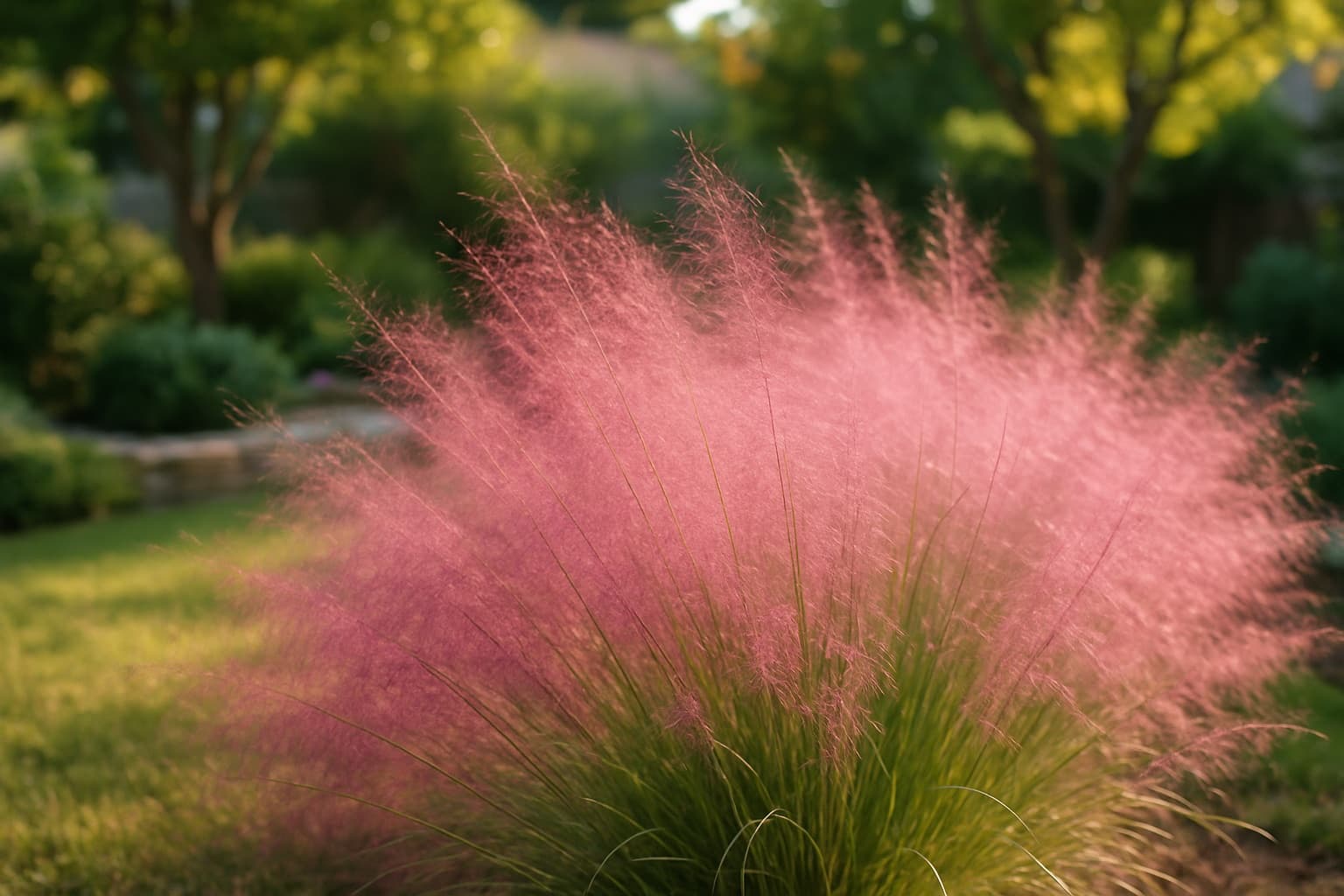
Is Gulf Muhly Toxic to Dogs?
The short version
- Gulf Muhly / Pink Muhly Grass (Muhlenbergia capillaris) is not on the ASPCA toxic plant list for dogs, cats, or horses.
- Native to the Edwards Plateau / Hill Country (San Antonio area), thriving in poor rocky soil.
- Famous for an airy cloud of pink-purple seed plumes each fall (September through November).
Quick answer
Gulf Muhly, also called Pink Muhly Grass (Muhlenbergia capillaris), is not on the ASPCA Animal Poison Control Center toxic plant list for dogs, cats, or horses. Like any ornamental grass, its seed heads and fine awns can occasionally cause mechanical irritation if they get caught in a dog's paws, ears, or coat. That is a physical issue, not a toxicity one. If your dog eats a large amount of any plant and seems unwell, call the ASPCA Animal Poison Control Center at (888) 426-4435.
Every fall, Gulf Muhly puts on one of the most photographed shows in Texas landscaping: a cloud of airy pink-purple seed plumes that seems to glow at dusk. For a dog owner deciding what to plant along a front walk or fence line, it also happens to be an easy call on the toxicity front.
What the ASPCA says
Gulf Muhly (Muhlenbergia capillaris) does not appear on the ASPCA Animal Poison Control Center toxic plant list for dogs, cats, or horses. It is a true grass, and like most ornamental grasses, the main thing to watch for is not toxicity but mechanics: the dried seed heads and thin awns can work their way into a dog's paw pads, ears, or coat later in the season and cause local irritation. That is worth a quick check after a romp through a stand of it, but it is a separate issue from the plant being poisonous.
The general caveat still applies to any plant: a dog that eats a large quantity of leaf or seed material can end up with mild stomach upset. Gulf Muhly is not a plant dogs typically graze on, but if you notice vomiting, diarrhea, or lethargy after your dog has been chewing on it, call your vet or the ASPCA Animal Poison Control Center.
Why Gulf Muhly earns a spot in a Hill Country dog yard
Gulf Muhly is native across much of Texas and is especially common and widely planted in the Edwards Plateau / Hill Country (San Antonio area), per the Lady Bird Johnson Wildflower Center. It also grows well across Central Texas more broadly. As a bunchgrass, it stays a tidy 2 to 3 feet tall with fine, arching blue-green blades most of the year, then erupts into that signature pink-purple plume display from September through November. Once established it is extremely drought-tolerant, handles poor rocky soil without complaint, and needs little upkeep beyond an annual cutback in late winter.
That combination matters for an HOA-conscious yard: the fall color reads as a deliberate ornamental statement rather than an unkempt planting, which makes Gulf Muhly an easy, HOA-friendly accent near a front walk, mailbox bed, or fence line where a dog spends time.
If something goes wrong
ASPCA Animal Poison Control Center: (888) 426-4435 (24/7, fee may apply). Have the plant name ready when you call.
Checking more than one plant? See the full list of plants toxic to dogs and cats, with native alternatives, covering every plant on the ASPCA list.
See a finished plan for a yard like this
Find our guides useful? Add Pollinator Patch as a preferred source on Google and articles like this one will show up higher in your own search results.