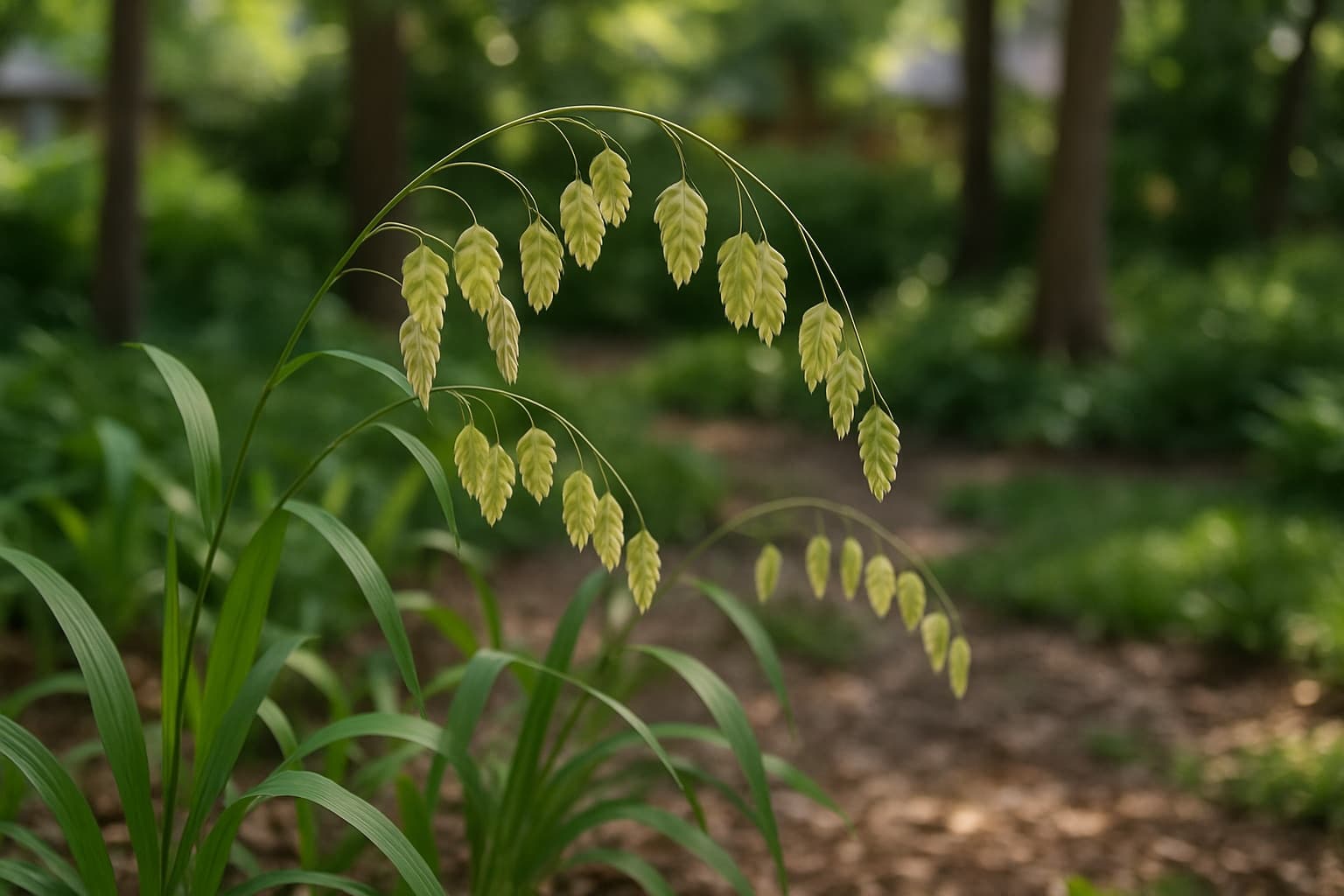
Is Inland Sea Oats Toxic to Dogs?
The short version
- Inland Sea Oats (Chasmanthium latifolium) is not on the ASPCA toxic plant list for dogs, cats, or horses.
- Native to the Texas Post Oak Savanna (College Station area), one of the few native grasses that thrives in shade.
- Seed awns can cause mechanical (not chemical) irritation if caught in fur, paws, or ears, like any ornamental grass.
Quick answer
Inland Sea Oats (Chasmanthium latifolium), also called River Oats or Wood Oats, is not on the ASPCA Animal Poison Control Center toxic plant list for dogs, cats, or horses. It is a true grass, and as with any ornamental grass, the dry seed heads can produce awns that occasionally catch in a dog's paws, ears, or coat and cause mechanical irritation. That is a physical snag, not a toxicity concern. If your dog eats a large amount of plant material and seems unwell, call the ASPCA Animal Poison Control Center at (888) 426-4435.
Inland Sea Oats is one of the few ornamental grasses that actually prefers shade, which makes it useful in a spot most grass species simply cannot fill. Its arching stems of flat, oat-like seed heads dangle and catch the light, and for a dog owner planning a shaded native bed, it is a plant you do not have to think twice about.
What the ASPCA says
Inland Sea Oats (Chasmanthium latifolium) does not appear on the ASPCA Animal Poison Control Center toxic plant list for dogs, cats, or horses. There is no documented systemic toxin tied to this species for any of those animals. The one physical caveat worth knowing is separate from toxicity: like other ornamental grasses, its dried seed heads carry small awns that can occasionally lodge in a dog's paw pads, ears, or fur later in the season, causing irritation from the awn itself rather than from anything the plant contains.
The usual general caveat still applies: a dog that eats a large quantity of any plant material, grass included, can end up with mild stomach upset. That is a volume issue common to most plants, not something specific to Inland Sea Oats.
Why Inland Sea Oats earns a spot in a shaded Texas dog yard
Inland Sea Oats is native and widespread across the eastern half of Texas, including the Post Oak Savanna (College Station area), where it grows naturally in shaded woodland understories and along stream banks, per the Lady Bird Johnson Wildflower Center. That native habitat is exactly why it performs where most ornamental grasses fail: full-sun grasses tend to thin out or refuse to establish under trees, while Inland Sea Oats fills that gap.
The plant typically reaches 2 to 4 feet, with arching stems carrying flat, oat-like seed heads that shimmer in the wind through summer, then turn bronze and copper in fall and hold their shape and color through winter. Birds work the seed heads through the colder months, so the same planting that solves a shade problem also keeps feeding wildlife after most other bloom in the yard has finished.
If something goes wrong
ASPCA Animal Poison Control Center: (888) 426-4435 (24/7, fee may apply). Have the plant name ready when you call.
Checking more than one plant? See the full list of plants toxic to dogs and cats, with native alternatives, covering every plant on the ASPCA list.
See a finished plan for a yard like this
Find our guides useful? Add Pollinator Patch as a preferred source on Google and articles like this one will show up higher in your own search results.