Is Little Bluestem Toxic to Dogs?
The short version
- Little Bluestem (Schizachyrium scoparium) is not on the ASPCA toxic plant list for dogs, cats, or horses.
- The official State Grass of Texas since 2009, native across the Blackland Prairie / Cross Timbers (Dallas area).
- Turns copper-orange-red in fall and winter, providing months of color with no supplemental water.
Quick answer
Little bluestem (Schizachyrium scoparium) is not on the ASPCA Animal Poison Control Center toxic plant list for dogs, cats, or horses. As a true grass, its seed heads and awns can occasionally catch in a dog's paws, ears, or coat and cause mechanical irritation, a physical issue rather than a toxicity concern. If a dog eats a large amount of any plant material, mild stomach upset is possible. If something seems off, call the ASPCA Animal Poison Control Center at (888) 426-4435.
Little bluestem has held an unusual honor since 2009: the Texas Legislature named it the official State Grass of Texas. That kind of recognition does not happen for a plant without a long track record across the state, and this native bunchgrass has earned it, showing up on prairies, roadsides, and home landscapes from the Panhandle to the Gulf Coast. For a dog owner weighing what to plant, its state-grass status is a useful shortcut to a plant that is both familiar and, as far as toxicity goes, unremarkable.
What the ASPCA says
Little bluestem does not appear on the ASPCA Animal Poison Control Center toxic plant list for dogs, cats, or horses. That means there is no documented systemic toxin associated with the plant for those species. One caveat worth naming separately: like other ornamental grasses, little bluestem produces seed heads with fine awns in late summer and fall, and those awns can occasionally work into a dog's paw pads, ears, or coat. That is a mechanical, physical risk, not a chemical one, and it has nothing to do with the plant's ASPCA status.
The general caveat still applies: a dog that eats a large quantity of any plant material, grass included, can end up with mild gastrointestinal upset. That is a volume issue common to almost any vegetation, not something specific to little bluestem.
Why little bluestem earns a spot in a Blackland Prairie dog yard
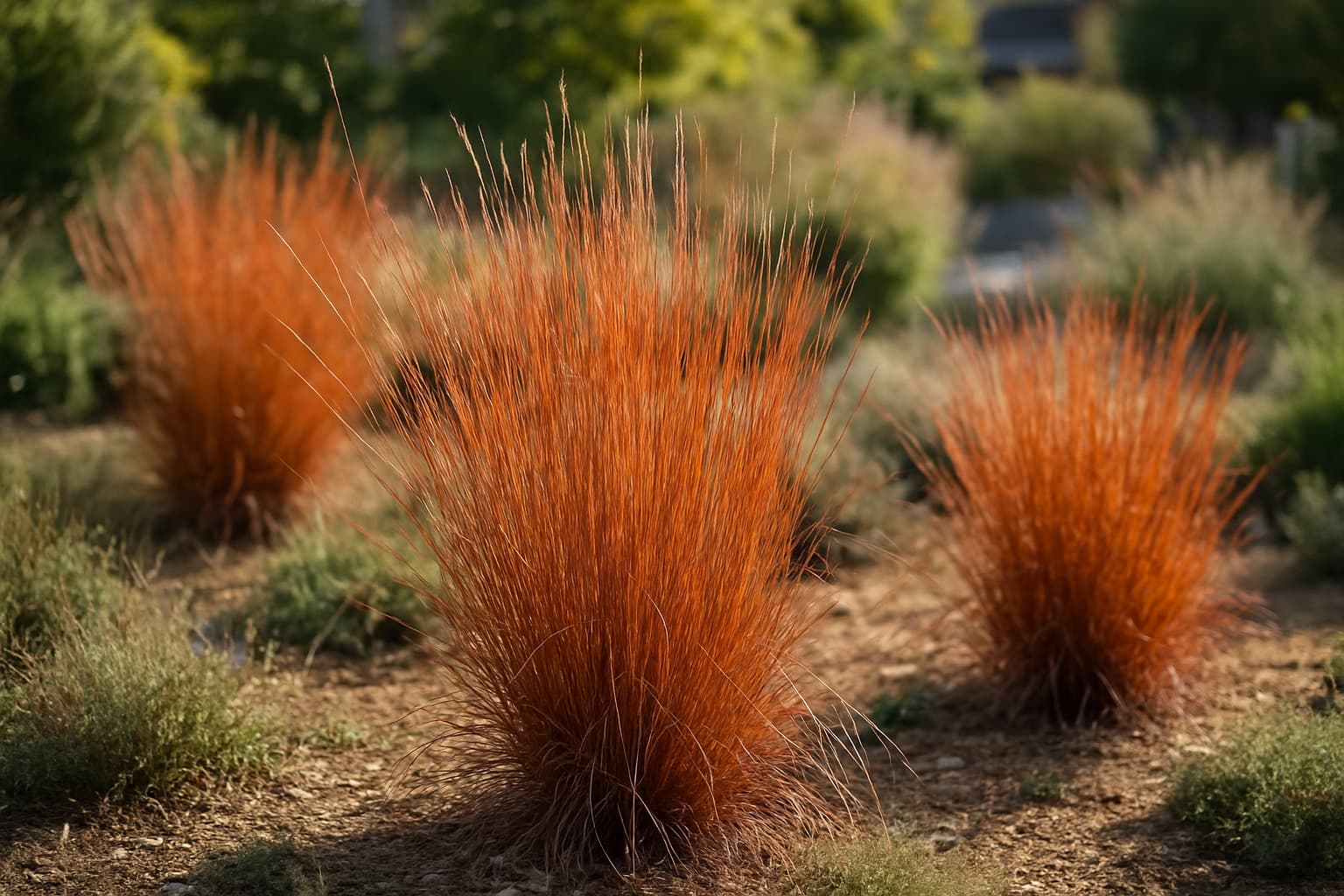
Little bluestem is native and widespread across virtually all of Texas, and it is a defining grass of the Blackland Prairie / Cross Timbers (Dallas area) ecoregion in particular, per the Lady Bird Johnson Wildflower Center. It grows as a tidy bunchgrass, typically 2 to 3 feet tall, with blue-green stems through the summer that shift to a striking copper-orange-red once cooler weather arrives, holding that color through winter. That gives a yard months of texture and interest from a plant that needs no supplemental water once it is established.
The grass also does real work for wildlife. Its foliage offers cover and nesting material for ground-feeding birds, and the seed heads carry food into winter when little else is available. Combined with its low maintenance and drought tolerance, little bluestem makes a strong turf-alternative or accent grass for a native prairie-style bed, one that a Dallas-area homeowner can plant without worrying about how a dog will react to it.
If something goes wrong
ASPCA Animal Poison Control Center: (888) 426-4435 (24/7, fee may apply). Have the plant name ready when you call.
Checking more than one plant? See the full list of plants toxic to dogs and cats, with native alternatives, covering every plant on the ASPCA list.
See a finished plan for a yard like this
Find our guides useful? Add Pollinator Patch as a preferred source on Google and articles like this one will show up higher in your own search results.