Is Moss Phlox Toxic to Dogs?
The short version
- Moss Phlox (Phlox subulata) carries an explicit ASPCA non-toxic listing for dogs.
- It is not documented as native to Texas; its native range is the central and eastern US and Canada.
- Texas Trailing Phlox (Phlox nivalis ssp. texensis), a rare Piney Woods native, is the true Texas counterpart.
Quick answer
Moss Phlox (Phlox subulata), also sold as Creeping Phlox or Moss Pink, carries an explicit non-toxic listing from the ASPCA Animal Poison Control Center for dogs. One thing to know before you plant it in Texas: it is not native to Texas, even though it is a common sight at Texas nurseries in early spring. If your dog eats a large amount and seems unwell, call the ASPCA Animal Poison Control Center at (888) 426-4435.
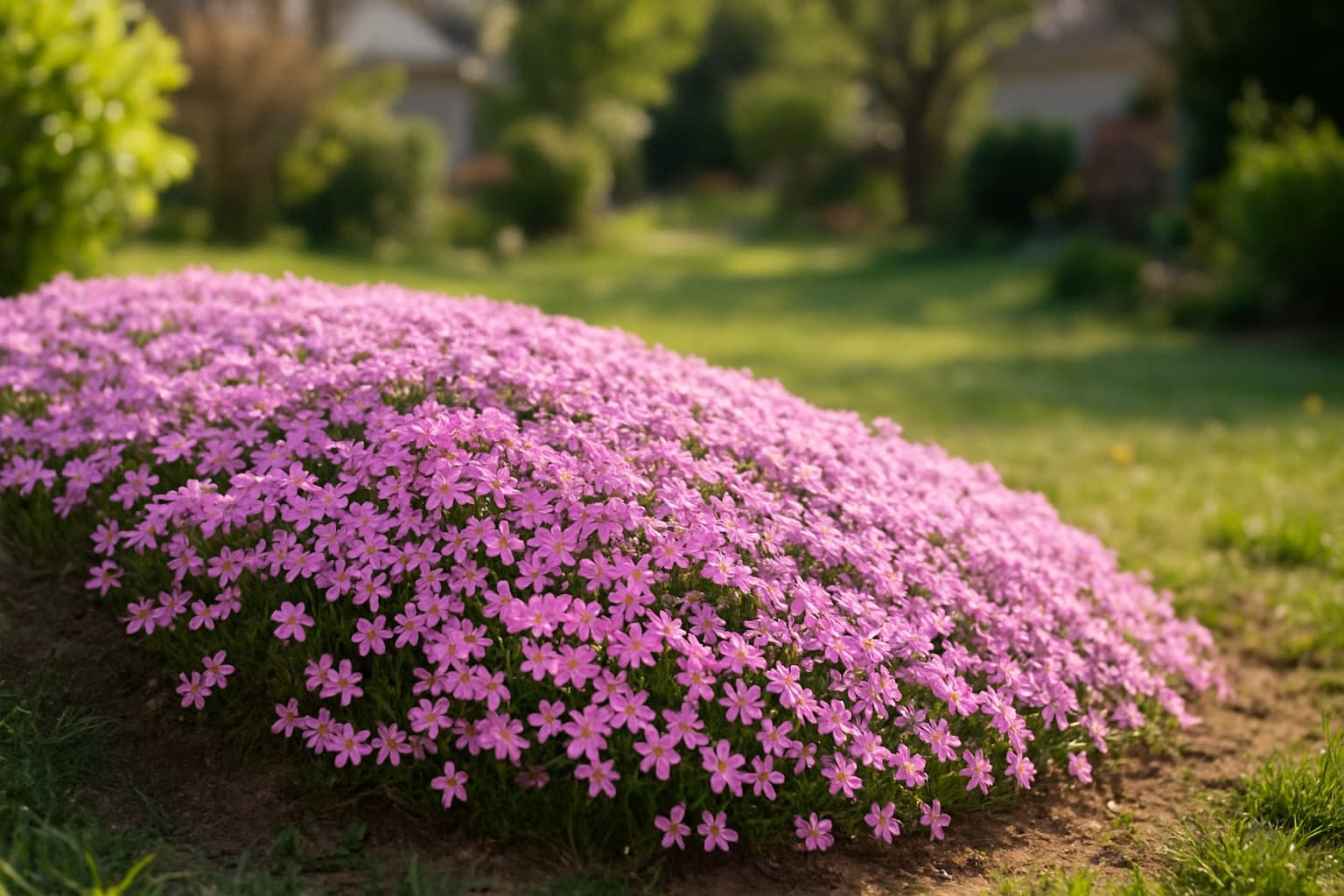
Moss Phlox shows up on garden center tables every spring, usually as a flat of dense, low mounds already covered in small pink or purple flowers. It is one of the most widely planted groundcovers in the country, and for dog owners it comes with good news on the toxicity front. The native-plant question is a separate matter, and worth understanding before it goes in the ground.
What the ASPCA says
Moss Phlox has an explicit entry in the ASPCA plant database marking it as non-toxic to dogs. That is a step beyond simply being absent from the toxic list. The ASPCA has specifically evaluated the plant and recorded it as not causing the kind of systemic reaction it tracks in dogs. You can check the entry yourself at aspca.org/pet-care/animal-poison-control/toxic-and-non-toxic-plants.
The general caveat still applies. A dog that eats a large amount of any plant material, including Moss Phlox foliage or flowers, can end up with mild stomach upset from the sheer volume and fiber, not from any toxin in the plant. That is true of grass, mulch, and most non-toxic groundcovers, and it is not a reason to avoid the plant.
Is Moss Phlox actually native to Texas?
No. Moss Phlox is not native to Texas. Its native range covers the central and eastern United States and Canada, from Michigan, Ontario, and New York south through the Appalachian region into North Carolina, along with a number of other eastern and midwestern states. Texas does not fall within that range, according to the Lady Bird Johnson Wildflower Center's native plant database and USDA-derived distribution records.
That has not stopped it from becoming a fixture at Texas nurseries and big-box garden centers every spring. It is easy to grow, blooms early and heavily, and holds up in a rock garden or on a slope, so retailers stock it regardless of where it actually belongs. If a Texas yard is the goal and native plantings matter to you, Moss Phlox is worth knowing as a popular import rather than a regional native.
There is a true Texas-native counterpart worth asking about: Texas Trailing Phlox (Phlox nivalis ssp. texensis). It is native to the Piney Woods of southeast Texas, where it grows as a low, mat-forming plant with pink to magenta flowers in a similar early-spring show. It is also rare and federally listed, found in only a handful of East Texas counties, so it is not something to expect on a big-box nursery shelf or to dig from the wild. A native plant nursery is the right place to ask whether nursery-propagated stock is available.
Why people plant it anyway
Moss Phlox is a low, mat-forming perennial that stays evergreen or semi-evergreen through much of the year, usually reaching 4 to 6 inches tall. In early spring it disappears under a carpet of small, five-petaled flowers in pink, purple, white, or red depending on the cultivar. Gardeners nationwide use it to cover slopes, edge borders, and fill rock gardens where little else spreads that fast or blooms that reliably. In Texas it is planted for exactly those reasons, as a dependable, widely available spring groundcover rather than for any ecological role it plays here, since it has none.
If something goes wrong
ASPCA Animal Poison Control Center: (888) 426-4435 (24/7, fee may apply). Have the plant name ready when you call.
Checking more than one plant? See the full list of plants toxic to dogs and cats, with native alternatives, covering every plant on the ASPCA list.
See a finished plan for a yard like this
Find our guides useful? Add Pollinator Patch as a preferred source on Google and articles like this one will show up higher in your own search results.