Is Ninebark Toxic to Dogs?
The short version
- Ninebark (Physocarpus opulifolius) is not on the ASPCA toxic plant list for dogs, cats, or horses.
- Its documented native range runs from New York to Minnesota, south to Florida, Arkansas, and Kansas, and does not include Texas.
- Grown mainly for its exfoliating bark and colorful cultivar foliage rather than regional native value in Texas.
Quick answer
Ninebark (Physocarpus opulifolius) is not on the ASPCA Animal Poison Control Center toxic plant list for dogs, cats, or horses. One honest note before you buy: Ninebark is not documented as native to Texas, even though it is commonly sold there labeled as "a native plant." As with any plant, a dog that eats a large amount can get mild stomach upset. If that happens, call the ASPCA Animal Poison Control Center at (888) 426-4435.
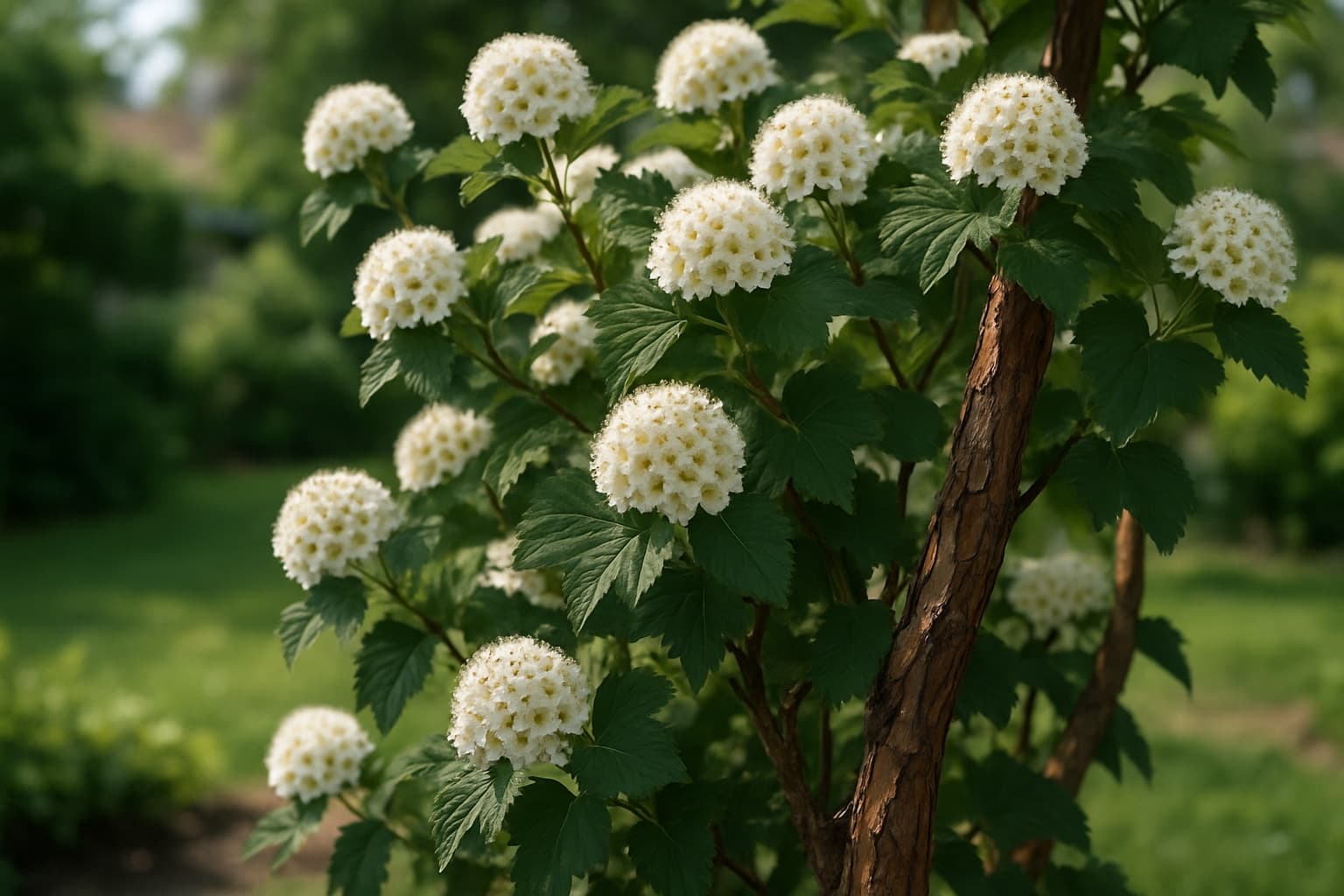
Ninebark is a deciduous shrub grown less for flowers than for its bark. As the plant matures, older stems shed in thin, papery layers that peel back to reveal different shades underneath, an effect that holds visual interest through winter when most other shrubs go bare. Add small spring flower clusters and, in many nursery cultivars, deep purple-bronze foliage, and it is easy to see why the plant sells well.
What the ASPCA says
Ninebark (Physocarpus opulifolius) does not appear on the ASPCA Animal Poison Control Center toxic plant list for dogs, cats, or horses. That absence means there is no documented systemic toxin in the plant for those species. You can check for yourself at aspca.org/pet-care/animal-poison-control/toxic-and-non-toxic-plants.
The usual caveat still applies. A dog that eats a large quantity of any plant material, bark, leaves, or seed capsules included, can end up with mild GI upset just from the bulk and fiber. That is a general digestive response, not evidence of a toxin, and it is worth knowing about regardless of which plant is involved.
Is Ninebark actually native to Texas?
No. Ninebark's documented native range runs through central and eastern North America, from New York west to Minnesota and South Dakota, and south to Florida, Arkansas, and Kansas. Texas falls outside that range. It is a real native plant, just not a Texas one.
The confusion is understandable. Ninebark shows up at Texas nurseries labeled generically as "a native plant," and in a loose sense that is true: it is native to a large stretch of the eastern and midwestern United States. But native to the country is not the same claim as native to Texas, and for a homeowner specifically trying to plant regional natives for local wildlife value, that distinction matters. If a true Texas native is the goal, Ninebark is not it, and it is worth asking a nursery to point you toward species that actually appear on Texas native plant lists.
Why people plant it anyway
Set the native-range question aside and Ninebark is still a shrub with a real case for itself as an ornamental. It typically grows 5 to 8 feet tall, and the exfoliating bark, the source of the name "ninebark," from an old belief that the plant carries nine layers of bark, gives a garden something to look at once the spring flowers are gone and the leaves have dropped. Those spring flowers arrive in small white to pink clusters, followed by dark reddish seed capsules through summer. Popular cultivars like 'Diabolo' and 'Little Devil' were bred for deep purple-bronze foliage, chosen for color rather than for any particular wildlife benefit. Planted this way, in a Texas yard, it is best understood as an honest ornamental choice, not a stand-in for regional ecological value it does not have.
If something goes wrong
ASPCA Animal Poison Control Center: (888) 426-4435 (24/7, fee may apply). Have the plant name ready when you call.
Checking more than one plant? See the full list of plants toxic to dogs and cats, with native alternatives, covering every plant on the ASPCA list.
See a finished plan for a yard like this
Find our guides useful? Add Pollinator Patch as a preferred source on Google and articles like this one will show up higher in your own search results.