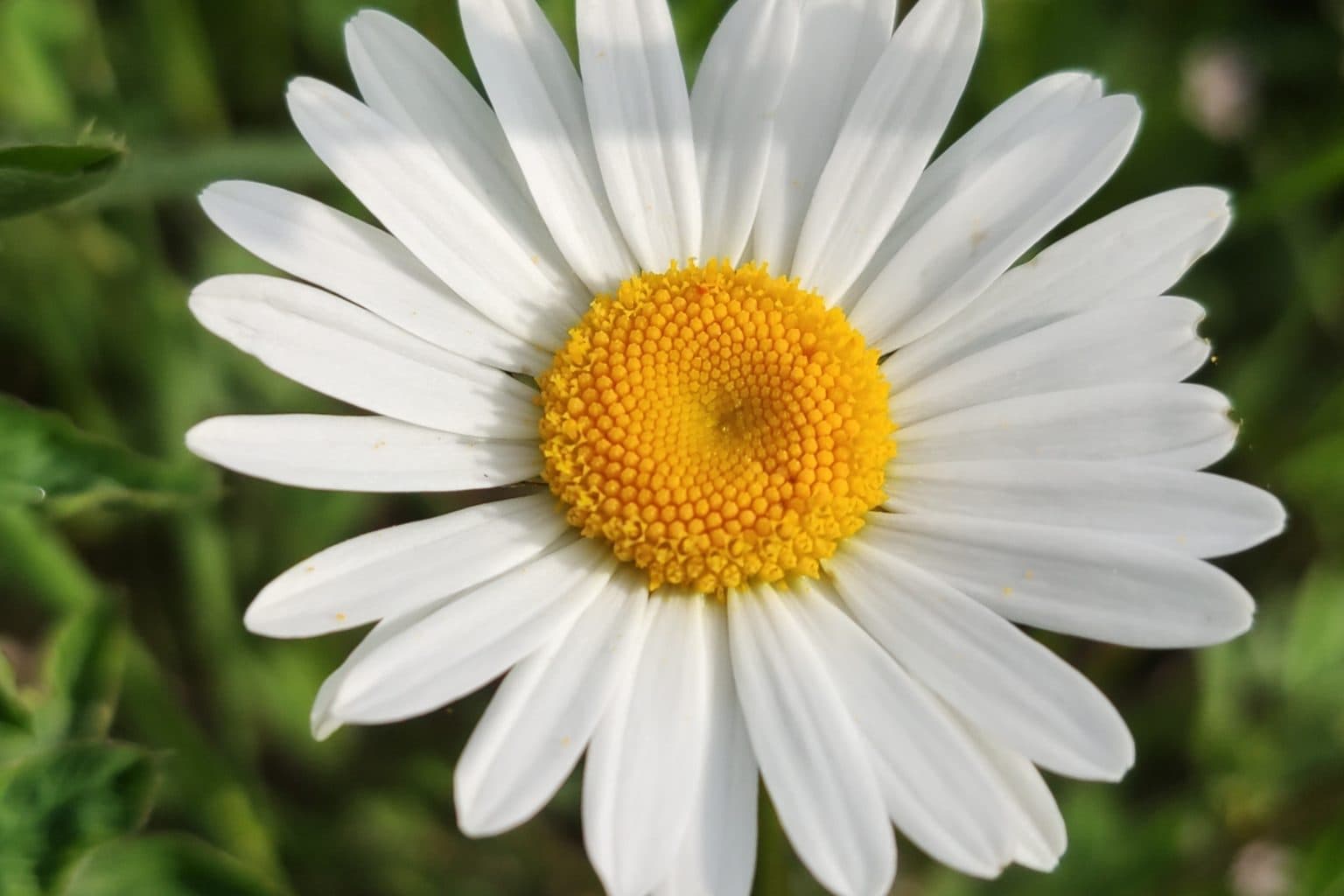
Quick answer: Yes, cautiously. Oxeye Daisy (Leucanthemum vulgare, synonym Chrysanthemum leucanthemum) falls under the ASPCA Animal Poison Control Center's Chrysanthemum listing, which is toxic to dogs, cats, and horses. Garden ingestion usually causes mild stomach upset and skin irritation. Severe cases are tied to concentrated pyrethrins, not a few flower heads. If your dog ate it, call the ASPCA Animal Poison Control Center at (888) 426-4435.
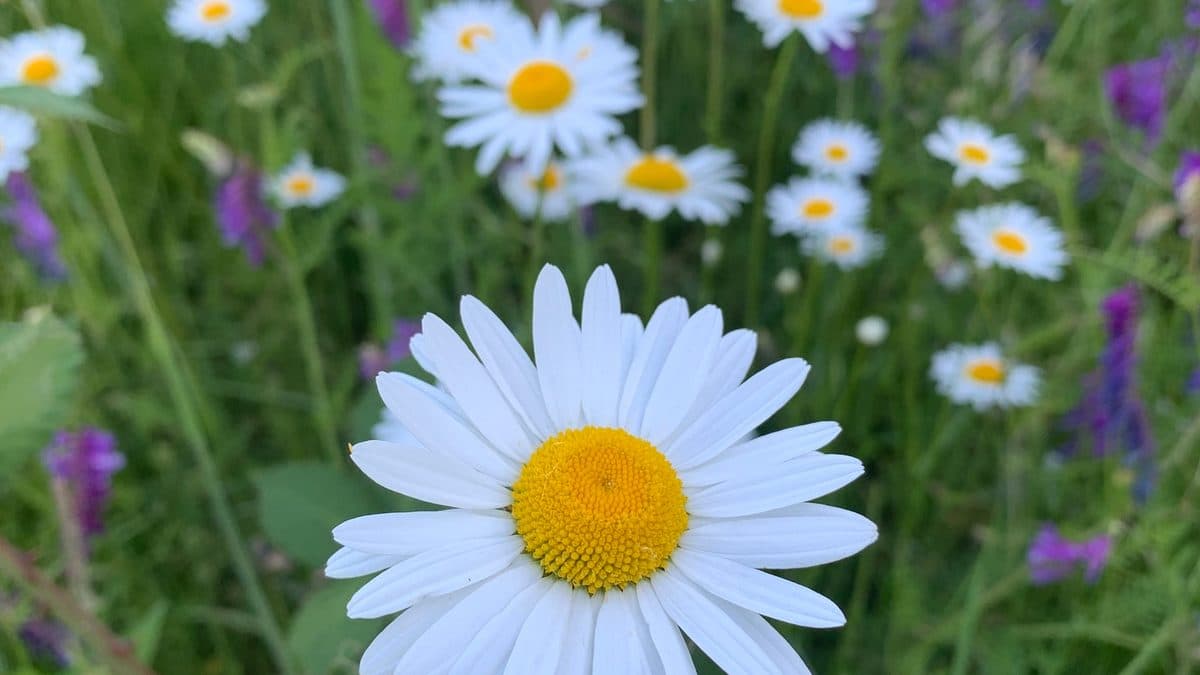
Oxeye daisy is the classic white-petal, yellow-center daisy you see naturalized along roadsides and sold in wildflower mixes. It looks harmless, and for a dog the realistic risk is mild. But it does sit on the ASPCA toxic list through the chrysanthemum family, so it is worth understanding before you plant it, especially since it is also an invasive weed in much of the country.
What the ASPCA says
Oxeye daisy is Leucanthemum vulgare, and through its older synonym Chrysanthemum leucanthemum it sits inside the ASPCA Animal Poison Control Center's "Chrysanthemum spp." listing (also filed under Daisy and Mum), family Compositae/Asteraceae. That listing is toxic to dogs, cats, and horses. The toxic principles, per the ASPCA, are "Sesquiterpene, lactones, pyrethrins and other potential irritants."
The clinical signs the ASPCA names for this group are "Vomiting, diarrhea, hypersalivation, incoordination, dermatitis." In practice, a dog that mouths a garden oxeye daisy is most likely to get mild stomach upset or some skin irritation from contact. The more serious end of that list is tied to concentrated exposure, which matters for how worried to be.
Not every daisy is toxic
This is where people get tripped up. "Daisy" is a shape, not a single plant, and the toxic reputation does not apply evenly. The compounds that drive the warning, pyrethrins and sesquiterpene lactones, are concentrated in true mums and chrysanthemums. That is the same pyrethrin chemistry used in insecticides, which is where the severe poisoning cases come from, not from a dog nibbling a wildflower.
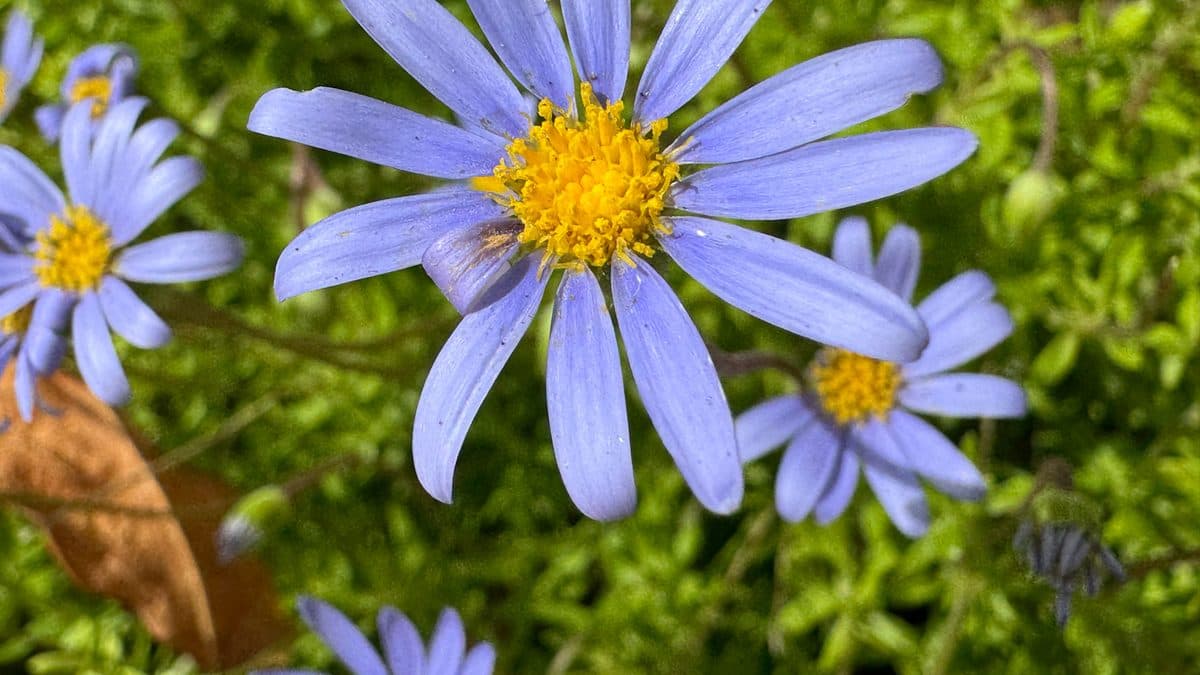
Meanwhile the ASPCA lists Blue Daisy (Felicia amelloides) as non-toxic to dogs, cats, and horses. So a daisy-shaped flower is not automatically a problem. Be precise about the plant: the toxicity warning here is specifically the chrysanthemum and oxeye-daisy group, not everything with white petals and a yellow center.
One more reason to skip oxeye daisy in the yard has nothing to do with your dog. It is a listed noxious and invasive weed in many states, escaping gardens and crowding out native plants, so most regional native-plant groups steer people away from it regardless of pets.
| Plant | Dog Safe? | Notes |
|---|---|---|
| Oxeye Daisy (Leucanthemum vulgare) | Caution | In the ASPCA Chrysanthemum listing (toxic); garden ingestion usually mild GI upset and dermatitis. Also an invasive weed |
| True mums / Chrysanthemum (Chrysanthemum spp.) | No | Toxic to dogs, cats, and horses per the ASPCA; highest pyrethrin and sesquiterpene-lactone concentration |
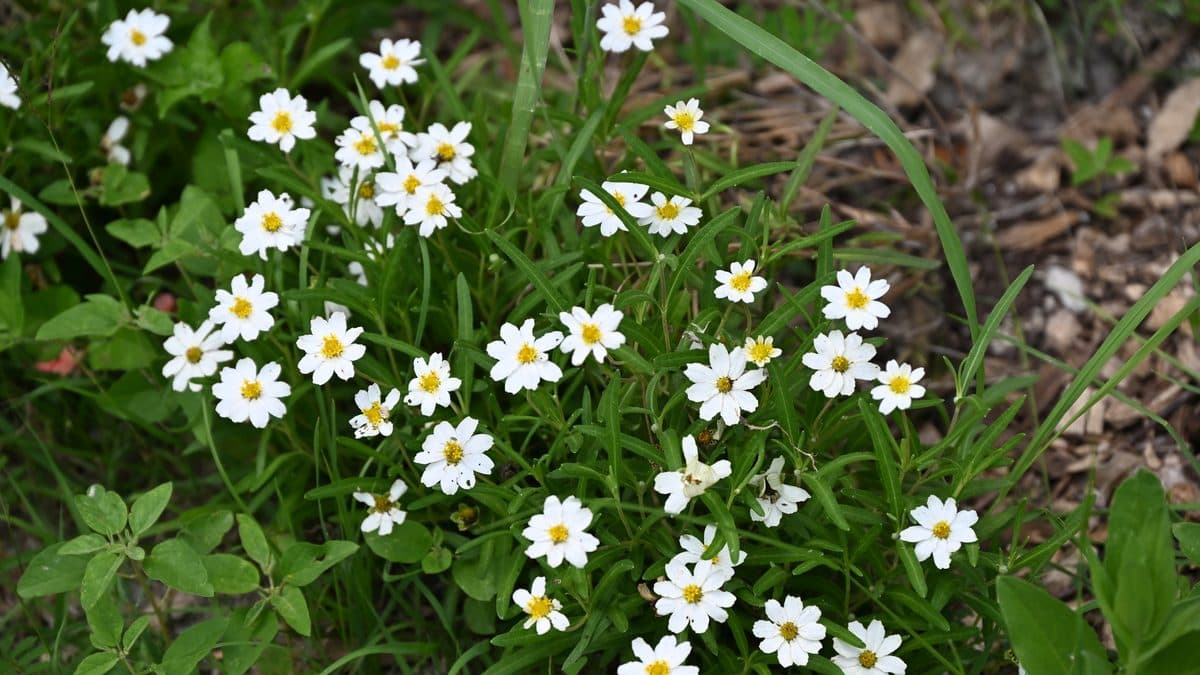
| Blackfoot Daisy (Melampodium leucanthum) | Yes | Not on the ASPCA toxic plant list; closest white-daisy look, very drought tough |
| White Gaura / Beeblossom (Oenothera lindheimeri) | Yes | Not on the ASPCA toxic plant list; in the evening-primrose family, not the daisy family at all |
| Fall Aster (Symphyotrichum oblongifolium) | Yes | Not on the ASPCA toxic plant list; daisy-family but not the chrysanthemum group, purple fall bloom |
What to do if your dog ate it
- Note whether the plant was a garden oxeye daisy or a true potted mum, and roughly how much was eaten. The mums carry more of the concentrated compounds.
- Call the ASPCA Animal Poison Control Center at (888) 426-4435, or your vet, especially if a chrysanthemum insecticide or pyrethrin product was also involved.
- Watch for vomiting, diarrhea, drooling, wobbliness, or skin irritation, which are the signs the ASPCA names for this group, and report them on the call.
- Cats are more sensitive than dogs to this plant group, so treat any cat ingestion as the more urgent call.
- Do not induce vomiting unless a vet tells you to.
Dog-safe native swaps with the same look
If you want that clean white-daisy look without the chrysanthemum listing, these Edwards Plateau and Hill Country natives (San Antonio area) give you similar sun-loving color and stay off the ASPCA toxic plant list. Native ranges per the Lady Bird Johnson Wildflower Center.
- Blackfoot Daisy (Melampodium leucanthum) is the closest match: low white-daisy mounds that bloom for months and shrug off drought. It is in the daisy family (Asteraceae) but is not on the ASPCA toxic plant list.
- White Gaura / Beeblossom (Oenothera lindheimeri) is the pick for the most cautious owners. It is in the evening-primrose family (Onagraceae), so it sidesteps the daisy family entirely, and it is not on the ASPCA toxic plant list. Airy white-to-pink flowers on tall stems.
- Fall Aster (Symphyotrichum oblongifolium) gives a burst of purple daisy-shaped blooms in fall. Like blackfoot daisy it is in Asteraceae but is not on the ASPCA toxic plant list; the pyrethrin and sesquiterpene-lactone risk is specific to true mums, not asters.
For the rest of the plants worth checking before your next nursery run, see the Texas yard plants most toxic to dogs.
If something goes wrong
ASPCA Animal Poison Control Center: (888) 426-4435 (24/7, fee may apply). Have the plant name ready when you call, and mention if any pyrethrin or chrysanthemum insecticide was involved.
Checking more than one plant? See the full list of plants toxic to dogs and cats, with native alternatives, covering every plant on the ASPCA list.