Is Redbud Toxic to Dogs?
The short version
- Eastern Redbud (Cercis canadensis) is not on the ASPCA toxic plant list for dogs, cats, or horses.
- The Texas Redbud variety is native across the Edwards Plateau / Hill Country (San Antonio area).
- An early nectar source for native bees, blooming magenta-pink before leaf-out each spring.
Quick answer
Redbud (Cercis canadensis) is not on the ASPCA Animal Poison Control Center toxic plant list for dogs, cats, or horses. It is not considered toxic to pets, which is part of why it works so well as a small native tree in Texas yards with dogs. As with any plant, a dog that eats a large amount can get mild stomach upset. If that happens, call the ASPCA Animal Poison Control Center at (888) 426-4435.
Redbud is one of the easiest small trees to like: it is the first big bloom of the year, it stays a manageable size, and it fits an HOA-friendly front yard without looking like a project. For a Texas dog owner, it also happens to be a tree you do not have to think twice about.
What the ASPCA says
Redbud (Cercis canadensis, including the Texas Redbud form sometimes sold as Cercis canadensis var. texensis) does not appear on the ASPCA Animal Poison Control Center toxic plant list for dogs, cats, or horses. That means there is no documented systemic toxin flagged for those species.
The usual caveat still applies: a dog that eats a large quantity of any plant material, including fallen redbud flowers, leaves, or seed pods, can get mild GI upset simply from the volume and fiber, not from a toxin. That is a general digestive response, not a sign the plant itself is dangerous.
Why Redbud earns a spot in a Hill Country dog yard
Redbud is native across most of Texas, and it is especially common and well loved in the Edwards Plateau / Hill Country (San Antonio area), where the Texas Redbud variety, with glossier, more heat and drought tolerant leaves than the straight species, is a signature small native tree, per the Lady Bird Johnson Wildflower Center. It stays a manageable 15 to 25 feet, small enough for a front yard without crowding the house or a fence line.
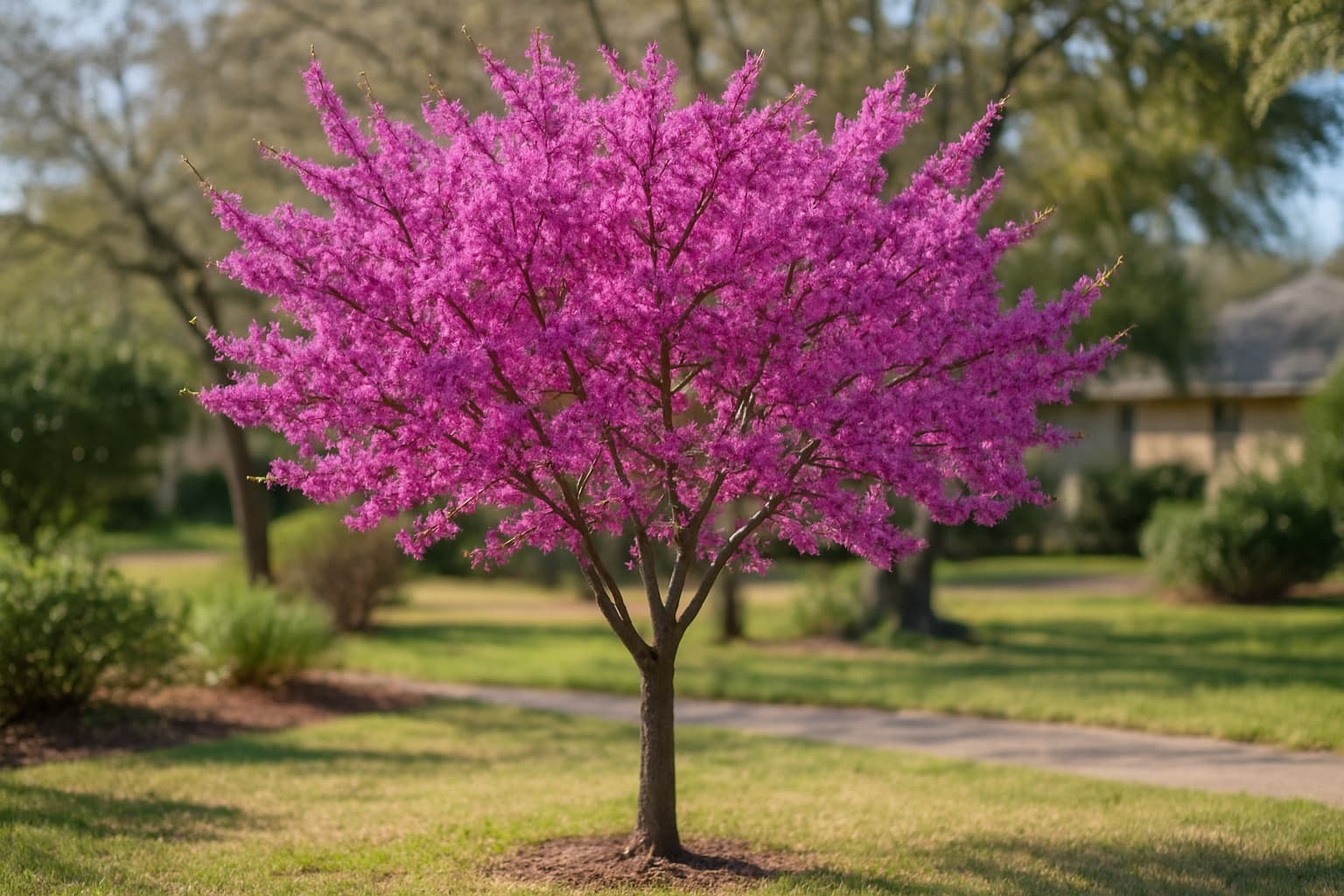
Its main draw is timing: magenta-pink, pea-like flowers cover the bare branches in very early spring, often before anything else in the yard has bloomed and ahead of the tree's own leaf-out. Those early flowers are an important nectar source for native bees just emerging from winter. Heart-shaped leaves follow, then flat brown seed pods later in the season. Redbud handles full sun to part shade and adapts to most soils, and the Texas Redbud variety in particular takes Hill Country heat and limestone soils well. Some yards lean on oleander for that same early splash of color as a small tree or large shrub, but oleander is toxic to dogs per the ASPCA (it contains cardiac glycosides), so a redbud is a genuinely dog-safer way to get an intentional, well-kept small tree with the same kind of visual punch.
If something goes wrong
ASPCA Animal Poison Control Center: (888) 426-4435 (24/7, fee may apply). Have the plant name ready when you call.
Checking more than one plant? See the full list of plants toxic to dogs and cats, with native alternatives, covering every plant on the ASPCA list.
See a finished plan for a yard like this
Find our guides useful? Add Pollinator Patch as a preferred source on Google and articles like this one will show up higher in your own search results.