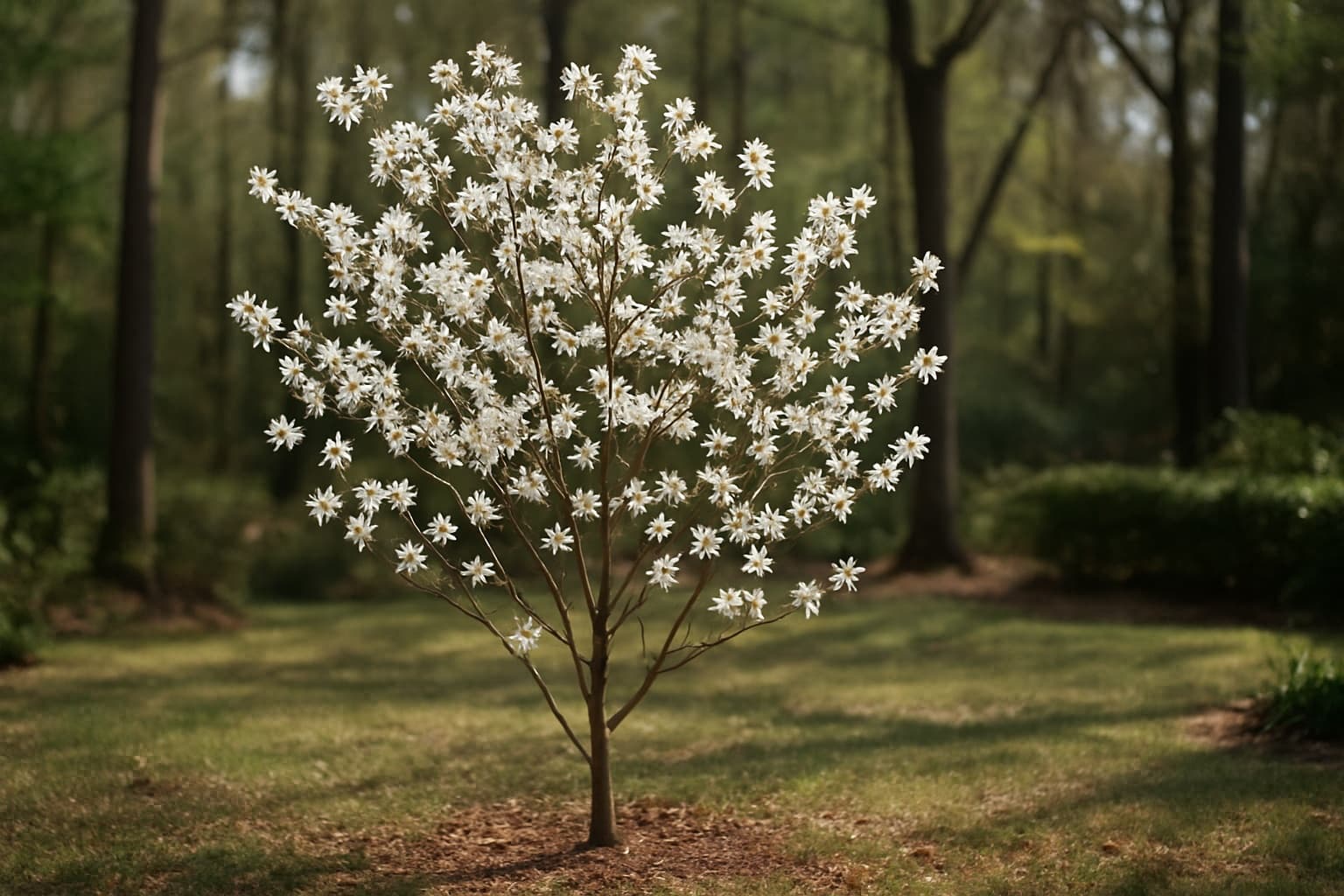
Is Serviceberry Toxic to Dogs?
The short version
- Downy Serviceberry (Amelanchier arborea) is not on the ASPCA toxic plant list for dogs, cats, or horses.
- Its native range only just reaches far northeastern Texas (Piney Woods); it is far more common across the eastern US.
- One of the earliest native trees to bloom in spring, followed by edible berries birds eat heavily.
Quick answer
Downy serviceberry (Amelanchier arborea) is not on the ASPCA Animal Poison Control Center toxic plant list for dogs, cats, or horses. It is not considered toxic to pets. As with any plant, a dog that eats a large amount can get mild stomach upset. If that happens, call the ASPCA Animal Poison Control Center at (888) 426-4435.
Serviceberry is one of the first native trees to bloom each spring, covering itself in small white flowers before most of the yard has woken up. It follows with small reddish-purple berries that birds strip quickly, then closes out the season with strong fall color. It is also a plant dog owners can plant without a second thought.
What the ASPCA says
Downy serviceberry (Amelanchier arborea) does not appear on the ASPCA Animal Poison Control Center toxic plant list for dogs, cats, or horses. That means there is no documented systemic toxin from this species for those animals. You can verify at aspca.org/pet-care/animal-poison-control/toxic-and-non-toxic-plants.
The usual caveat still applies: a dog that eats a large quantity of any plant material, including the berries, can end up with mild GI upset. That is a volume issue common to most fruiting plants, not a sign of toxicity.
Where serviceberry actually grows in Texas
Downy serviceberry is best known as an eastern United States native, found from New Brunswick down to Florida and west to Minnesota and Nebraska. In Texas, its native range is narrow: per the Lady Bird Johnson Wildflower Center, it only reaches the far northeastern corner of the state, in the Piney Woods ecoregion near the Red River and Texarkana, with Beaumont marking the general area the Wildflower Center tracks for this ecoregion. It is not a common or widespread Texas native, and homeowners outside that Piney Woods corner should treat it as an eastern US species rather than a plant native to their part of Texas.
Why it is worth planting anyway
Where it does fit, serviceberry earns its space. It is a small deciduous tree or large shrub, typically 15 to 25 feet, and one of the earliest native trees to flower, putting out white five-petaled blooms before or alongside its leaves. Small reddish-purple berries follow in early summer, edible for people and heavily eaten by birds, which is where the common names serviceberry and juneberry come from. Fall brings orange to red foliage, and the tree tolerates part shade and understory conditions, making it a good fit under taller canopy.
If something goes wrong
ASPCA Animal Poison Control Center: (888) 426-4435 (24/7, fee may apply). Have the plant name ready when you call.
Checking more than one plant? See the full list of plants toxic to dogs and cats, with native alternatives, covering every plant on the ASPCA list.
See a finished plan for a yard like this
Find our guides useful? Add Pollinator Patch as a preferred source on Google and articles like this one will show up higher in your own search results.