Is Switchgrass Toxic to Dogs?
The short version
- Switchgrass (Panicum virgatum) is not on the ASPCA toxic plant list for dogs, cats, or horses.
- Texas A&M AgriLife Extension documents a livestock-forage photosensitization risk in grazing cattle, a different context than a dog in a yard.
- Native to the Texas Blackland Prairie (Dallas area), one of the dominant historic tallgrass prairie species.
Quick answer
Switchgrass (Panicum virgatum) is not on the ASPCA Animal Poison Control Center toxic plant list for dogs, cats, or horses. There is one caveat worth knowing so conflicting search results do not throw you off: Texas A&M AgriLife Extension literature documents switchgrass as a cause of photosensitization in grazing livestock, cattle, sheep, and horses that eat large quantities of it as pasture forage over time. That is a livestock-forage finding, not a documented dog-toxicity risk, and it describes a different situation than a dog nosing around an ornamental clump in a yard. If your dog eats plant material and seems unwell, call the ASPCA Animal Poison Control Center at (888) 426-4435.
Switchgrass was once one of the defining grasses of the tallgrass prairie that covered much of Texas before it was plowed and grazed into something else. It still shows up in restored prairie plantings and increasingly in home landscapes, where its height, movement, and fall color do a lot of work for very little maintenance. For dog owners weighing it as a yard plant, the ASPCA record is straightforward, but there is a real caveat from a different field of research that deserves a clear explanation rather than a quick dismissal.
What the ASPCA says
Switchgrass (Panicum virgatum) does not appear on the ASPCA Animal Poison Control Center toxic plant list for dogs, cats, or horses. No systemic toxin from this species is documented for companion animals on that list, and you can check the ASPCA database yourself at aspca.org/pet-care/animal-poison-control/toxic-and-non-toxic-plants.
The general caveat still applies to any plant, ornamental grass included. A dog that eats a large amount of switchgrass foliage, the way a bored puppy might work through a clump over an afternoon, can end up with mild stomach upset or vomiting simply from the bulk of fibrous plant material, not from a toxin. That is normal digestive irritation, not evidence of poisoning.
The livestock caveat you may have seen online
If you search switchgrass and toxicity, you may run into references to photosensitization in livestock, and it is worth explaining precisely what that means instead of leaving it as a vague warning. Texas A&M AgriLife Extension forage and livestock literature documents Panicum virgatum as a cause of hepatogenous photosensitization in grazing animals, cattle, sheep, and horses, when it makes up a large share of their forage intake over an extended period. The mechanism is tied to saponin compounds in the plant that can affect the liver and, in turn, the skin's sensitivity to sunlight in animals that graze heavily on it.
That is a specific agricultural context: pastured livestock consuming large volumes of switchgrass as their primary forage over weeks or months. It is not the same situation as a dog encountering an ornamental clump planted along a fence line or in a bed, and it is not a documented dog-toxicity finding. We are including it here because the research exists and a homeowner deserves the full picture, not because there is evidence it poses a comparable risk to a dog in a yard.
Why it earns a spot in a Blackland Prairie yard
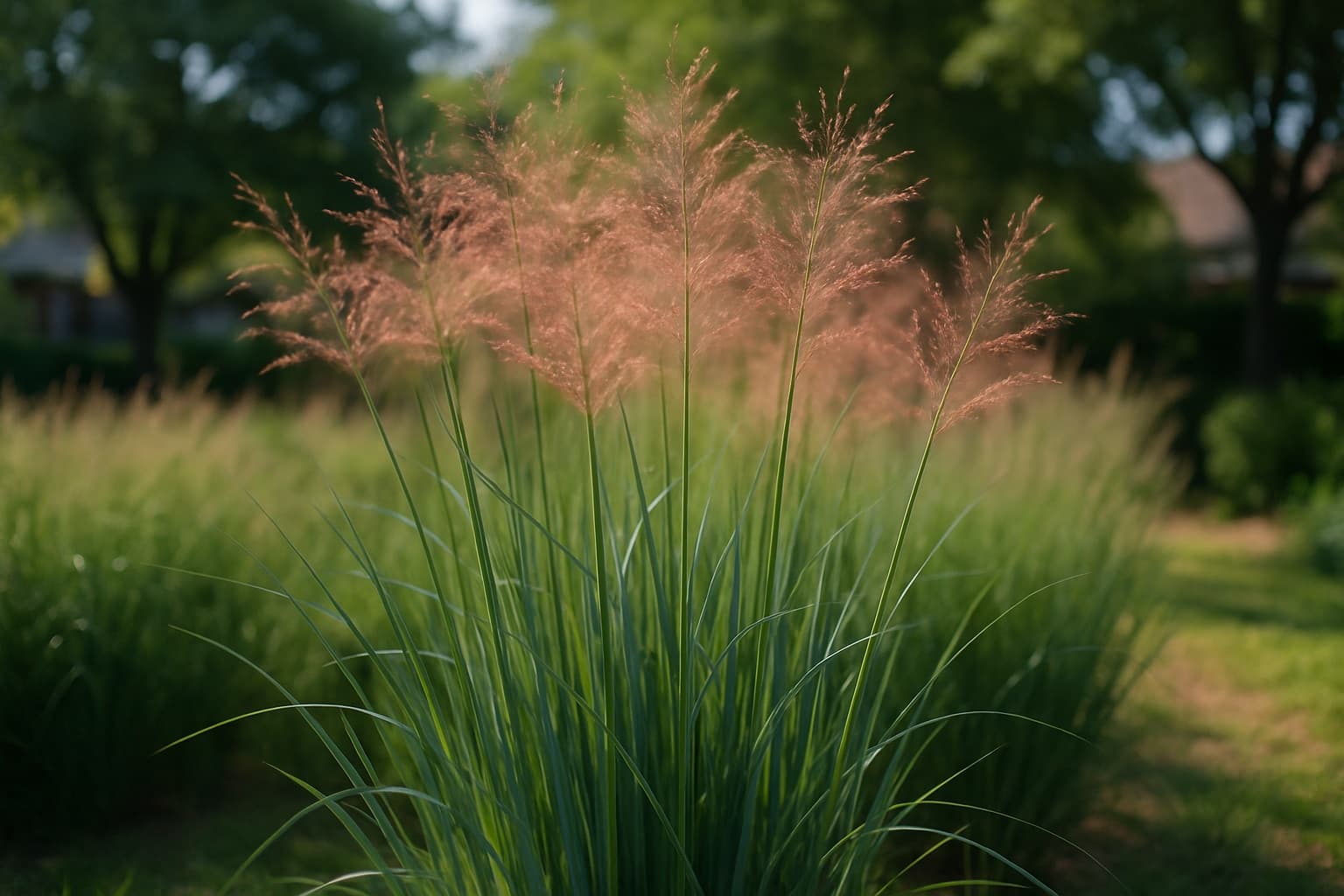
Switchgrass is native and widespread across nearly all of Texas, and it was historically one of the dominant grasses of the tallgrass prairie, particularly in the Blackland Prairie (Dallas area), per the Lady Bird Johnson Wildflower Center. It grows as an upright bunchgrass, typically three to six feet tall, with blue-green summer foliage that shifts to gold and burgundy in fall and airy, pink-tinged seed panicles that catch late-summer light. Its roots run deeper than almost any other native prairie grass, which is a large part of why it handles Texas drought and holds soil on slopes and along drainage paths so well.
Beyond erosion control and drought tolerance, switchgrass keeps working through winter. Its seed heads feed birds and its standing structure provides cover long after summer bloomers have died back, which makes it one of the few plants in a native yard still pulling weight in January.
If something goes wrong
ASPCA Animal Poison Control Center: (888) 426-4435 (24/7, fee may apply). Have the plant name ready when you call.
Checking more than one plant? See the full list of plants toxic to dogs and cats, with native alternatives, covering every plant on the ASPCA list.
See a finished plan for a yard like this
Find our guides useful? Add Pollinator Patch as a preferred source on Google and articles like this one will show up higher in your own search results.