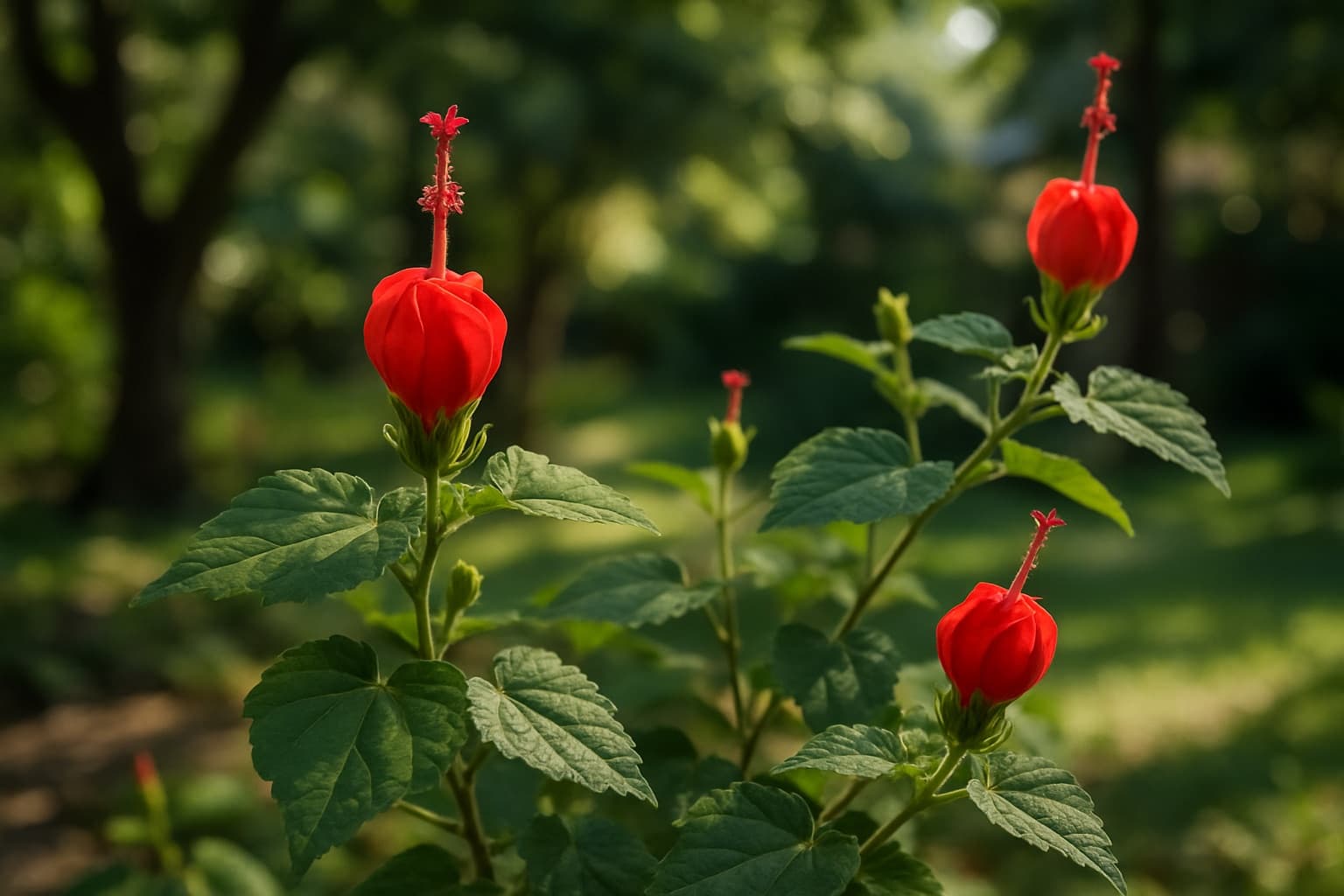
Is Turk's Cap Toxic to Dogs?
The short version
- Turk's Cap (Malvaviscus arboreus var. drummondii) is not on the ASPCA toxic plant list for dogs, cats, or horses.
- Native across the South Texas Plains (McAllen area) and much of Central Texas.
- One of the few heavy-blooming Texas natives that thrives in full shade, and a reliable fall hummingbird plant.
Quick answer
Turk's Cap (Malvaviscus arboreus var. drummondii) is not on the ASPCA Animal Poison Control Center toxic plant list for dogs, cats, or horses. It is not considered toxic to pets, which is part of why it works well in a shaded South Texas dog yard. As with any plant, a dog that eats a large amount can get mild stomach upset. If that happens, call the ASPCA Animal Poison Control Center at (888) 426-4435.
Turk's Cap is one of the few Texas natives that keeps blooming in part shade to full shade, which makes it useful under live oaks and in the shaded beds that most heavy bloomers skip. It also happens to be a plant dog owners do not need to worry about.
What the ASPCA says
Turk's Cap (Malvaviscus arboreus var. drummondii) does not appear on the ASPCA Animal Poison Control Center toxic plant list for dogs, cats, or horses. That list is checked against the current ASPCA database, and Turk's Cap returns no match under either its common or scientific name.
The usual caveat applies: a dog that eats a large quantity of any plant material can get mild GI upset. Turk's Cap produces small red fruit that birds eat, and while the plant is not on the toxic list, a dog that gorges on fallen fruit could get a temporary upset stomach the same way it might with any fruit.
Why Turk's Cap earns a spot in a South Texas dog yard
Turk's Cap is native and widespread across much of Texas, per the Lady Bird Johnson Wildflower Center, and it is especially common in the South Texas Plains (McAllen area), the Hill Country, the Houston area, and Central Texas shade gardens. It is a perennial shrub, typically three to six feet tall, named for its red flowers that never fully open, twisting instead into a shape that resembles a turban.
It blooms heavily from summer through fall and is one of the most reliable hummingbird plants in Texas, with ruby-throated hummingbirds feeding on it heavily during fall migration. The small red fruit that follows is edible and draws birds as well. Turk's Cap is extremely tolerant of part shade to full shade, which is unusual for a heavy-blooming native, and it also handles heat and drought once established, making it one of the few Texas natives that thrives under live oaks.
| Plant | Dog Safe? | Notes |
|---|---|---|
| Turk's Cap (Malvaviscus arboreus var. drummondii) | Yes | Not on ASPCA toxic plant list; Texas native, thrives in part shade to full shade, reliable hummingbird plant |
| Toxic shade shrub it can replace: Azalea | No | Azalea (Rhododendron spp.) is toxic to dogs per the ASPCA (grayanotoxins); Turk's Cap is a dog-safer shade bloomer for a similar shaded bed, though bloom season and flower shape differ |
If something goes wrong
ASPCA Animal Poison Control Center: (888) 426-4435 (24/7, fee may apply). Have the plant name ready when you call.
Checking more than one plant? See the full list of plants toxic to dogs and cats, with native alternatives, covering every plant on the ASPCA list.
See a finished plan for a yard like this
Find our guides useful? Add Pollinator Patch as a preferred source on Google and articles like this one will show up higher in your own search results.