Is Wax Myrtle Toxic to Dogs?
The short version
- Wax Myrtle (Morella cerifera) is not on the ASPCA toxic plant list for dogs, cats, or horses.
- Native to the Texas Gulf Coast Prairie (Houston area), per the Lady Bird Johnson Wildflower Center.
- A fast, evergreen screening alternative to toxic Oleander, tolerant of wind, salt spray, and poor drainage.
Quick answer
Wax Myrtle (Morella cerifera), also called Southern Wax Myrtle or Southern Bayberry, is not on the ASPCA Animal Poison Control Center toxic plant list for dogs, cats, or horses. It is not considered toxic to pets, which makes it a solid native screening choice for Gulf Coast yards with dogs. As with any plant, a dog that eats a large amount can get mild stomach upset. If that happens, call the ASPCA Animal Poison Control Center at (888) 426-4435.
Wax Myrtle earns its keep on the Texas Gulf Coast: it grows fast, stays evergreen, and shrugs off the wind, salt spray, and heavy clay that stall out less tolerant shrubs. For a homeowner with a dog and a bare property line, that combination of speed, toughness, and a clean bill of health from the ASPCA makes it worth a look before reaching for a more common but riskier screening plant.
What the ASPCA says
Wax Myrtle (Morella cerifera, sometimes listed under its older name Myrica cerifera) does not appear on the ASPCA Animal Poison Control Center toxic plant list for dogs, cats, or horses. That means there is no documented systemic toxin identified for those species. You can verify at aspca.org/pet-care/animal-poison-control/toxic-and-non-toxic-plants.
The usual caveat still applies. A dog that eats a large quantity of any plant material, leaves, bark, or the small waxy berries, can end up with mild GI upset the way it might after overdoing it on any yard debris. That is ordinary plant-matter upset, not a sign of a toxin specific to Wax Myrtle.
Why Wax Myrtle earns a spot in a Gulf Coast dog yard
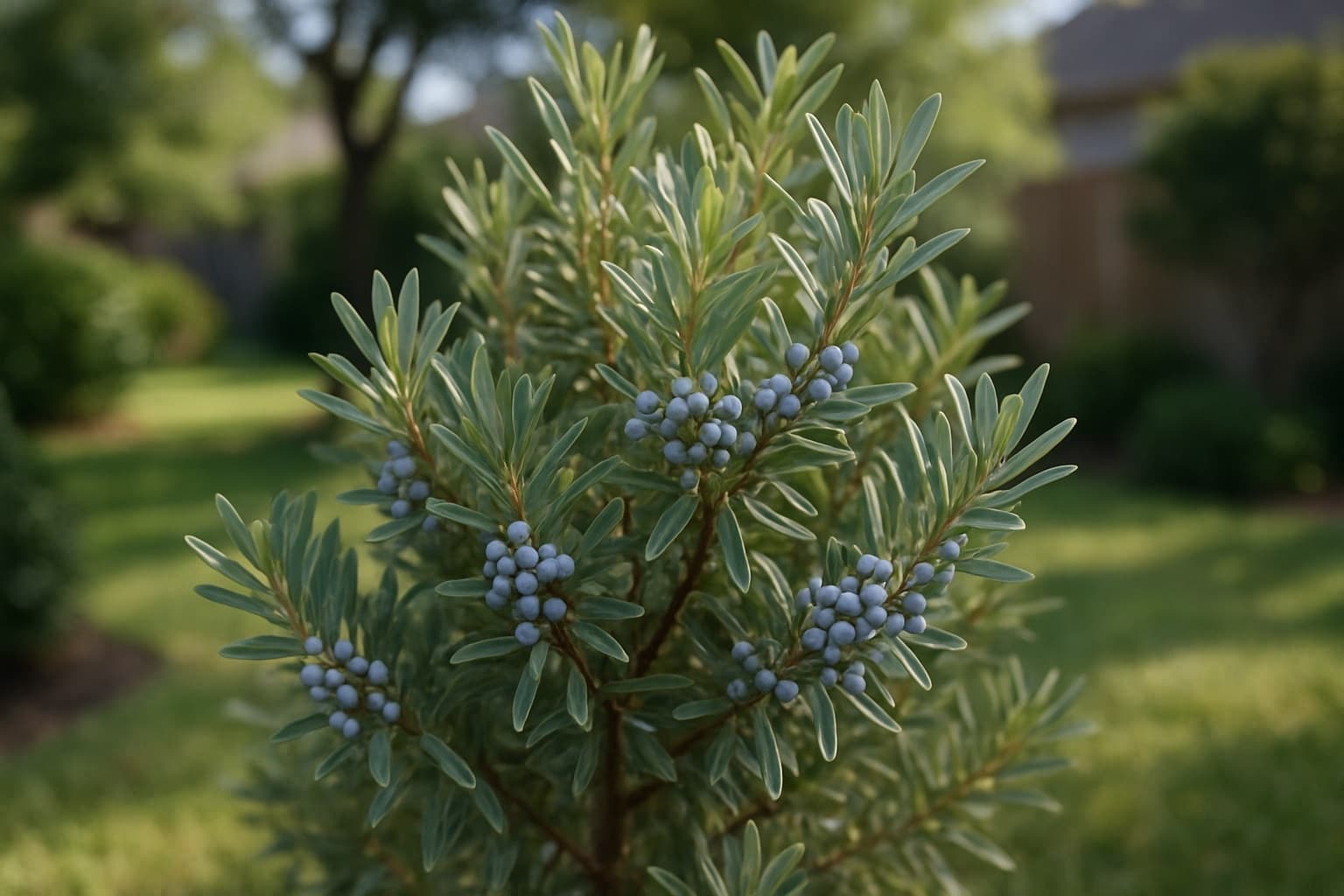
Wax Myrtle is native to the coastal and eastern United States, including the Gulf Coast Prairie (Houston area), per the Lady Bird Johnson Wildflower Center. It grows into a fast, evergreen large shrub or small tree, typically 10 to 20 feet, with aromatic gray-green leaves that smell like bay or citrus when crushed. In fall it produces small waxy blue-gray berries that birds eat heavily, especially yellow-rumped warblers, which depend on the waxy coating for winter fat reserves.
It handles full sun to part shade and tolerates wind, salt spray, poor drainage, and heat about as well as any shrub sold in the region, which is why it shows up so often as a workhorse screening plant along Gulf Coast property lines. For a dog owner, that toughness paired with a clean ASPCA record makes it a straightforward swap for a toxic screening shrub in the same spot.
| Plant | Dog Safe? | Notes |
|---|---|---|
| Wax Myrtle (Morella cerifera) | Yes | Not on the ASPCA toxic plant list; Gulf Coast native, fast evergreen screening, feeds wintering birds |
| Toxic shrub it can replace: Oleander | No | Oleander is toxic to dogs per the ASPCA, top to bottom; Wax Myrtle fills the same dense evergreen screening role |
If something goes wrong
ASPCA Animal Poison Control Center: (888) 426-4435 (24/7, fee may apply). Have the plant name ready when you call.
Checking more than one plant? See the full list of plants toxic to dogs and cats, with native alternatives, covering every plant on the ASPCA list.
See a finished plan for a yard like this
Find our guides useful? Add Pollinator Patch as a preferred source on Google and articles like this one will show up higher in your own search results.