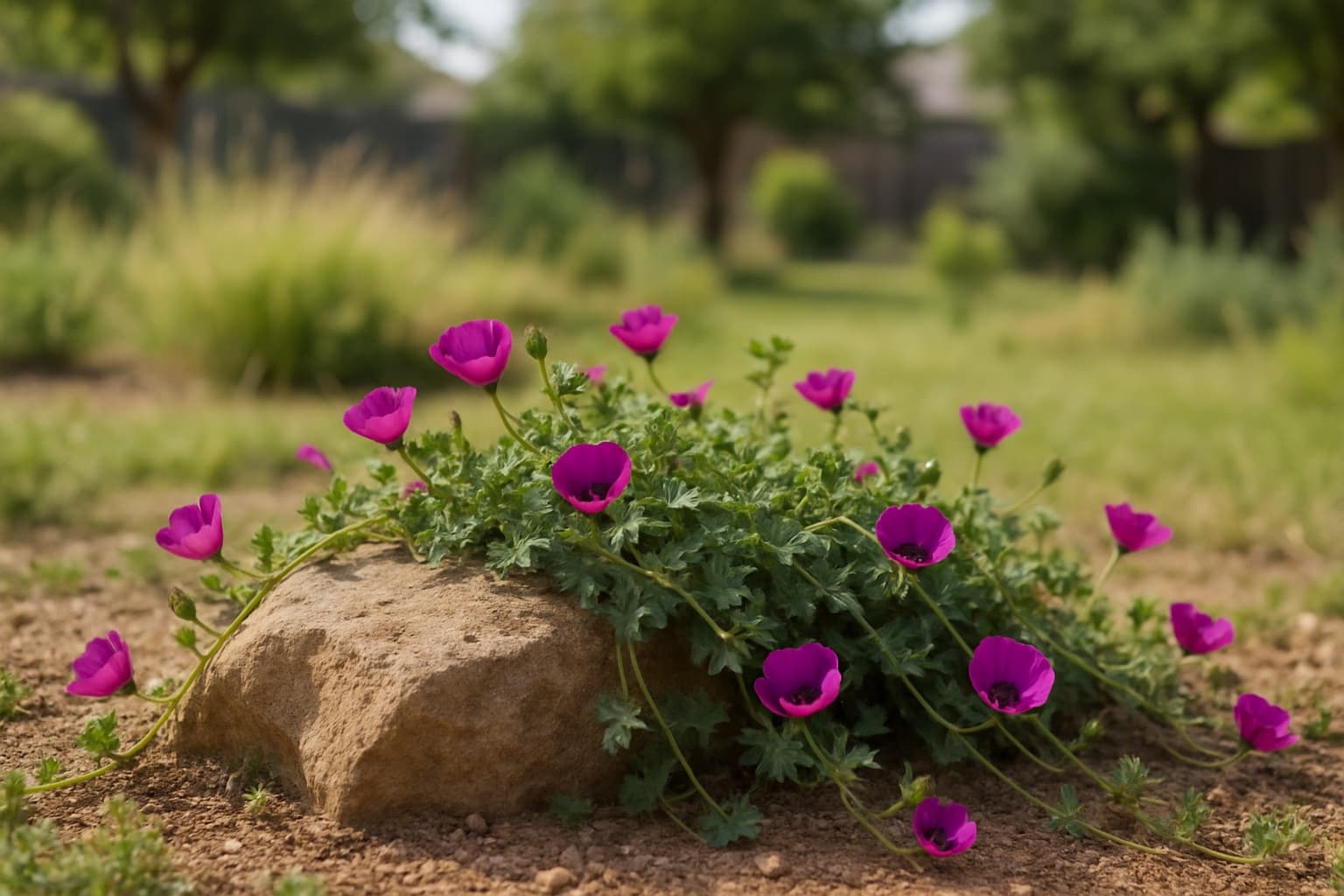
Is Winecup Toxic to Dogs?
The short version
- Winecup (Callirhoe involucrata) is not on the ASPCA toxic plant list for dogs, cats, or horses.
- Native across the Texas High Plains / Llano Estacado (Lubbock area) and much of the state.
- A low, sprawling, deep-taprooted wildflower that reads as an intentional, tidy planting.
Quick answer
Winecup (Callirhoe involucrata) is not on the ASPCA Animal Poison Control Center toxic plant list for dogs, cats, or horses. It is not considered toxic to pets, which is part of why it works well in a Texas front yard with dogs. As with any plant, a dog that eats a large amount can get mild stomach upset. If that happens, call the ASPCA Animal Poison Control Center at (888) 426-4435.
Winecup is a low, sprawling wildflower with a deep taproot that lets it shrug off Texas drought once it is established. It stays close to the ground, spreads wide instead of tall, and covers itself in cup-shaped magenta-purple blooms for weeks in spring. For a dog owner looking for a native groundcover that will not end up on a poison control call, it is an easy one to plant.
What the ASPCA says
Winecup (Callirhoe involucrata) does not appear on the ASPCA Animal Poison Control Center toxic plant list for dogs, cats, or horses. That standard means there is no documented systemic toxin for those species. You can verify at aspca.org/pet-care/animal-poison-control/toxic-and-non-toxic-plants.
The usual caveat still applies: a dog that eats a large quantity of any plant material, winecup included, can end up with mild, temporary GI upset. That is a general digestive response to volume, not a sign of toxicity, and it is worth mentioning to your vet if it does not clear up on its own within a day.
Why Winecup earns a spot in a High Plains dog yard
Winecup is native and widespread across most of Texas, and the Lady Bird Johnson Wildflower Center lists it as a classic prairie and roadside wildflower of the state, especially common across the High Plains / Llano Estacado (Lubbock area). In that landscape it grows low, typically only 4 to 8 inches tall, while spreading 2 to 3 feet wide from a single plant. Its magenta-purple, cup-shaped flowers open heavily in spring and can carry into early summer, and native bees work them steadily while they last.
Once established, its deep taproot carries it through dry stretches with little supplemental water, which makes it a practical groundcover for a rock garden, a border, or a spot where it can trail over a low wall. Because it stays low and spreads in a controlled mat rather than shooting up or reseeding into a scraggly patch, it reads as an intentional planting instead of a stray weed, which makes it an easy HOA-friendly choice for a front bed.
If something goes wrong
ASPCA Animal Poison Control Center: (888) 426-4435 (24/7, fee may apply). Have the plant name ready when you call.
Checking more than one plant? See the full list of plants toxic to dogs and cats, with native alternatives, covering every plant on the ASPCA list.
See a finished plan for a yard like this
Find our guides useful? Add Pollinator Patch as a preferred source on Google and articles like this one will show up higher in your own search results.