"Leave the Leaves" Is Good Ecology and Bad Instructions
The short version
- Iowa State University Extension puts recommended mulch depth in planting and flower beds at 2 to 4 inches. Leaves count as mulch.
- Michigan State University research, cited by Virginia Cooperative Extension, found a mulching mower can process up to 6 inches of leaves at a time without harming turf.
- A long-running MSU Hancock Turfgrass Research Center study applied 100 lbs of dry leaves per 1,000 sq ft to Kentucky bluegrass with no significant harm, and maple-mulched plots had significantly fewer broadleaf weeds than unmulched checks.
- The "wait until it is consistently 50 degrees" spring cleanup rule is folklore. Xerces’ own guidance uses phenological cues instead, such as apple and pear blossoms fading.
- No university extension we checked publishes a numeric depth at which leaves kill turf. Jordan and Schulze (2020, Journal of Medical Entomology) did find roughly three times as many blacklegged tick nymphs where homeowners dumped leaves at the lawn and woodland edge.
Quick answer
The ecology behind "leave the leaves" is sound. The instruction is not, because it almost never arrives with a depth or a place. Leaves belong in your planting beds, where Iowa State University Extension puts useful mulch depth at 2 to 4 inches. On turf, shred them in place with a mower rather than letting them sit whole: Michigan State University research found a mulching mower handles up to 6 inches of leaves at a time without harming the lawn. The version that fails is a whole-leaf blanket left on grass all winter.
Every October the same three words go around, and they are correct. Then in April a lot of people are looking at a dead grey patch where their lawn used to be, deciding that native gardening advice does not work. The problem is not the ecology. The problem is that a slogan is not an instruction.
What is actually in there
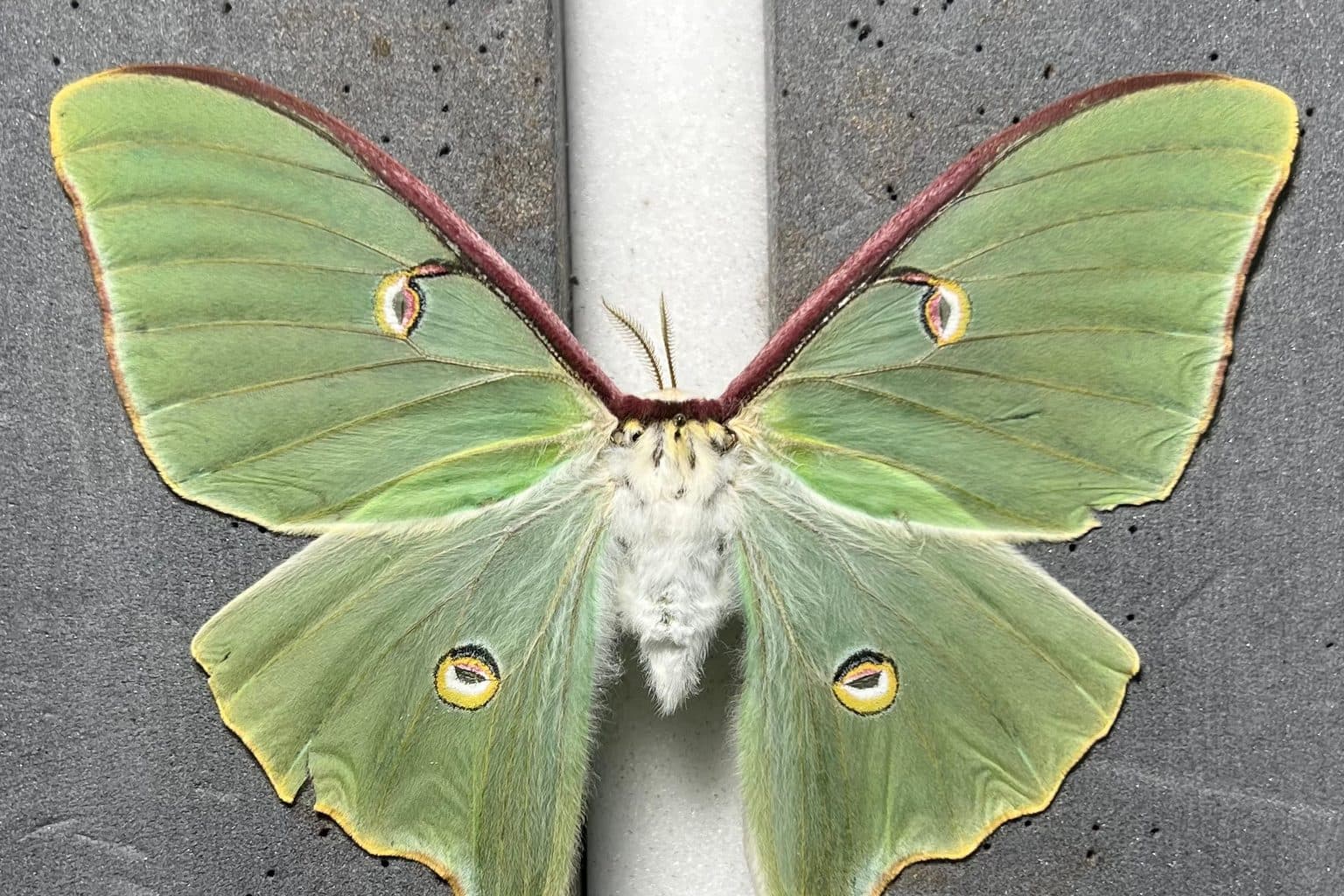
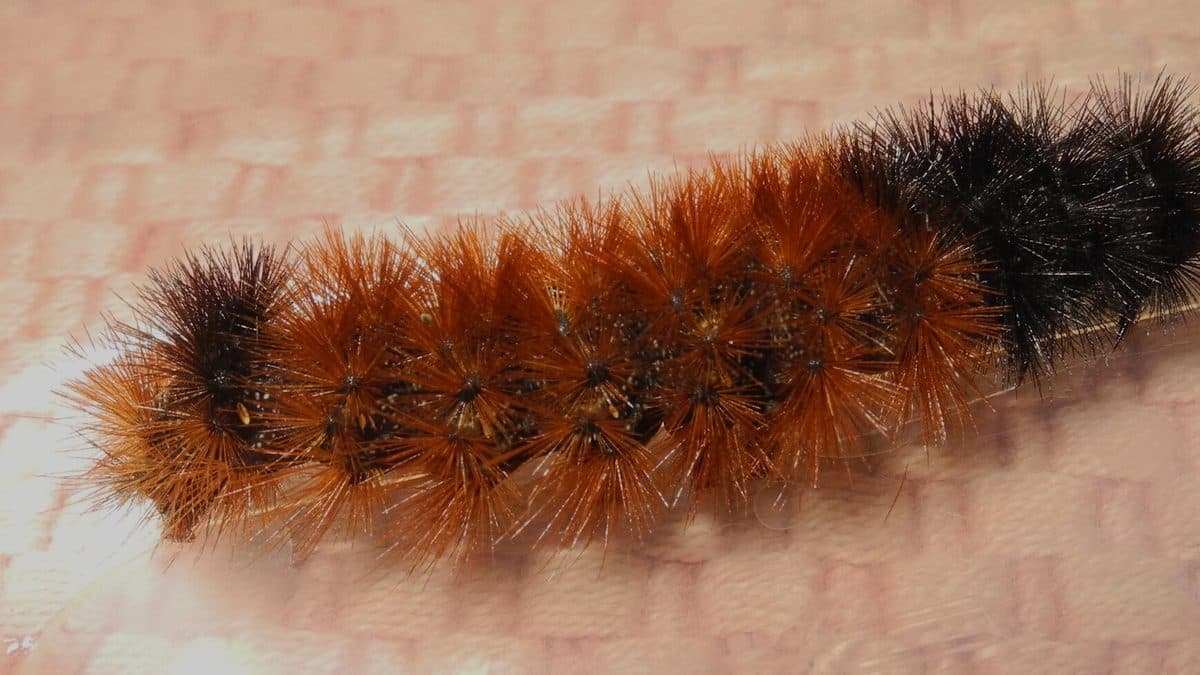
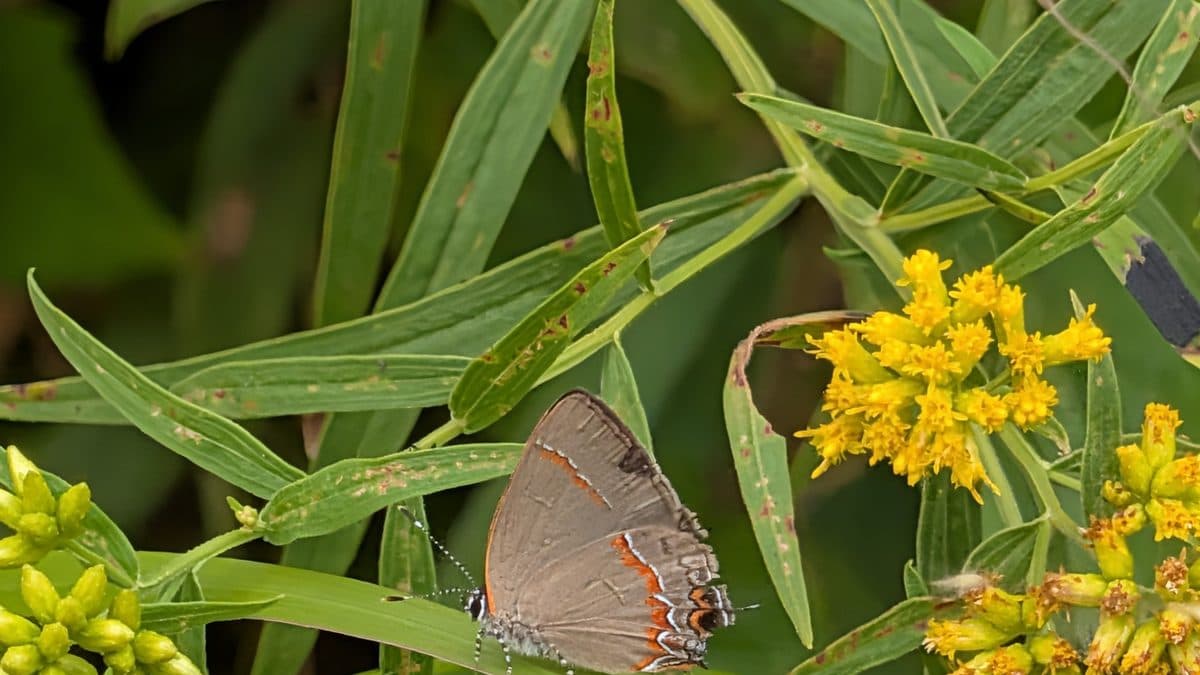
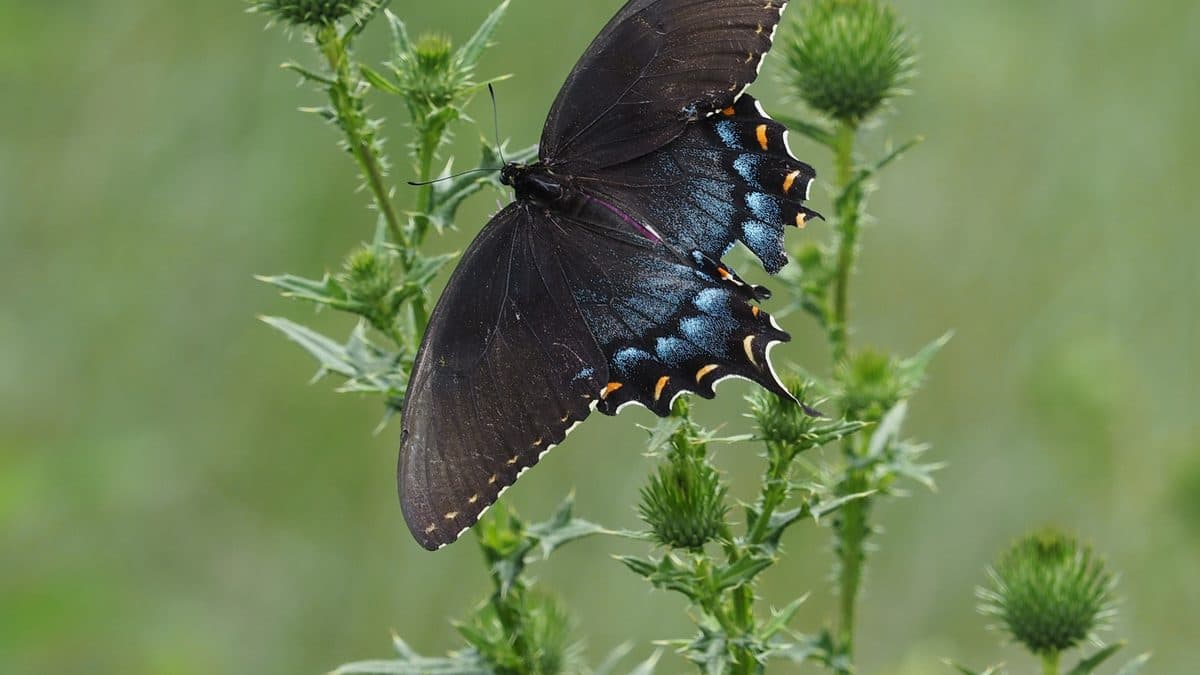
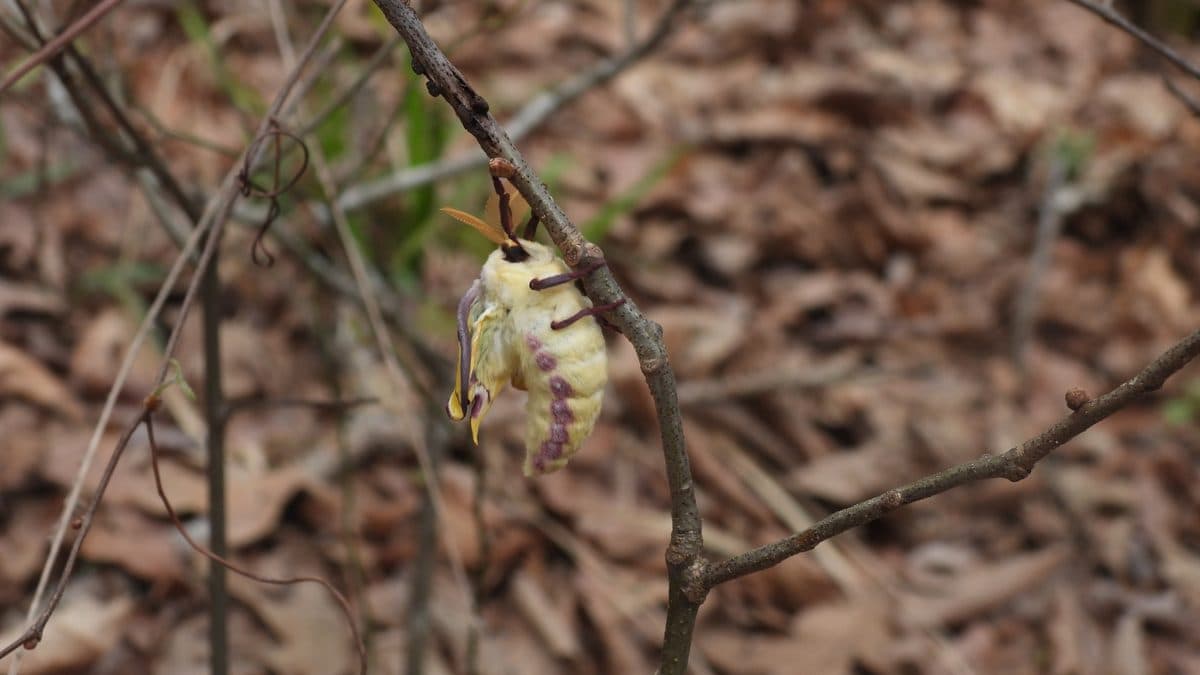
The case for leaf litter is real and specific. The Xerces Society's guidance on leaving the leaves (opens in new tab) names the residents: luna moths and swallowtail butterflies overwinter as cocoons and chrysalises camouflaged among dead leaves, great spangled fritillary and woolly bear caterpillars tuck into leaf piles, and the red-banded hairstreak lays its eggs on fallen oak leaves, which then become the caterpillars' food in spring.
That last one is worth sitting with. For the red-banded hairstreak, the fallen leaf is not shelter. It is the nursery and the groceries. Bagging it in November is not tidying, it is removing next year's butterflies.
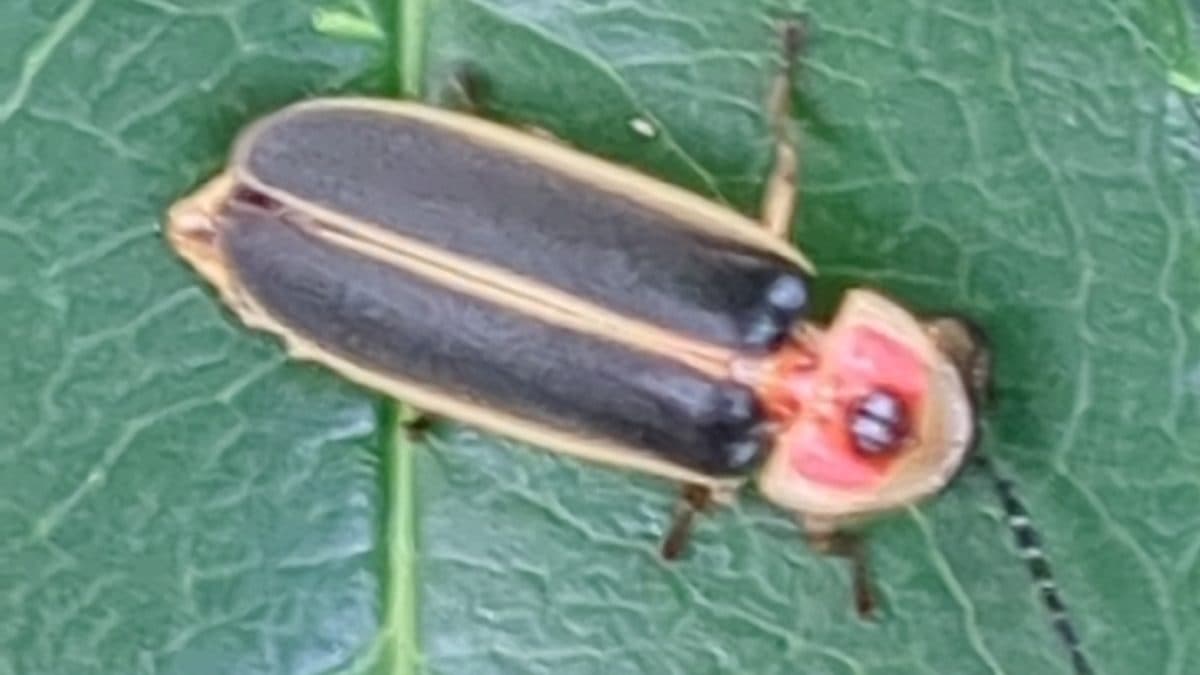
Fireflies belong in the same conversation, with a caveat. Clemson Extension notes that fireflies spend about 95 percent of their lives as larvae, hunting in moist ground debris. Worth being straight about the detail: Illinois Extension describes firefly larvae as overwintering typically in the soil rather than in the leaf layer itself, so the sources are not unanimous on exactly where they sit. Either way, a bare, blown, compacted yard is not it.
Two numbers the slogan is missing
In beds, 2 to 4 inches. Iowa State University Extension puts recommended mulch depth in planting and flower beds at 2 to 4 inches. Leaves are mulch. That is the number, and it is the same number you would use for shredded bark.
On turf, shred rather than smother.Michigan State University research, cited in Virginia Cooperative Extension's publication on lawn leaf management (opens in new tab), found a mulching mower can process up to 6 inches of leaves at a time without harming the turf.
The turf research is better than most people expect. A long-running study at Michigan State University's Hancock Turfgrass Research Center applied oak and maple leaves to Kentucky bluegrass at 100 pounds of dry leaves per 1,000 square feet, roughly ankle height, mulched in with a mower. Over years of data the researchers found no significant harm to turf color or soil pH, and the maple-mulched plots actually showed better turf quality and significantly fewer dandelions and broadleaf weeds than the plots where leaves were removed. A separate study involving Purdue's turfgrass program, published by Acosta-Martinez and colleagues in Biology and Fertility of Soils in 1999, applied up to 4,000 pounds of maple leaves per acre to ryegrass turf and reported no undesirable effects on quality, color, growth, thatch, soil pH, weeds or disease.
So leaves are not the enemy of a lawn. Whole leaves left in a mat are a different thing from shredded leaves worked in, and the slogan does not distinguish between them.
A number nobody publishes
The 50 degree rule is folklore
You have read some version of this: wait to clean up until temperatures are consistently above 50 degrees, or above 50 for a week straight, so the insects can emerge. It gets repeated as though it came from a lab.
It did not. Xerces' own guidance on not rushing spring cleanup (opens in new tab) does not use a temperature threshold at all. It uses what the season is visibly doing: apple and pear blossoms fading, the point where it is safe to put tomatoes in, lawns growing again. University of Missouri Extension does repeat a 50 degree figure, but as informal practical advice with no research attached to the number.
The reason a single temperature cannot be right is that emergence is not governed by one threshold. Different species come out on different accumulated warmth and day length. Some native bees fly only in March. Others are not out until late summer. A flat number cannot describe all of them, and a gardener who treats it as a rule is going to feel either falsely reassured or needlessly stuck.
Use the phenological cues instead. They are free, they are local by definition, and they are what the organization behind the campaign actually recommends.
The objection you are going to hear
Someone will say leaves bring ticks, and there is a real study behind that worry rather than pure squeamishness. Research by Robert Jordan and Terry Schulze, published in the Journal of Medical Entomology in 2020, looked at what happens where homeowners rake or blow leaves to the edge of the woods. Those dumping areas had leaf litter two to three times deeper than natural edge and forest plots, and about three times as many blacklegged tick nymphs the following spring.
Read that carefully, because it argues for placement rather than removal. The problem was concentrating leaves into deep piles at the woodland edge, which is exactly where people and pets walk. Spreading leaves at bed depth in planted areas is not the treatment that produced the tick result.

What to actually do
- Beds get the leaves, at 2 to 4 inches. Whole leaves are fine here. Keep them pulled back a little from stems and trunks.
- Lawn gets the mower. Shred leaves in place. Up to about 6 inches at a time is within what the research covers, and the shredded material feeds the soil.
- Do not build deep piles at the woodland edge, especially along paths, patios, and anywhere the dog goes.
- If you have more leaves than beds, stockpile the surplus somewhere out of the way rather than bagging it, and use it as mulch next season.
- In spring, watch the plants rather than the thermometer. When the early blossoms are going over and the lawn is growing again, the overwintering insects have had their window.
- Keep a clean edge. A defined bed line is what makes a leaf-mulched front yard read as deliberate rather than neglected. More on that in the three design cues HOAs actually notice.
None of that is harder than raking. It is just specific, which is what the slogan never was.
People also ask
Should I leave leaves on my lawn over winter?
Not whole and not in a mat. Michigan State University research found a mulching mower can process up to 6 inches of leaves at a time without harming turf, so the better move on grass is to shred them in place. Virginia Cooperative Extension notes a thick whole-leaf layer blocks sunlight and traps moisture, which raises disease risk. Whole leaves belong in beds, at 2 to 4 inches per Iowa State University Extension.How deep should leaf mulch be in a garden bed?
Iowa State University Extension recommends 2 to 4 inches of mulch in planting and flower beds. Leaves count as mulch for this purpose. Pull the layer back slightly from plant stems and tree trunks.Is it true you should wait until it is 50 degrees to clean up leaves?
That rule is not published by the Xerces Society or, as far as we could verify, by any university extension as a research finding. Xerces' own spring cleanup guidance uses visible seasonal cues instead: apple and pear blossoms fading, the point when it is safe to plant tomatoes, and lawns growing again. Insect emergence depends on accumulated warmth and day length that vary by species, so one flat temperature cannot describe them all.What insects overwinter in leaf litter?
The Xerces Society names luna moths and swallowtails, which overwinter as cocoons and chrysalises camouflaged among dead leaves, plus great spangled fritillary and woolly bear caterpillars that tuck into leaf piles. The red-banded hairstreak lays eggs on fallen oak leaves, which its caterpillars then eat in spring.Do leaves attract ticks?
Deep piles can. A 2020 Journal of Medical Entomology study by Robert Jordan and Terry Schulze found that areas where homeowners dumped raked leaves at the lawn and woodland edge had leaf litter two to three times deeper and roughly three times as many blacklegged tick nymphs the following spring. The finding is about concentrating leaves into deep piles where people walk, not about mulching beds at normal depth.Know what is planted before you decide what to clear
Pollinator Patch tracks the plants in your yard and what each one needs season by season, so fall cleanup is a set of specific calls rather than one blanket rule applied everywhere.
See a finished plan for a yard like this
Find our guides useful? Add Pollinator Patch as a preferred source on Google and articles like this one will show up higher in your own search results.