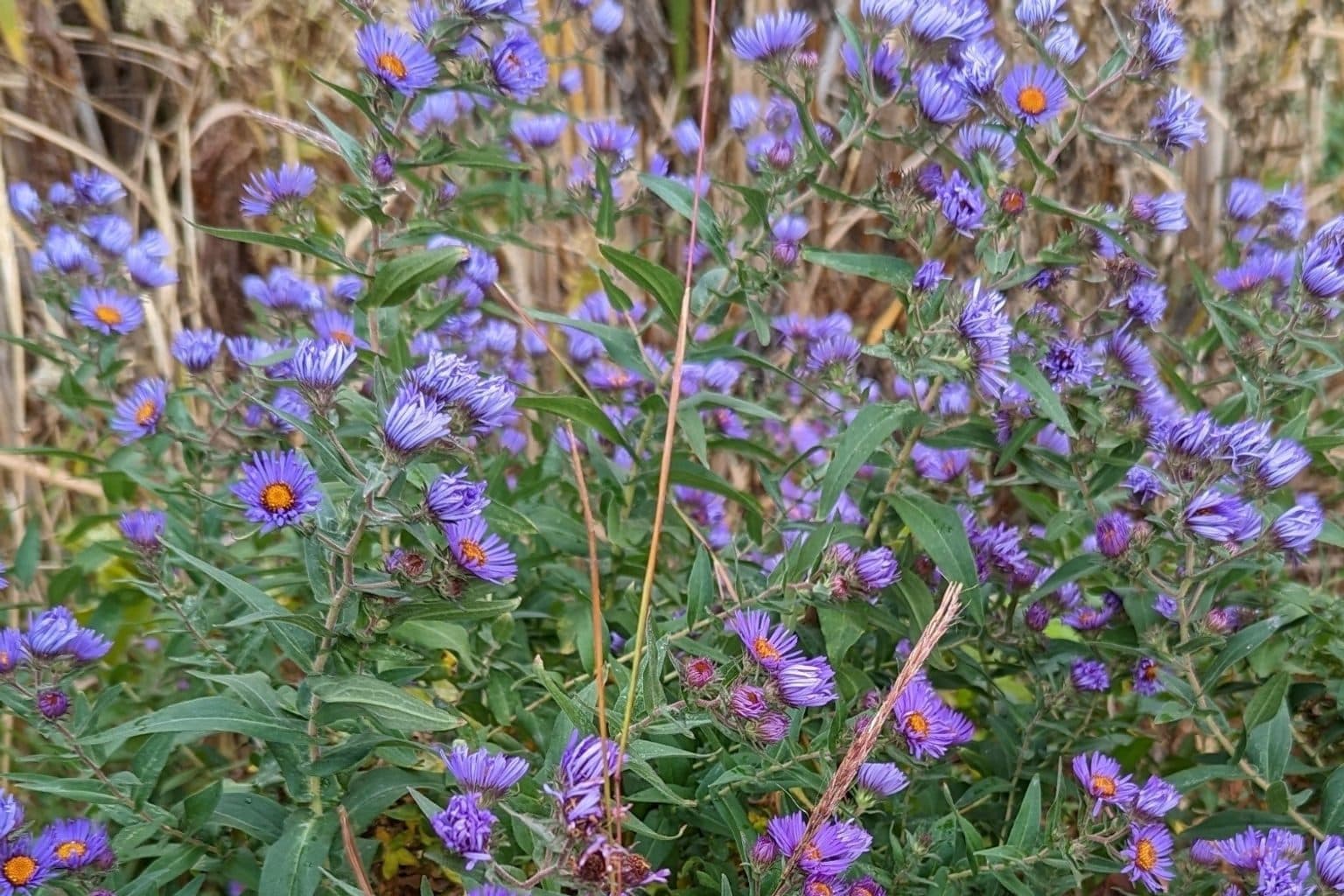
Mums vs. Native Asters: Where Mums Came From, and Six Asters to Plant Instead
Short answer
Garden mums are chrysanthemums, first cultivated in China as far back as the 15th century BC. Many fall mums do not come back: Iowa State University Extension says most florist mums will not survive the winter when planted outdoors in Iowa. Native asters bloom in the same weeks, return every year, and feed bees late in the season.
The short version
- Chrysanthemums were first cultivated in China as far back as the 15th century BC (Longwood Gardens), were brought to Japan around the Heian period, and were first adopted as the Japanese imperial family crest in the early Kamakura period (Nippon.com).
- Chrysanthemum is a short-day plant that flowers in response to the length of day versus the length of night (University of Missouri Integrated Pest Management).
- Most florist mums will not survive the winter when planted outdoors in Iowa, and garden mums planted in late summer or early fall often do not survive the winter (Iowa State University Extension).
- Chrysanthemum is toxic to dogs, cats, and horses per the ASPCA Animal Poison Control Center plant database.
- Late-flowering asters and goldenrod provide bee forage into September and October, and Bumble Bee Watch holds nearly 450 observations of bumble bees on asters (Xerces Society).
- Six native asters by ecoregion: New England aster (Minneapolis and St. Paul), Georgia aster (Atlanta), aromatic aster (Dallas), smooth blue aster (Denver), Douglas aster (Seattle), and Pacific aster (San Francisco Bay Area), all perennials per the Lady Bird Johnson Wildflower Center.
Quick answer
Garden mums are chrysanthemums, a flower first cultivated in China as far back as the 15th century BC. People buy them every fall because they are covered in color right when the rest of the yard is fading. The catch is winter: Iowa State University Extension says most florist mums will not survive the winter when planted outdoors in Iowa. A native aster blooms in the same weeks, comes back every year, and feeds bees at the end of the season. Six to plant, one for each region, are below.
This is the longer version of a short video I made about skipping mums this fall: where mums came from, why they are so easy to love, and six native asters to plant in their place, each matched to the part of the country where it actually belongs.
Where mums came from
Longwood Gardens notes that chrysanthemums were first cultivated in China as far back as the 15th century BC, and that grafting and training them into artful forms is still honored every year during festivals in both China and Japan.
According to Nippon.com's history of the flower, chrysanthemums were grown for medicinal and culinary purposes in China since ancient times and were brought to Japan around the Heian period (794 to 1185). The chrysanthemum was first adopted as the Japanese imperial family crest in the early Kamakura period (1185 to 1333) through the influence of Emperor Go-Toba. During the Meiji period, a chrysanthemum with 16 double petals was established as the official imperial crest, and the design was defined in detail in the 1926 Imperial Household Ceremony Regulations.
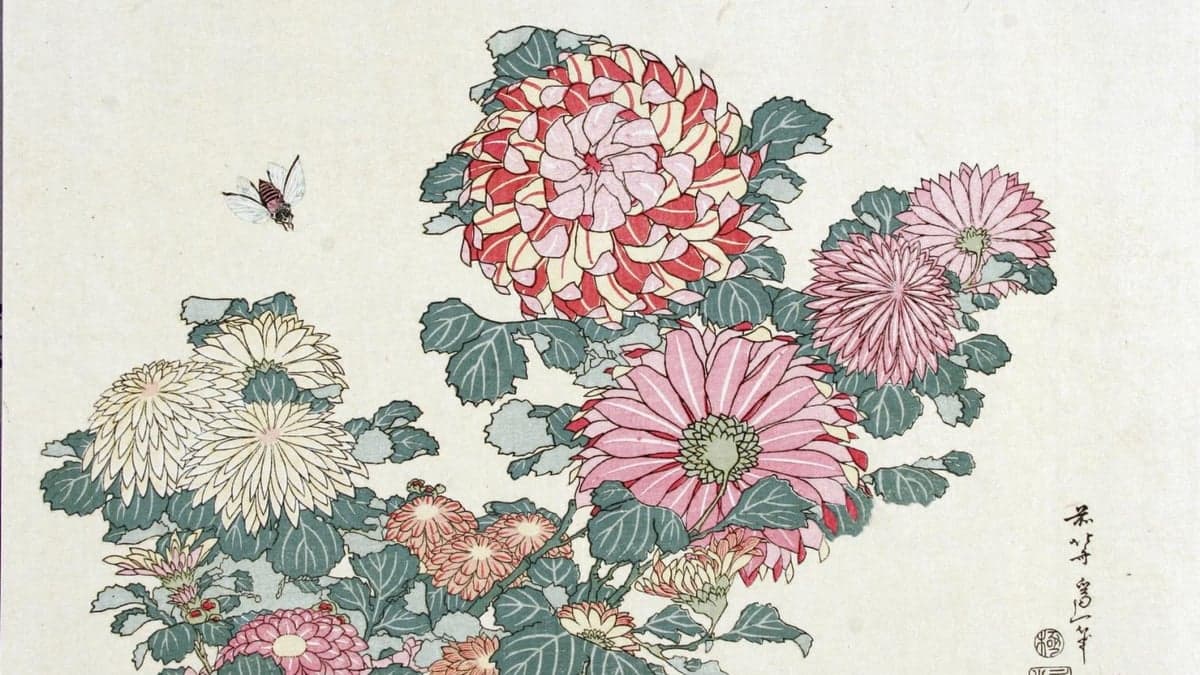
Centuries of breeding are why the flowers look the way they do now. The National Chrysanthemum Society USA organizes its gallery of show mums into 13 numbered bloom classes, plus separate categories for bonsai, sprays, trees, and cascades.
Why people buy mums every fall
The timing is built into the plant. University of Missouri Integrated Pest Management describes chrysanthemum as a good example of a short-day plant, one that flowers in response to the length of day versus the length of night. That is why mums are at their best as summer turns to fall.
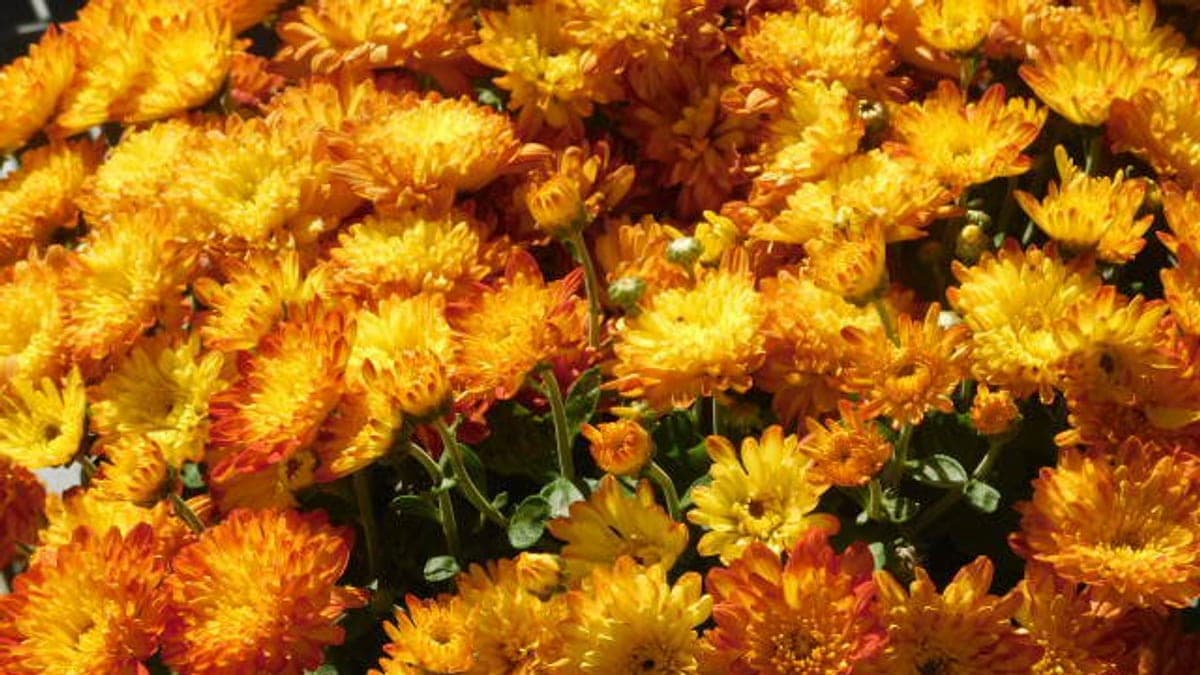
The appeal is easy to understand. A mum is a full dome of orange, yellow, red, or purple that fits in a pot on the front step, and it looks finished the day you bring it home. For anyone who wants the front of the house to look cared for in October, that is hard to argue with.
The catch: most fall mums do not make it through winter
Iowa State University Extension's guide to growing chrysanthemums is direct about it: "Most florist mums will not survive the winter when planted outdoors in Iowa." Garden mums are more cold-hardy than florist mums, but the same page says garden mums "planted in late summer or early fall often do not survive the winter."
The reason is in the roots. Per Iowa State, chrysanthemums have shallow, fibrous roots, and repeated freezing and thawing of the soil in winter can heave plants out of the ground. That guidance is written for Iowa winters. If you do want a mum to come back, the same page says spring is the best time to plant garden mums, and recommends several inches of straw or pine needles over the plants in late November or early December.
My own view is simpler. If a plant is going to be a one-season decoration that you buy again next year, I would rather give that spot to something that comes back.
Mums and pets
Why plant a native aster instead
Native asters bloom in the same late stretch of the year, and all six below are perennials, per the Lady Bird Johnson Wildflower Center. Plant one this fall and it comes back on its own next year, and the year after that.
All six are in the genus Symphyotrichum. The Wildflower Center lists the older Aster names as synonyms (Georgia aster carries Aster georgianus, for example), so you may see either name on a plant tag.
The bigger reason is what asters do for pollinators at the end of the season. The Xerces Society says late-flowering species in the aster family such as goldenrod and asters provide forage into September and October. In the same article, Xerces reports nearly 450 Bumble Bee Watch observations of bumble bees on asters, with at least 26 different bumble bee species recorded on goldenrod and asters, including the rusty patched bumble bee.
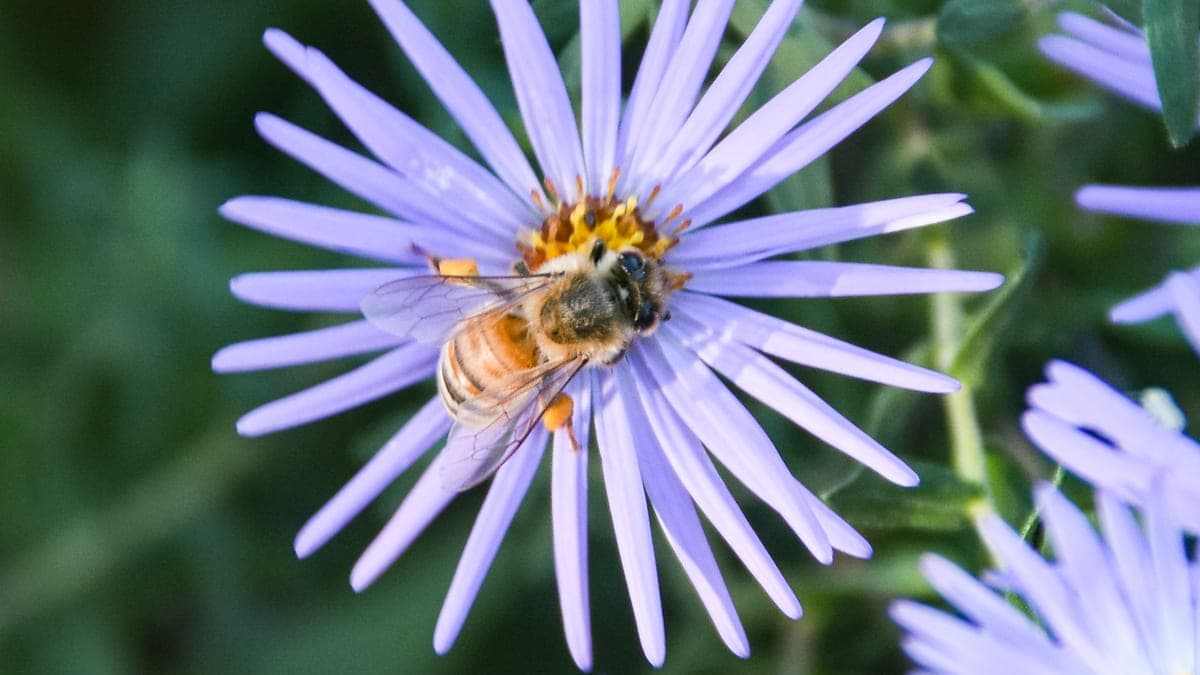
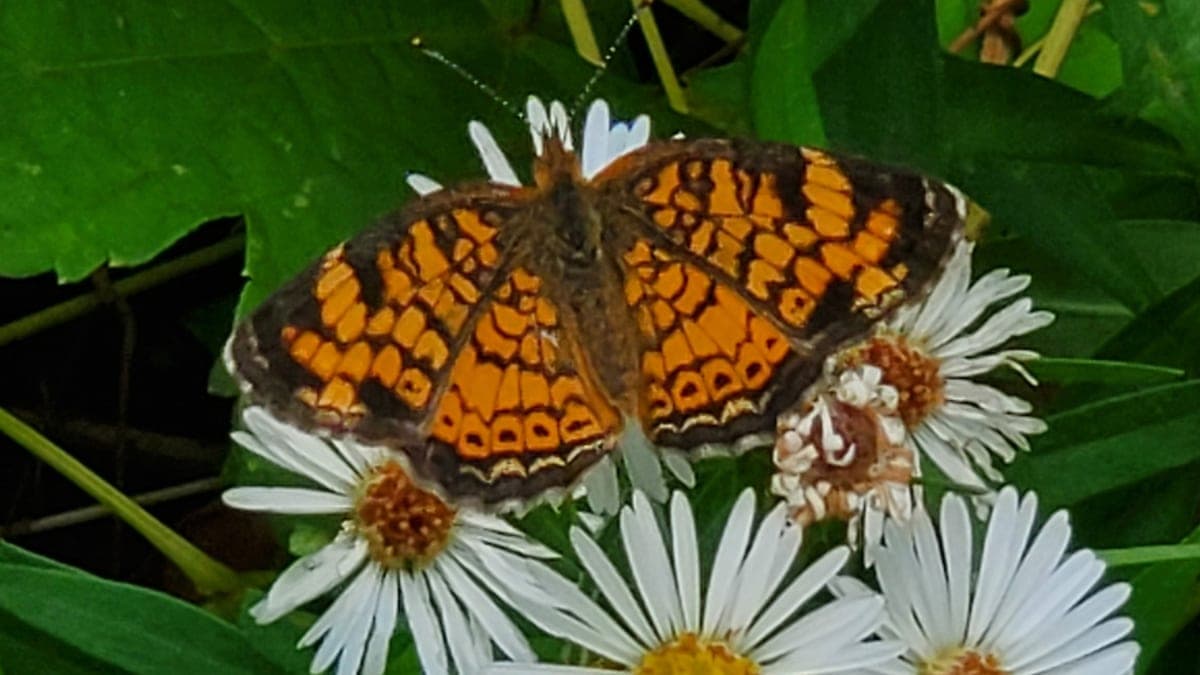
Asters feed caterpillars too. The Wildflower Center lists New England aster as a larval host for the pearl crescent and checkerspot butterflies, and Butterflies and Moths of North America lists smooth-leaved true asters among the pearl crescent's caterpillar hosts.
Six native asters to plant instead, by region
An aster is only a good pick if it is native where you live, so each one below is matched to a single EPA Level III ecoregion and a city inside it. Ecoregion membership comes from the Pollinator Patch plant database. Native range, bloom months, and height come from the Lady Bird Johnson Wildflower Center. If your city is not on the list, look up your own ZIP code, because the right aster depends on your ecoregion. Each section also links to the species' county-level map from the Biota of North America Program, if you want to see where it has been recorded.
New England aster
North Central Hardwood Forests, Minneapolis and St. Paul area
New England aster (Symphyotrichum novae-angliae) is the tall one, up to about six feet, with purple rays around an orange-yellow center. The Wildflower Center gives its native range as Quebec and Maine to South Carolina, west to the eastern Great Plains, and in the mountains of Wyoming, Colorado, and New Mexico. It blooms August through October in moist soil and carries special value to native bees, bumble bees, and honey bees. Give it the back of a bed, where the height looks planned.
County-level map: Biota of North America Program (BONAP), view Symphyotrichum novae-angliae on bonap.net (opens in new tab)
Georgia aster
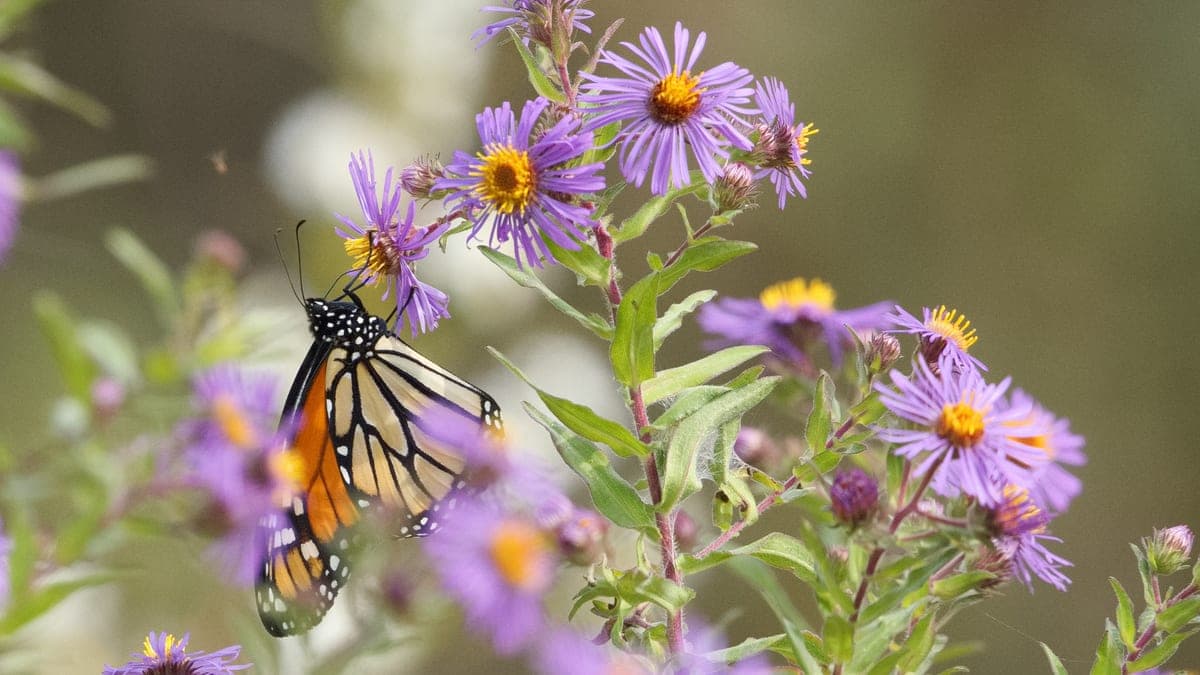
Piedmont, Atlanta area
Georgia aster (Symphyotrichum georgianum) is the Southeast's late show. The Wildflower Center lists it as native to Alabama, Georgia, Louisiana, North Carolina, and South Carolina, with purple to violet flowers in October and November on plants 18 inches to about three feet tall. It starts blooming later than any other aster on this list, which puts its flowers on the calendar right where fall mums are.
County-level map: Biota of North America Program (BONAP), view Symphyotrichum georgianum on bonap.net (opens in new tab)
Aromatic aster
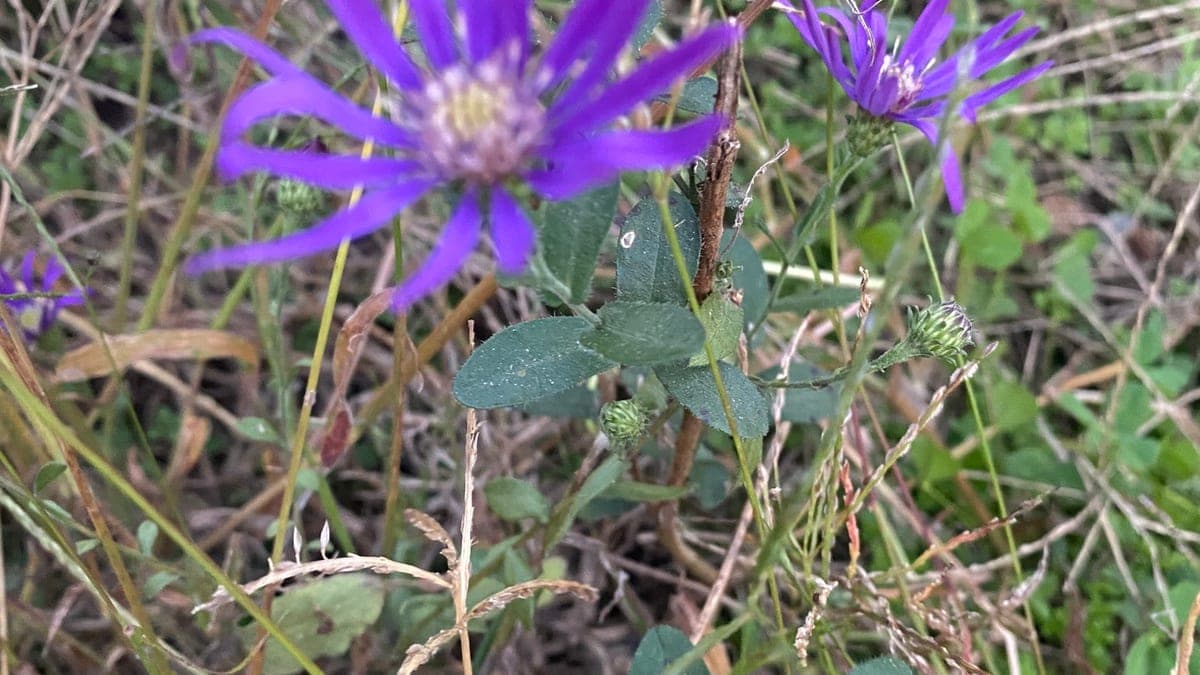
Texas Blackland Prairies, Dallas area
Aromatic aster (Symphyotrichum oblongifolium), which also goes by fall aster and shale aster, is the compact, tough choice. The Wildflower Center lists its range as Pennsylvania to North Carolina, west to northeastern Wyoming and Texas, and south to Tamaulipas in northeastern Mexico. It grows up to about three feet, often less, in sun or part shade and dry or moist soil, and blooms September through November with special value to native bees. In a Dallas yard that gets little summer water, that tolerance for dry soil is the point.
County-level map: Biota of North America Program (BONAP), view Symphyotrichum oblongifolium on bonap.net (opens in new tab)
Smooth blue aster
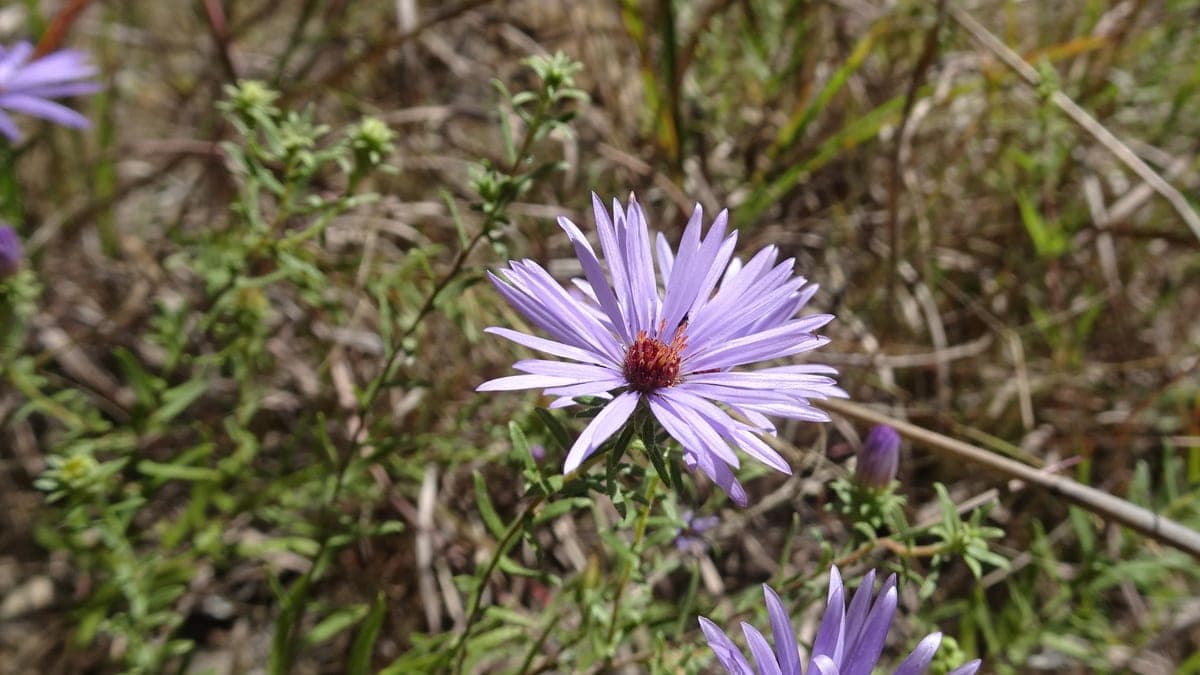
High Plains, Denver area
Smooth blue aster (Symphyotrichum laeve) has the widest range of the six. The Wildflower Center describes it as native throughout much of North America, except Florida, California, and the far north. It wants sun and dry soil, grows up to about four feet, and blooms August through October with fragrant flowers and special value to native bees. On the dry side of the Front Range, the dry-soil preference makes it an easy fit.
County-level map: Biota of North America Program (BONAP), view Symphyotrichum laeve on bonap.net (opens in new tab)
Douglas aster
Puget Lowland, Seattle area
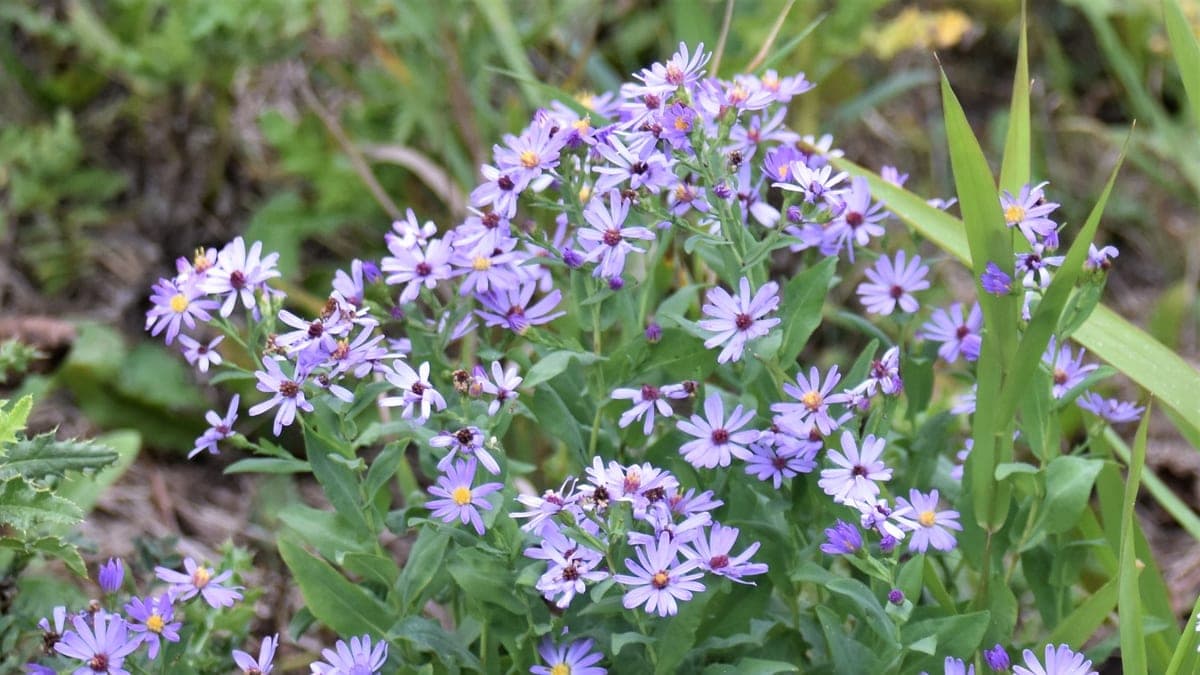
Douglas aster (Symphyotrichum subspicatum) is the one for the Pacific Northwest. The Wildflower Center lists it as native to Alaska, Idaho, Montana, Oregon, and Washington, blooming July through September and growing up to about four feet, with special value to native bees. It starts a month earlier than New England aster, so in Seattle it carries color from midsummer into early fall.
County-level map: Biota of North America Program (BONAP), view Symphyotrichum subspicatum on bonap.net (opens in new tab)
Pacific aster
Central California Foothills and Coastal Mountains, San Francisco Bay Area
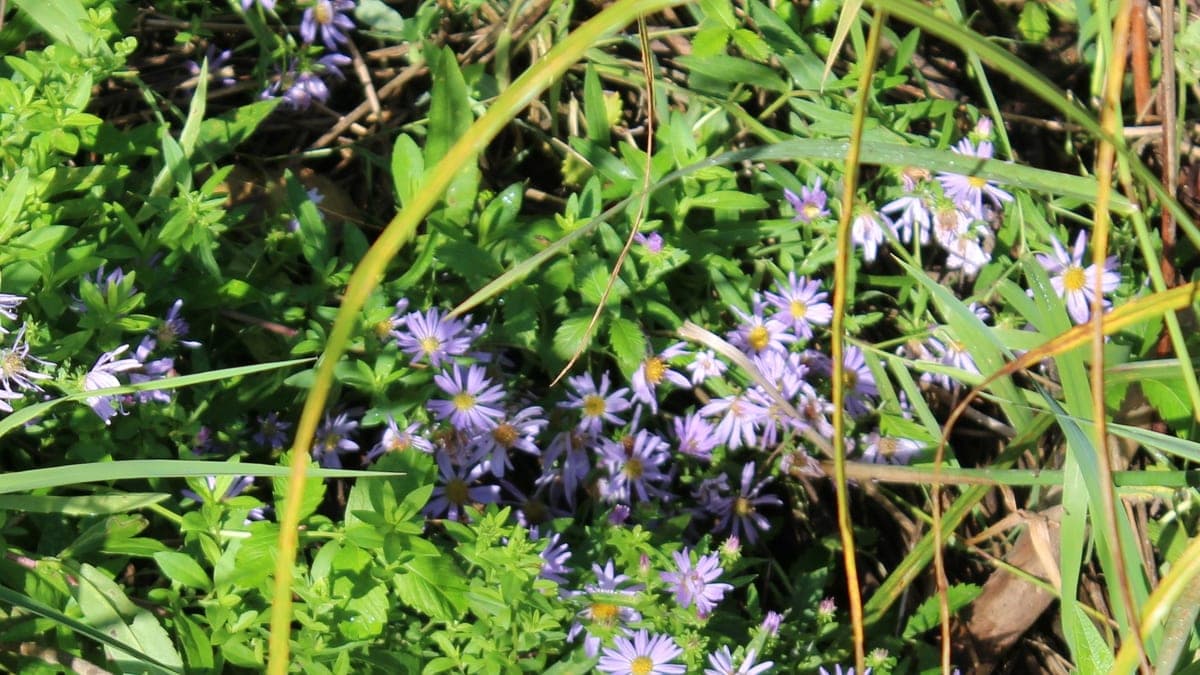
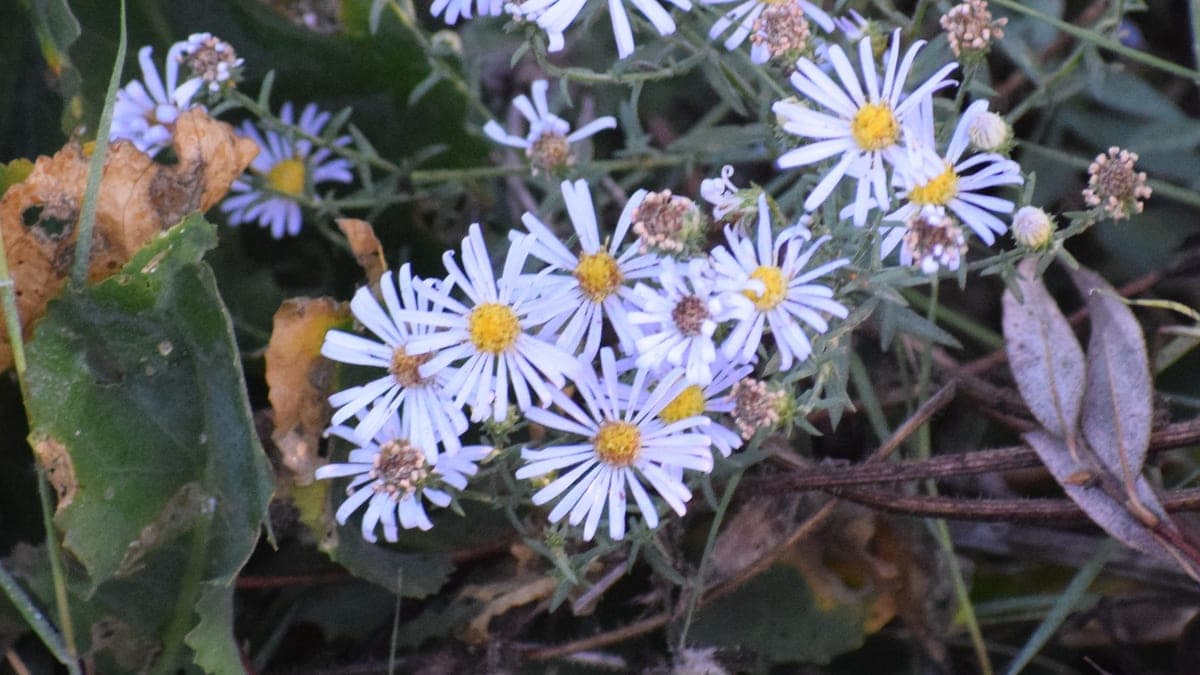
Pacific aster (Symphyotrichum chilense), also called common California aster, is the pick for the Bay Area. The Wildflower Center lists it as native to California, Oregon, and Washington, and to British Columbia in Canada. It blooms July through September, grows up to about four feet and often shorter, and carries special value to native bees.
County-level map: Biota of North America Program (BONAP), view Symphyotrichum chilense on bonap.net (opens in new tab)
Planting asters this fall
How late you can plant depends on your first frost date, which we walk through in when to plant native plants in fall before the first frost.
Once your asters finish blooming, leave the stems and the fallen leaves around them through winter. The Xerces Society suggests leaving newly fallen leaves, branches, logs, and loose dirt in the spaces you manage, because overwintering bumble bee queens need insulation and materials to build their overwintering sites. If a tidy look matters on your street, keep a clean edge along the bed so the standing stems look deliberate.
If you have pets and want to check the rest of the yard, we keep every plant on the ASPCA toxic list, with native alternatives in one place.
People also ask
Do mums come back every year?
Garden mums can, but many do not. Iowa State University Extension says most florist mums will not survive the winter when planted outdoors in Iowa, and garden mums planted in late summer or early fall often do not survive the winter. The same page says spring is the best time to plant garden mums.Are mums toxic to dogs?
Yes. Chrysanthemum is toxic to dogs, cats, and horses per the ASPCA Animal Poison Control Center plant database, with clinical signs including vomiting, diarrhea, hypersalivation, incoordination, and dermatitis. If your pet ate part of one, call the ASPCA Animal Poison Control Center at (888) 426-4435 or your veterinarian.Are asters perennials?
All six native asters in this article are listed as perennials by the Lady Bird Johnson Wildflower Center: New England aster, Georgia aster, aromatic aster, smooth blue aster, Douglas aster, and Pacific aster. Plant one and it comes back year after year.When do native asters bloom?
It depends on the species. The Lady Bird Johnson Wildflower Center lists Douglas aster and Pacific aster from July through September, New England aster from August through October, aromatic aster from September through November, and Georgia aster in October and November.Find the aster that is native to your yard
Pollinator Patch matches native plants to your ZIP code and ecoregion, so you get the aster that belongs in your yard, plus the plants that pair with it, instead of a national list.
See a finished plan for a yard like this
Find our guides useful? Add Pollinator Patch as a preferred source on Google and articles like this one will show up higher in your own search results.