Quick answer: For the limestone side of Austin, plant species that grow wild on the Edwards Plateau: rock rose, cenizo, damianita, four-nerve daisy, Lindheimer's muhly, and twistleaf yucca. The Lady Bird Johnson Wildflower Center lists five of them for dry soil and the muhly for dry to moist, and all but the daisy list limestone or caliche soil there. The common thread is drainage. Dig the hole to suit the plant and skip filling it with rich compost, because Texas A&M AgriLife Extension warns that a hole like that holds water against the roots.
If your yard is a few inches of tan soil over white rock, the best native plants for Austin limestone soil are the ones that evolved on it. The usual garden advice about enriching the bed works against them.
This post covers which part of Austin that describes, why the ground behaves the way it does, six Edwards Plateau natives that suit it, and how to plant them where a shovel hits rock.
Which side of Austin this list is for
Austin sits where two landscapes meet. Texas A&M AgriLife Extension in Travis County uses I-35 as the dividing line in its guide to Austin area soils (opens in new tab). West of it is the Edwards Plateau, which it describes as thin soil on top of exposed limestone. East of it are the Blackland Prairies, with deep black and reddish clay that absorbs water slowly.
Everything below is a plant list for the western, limestone half, anchored to the Edwards Plateau and Hill Country around Austin. East Austin yards have a different problem, clay, and different plants do well there. Our Austin guide to native landscaping, rebates, and HOAs covers the city more broadly.
What thin limestone soil does to plants
AgriLife puts the Edwards Plateau problem simply: the biggest challenge is not having enough soil. Its guide says flowers need 6 to 12 inches. The soil is also alkaline. The same guide calls Central Texas soils usually high in pH, which suits western natives and rules out acid-loving plants like azaleas and blueberries.
Caliche is the harder layer, a cemented limestone crust. New Mexico State University's extension guide to caliche soils (opens in new tab) notes that caliche absorbs water but releases it poorly and slows downward movement, so roots sitting above it can run short between rains. It also reports a typical pH of 7.5 to 8.5, high enough to lock up iron, boron, zinc, and manganese. That guide is written for New Mexico.
Native plants for Austin limestone soil: six that suit it
Native range and growing conditions below come from the Lady Bird Johnson Wildflower Center plant database, except where another source is named. The City of Austin's Watershed Protection plant guide (opens in new tab) also lists rock rose and damianita as Edwards Plateau natives.
| Plant | Height | Sun | Bloom | Soil note |
|---|---|---|---|---|
| Rock rose (Pavonia lasiopetala) | Up to about 4 ft | Sun or part shade | April to November | Well-drained limestone, caliche listed |
| Cenizo (Leucophyllum frutescens) | 2 to 5 ft | Sun or part shade | After rain, off and on | Rocky, limestone-based, caliche listed |
| Damianita (Chrysactinia mexicana) | 1 to 2 ft | Sun | March to November | Needs excellent drainage |
| Four-nerve daisy (Tetraneuris scaposa) | 8 to 12 in | Full sun | Mainly March to June | Dry, rocky hillsides |
| Lindheimer's muhly (Muhlenbergia lindheimeri) | 2 to 5 ft | Full sun | May to November | Rocky limestone, pH above 7.2 |
| Twistleaf yucca (Yucca rupicola) | Foliage under 2 ft, flower stalks to about 6 ft | Sun or part shade | April to June | Rocky limestone, caliche listed |
Rock rose
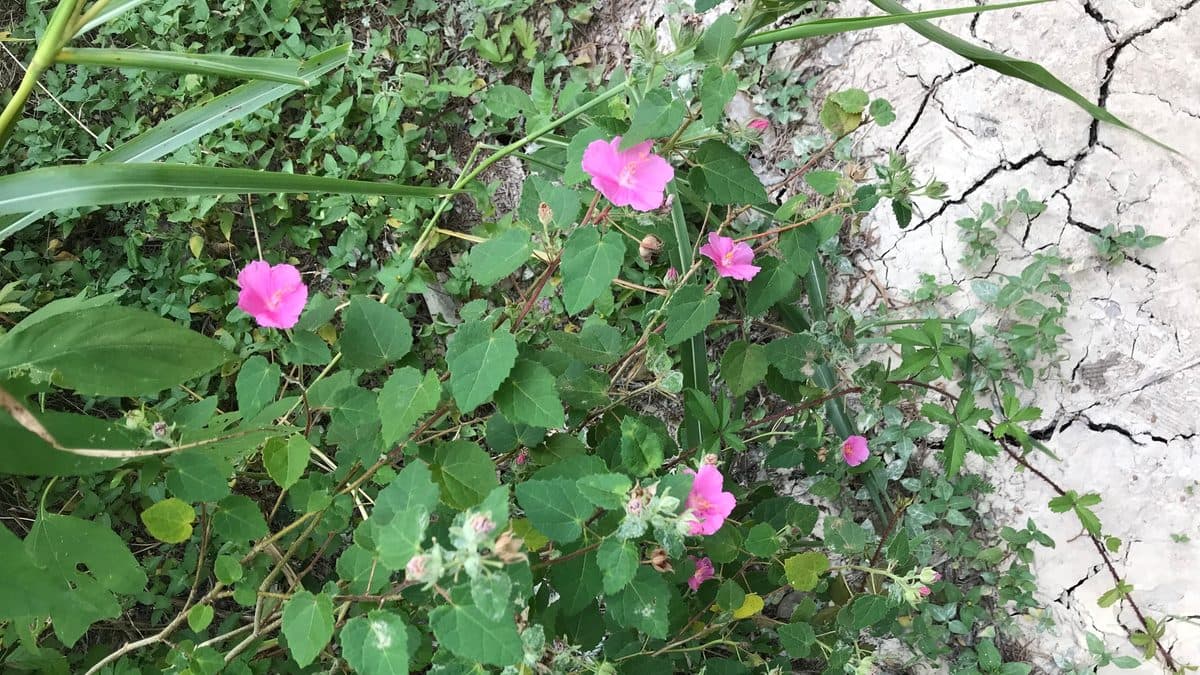
Pink, hibiscus-like flowers with a yellow center column open from April through November, and the Wildflower Center names it a nectar source for butterflies, moths, and hummingbirds (Pavonia lasiopetala (opens in new tab)). In Texas it grows from the Edwards Plateau through the Rio Grande Plains, and it reaches into adjacent Mexico. Expect some mildew and a leggy look unless you prune.
Cenizo
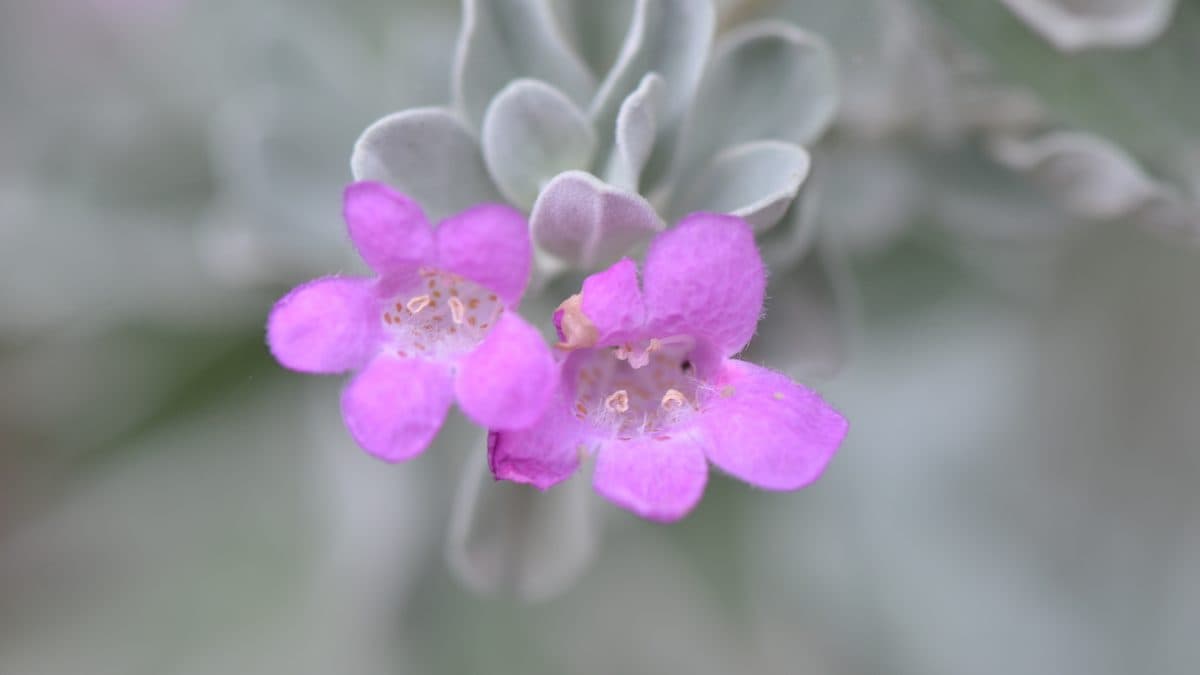
Silver-gray leaves and violet to purple flowers that tend to follow rain, on a shrub 2 to 5 feet tall and 4 to 6 feet wide. The Wildflower Center lists Theona checkerspot and Calleta silkmoth as larval hosts (Leucophyllum frutescens (opens in new tab)). It also warns that cenizo is prone to cotton root rot in soil that stays wet, and says not to fertilize or overwater it. A raised or sloped spot is the safer choice.
Damianita
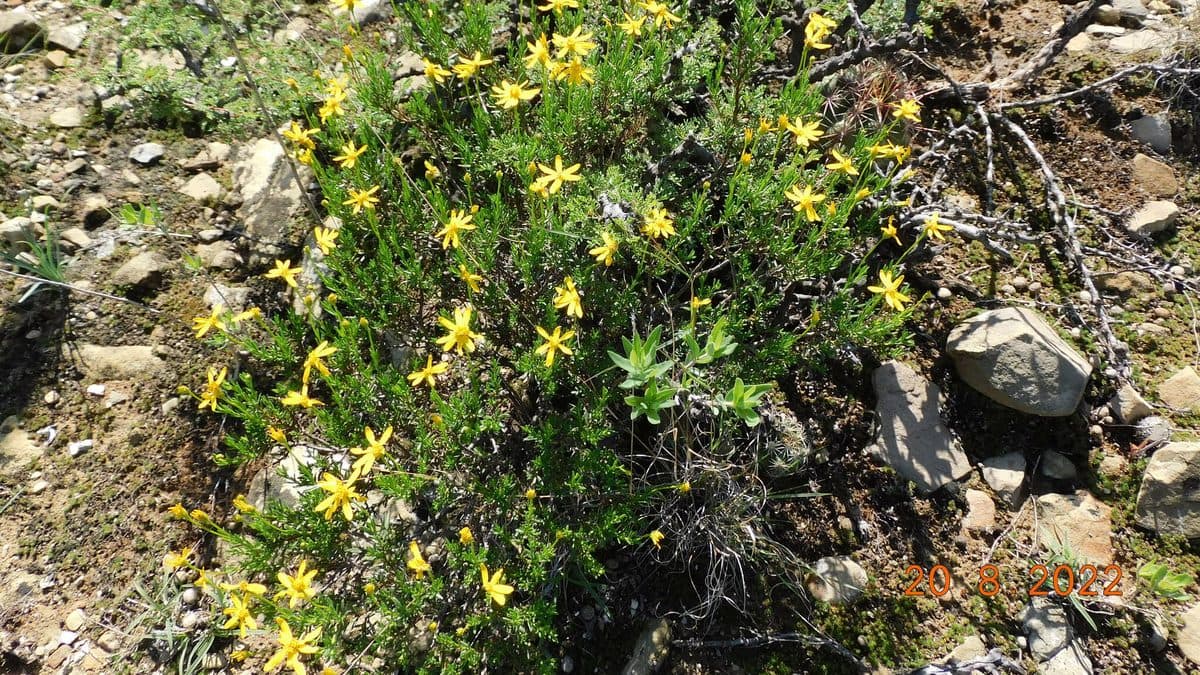
A rounded, evergreen mound of aromatic foliage covered in golden flowers, mostly in spring. The Wildflower Center gives its native habitat as caliche and limestone outcrops in the southern Hill Country and says it requires excellent drainage (Chrysactinia mexicana (opens in new tab)). That makes it a fit for a slope or a gravel bed.
Four-nerve daisy
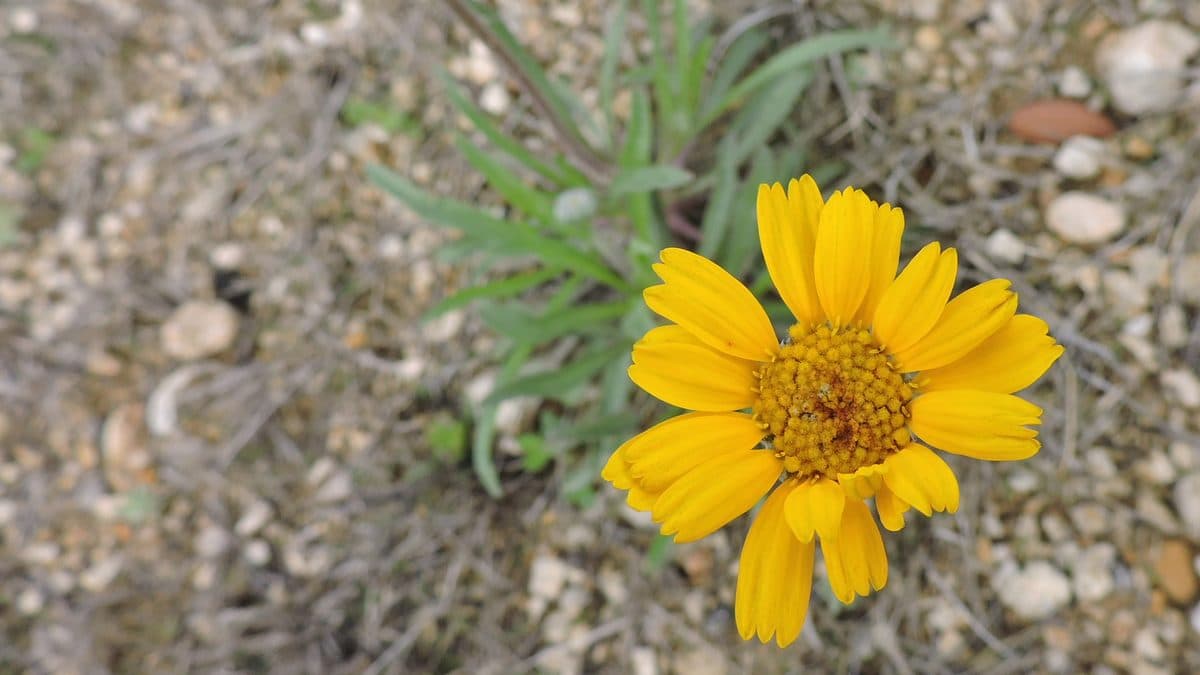
A silvery, low perennial with one yellow daisy per leafless stalk, suited to a rock garden or border. The Native Plant Society of Texas lists the Edwards Plateau among its ecoregions, including the Balcones Canyonlands (NPSOT (opens in new tab)). Overwatering makes it leggy, per the same page, and the Wildflower Center calls its water use low (Tetraneuris scaposa (opens in new tab)).
Lindheimer's muhly
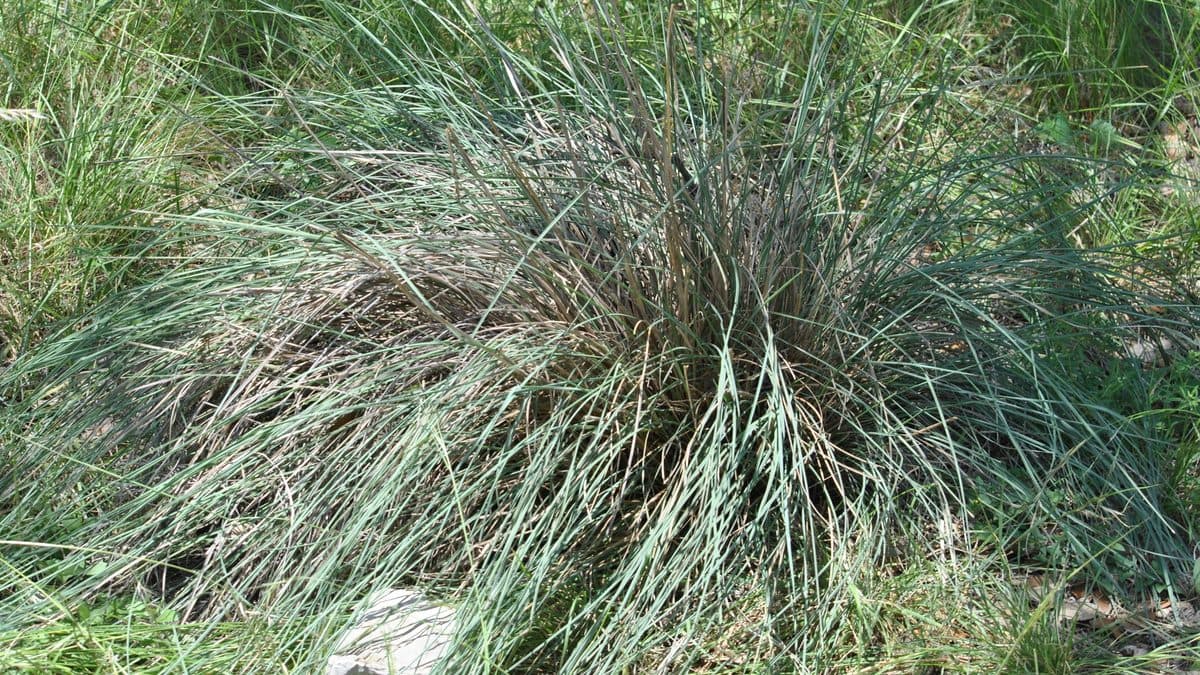
The tall one. This bunchgrass makes a fountain 2 to 5 feet tall with silvery seed heads from May through November. The Wildflower Center says it is native from the Edwards Plateau into northern Mexico and lists rocky limestone soil and alkaline pH above 7.2 (Muhlenbergia lindheimeri (opens in new tab)). Its water use is medium, the highest of the six, so it can take the spot that gets a little more water.
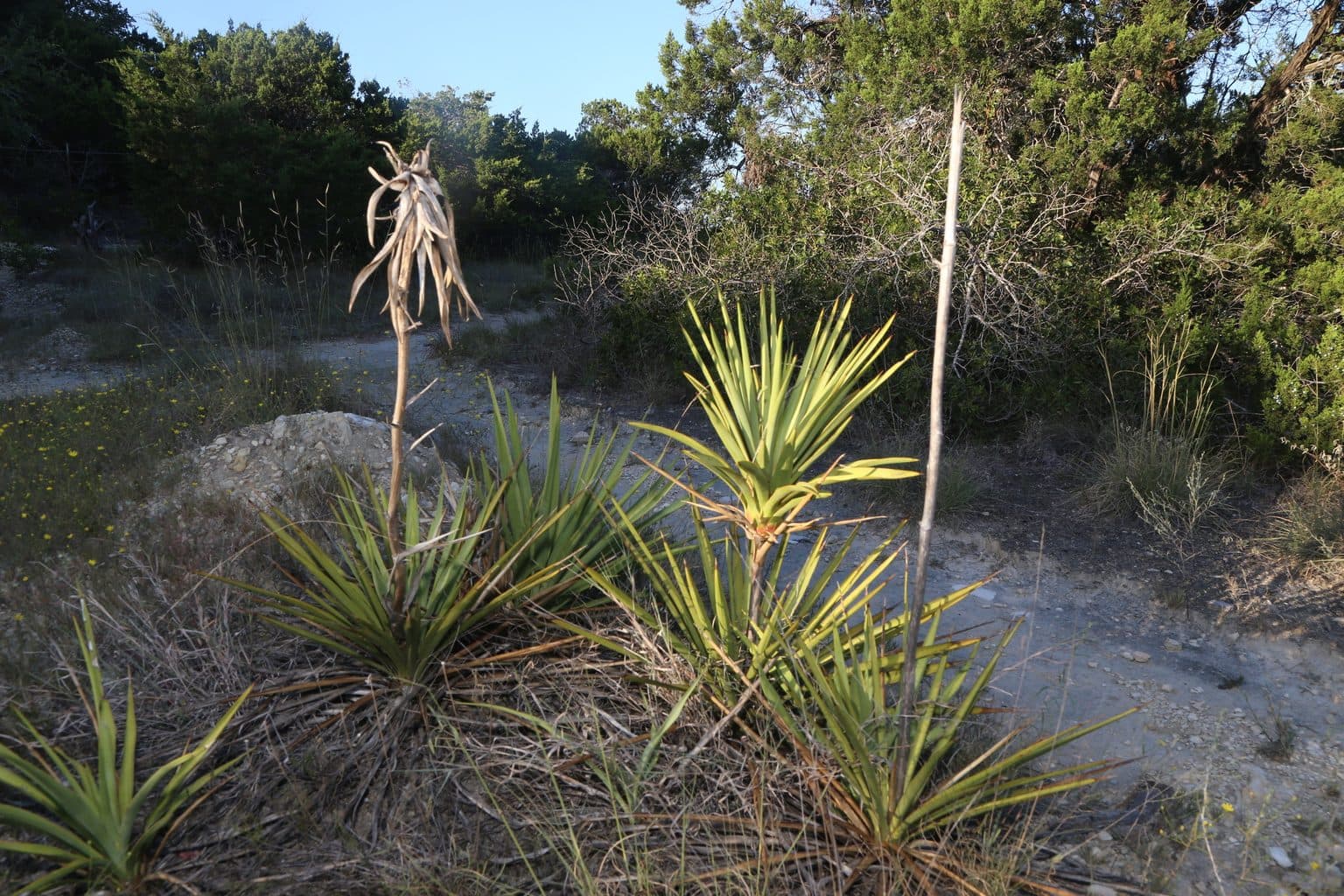
Twistleaf yucca
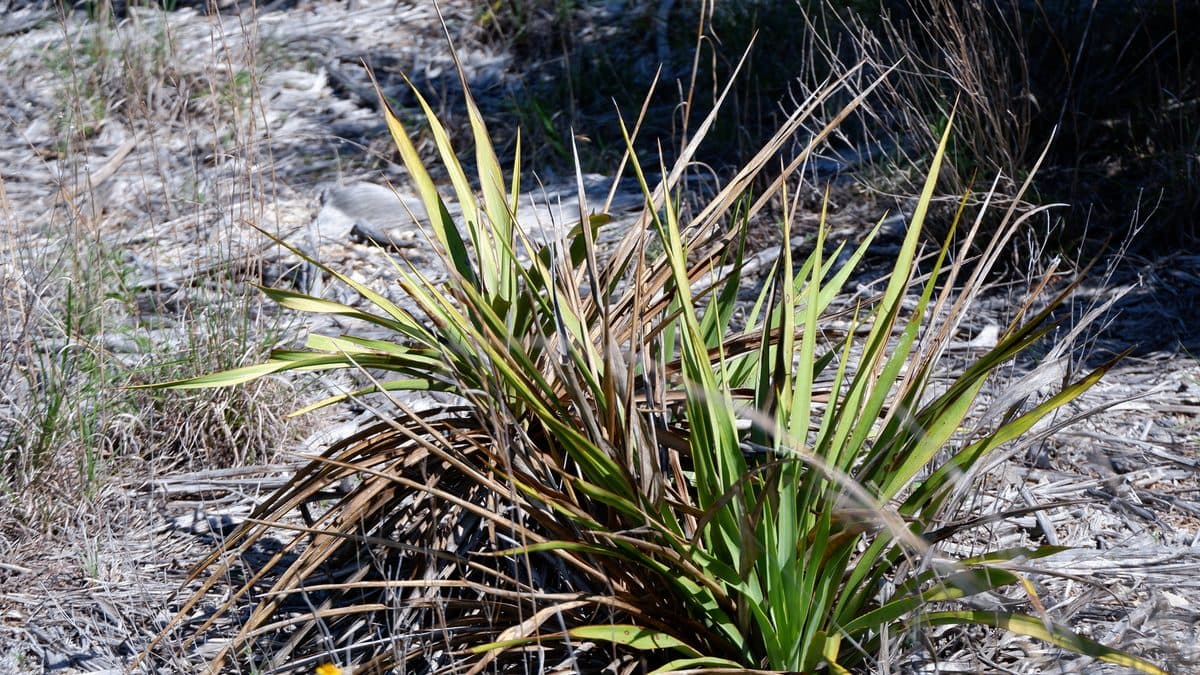
The Wildflower Center lists this one as endemic to the Edwards Plateau. Leaves stay under 2 feet, and white flower stalks reach about 6 feet in April to June. Kendall's yucca skipper uses it as a larval host, and the page notes deer leave the foliage alone but eat the blossoms (Yucca rupicola (opens in new tab)).
Planting native plants in Austin limestone soil
Plants that came from this ground need less preparation than the standard garden routine suggests. AgriLife says native plants generally need less soil preparation. For the Edwards Plateau it suggests a 1 to 2 inch layer of compost on the surface each spring and fall, about 3 inches of mulch, and at least 30 percent real soil by volume wherever you mix anything in.
- Skip the compost-only planting hole. AgriLife calls these “mini swimming pool holes” that hold water and girdle roots.
- If you hit caliche, dig through the layer when you can. NMSU says to backfill with soil that has 2 to 4 percent organic matter and to test drainage first by filling the hole with water. It should drop at least an inch an hour.
- If the rock is too thick to break, build up. AgriLife says raised planting beds can turn a shallow rocky soil into a good garden spot.
- Group the plants by water need. Muhly takes more than damianita, and cenizo rots if it is kept wet.
- Wait to fertilize. AgriLife notes these soils often already have high phosphorus and potassium, and says to test before adding any.
A caution on Mexican feathergrass
Mexican feathergrass (Nassella tenuissima) turns up on many Austin plant lists, but the Native Plant Society of Texas places its native range in West Texas and the Chihuahuan Desert ecoregions, not the Edwards Plateau (NPSOT (opens in new tab)). The same page says it reseeds prolifically and can crowd out other plants outside its home range. Lindheimer's muhly gives a similar soft look and belongs here.
Where to start
A simple layout follows the heights in the table. Put the yucca and muhly at the back or on a corner, cenizo and rock rose in the middle, and damianita and four-nerve daisy along the front edge, so the planting steps down toward the sidewalk. Repeating the same plant two or three times reads as intentional from the street and is easy to maintain. Clean edges and a layer of mulch around the plants finish the look. Mulch matters on these soils because AgriLife recommends about 3 inches on the Edwards Plateau.
Pick two or three of these, set them on the sunniest, best-draining spot you have, and water them in. You can add more once you see how the ground handles a summer. The rebate side is covered in our Austin Water native plant rebate guide.
People also ask
What grows best in limestone soil in Austin?
Plants native to the Edwards Plateau, such as rock rose, cenizo, damianita, four-nerve daisy, Lindheimer's muhly, and twistleaf yucca. The Lady Bird Johnson Wildflower Center lists them for dry or dry to moist soil, and all but the daisy list limestone or caliche among their soils.
Should I amend limestone or caliche soil before planting natives?
Lightly at most. Texas A&M AgriLife Extension says native plants generally need less soil preparation and advises against holes filled only with compost. For the Edwards Plateau it suggests a top layer of 1 to 2 inches of compost each spring and fall plus mulch.
Does this plant list work for east Austin?
Mostly no. AgriLife describes the area east of I-35 as Blackland Prairie with deep clay, a different soil problem from thin limestone. This list is for the Edwards Plateau side to the west.
Want the list for your own ZIP?
Pollinator Patch matches native plants to your ZIP and ecoregion and helps you plan a layout, so you can see which of these suit your yard before you buy.