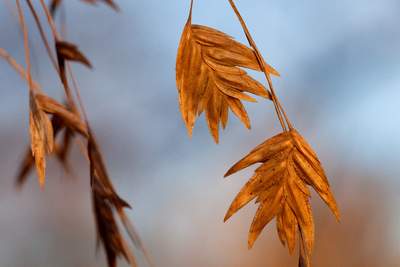
Swap the Giant Fuzz Ball for Texas's Most Stunning Native Grass
The short version
- Pampas grass gets too large for most applications and dense crowns can harbor pests.
- Gulf Muhly offers dramatic fall plumes in pink and purple at a manageable size.
- Gulf Muhly often qualifies for WaterSaver and WaterWise rebates.
Pampas grass makes a statement, but it gets huge and the dense crown can harbor rodents and insects. Gulf Muhly delivers the same dramatic, cloud-like fall texture in a manageable size, with pink and purple plumes that look great from the street and in photos. It often qualifies for WaterSaver and WaterWise rebates.
Why Pampas grass is a poor fit for most yards
Pampas grass (Cortaderia selloana) can reach 10 feet or more and spread wide. For most residential lots that is too large. The dense base also creates cover for rodents and insects, which some homeowners and HOAs dislike. It has a place in very large or commercial landscapes; in a typical front yard it often outgrows its welcome.
Grow Gulf Muhly instead
Gulf Muhly (Muhlenbergia capillaris) is a Texas native grass that tops out at a few feet with airy pink and purple plumes in fall. It is drought-tolerant, stays manageable, and reads as intentional when grouped and edged. It peaks in September and October, so it is a strong content-calendar plant for late-season interest. For height and HOA tips, see native grasses height HOA Texas.
Many Texas cities offer rebates for water-wise plants like Gulf Muhly. Check rebates before you buy. For design cues, see our cues of care guide.
Plan a native yard
Pollinator Patch helps you pick plants by region. Check if your city offers a rebate for water-wise landscaping.
See a finished plan for a yard like this
Find our guides useful? Add Pollinator Patch as a preferred source on Google and articles like this one will show up higher in your own search results.