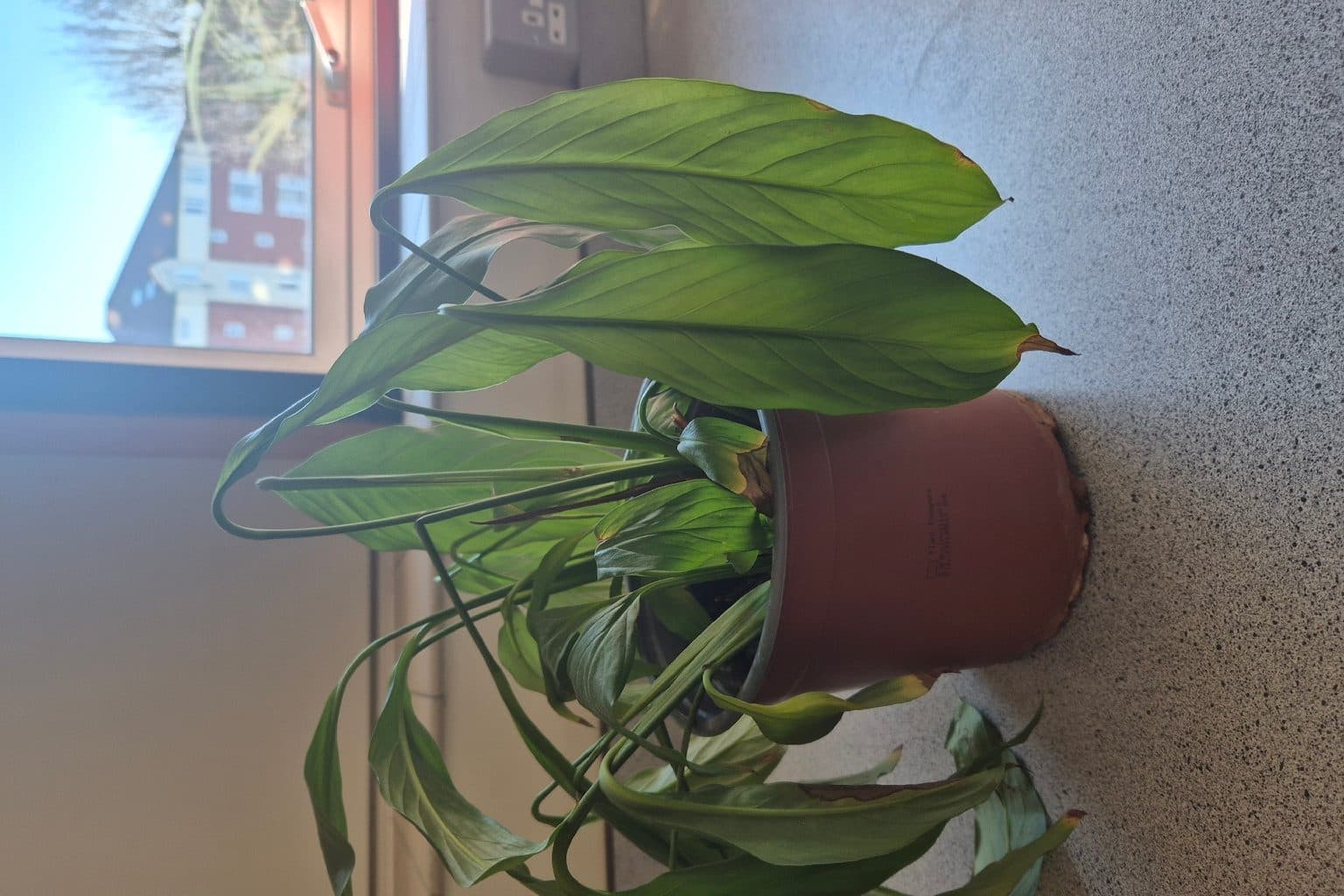
My Potted Plant Is Wilting Even Though I Watered It
Short answer
A potted plant that wilts in wet soil has roots that cannot take up water, and in a container that usually means they are drowning: no drainage hole, a full saucer, or a mix that never dries. A potted plant that wilts a day after watering with dry soil is usually root bound. Lift the pot before you water again.
The short version
- Wilting is the result of roots not being able to provide adequate moisture to the leaves and stems, so the question is why the roots stopped delivering (Iowa State University Extension).
- The primary symptom of excess moisture is wilting or yellowing of lower and inner leaves, because excess water reduces oxygen in the soil and damages the fine roots that take up water (University of Maryland Extension).
- A root-bound pot lets water pass through too quickly, leaving the center of the root ball dry, and a bone-dry mix sheds water down the gap between root ball and pot (University of Maryland Extension, UC Master Gardeners of Santa Clara County).
- Heat alone can cause wilting even when moisture is adequate, and root injury can occur at soil temperatures above 105F, which is common in containers in direct sun (University of Minnesota Extension, UC IPM).
- Lift the pot before you water: heavy and wilted means stop watering, light and wilted means soak it from the bottom until the bubbling stops, then repot if the root ball is a solid mass.
- Use a pot with a drainage hole and no gravel layer, empty the saucer after every watering, and shade the sides of dark pots in summer (University of Wisconsin-Madison, University of Maryland Extension, UC IPM).
Quick answer
A potted plant that wilts in wet soil has roots that cannot take up water, and in a container that almost always means the roots are drowning: no drainage hole, a saucer that stays full, or a mix that never dries out. A potted plant that wilts within a day of watering, with soil that feels dry, is usually root bound, and the water is running down the gap between the root ball and the pot without soaking in. Lift the pot, push a finger two inches into the mix, and if you are still not sure slide the plant out and look at the roots. That three-minute check sorts the four causes below.
The instinct when a plant droops is to water it. In a pot that instinct is often the problem, because the two most common reasons a potted plant wilts look identical from above and need opposite fixes. Iowa State University Extension puts the mechanism in one sentence: wilting is the result of roots not being able to provide adequate moisture to the leaves and stems. Everything below is about why the roots stopped delivering, in the order worth checking for a plant in a container.
The three-minute check
Lift the pot. University of Maryland Extension calls this the quick test: lift the plant, pot and all, and judge the weight against what it felt like right after a watering. A heavy pot under a wilted plant is a wet pot, and water is not the thing it is missing. A pot that feels nearly empty a day after you watered it is telling you the water never soaked in.
Push a finger two inches into the mix, past the dry crust on top. Maryland Extension uses the same two-inch depth for houseplants. Damp at two inches and wilted above means the roots have water and are not using it. Dry at two inches means they do not.
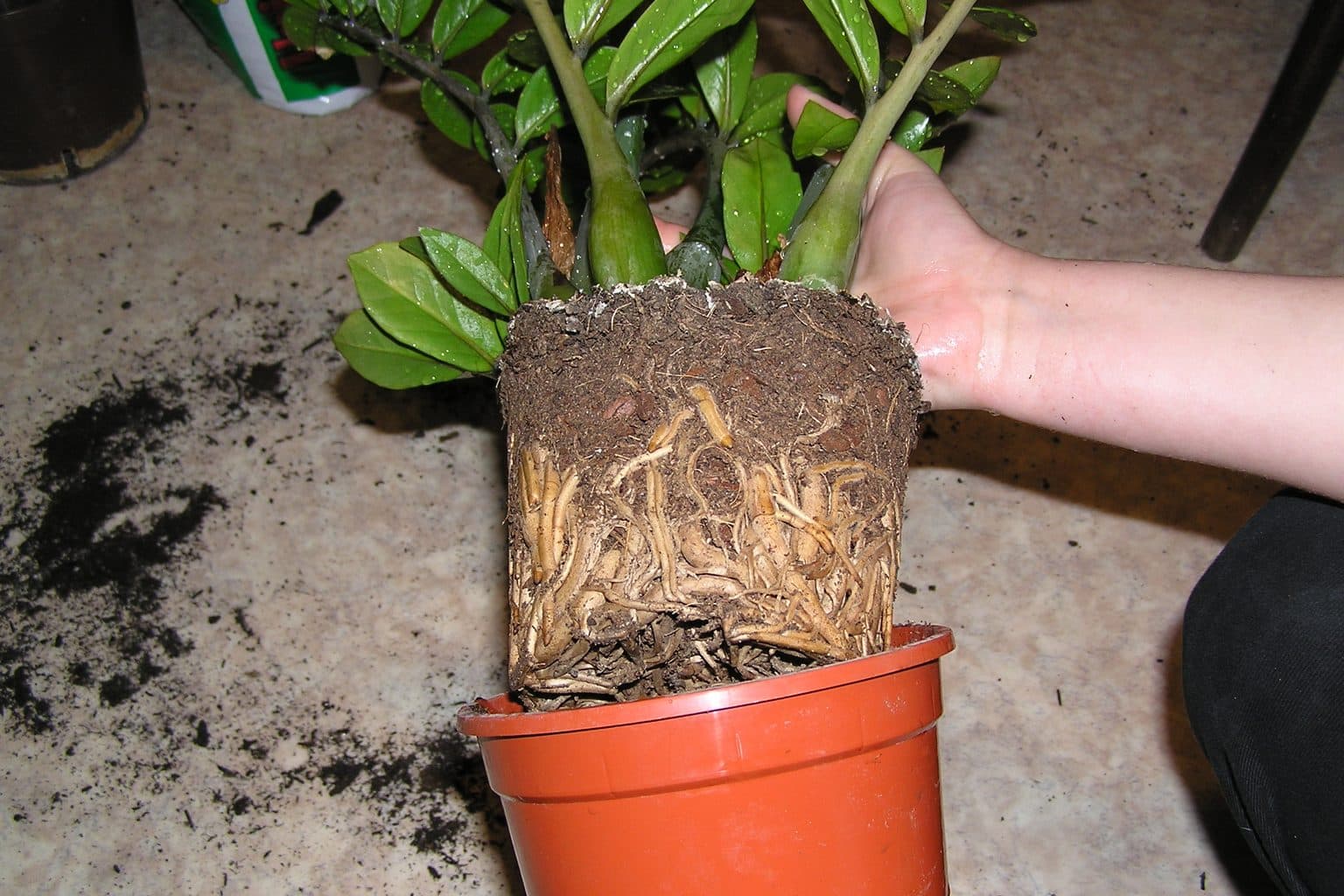
Slide the plant out. Missouri Botanical Garden's overwatering guidance says to check by knocking a small potted plant out of its container, and it is the one step that settles the question. Tip the pot, support the stem between your fingers, and look at the root ball. A pot-shaped mass of roots with almost no mix visible is root bound. Roots that are soft, brown, and smell sour are rotting. Pale, firm roots around a bone-dry core mean the water has been running past them. Roots that look fine in mix that is moist, on a plant that wilted at three in the afternoon, mean heat.
Cause 1: the roots are drowning
Strong match if the pot is heavy and the plant is wilted
This is the one that surprises people, because the symptom is the opposite of what the cause suggests. Maryland Extension's page on overwatered plants states it plainly: the primary symptom of excess moisture is wilting or yellowing of lower and inner leaves. The reason is oxygen. Excess water reduces oxygen in the soil, which damages fine roots and leaves the plant unable to take up water (University of Maryland Extension). The plant is wilting because it is drowning, and the leaves cannot tell the difference between roots that are dry and roots that are dead.
University of Wisconsin horticulture pathologists describe the same picture from the disease side. A plant with root rot is wilted even though the soil is wet, often stunted, and may carry leaves with a yellow or red color. When you slide it out, the roots are soft and brown and may have a bad odor (Root Rots on Houseplants, University of Wisconsin-Madison). Missouri Botanical Garden adds that soil that has stayed wet too long usually smells sour or rotten, which you will notice the moment the root ball is out of the pot.
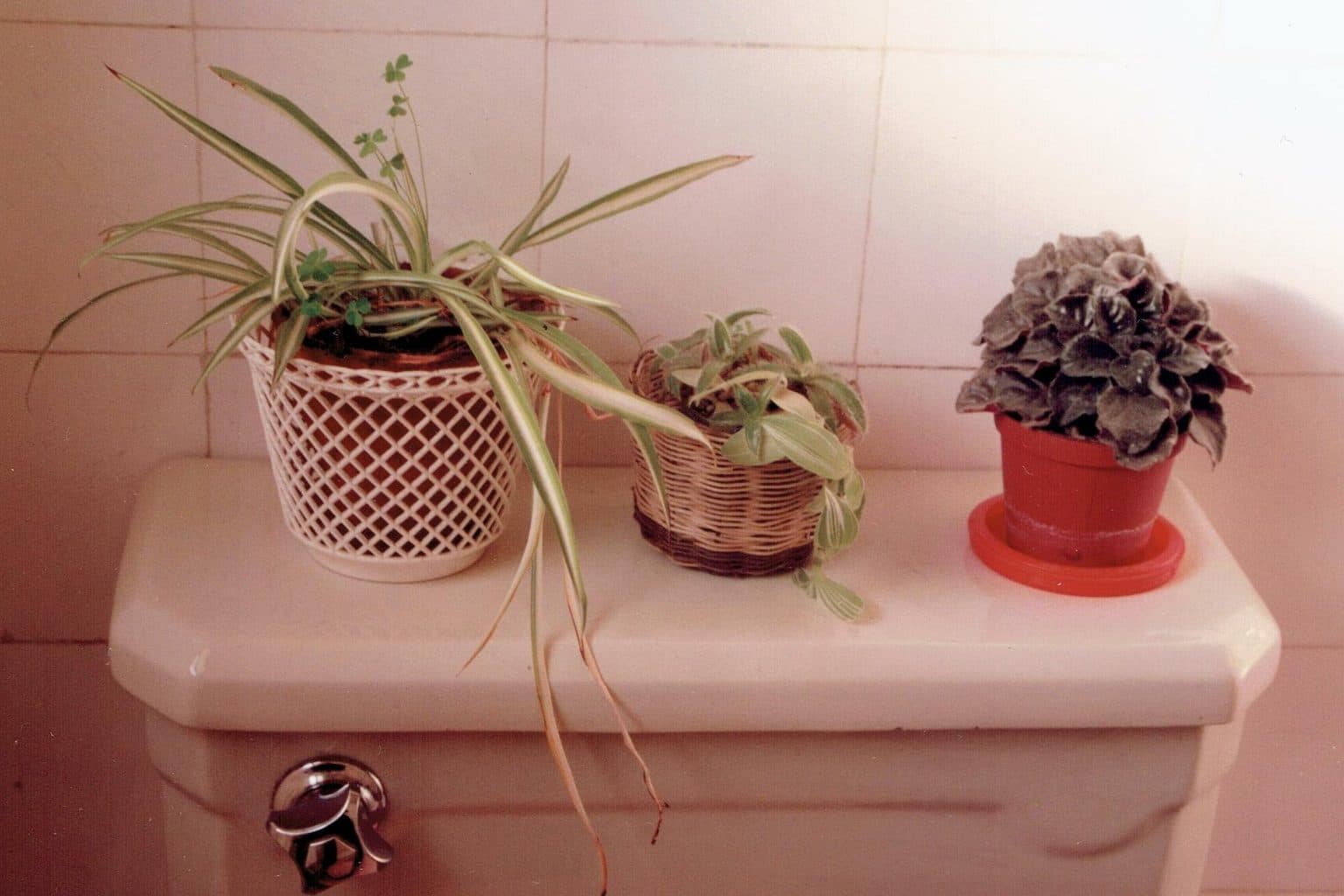
In a container, the water has to be coming from somewhere, and it is usually one of four places. A pot with no drainage hole, where every watering collects in the bottom (that one has its own page). A decorative outer pot with the plastic nursery pot sitting inside it in an inch of water you cannot see. A saucer that never gets emptied, which Maryland Extension says to pour off after every watering. And a layer of gravel at the bottom of the pot, which Wisconsin says does not help and can actually inhibit drainage.
What to do. Stop watering, tip out the saucer, and get the plant out of the pot so the root ball can dry in the air for a day. Then look hard at the roots. If most of them are brown mush, Wisconsin's advice is blunt: often the best and most cost effective way of dealing with a plant with root rot is to throw it out. If there are still firm, pale roots, cut away the soft ones, repot into fresh mix in a pot with a hole, and from then on water only when the pot is light. The whole management plan on the Wisconsin page fits in three words, in capitals: reduce soil moisture.
Cause 2: it is root bound, and the water is not reaching the roots
Strong match if the pot is light a day after you watered it
A plant that has been in the same pot for a season or two fills it with roots, and at that point there is very little mix left to hold water. Maryland Extension describes exactly what you see at the watering can: often when watering a pot-bound plant the water passes through the pot too quickly and is not absorbed adequately, so the center of the root ball remains dry. You water, it runs out the bottom in seconds, you assume it is fine, and the plant wilts again by evening.
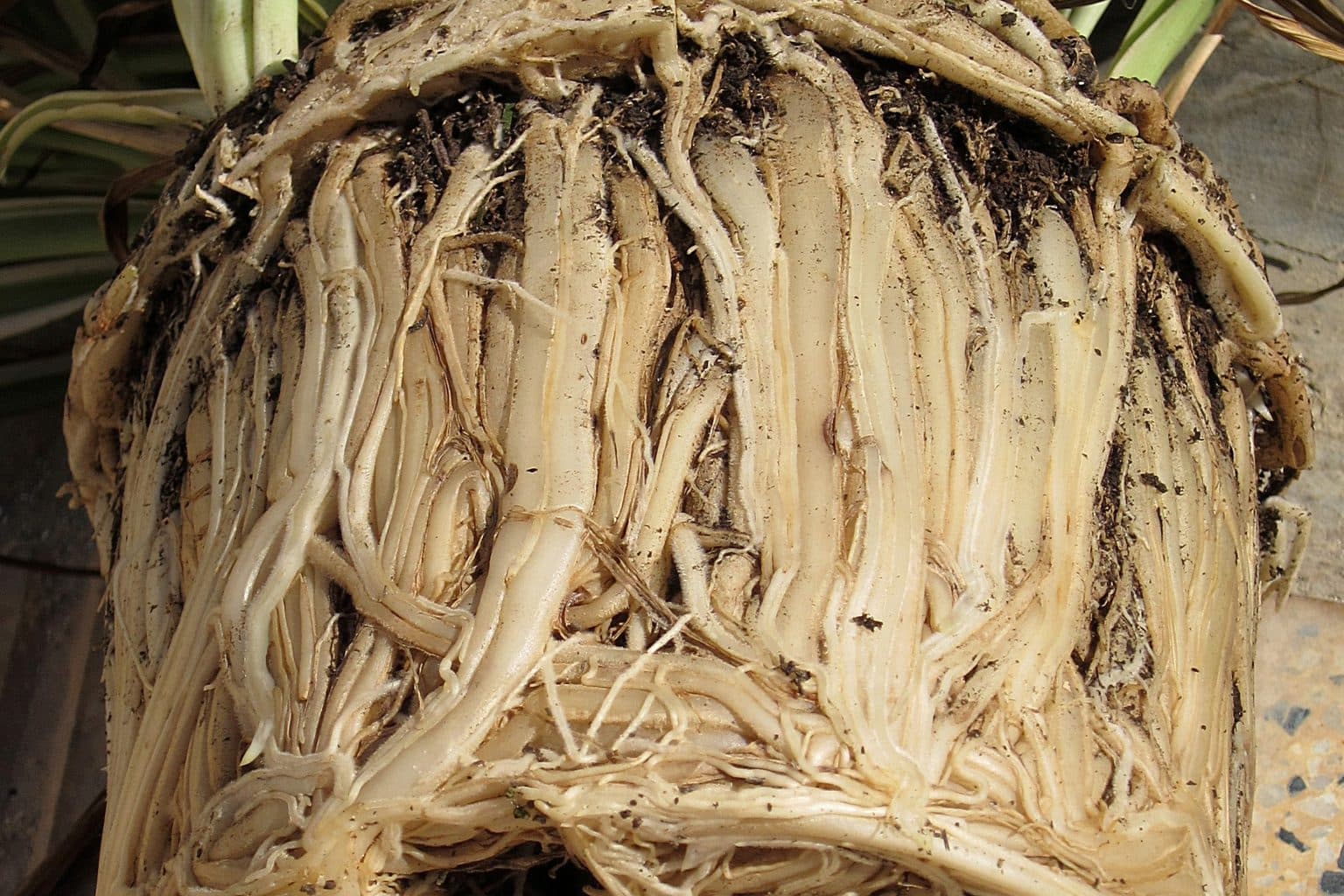
There is a second version of this that does not need a root-bound plant, only a root ball that dried out completely once. A potting mix that has gone bone dry can start to repel water. The UC Master Gardeners of Santa Clara County describe the water running between the side of the pot and the hydrophobic root ball instead, barely wetting the outer surface and leaving the center of the root ball dead dry. From above it looks exactly like the root-bound case, a light pot under a wilted plant.
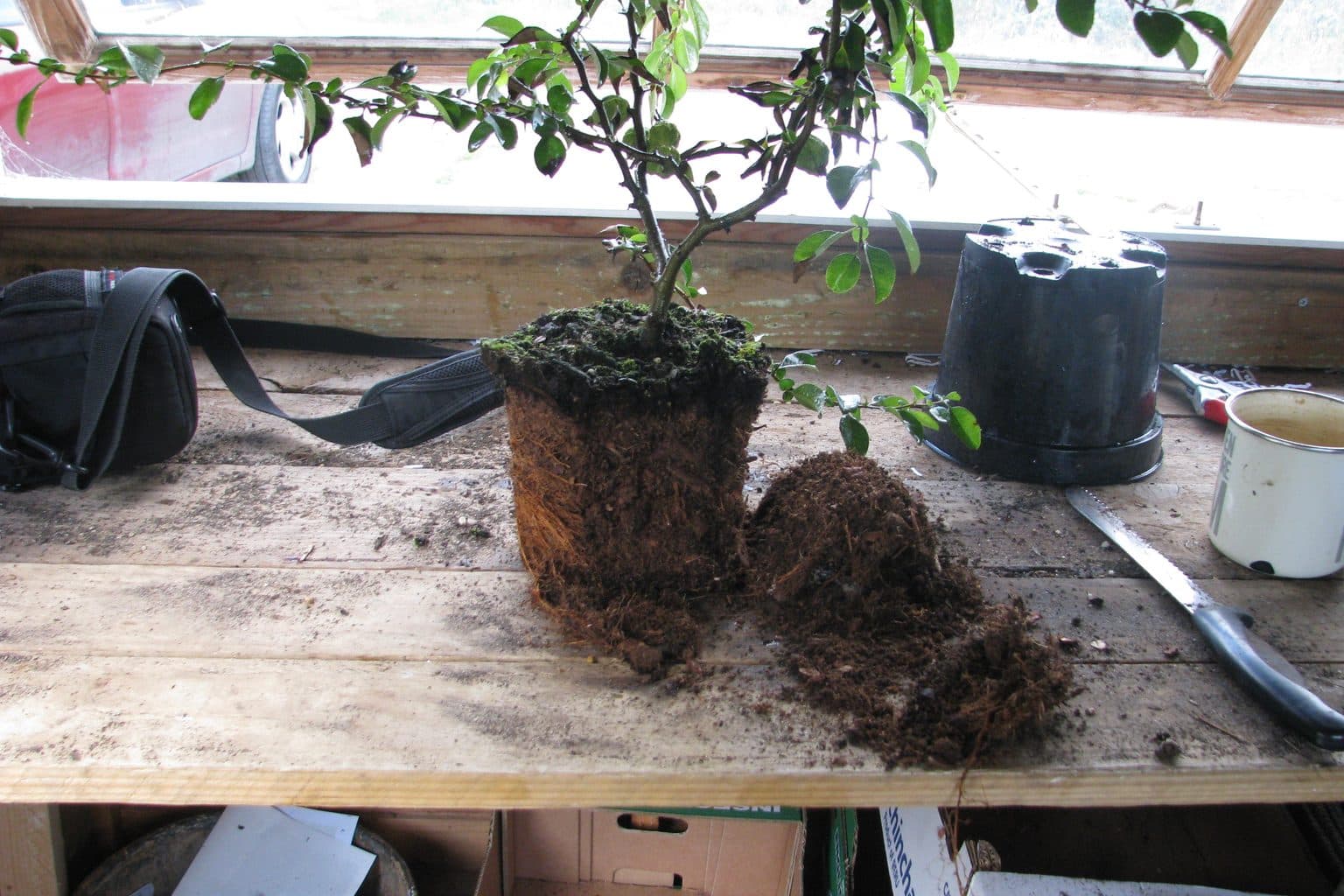
What to do. Rewet it from the bottom first. The Santa Clara guidance is to submerge the whole pot in a bucket of water, watch the air bubbles escape as the water displaces the air, and remove the pot once the bubbling stops. Bottom watering a dried-out pot may take an hour or more to thoroughly rewet the soil. Then, if the root ball is a solid mass, repot. Maryland Extension's fix is to move pot-bound plants into larger pots and loosen the tight root mass by hand or cut it away so the roots can spread. Iowa State Extension gives the same instruction for a root ball that dries out very quickly: repot into a larger container. The soil-dries-in-a-day version of this problem has its own page.
Cause 3: the pot is cooking
Possible. It wilts in the afternoon, stands back up by morning, and the mix is still moist
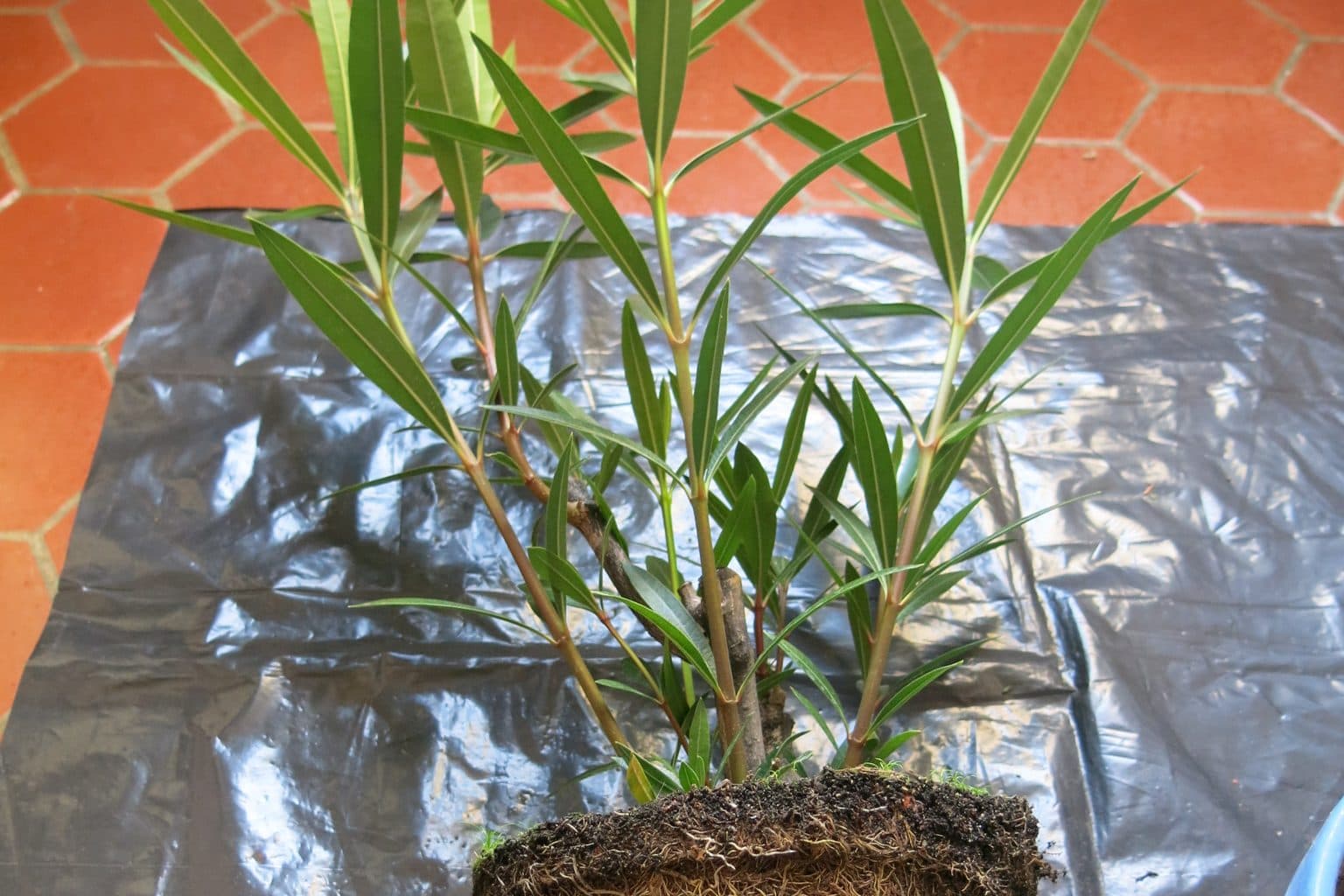
Heat alone can wilt a plant that has all the water it needs. University of Minnesota Extension's heat-wave guidance is to check the soil, not the leaves, because heat alone can cause wilting even when moisture is adequate, the classic droop even when the soil is moist. In the ground that is usually harmless, and the midday-versus-dawn test in my post on native plants wilting in summer heat is how to read it. In a pot the same heat reaches the roots.
The University of California's statewide IPM program puts a number on it: root injury can occur at soil temperatures above 105F, and root injury from heat is common in plant containers exposed to direct sun but uncommon in landscapes because of the insulating effect of soil (UC IPM). Plants often come home from the store in thin black plastic pots that heat up significantly in the sun (UC Master Gardeners of Solano County), and a black pot on a west-facing patio in July is a root oven.
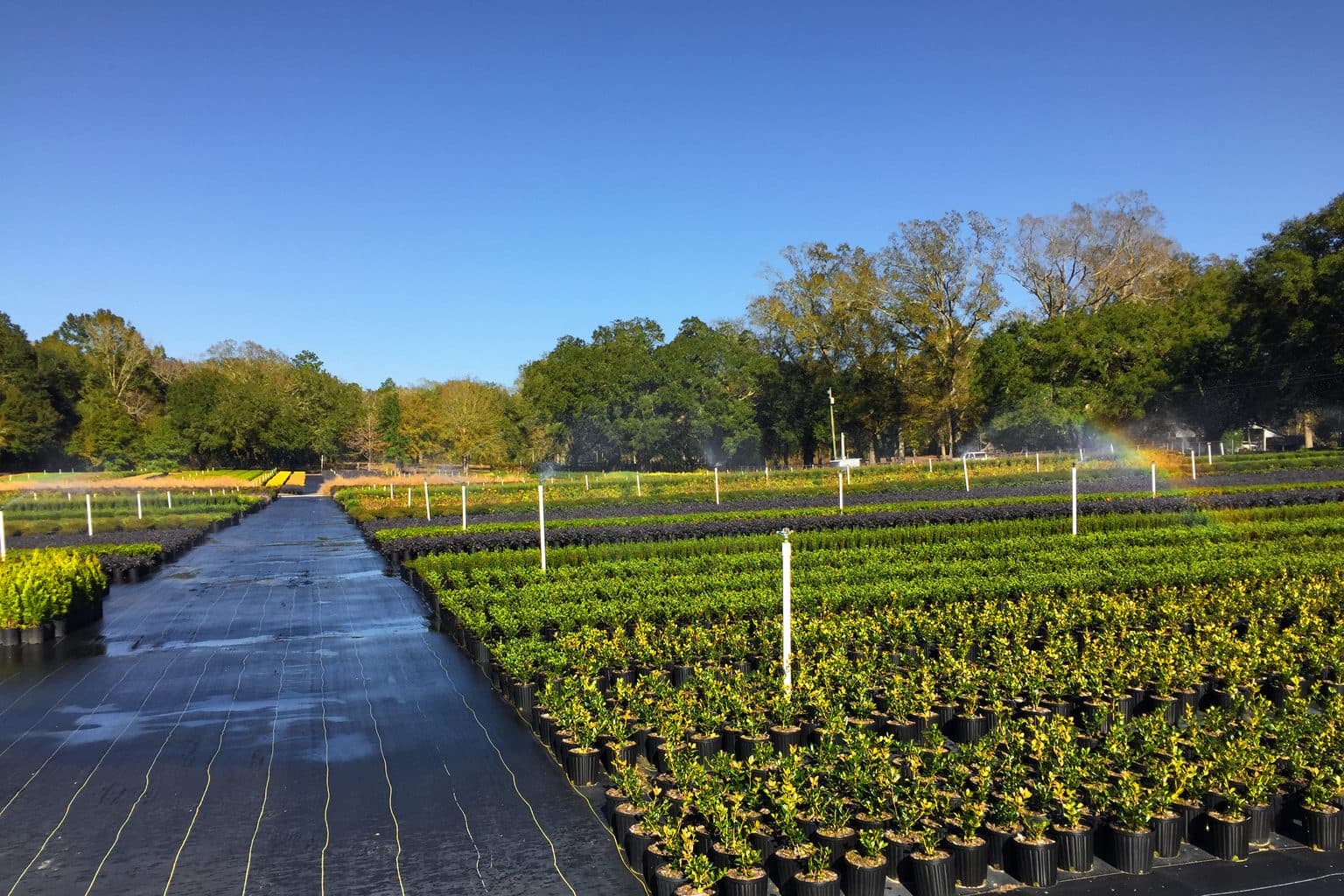
What to do. Shade the sides of containers and planting boxes (UC IPM). Shift pots to morning sun and afternoon shade, or double-pot to insulate the roots (University of Minnesota Extension). During a heat wave, plants in containers and hanging baskets may need water twice a day (Iowa State University Extension), but always check the soil first, because a wet pot in a heat wave is Cause 1 waiting to happen.
Cause 4: you moved it or repotted it in the last two weeks
Possible. The roots looked fine when you slid it out
Roots that were just disturbed take time to pick up water again. Purdue Extension's guidance on transplant shock lists wilting leaves, especially on recent transplants, along with yellowing and leaf rolling or curling, as the signs. It also names a cause that is specific to plants that came out of a nursery pot: problems can result from failure to spread roots of container grown plants, which often have roots coiled around the inside of the pot (Purdue Extension BP-31).
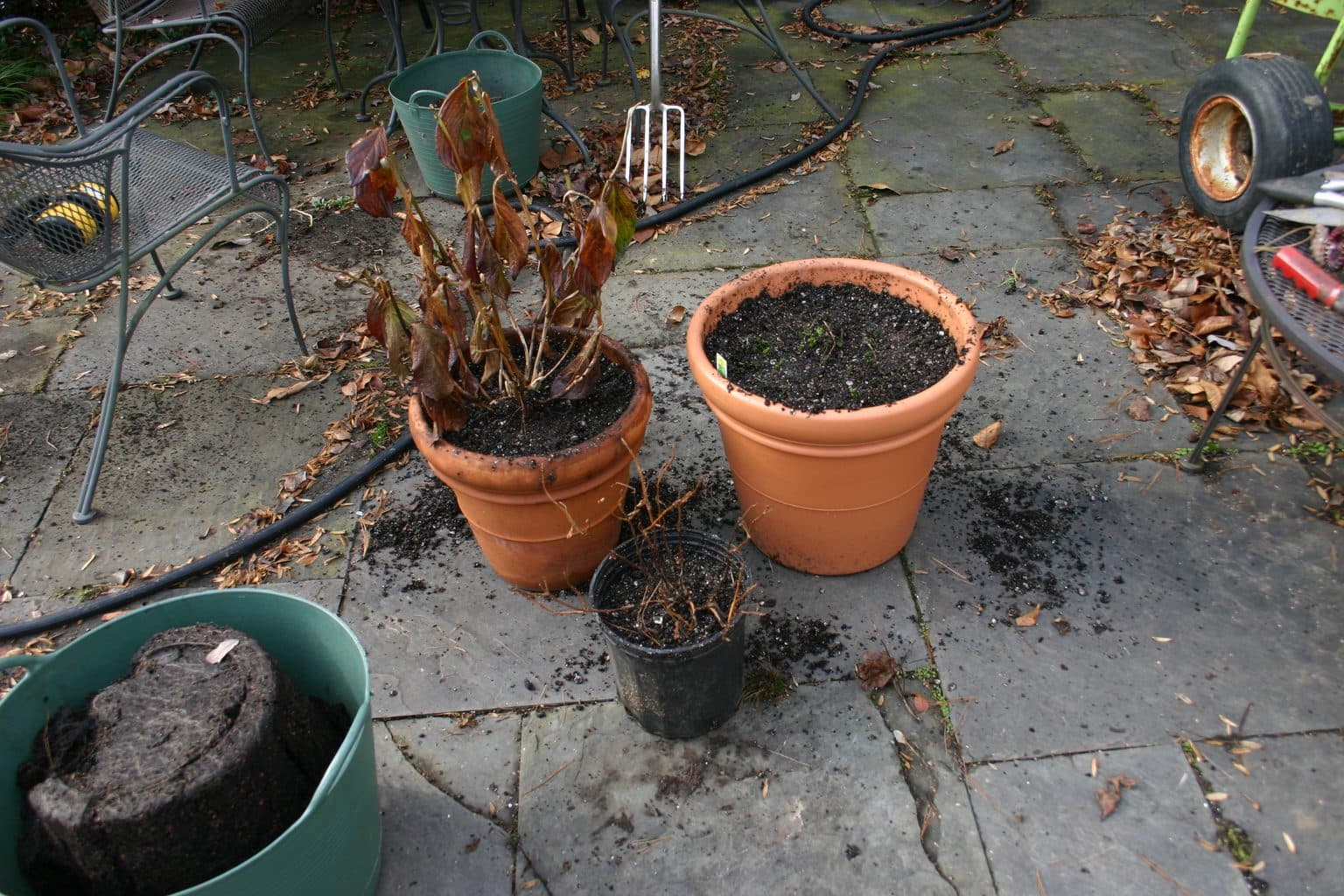
What to do. Give it shade and time, and do not repot it again. Purdue's warning on watering applies word for word to a pot: proper watering after transplanting is especially critical in the first year, and over watering is just as injurious as under watering. Lift the pot and water when it is light.
The ruling-out step
| What you found | Points to | Do not |
|---|---|---|
| Heavy pot, wet mix, wilted plant | Roots drowning | Do not water it |
| Light pot, water runs straight through | Root bound, or a dried-out root ball | Do not water from the top again until it has soaked |
| Moist mix, wilts at 3 pm, fine at dawn | Heat | Do not move it into more sun to dry it out |
| Repotted or moved in the last two weeks, roots look healthy | Transplant shock | Do not repot it a second time |
If none of the four fits, it is worth a second look at the roots before you do anything else. And if the plant has been in the same wet pot for weeks, do not be surprised if two causes are true at once: a root-bound plant in a saucer full of water is root bound on the outside and rotting on the inside.
Set the pot up so it does not happen again
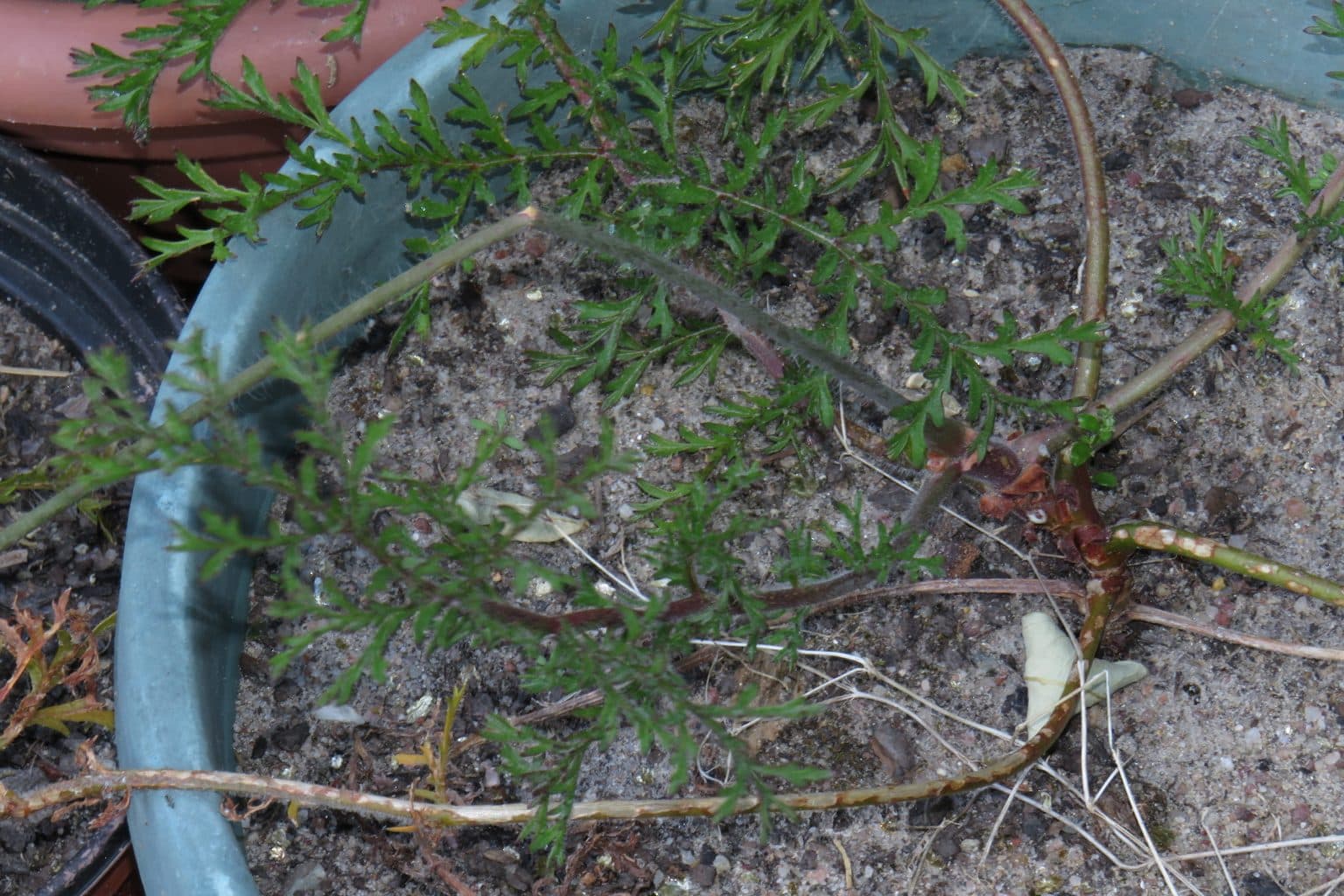
Every one of these comes from an extension page above, and none of them costs anything. Use a pot with a drainage hole and no gravel layer in the bottom (University of Wisconsin-Madison). If the pot you love has no hole, grow the plant in a plain nursery pot and set that inside it, then lift it out to water. Water until it drains freely from the bottom of the container, and dump any excess from the saucer (University of Maryland Extension). Make lifting the pot the habit instead of the calendar. In summer, shade the sides of dark pots or move them out of afternoon sun (UC IPM).
A note for natives in pots
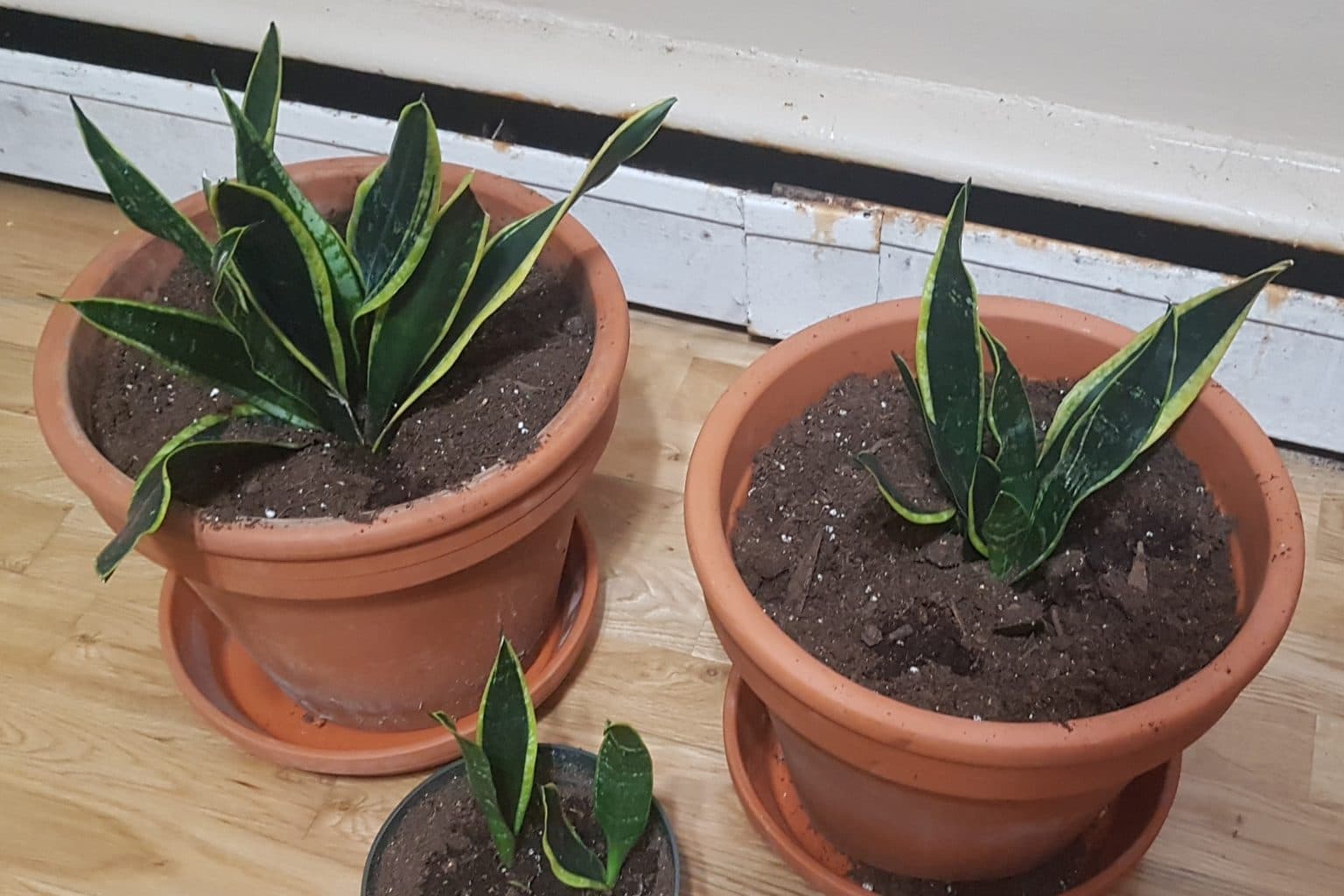
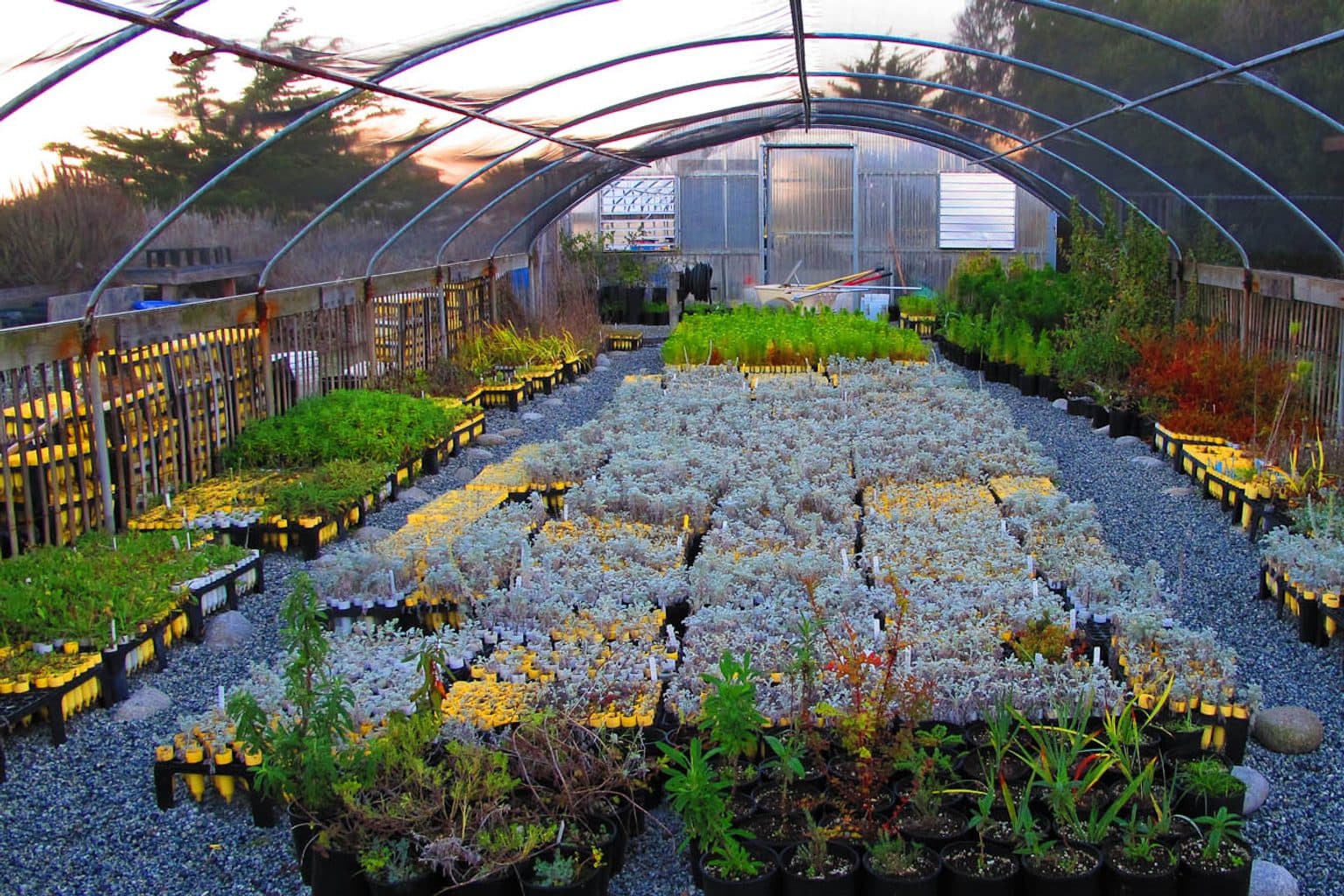
A native plant in a container is a container plant first. Drought tolerant describes an established native in the ground, not a first-year plant (Lady Bird Johnson Wildflower Center), and a native in a pot never gets past that first-year state, because its roots can only ever be as big as the pot. Everything above applies to it, and the black nursery pot it came home in is the first thing to change.
People also ask
Why is my plant wilting after I watered it?
Because the roots cannot take up the water. In a pot the usual reason is that the roots are sitting in water and losing oxygen, which damages them (University of Maryland Extension), or that the plant is root bound and the water ran past the root ball without soaking in (University of Maryland Extension). Lift the pot: heavy means the first, light means the second.
Can too much water make a plant wilt?
Yes. Maryland Extension lists wilting or yellowing of lower and inner leaves as the primary symptom of excess moisture, and University of Wisconsin-Madison describes root rot as a plant that is wilted even though the soil is wet.
Should I water a wilting plant?
Only after you have lifted the pot and checked the soil two inches down. A wilted plant in a heavy, wet pot should not be watered. A wilted plant in a light, dry pot should be soaked from the bottom until the bubbling stops (UC Master Gardeners of Santa Clara County).
How do I know if my plant is root bound?
Water passes through the pot too quickly and the center of the root ball stays dry (University of Maryland Extension). Slide the plant out: a pot-shaped mass of roots with little mix visible is root bound, and the fix is a larger pot with the root mass loosened or cut.
Still not sure
This is exactly what your county Extension office answers, for free. They are the local horticulture experts for your area, they know what is going around this season where you live, and they will look at a photo.
Find your local Extension officeReminders for every pot you own
Pollinator Patch tracks watering for every plant you own, native or not, in the ground or in a pot, and sends the reminder when your plants need it. Care is free.
See a finished plan for a yard like this
Find our guides useful? Add Pollinator Patch as a preferred source on Google and articles like this one will show up higher in your own search results.