Keep Them Blooming: Deadheading and Watering New Plants This Summer
The short version
- Deadheading spent blooms redirects plant energy from seed production to new flower buds, extending bloom time by 4 to 6 weeks on plants like Black-Eyed Susan, Salvia greggii, and Coneflower.
- Do not deadhead everything. Seed heads on Purple Coneflower feed goldfinches and other birds through fall. Deadhead through mid-summer, then let the final blooms set seed.
- "Native and drought-tolerant" applies to established plants, not first-year plantings. Spring-installed plants still have shallow roots and need regular water through June and July.
- Water deeply and infrequently. A slow 20-minute soak at the base of each plant, once or twice a week, is more effective than daily light watering.
Late May is when a lot of native gardens quietly start to underperform. The early-season bloom flush winds down, the heat starts building, and it's easy to assume the plants are just done for the year. Usually they're not. Two things you can do this week will carry most gardens through June and July.
Deadhead spent blooms to extend the flowering window
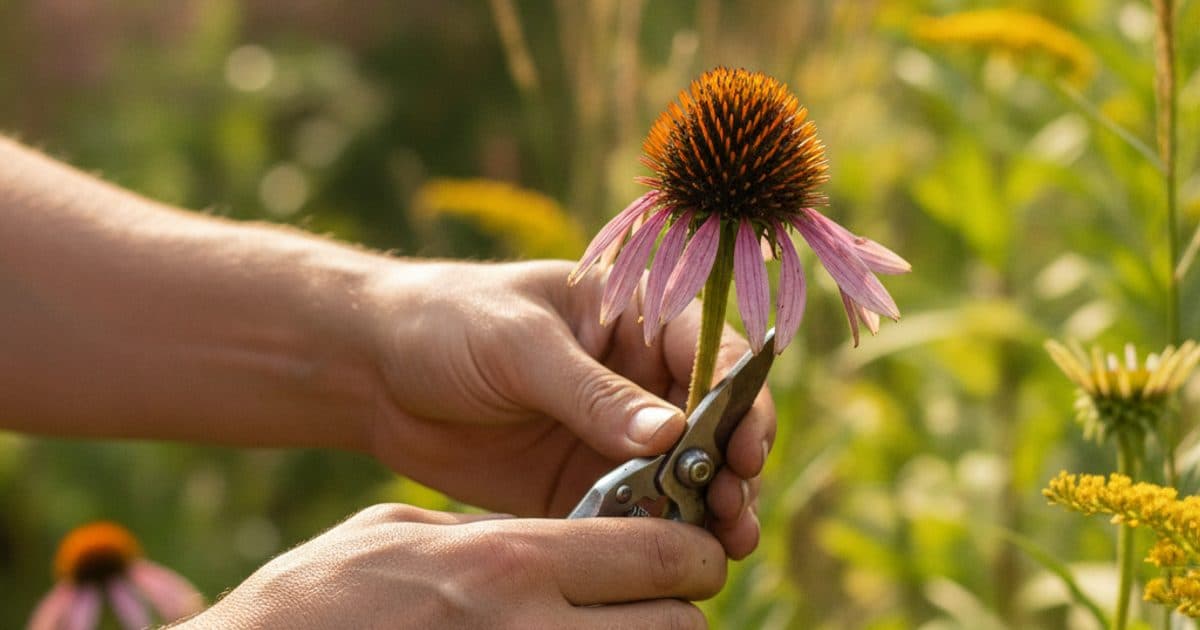
When a flower finishes, the plant shifts its energy toward making seed. If you remove the spent bloom before the seed sets, it redirects that energy into producing new flower buds instead. For plants like Black-Eyed Susan, Salvia greggii, and Purple Coneflower, consistent deadheading can extend the blooming window by four to six weeks.
The technique is simple. Snip just below the spent flower head, above the next leaf node or side branch. Clean garden scissors work fine. Five minutes per plant, once a week through mid-summer, is enough to make a noticeable difference.
One important exception: don't deadhead everything. Seed heads on Purple Coneflower, Black-Eyed Susan, and Gulf Muhly are food sources for goldfinches and other birds through fall and winter. A good rule of thumb is to deadhead the first two or three rounds of spent blooms through mid-summer, then let the final round go to seed. You get the extended bloom season and the wildlife value.
For a full seasonal care schedule, see the summer native plant care guide and the HOA-conscious maintenance checklist.
Water new plantings more than you think you need to
“Native and drought-tolerant” is accurate once a plant is established. Establishment takes a full growing season, sometimes two. A plant you put in the ground in March or April has had eight to ten weeks to develop roots. When June arrives and the soil starts baking, those roots are still shallow. They can't yet reach the deeper moisture that established plants rely on.
For anything planted this spring, water deeply once or twice a week through June and July. Deep and infrequent is more effective than a light daily sprinkle. Daily shallow watering keeps moisture near the surface and encourages roots to stay shallow, which is the opposite of what you want. A slow, 20-minute soak at the base of each plant moves water down into the soil where roots can follow it.
Signs a plant needs water: wilting in the morning (not just during afternoon heat), yellowing leaves, or soil that's dry an inch below the surface. Signs of overwatering: yellowing lower leaves, soggy soil that doesn't dry between waterings, or a musty smell around the root zone.
Once a plant's roots are six to eight inches deep, typically by late fall of the first year, it can handle much more on its own. The goal right now is to support root development before the hottest weeks arrive, not to keep the plant alive indefinitely with surface water.
For more on establishment and first-year watering, see why native gardens fail in year one and the pre-planting checklist.
What to skip in late May
Heavy pruning can wait. Cutting back established plants in peak heat stresses them at exactly the wrong time. If something looks untidy, trim the edges for HOA appearances, but save any structural pruning for fall. For HOA-conscious maintenance that keeps your garden looking intentional without stressing your plants, see mulch, edging, and visibility cues.
Fertilizing is also best skipped in summer. Most Texas native plants are adapted to lean soil. Adding fertilizer in heat and drought can push growth that the plant can't support, and fast-release nitrogen can burn roots.
See a finished plan for a yard like this
Find our guides useful? Add Pollinator Patch as a preferred source on Google and articles like this one will show up higher in your own search results.