Plants Toxic to Dogs in North Carolina Yards
The short version
- Rhododendron/Azalea, English Ivy, Nandina, Yew, Boxwood, and Hosta are all ASPCA-confirmed toxic to dogs and common in North Carolina yards.
- Yew is among the most acutely dangerous, capable of causing sudden cardiac collapse from a small amount.
- Each toxic plant has a North Carolina-native swap not on the ASPCA list: Virginia Sweetspire, Green-and-Gold, American Beautyberry, Eastern Red Cedar, Wax Myrtle, and Foamflower.
If your dog ate something and you are worried right now
Call the ASPCA Animal Poison Control Center: (888) 426-4435. There is a consultation fee, but they are available 24/7 and will walk you through it. Your vet's emergency line is the other call to make.
Quick answer
The most dangerous plants for dogs in North Carolina yards are Rhododendron and Azalea, English Ivy, Nandina (Heavenly Bamboo), Yew, Boxwood, and Hosta. Each has a North Carolina-native swap that is not on the ASPCA toxic plant list: Virginia Sweetspire, Green-and-Gold, American Beautyberry, Eastern Red Cedar, Wax Myrtle, and Foamflower.
North Carolina yards run from Piedmont foundation beds to mountain hillsides, and several of the plants that show up in both settings are toxic to dogs. Rhododendrons cover whole mountainsides in the Blue Ridge. Boxwood and yew line formal Piedmont gardens. Hosta fills nearly every shady bed in the state.
Below are the plants most worth knowing about if you have a dog in North Carolina, why each one is a problem, and a native alternative that gives you a similar look. Toxicity is per the ASPCA Animal Poison Control Center plant database. Native swaps come from the North Carolina Native Plant Society and NC State Extension recommended lists.
Rhododendron and Azalea (Rhododendron spp.)
Rhododendrons and azaleas are practically a regional signature in North Carolina. Wild and cultivated rhododendrons cover the Blue Ridge and Appalachian foothills, popular enough that several mountain towns hold rhododendron festivals, and azaleas are standard in Piedmont foundation plantings. All of it is toxic to dogs per the ASPCA: grayanotoxins in the leaves and flowers cause vomiting and drooling, and larger amounts can affect the heart and nervous system. That includes native deciduous azalea species, so a native azalea is not automatically pet-safe.
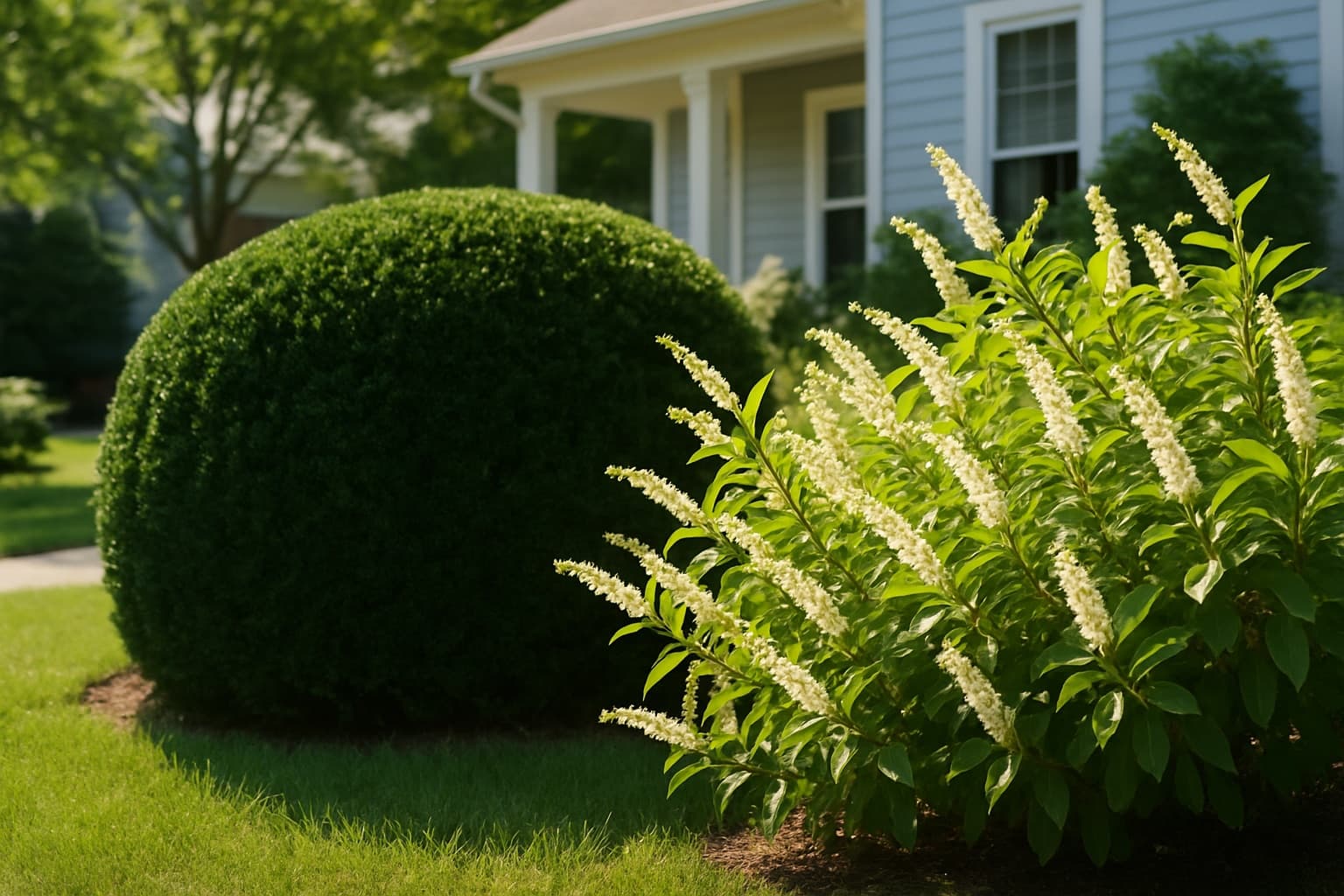
Safe swap: Virginia Sweetspire (Itea virginica), a North Carolina native shrub with fragrant white spring flower spikes and deep red fall color. It tolerates sun to part shade and handles wet spots well, and it is not on the ASPCA toxic plant list (North Carolina Native Plant Society).
English Ivy (Hedera helix)
Homeowners reach for English Ivy because it holds up in shade where little else will grow, but it is toxic to dogs per the ASPCA (saponins that cause vomiting, abdominal pain, and drooling), and it has become aggressively invasive across the Piedmont and mountains, smothering native forest understory as it spreads.
Safe swap: Green-and-Gold (Chrysogonum virginianum), a low North Carolina native groundcover for shade to part sun. It flowers bright yellow from spring through fall and is not on the ASPCA toxic plant list (NC State Extension).
Nandina / Heavenly Bamboo (Nandina domestica)
Builders default to Nandina in foundation plantings across North Carolina, which is unfortunate on two counts. The plant is toxic to dogs per the ASPCA due to cyanogenic compounds, it is also invasive in the state, and separately, its red berries are documented to be dangerous to cedar waxwings and other birds that eat them.
Safe swap: American Beautyberry (Callicarpa americana), a North Carolina native shrub with striking purple berry clusters in fall that birds eat safely. Not on the ASPCA toxic plant list (North Carolina Native Plant Society).
Yew (Taxus baccata, Taxus canadensis, Taxus cuspidata)
Sold under a handful of species names but all simply called yew, this is one of the most acutely dangerous common landscaping shrubs a dog can encounter. The taxine alkaloids in the needles and seeds can trigger sudden cardiac collapse from a small amount, and a dog eating yew is a genuine emergency, not a wait-and-see situation. Yew is common as a clipped foundation hedge across North Carolina.
Safe swap: Eastern Red Cedar (Juniperus virginiana), a North Carolina native evergreen conifer that takes shearing and hedging just as well as yew does. Not on the ASPCA toxic plant list (NC State Extension).
Boxwood (Buxus spp.)
The classic clipped evergreen of formal Piedmont gardens, boxwood is toxic to dogs per the ASPCA. Its alkaloids cause GI upset in smaller amounts, and larger amounts can bring on more serious effects. It remains one of the most widely planted foundation and hedge shrubs in the state.
Safe swap: Wax Myrtle (Morella cerifera), a fast, evergreen North Carolina native that forms a dense, informal hedge or screen, with aromatic foliage and berries for birds. Not on the ASPCA toxic plant list (NC State Extension). Skip holly as a substitute here: some hollies, including American Holly, are themselves toxic per the ASPCA, so the genus is not a safe default.
Hosta (Hosta plantaginea and other Hosta spp.)
Hosta is probably the single most common shade perennial in North Carolina yards, and it is toxic to dogs per the ASPCA. Saponins in the leaves cause vomiting, diarrhea, and lethargy if a dog chews on the foliage, which is easy to do given how low the leaves sit.
Safe swap: Foamflower (Tiarella cordifolia), a North Carolina native shade perennial groundcover with white spring flower spikes and attractive mottled foliage. Not on the ASPCA toxic plant list (North Carolina Native Plant Society).
A note on the plants people worry about needlessly
Some North Carolina favorites are fine. Purple Coneflower and Black-eyed Susan, both widely planted natives, are not on the ASPCA toxic plant list and are reliable, dog-reasonable choices for a sunny bed. As with any plant, "non-toxic" means no known systemic toxin, not that a dog should eat a whole clump; large amounts of any plant can cause mild stomach upset. If something looks off, call the ASPCA Animal Poison Control Center at (888) 426-4435.
Quick reference
Toxicity details on this page follow the ASPCA Animal Poison Control Center plant database. For native swaps suited to your part of the state, the North Carolina Native Plant Society and NC State Extension both publish regional native plant recommendations by sun, size, and bloom time.
If you are replacing toxic plants and want help covering the cost, see North Carolina landscaping and water rebates.
To filter every plant in your plan by pet toxicity before you buy, get Pollinator Patch on the App Store. Plants with a cited toxic listing carry a Toxic to Pets flag right on the card.
Checking more than one plant? See the full list of plants toxic to dogs and cats, with native alternatives, covering every plant on the ASPCA list.
See a finished plan for a yard like this
Find our guides useful? Add Pollinator Patch as a preferred source on Google and articles like this one will show up higher in your own search results.