Plants Toxic to Dogs in Washington Yards
The short version
- Rhododendron/Azalea, English Ivy, English Holly, Foxglove, Yew, and Periwinkle are all ASPCA-confirmed toxic to dogs and common in Washington yards.
- Washington's own state flower, Pacific Rhododendron, is toxic to dogs despite being native.
- Each toxic plant has a Washington-native swap not on the ASPCA list: Red Flowering Currant, Kinnikinnick, Salal, Broadleaf Lupine, Western Red Cedar (the state tree), and Wild Ginger.
If your dog ate something and you are worried right now
Call the ASPCA Animal Poison Control Center: (888) 426-4435. There is a consultation fee, but they are available 24/7 and will walk you through it. Your vet's emergency line is the other call to make.
Quick answer
The most dangerous plants for dogs in Washington yards are Rhododendron and Azalea, English Ivy, English Holly, Foxglove, Yew, and Periwinkle. Each has a Washington-native swap that is not on the ASPCA toxic plant list: Red Flowering Currant, Kinnikinnick, Salal, Broadleaf Lupine, Western Red Cedar, and Wild Ginger. One of the six, Pacific Rhododendron, is Washington's own official state flower.
Western Washington yards lean hard on a handful of shrubs and groundcovers that show up in nursery aisles, hedge rows, and shady foundation beds across the Puget Sound region. Several of the most common ones are toxic to dogs, and a few are also spreading into the state's forests as invasives.
Here are the plants worth knowing about if you have a dog and a Washington yard, what they do, and a native swap for each. Toxicity below is per the ASPCA Animal Poison Control Center plant database. Native swaps are drawn from the Washington Native Plant Society.
Rhododendron and Azalea (Rhododendron spp.)
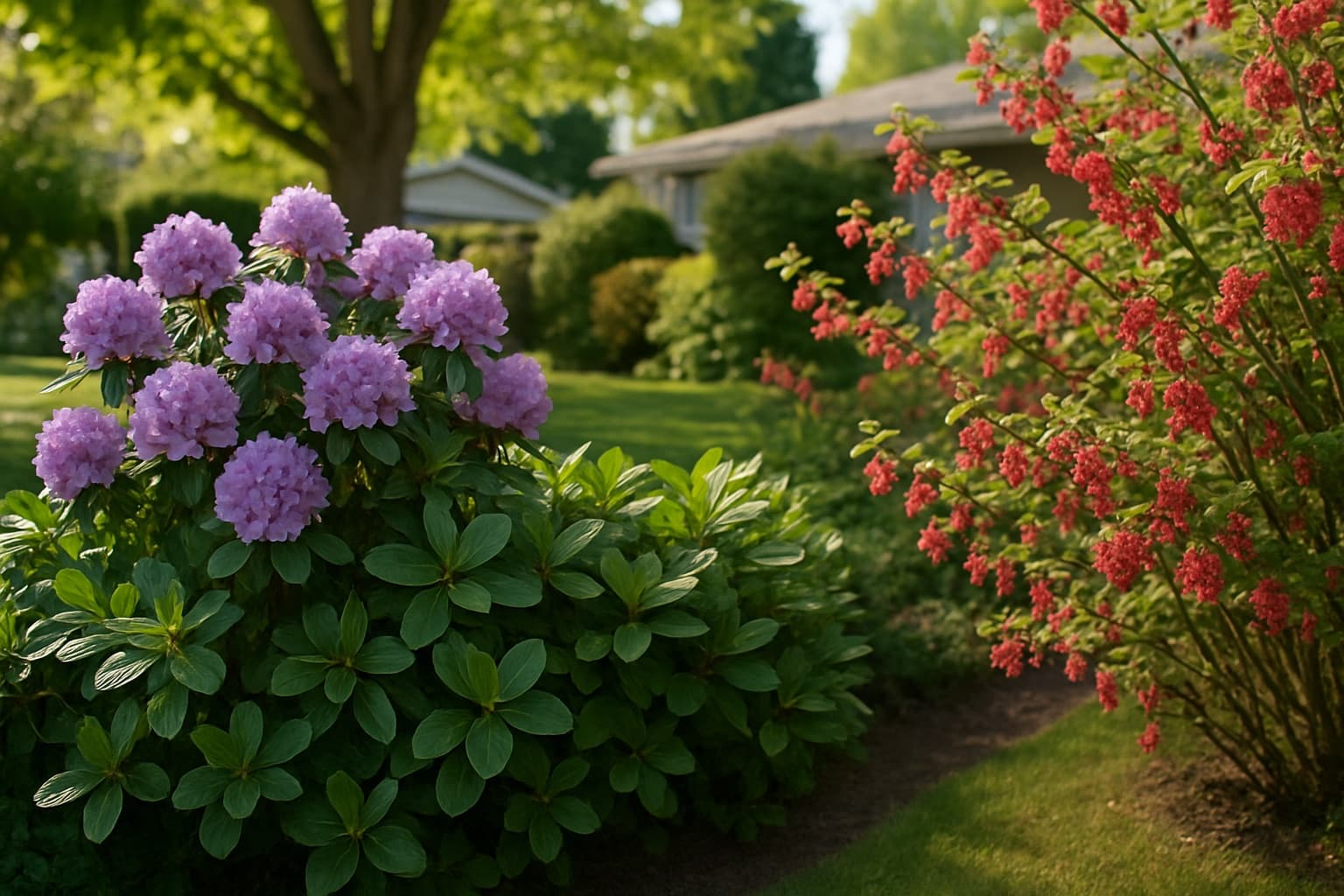
Even Washington's own state flower is toxic to dogs. Pacific Rhododendron (Rhododendron macrophyllum) holds that title, and the cultivated hybrid rhododendrons and azaleas that fill Puget Sound area yards carry the same risk. All parts contain grayanotoxins, and the ASPCA lists the genus as toxic, with vomiting and drooling from smaller amounts and heart and nervous-system effects if a dog gets into more.
Safe swap: Red Flowering Currant (Ribes sanguineum), a Washington native shrub with showy pink to deep red spring flower clusters that are a major early hummingbird draw. Not on the ASPCA toxic plant list (Washington Native Plant Society).
English Ivy (Hedera helix)
English Ivy covers fences, tree trunks, and bare ground across Western Washington, and it is toxic to dogs per the ASPCA. Saponins in the foliage cause vomiting, abdominal pain, and drooling. The bigger problem sits outside the yard: it is a severe, well-documented invasive in Western Washington forests, smothering native understory and climbing and eventually killing mature trees.
Safe swap: Kinnikinnick (Arctostaphylos uva-ursi), a Washington native evergreen groundcover with small pink bell-shaped flowers and red berries, tolerant of poor soil. Not on the ASPCA toxic plant list (Washington Native Plant Society).
English Holly (Ilex aquifolium)
English Holly gets planted widely across Western Washington for its glossy winter look, and the ASPCA lists it as toxic to dogs, with saponins concentrated in both the leaves and the berries. It is also a documented invasive, spreading into native forest as birds carry the berries beyond the yard where it was planted.
Safe swap: Salal (Gaultheria shallon), an iconic Washington native evergreen understory shrub with glossy leaves, small white-pink bell flowers, and dark berries, a Pacific Northwest signature plant. Not on the ASPCA toxic plant list (Washington Native Plant Society).
Foxglove (Digitalis purpurea)
Foxglove reseeds itself readily through Western Washington cottage gardens and slips out into wild areas nearby. It ranks among the most dangerous common garden plants: the ASPCA lists it as toxic, cardiac glycosides are the concern, and ingestion can cause a fatal heart arrhythmia.
Safe swap: Broadleaf Lupine (Lupinus latifolius), a Washington native perennial wildflower with tall spikes of blue-purple pea-like flowers, giving you a similar vertical cottage-garden accent. Not on the ASPCA toxic plant list (Washington Native Plant Society).
Yew (Taxus baccata or Taxus cuspidata)
Sold simply as "yew," this is one of the most acutely dangerous common landscaping shrubs and it is everywhere across Western Washington as a clipped hedge. Taxine alkaloids can bring on sudden cardiac collapse from a small ingested amount. Treat any suspected yew ingestion as an urgent case and call the poison control hotline immediately.
Safe swap:Western Red Cedar (Thuja plicata), a native evergreen conifer that takes hedging and screening just as well as yew. It is not on the ASPCA toxic plant list (Washington Native Plant Society), and it happens to be Washington's official state tree.
Periwinkle / Vinca (Vinca major or Vinca minor)
Periwinkle is a very common trailing groundcover in Washington yards, planted for its glossy leaves and blue flowers under trees and along borders. The ASPCA lists it as toxic to dogs; vinca alkaloids cause vomiting and low blood pressure, with tremors possible in larger amounts. Like English Ivy, it has escaped into Western Washington forests as another documented invasive.
Safe swap: Wild Ginger (Asarum caudatum), a Washington native shade groundcover with heart-shaped evergreen leaves and unusual maroon flowers hidden under the foliage. Not on the ASPCA toxic plant list (Washington Native Plant Society).
A note on the plants people worry about needlessly
Douglas Aster and Oregon Grape are both widely planted Washington natives, and neither is on the ASPCA toxic plant list. Oregon Grape (Mahonia aquifolium, also listed as Berberis aquifolium) carries an explicit non-toxic listing under multiple names in the ASPCA database. Both are reliable, dog-reasonable choices for a Washington bed. As with any plant, "non-toxic" means no known systemic toxin, not that a dog should eat a whole clump; large amounts of any plant can cause mild stomach upset. If something looks off, call the ASPCA Animal Poison Control Center at (888) 426-4435.
Quick reference
Toxicity details on this page follow the ASPCA Animal Poison Control Center plant database. Native swap details come from the Washington Native Plant Society.
If you are replacing toxic plants and want help covering the cost, see Washington landscaping and water rebates.
To filter every plant in your plan by pet toxicity before you buy, get Pollinator Patch on the App Store. Plants with a cited toxic listing carry a Toxic to Pets flag right on the card.
Checking more than one plant? See the full list of plants toxic to dogs and cats, with native alternatives, covering every plant on the ASPCA list.
See a finished plan for a yard like this
Find our guides useful? Add Pollinator Patch as a preferred source on Google and articles like this one will show up higher in your own search results.