Quick answer: Rhode Island has no native-plant, pollinator, or xeriscape law, and no general statute governing standard, non-condominium homeowners associations at all. The Rhode Island Condominium Act (R.I. Gen. Laws §§34-36.1-1.01 et seq.) is a real, detailed, mandatory statute, but it governs condominiums, not the single-family subdivisions most Pollinator Patch readers live in. A 2026 bill that would have created a general Rhode Island Homeowners' Association Act, House Bill 8273, died in the House Judiciary Committee before the legislature adjourned in June. For a standard Rhode Island HOA, the recorded declaration is almost the entire story, backed only by the general Rhode Island Nonprofit Corporation Act that governs how the association itself is organized as a corporation.
A lot of guidance online implies every state has some law shielding native or pollinator-friendly landscaping from an HOA, or at least a detailed statute spelling out how an association has to notify and hear you before it fines you. Rhode Island has neither for the community type most homeowners live in. The gap is easy to miss because the state does regulate condominiums in numeric detail. The legislature knows how to write that kind of statute. It has never extended it to a subdivision HOA, and the one recent attempt did not get out of committee.
This is a plain-English summary, not a fight plan. Most landscaping disputes end quietly once a homeowner reads the actual declaration, confirms what document the board is really relying on, and asks that a rule be applied the same way to every yard on the street.
The starting point: no landscaping statute
Texas has Property Code §202.007, which bars an HOA from prohibiting drought-resistant landscaping or water-conserving natural turf. California has Civil Code §4735. Washington's RCW 64.38.057 names pollinator habitat directly. Rhode Island has nothing comparable. No Rhode Island statute says an association cannot require turf grass, cannot ban a native planting bed, or has to accept a pollinator garden in a front yard. If a landscaping or turf clause appears in your recorded declaration, no state law overrides it.
That surprises some Rhode Island homeowners, because the state has an active native-plant and pollinator-habitat community, including a well-regarded pollinator garden design guide from the state office of the USDA Natural Resources Conservation Service and long-running programs from groups like the Rhode Island Wild Plant Society and the Audubon Society of Rhode Island. None of that public-facing enthusiasm has produced a bill limiting what a private HOA declaration can require. No such bill has passed in Rhode Island as of this writing.

No umbrella HOA act either, and a 2026 attempt to create one just failed
Some states with no landscaping statute still give homeowners something to work with: a mandatory act governing how the association itself has to notify you, hear you, and fine you, the way Virginia's Property Owners' Association Act or Ohio's planned community statute do. Rhode Island does not have that either, for a standard subdivision. The closest thing on the books, the Rhode Island Condominium Act, is exactly what its name says: a statute for condominiums.
Why the Condominium Act does not reach a standard subdivision HOA
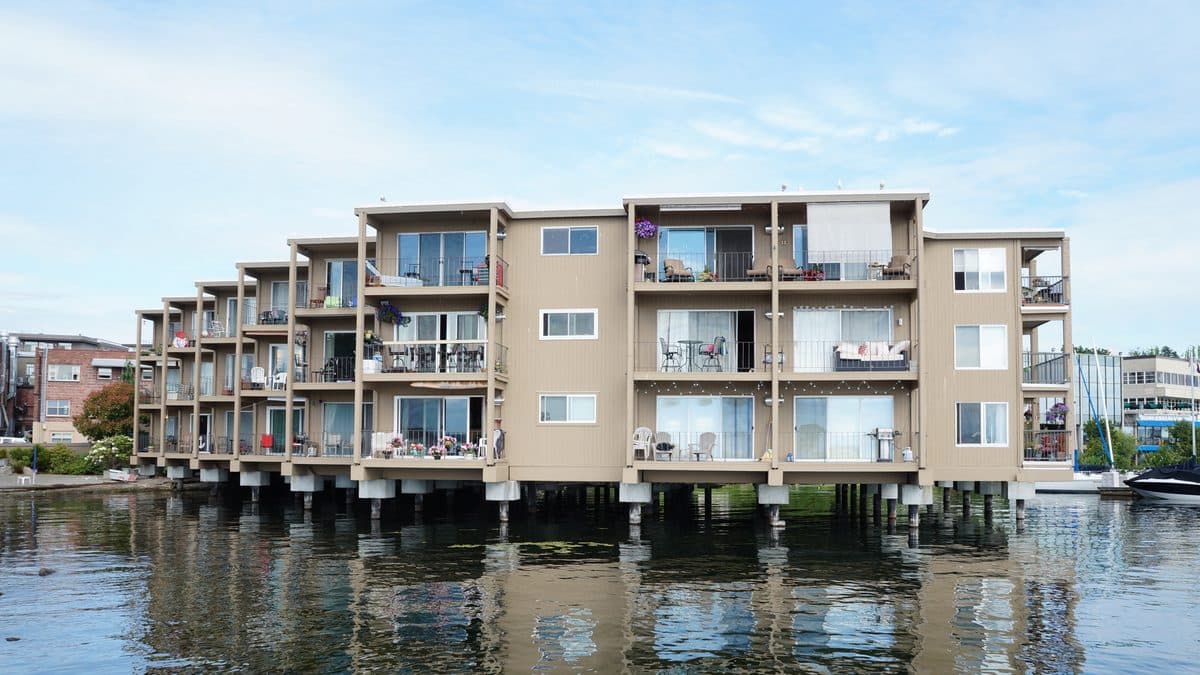
R.I. Gen. Laws §34-36.1-1.02 sets the Rhode Island Condominium Act's scope: it applies to condominiums created in the state after July 1, 1982. A condominium is a specific legal structure, individually owned units plus commonly owned elements, created by recording a declaration that expressly submits the property to the Act. A single-family subdivision where each owner holds the fee to a separate lot, with an association managing shared amenities or enforcing covenants, is not a condominium in that sense, and the Act's detailed rules on notice, fines, meetings, and records do not attach to it. Read the section at the Rhode Island General Assembly (opens in new tab).
For most Pollinator Patch readers in Rhode Island, that means the recorded declaration and any bylaws or rules the association has adopted under it are effectively the whole rulebook. There is no statewide statute filling in a notice-and-hearing procedure, a fine cap, or an amendment threshold the way there is in a growing list of other states in this series. The association is still typically organized as a nonprofit corporation, and where it is, the general Rhode Island Nonprofit Corporation Act (R.I. Gen. Laws Title 7, Chapter 6) supplies default rules for how the board itself has to be elected, meet, and keep records as a corporation. That statute governs the association's corporate housekeeping. It does not give owners a hearing right, a fine cap, or any word on landscaping.

A bill to fix this died in committee in 2026, so do not assume it exists
House Bill 8273, introduced March 11, 2026 by Representatives McNamara and Ackerman, would have added a new Chapter 36.2 to Title 34, cited as the Rhode Island Homeowner's Association Act. It was a detailed proposal: open board meetings with 14 days' notice, a right for members to speak at meetings, amendment thresholds requiring either a majority of voting interests plus two-thirds board approval or a flat 66⅔ percent vote, mandatory retention of association records for at least seven years, and a rule requiring member approval before the board spends more than $15,000 in a year on capital additions or improvements to the common elements. For a landscaping dispute, the part that matters most is that it would have required mandatory presuit mediation for disputes over parcel use, changes to a lot, or covenant enforcement, before either side could go to court.
The bill was referred to the House Judiciary Committee and did not advance. The Community Associations Institute publicly opposed it as inconsistent with the organization's preference for the Uniform Common Interest Ownership Act model, and reported that 17 of its advocates sent 285 opposition emails to committee members. The Rhode Island General Assembly's 2026 regular session adjourned sine die on June 11, 2026, with the bill still parked in committee, which under Rhode Island practice means it is dead for the session rather than merely delayed. None of H8273's provisions are law. It is worth knowing about because it shows the legislature recently considered, and for now declined, giving Rhode Island homeowners the procedural floor the state currently lacks. A homeowner citing H8273's mediation requirement to a board in 2026 would be citing a bill that never became law, which undercuts credibility rather than building it.

What a condominium owner gets that a subdivision homeowner does not
The contrast shows the legislature can write specific, numeric consumer protections when it decides to. R.I. Gen. Laws §34-36.1-3.02(a)(11) lets a condominium association "levy reasonable fines for violations of the declaration, bylaws, and rules and regulations of the association," but only after notice and an opportunity to be heard, and only as provided in §34-36.1-3.20.
§34-36.1-3.20: real dollar caps, for condominiums only
Notice and the opportunity for a hearing must be given before any fine is imposed. The hearing itself takes place before the executive board or a person the board designates. Daily fines are capped at $100 per day for a residential condominium and $500 per day for a commercial one. Fines that are not daily, a one-time penalty for a single violation, are capped at $500 for a residential condominium and $1,000 for a commercial one. If the dispute goes to court, the prevailing party can recover costs and, if represented by a member of the Rhode Island Bar, reasonable attorney's fees. Read the section at the Rhode Island General Assembly (opens in new tab).
A Rhode Island condominium owner cited for a landscaping violation on a patio or a limited common element therefore has a numeric ceiling to point to. A Rhode Island homeowner in a standard single-family subdivision, which is where most front-yard landscaping disputes happen, has none. Nothing in this post changes that gap. It exists because the legislature drew the Condominium Act's boundary exactly where its name says it drew it, and because the 2026 attempt to extend something comparable to subdivisions did not pass.
No solar override either, which is unusual in this series
Nearly every state examined in this series that has no landscaping protection has still picked exactly one thing to override a private declaration for: solar panels. Missouri, Virginia, Ohio, Wisconsin, Indiana, and Connecticut all bar an association from prohibiting rooftop solar, while saying nothing about what you may plant. Rhode Island breaks that pattern: it has not done either.

Rhode Island's Title 34, Chapter 40 is titled "Solar Easements," but it is a narrower tool than its name suggests. It defines a solar easement and describes how one can be voluntarily created, by a restriction, easement, covenant, or other instrument recorded between landowners, to protect a solar collector's access to sunlight from a neighbor's future construction. It does not void, override, or limit an existing declaration provision that bans or restricts solar panels on a home's own roof. No bill giving Rhode Island homeowners a right to install solar over an association's objection appears to have passed. That makes Rhode Island an outlier in this series: the legislature is silent on landscaping and on solar. That silence does not show the legislature considered and rejected a landscaping protection. It shows Rhode Island has not yet legislated in this area at all.
Could an old restriction have expired? A real question, but not simple arithmetic
A few states in this series turn out to have a covenant-expiry statute that can matter more than any HOA procedure section. Massachusetts voids a restriction after 30 years unless it is re-recorded. Wisconsin uses a 40-year clock. Rhode Island has something in the same family, its Marketable Record Title Act, R.I. Gen. Laws §§34-13.1-1 et seq., but it works on a different mechanism, and it is not a simple date-of-recording calculation the way Massachusetts's and Wisconsin's statutes are.
How Rhode Island's Marketable Record Title Act works
Under §34-13.1-2, a person holds "marketable record title" to an interest in land if the land records show an unbroken chain of title for forty years or more. The chain runs from a "root of title", defined in §34-13.1-1(e) as the most recent conveyance recorded at least 40 years before the date marketability is being checked. Under §34-13.1-4, that marketable record title is generally held free of interests and claims that depend on events before the root of title, which the statute declares null and void.
The key word is "before." Section 34-13.1-3 preserves, and does not extinguish, interests created by or arising out of the instruments that actually form the 40-year chain of title itself, meaning a restriction specifically referenced in a deed within that chain generally survives, while only a general, non-specific reference to "restrictions of record" is not enough to preserve it. The act also separately preserves interests kept alive by a properly recorded notice, and a short list of specific categories, a lessor's reversionary interest, easements, and interests of the government or a public utility, laid out in §34-13.1-7. Read the sections at the Rhode Island General Assembly (opens in new tab).
This is not something to calculate yourself
Because the Rhode Island statute runs from a "root of title" that shifts forward every time the property is sold, rather than from a fixed date the restriction was first recorded, whether a specific turf or landscaping restriction in your subdivision is still enforceable depends on exactly how it has been referenced in every deed since, not on subtracting 40 from the current year. A restriction specifically called out in your own deed, or in a deed in your 40-year chain, is very likely still preserved even if the original declaration is decades old. This is different from the flat, date-of-creation clocks in Massachusetts and Wisconsin, and treating it the same way is the single most likely way to get this wrong. This is a title-examination question for a Rhode Island real estate attorney or a title company, not something to resolve from a subdivision's recording date alone.
Where else you have leverage
What the declaration actually says
With no statewide procedure to fall back on, the exact words of your recorded declaration carry more weight in Rhode Island than in a state with a detailed HOA act. Ask for the specific section being cited, by number and page, not a paraphrase from a violation letter. A general tidiness or maintenance clause is not a turf mandate, and the gap between the two is often the whole dispute.

Even-handed enforcement
If your planting is cited while comparable or messier yards nearby are not, photograph them with dates. In a state governed largely by the declaration itself rather than a detailed statute, a documented pattern of inconsistent enforcement is one of the stronger practical arguments available to you.
The association's own corporate obligations
If your association is organized as a Rhode Island nonprofit corporation, which most are, it remains subject to the general Rhode Island Nonprofit Corporation Act (Title 7, Chapter 6) for how its board is elected, how meetings are called, and what corporate records it must keep. That statute does not create a landscaping-specific hearing right, but a board that is not following its own bylaws or basic corporate formalities when it cites you is on weaker ground procedurally, even without a CIOA-style statute to point to.
What your association can still require
Because Rhode Island has no landscaping statute and no umbrella HOA act for standard subdivisions, be realistic about what a clearly written declaration can enforce:
- Turf grass, or a minimum percentage of lawn, where the declaration says so plainly
- Pre-approval of landscaping changes through an architectural review process, where the documents establish one
- Maintenance standards covering dead plants, overgrowth, and edging
- Height limits near sidewalks, driveways, and street sight lines
- Rules about raised beds, borders, trellises, and other structures
- Setback and screening requirements
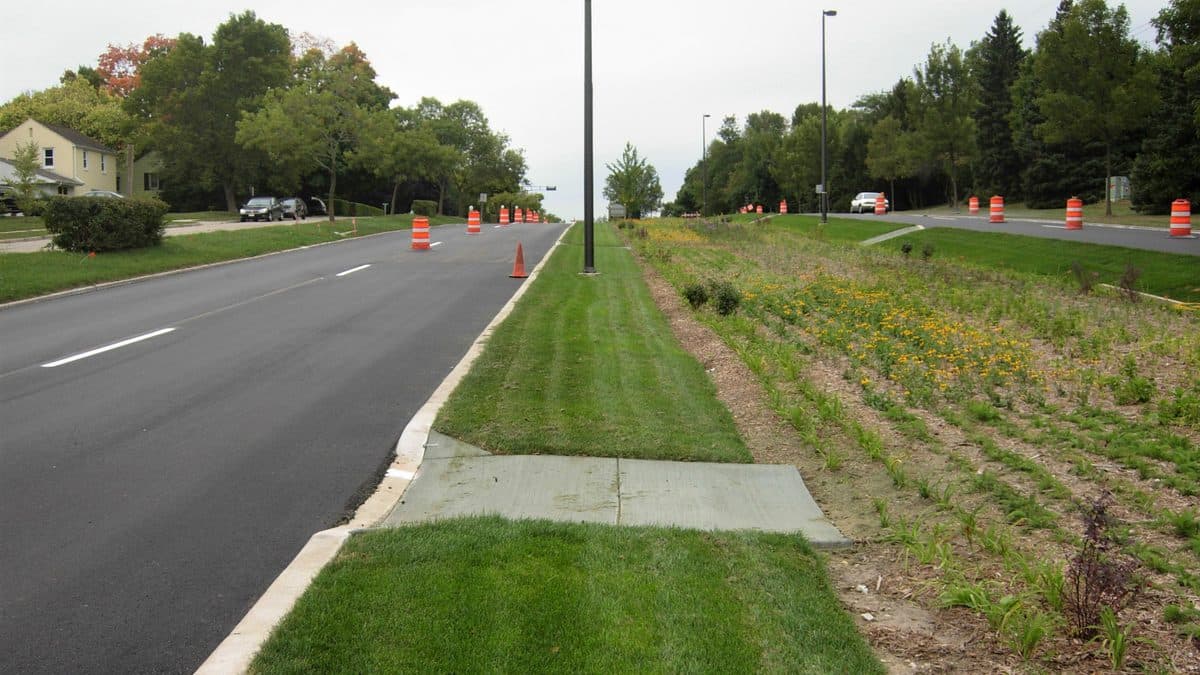
Cost-share can offset the work involved in a redesign that fits your declaration and reads as a funded, deliberate project rather than a challenge to the board. See the Rhode Island rebate page for what is currently available in your area.
How to respond when the rules feel unfair
- 1Confirm whether you are in a condominium or a standard subdivision.The Rhode Island Condominium Act's notice, hearing, and fine-cap rules only apply if your community is legally a condominium under §34-36.1-1.02. Most single-family HOA subdivisions are not, and everything about a statutory hearing right or a dollar cap on fines depends on getting this distinction right first.
- 2Ask for the exact recorded provision.Request the section of the declaration being cited, by number, not a summary from a violation letter or a property manager. In a state with no statewide procedure to fall back on, this is most of the leverage you have.
- 3If the restriction is old, ask a title professional whether it is still preserved.Do not assume it has expired, and do not assume it has not. Rhode Island's Marketable Record Title Act works from a shifting 40-year root of title, not a flat date, so this needs someone who can read your chain of title.
- 4Bring a tidy plan and a record of comparable yards.A plant list, a simple layout, and a maintenance schedule read as intentional rather than as a challenge to the board's authority. Dated photos of comparable, uncited yards on the same street are useful if enforcement looks selective.
When to involve a lawyer
- You are not sure whether your community is legally a condominium under the Rhode Island Condominium Act, which changes whether a statutory notice-and-hearing right and fine caps apply to you at all
- You want to know whether an old subdivision restriction is still enforceable under the Marketable Record Title Act, which requires reading your actual chain of title, not just checking a recording date
- The association is threatening a lien, a lawsuit, or a fine with no clear notice or opportunity to respond
- You are organizing a declaration amendment and need to confirm the vote threshold your specific declaration requires, since Rhode Island sets no statutory default for a standard subdivision
- You are weighing whether to reference House Bill 8273's mediation proposal in a dispute, since it did not become law and citing it as though it did could undercut your position
This is not legal advice.
We are a gardening app, not lawyers. This post summarizes publicly available Rhode Island law as of 2026. House Bill 8273 did not pass in the 2026 session and is not law. Rhode Island has no native-plant or landscaping-protection statute, no umbrella HOA act for non-condominium communities, and no solar-covenant override statute. Whether an old restriction survives under the Marketable Record Title Act depends on your property's specific chain of title. If you are facing charges, a lien, or a legal threat, talk to a real estate attorney licensed in Rhode Island.
People also ask
Does Rhode Island have a law protecting native landscaping from HOAs?
No. Rhode Island has no native-plant, pollinator, or xeriscape statute, and nothing comparable to Texas Property Code §202.007 or California Civil Code §4735. If a landscaping or turf requirement appears in your recorded declaration, no Rhode Island statute overrides it. No bill creating that kind of protection has passed in Rhode Island as of this writing.
Is there a general Rhode Island homeowners association act?
Not for standard, non-condominium subdivisions. The Rhode Island Condominium Act (R.I. Gen. Laws §§34-36.1-1.01 et seq.) governs condominiums created after July 1, 1982, with detailed notice, hearing, and fine-cap rules, but by its own terms in §34-36.1-1.02 it does not reach a single-family subdivision HOA. A 2026 bill, House Bill 8273, would have created a general Rhode Island Homeowners' Association Act, but it died in the House Judiciary Committee before the legislature adjourned in June 2026. Most standard Rhode Island HOAs run on their recorded declaration plus the general Rhode Island Nonprofit Corporation Act (Title 7, Chapter 6), which governs the association's corporate operations but not landscaping.
Does Rhode Island cap how much an HOA can fine you?
Only for condominiums. R.I. Gen. Laws §34-36.1-3.20 caps a condominium association's daily fines at $100 per day for a residential unit ($500 for commercial) and one-time fines at $500 for a residential unit ($1,000 for commercial), after notice and an opportunity to be heard. Those caps do not apply to a standard single-family HOA subdivision, which has no statutory fine cap at all, only whatever limit, if any, its own declaration or bylaws set.
Does Rhode Island protect solar panels from HOA restrictions?
No statute found does this. Rhode Island's Title 34, Chapter 40 lets neighboring landowners voluntarily create a solar easement to protect a solar collector's access to sunlight, but it does not void or override an existing declaration provision that bans or restricts rooftop solar panels. That puts Rhode Island in a different position from Missouri, Virginia, Ohio, Wisconsin, Indiana, and Connecticut, all of which override HOA restrictions on solar while leaving landscaping alone. Rhode Island currently has no override for either.
Can an old Rhode Island HOA restriction expire?
Possibly, but not on a simple date calculation. Rhode Island's Marketable Record Title Act (R.I. Gen. Laws §§34-13.1-1 et seq.) can extinguish an old interest that predates a property's 40-year "root of title," but it generally preserves any restriction specifically referenced within that 40-year chain of title, which many subdivision restrictions are. Unlike Massachusetts's flat 30-year rule or Wisconsin's 40-year rule, this requires reading your property's actual recorded chain of title, not just subtracting 40 from the current year. Check with a Rhode Island real estate attorney or title company before relying on it.
Planning a native yard in Rhode Island?
Pollinator Patch helps you build a plant plan that fits your declaration, with the tidy documentation review committees respond to. Plant list, layout, and maintenance schedule, all printable.