Black Swallowtail
Papilio polyxenes
Last reviewed: September 2026
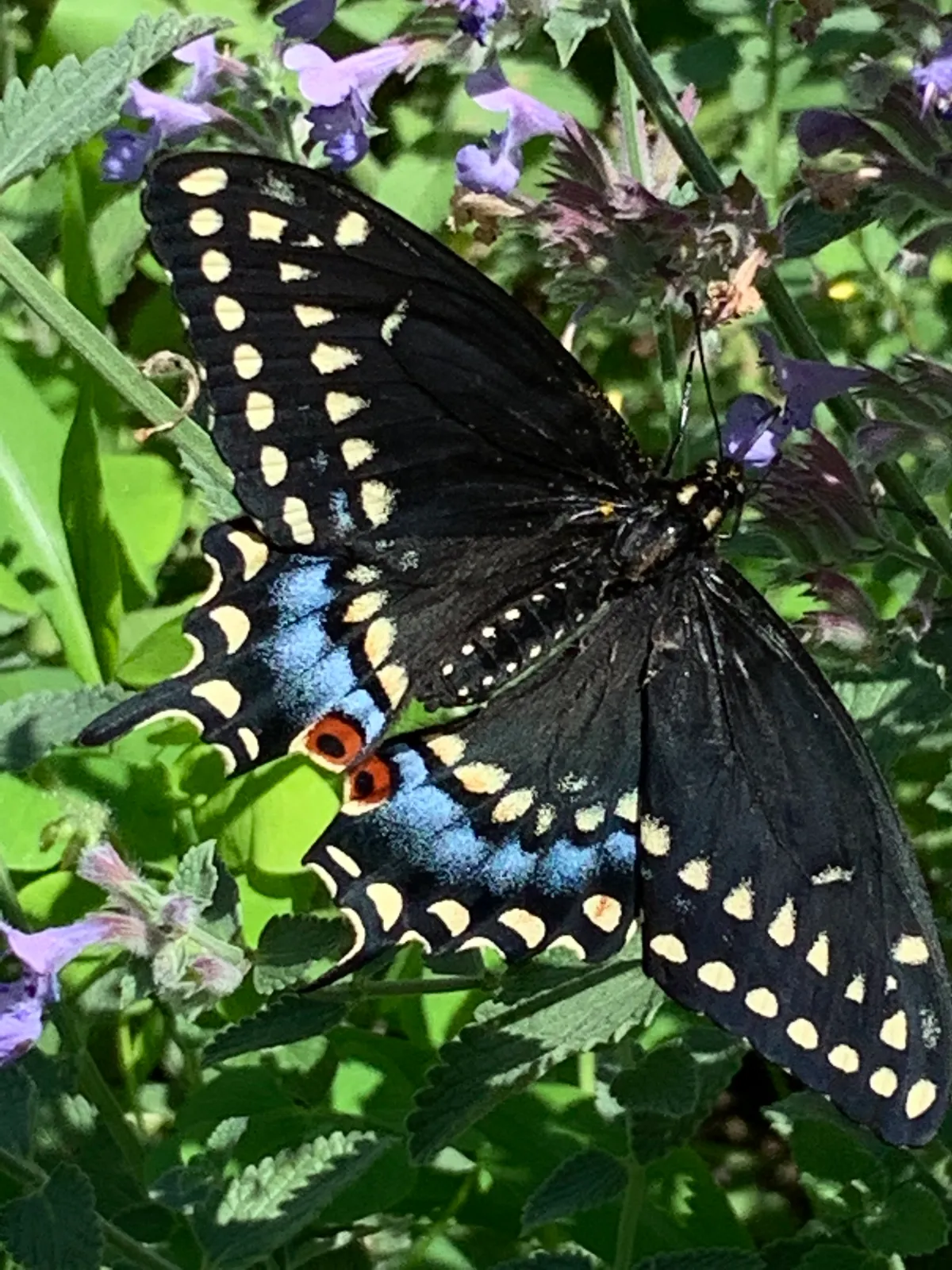
Black Swallowtail is known for its Black wings with yellow or orange spotted pattern.
Host plants
Black Swallowtail caterpillars can only develop on their larval host plants. Plant one of these natives and you can host the full life cycle in your own yard (host plant associations per the Xerces Society (opens in new tab)).
- Carrot (Daucus carota)
- Wild Parsnip (Pastinaca sativa)
- Petroselinum crispum
- Ruta graveolens
- Foeniculum vulgare
- Golden Zizia (Zizia aurea)
Want Black Swallowtail in your yard? Open Carrot in Pollinator Patch and plan an HOA-friendly garden around it for your region.
Family
Papilionidae
Wingspan
80–110 mm
Active
April through September
Range
TX, AL, AR, AZ and 40 more states
How to identify it
Look for black wings with two rows of yellow or orange spots, and a distinctive blue-green iridescent scaling on the hindwings.
Good to know
- Caterpillars have a unique defense mechanism where they emit a foul-smelling scent when threatened
- Males and females have slightly different wing patterns
- Named after the Greek mythological hero Polyxenes
Common questions
- What do Black Swallowtail caterpillars eat?
- Black Swallowtail caterpillars feed on Daucus carota, Pastinaca sativa, Petroselinum crispum, Ruta graveolens, Foeniculum vulgare, and Zizia aurea. These are the larval host plants the caterpillars must have to develop, per the Xerces Society and host plant records compiled from GBIF and iNaturalist.
- Where do Black Swallowtail live?
- Black Swallowtail is found across TX, AL, AR, AZ and 40 more states.
- When are Black Swallowtail active?
- Adult Black Swallowtail are typically on the wing from April through September.
Range and life-history data compiled from iNaturalist, GBIF, and the Xerces Society. Photo licensed cc-by.