American Blue Vervain
Verbena hastata
Last reviewed: September 2026
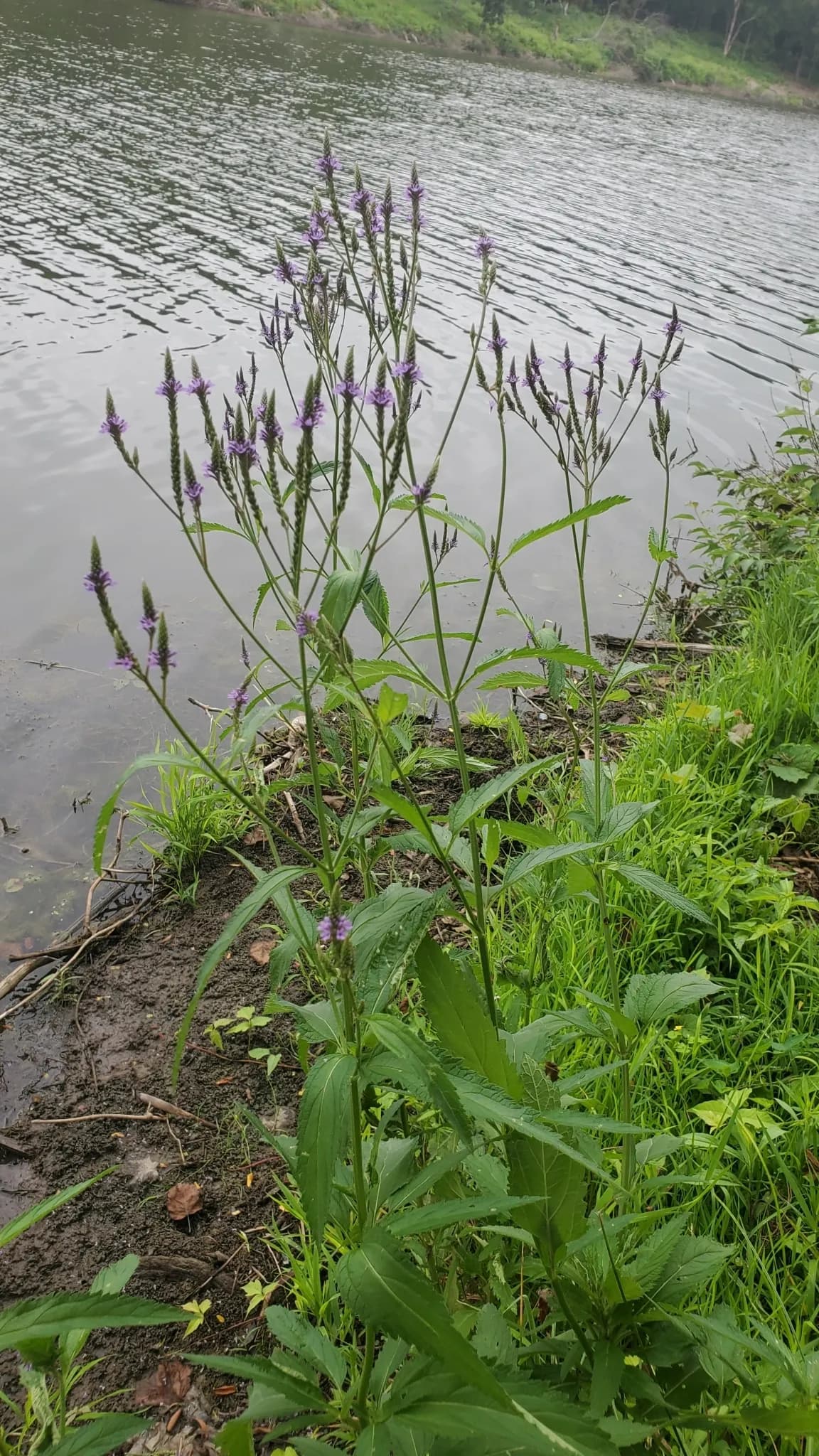
Verbena hastata, or blue vervain, is an upright perennial forb that blooms June through August with slender spikes of small purple flowers. It grows best in full sun with consistently moist to wet soil.
Toxicity unknown
American Blue Vervain (Verbena hastata) is not listed by the ASPCA Animal Poison Control Center (opens in new tab) or the other sources we check, so we have no verdict for it either way. Absence from those lists is not a clearance. If your pet shows symptoms after eating any plant, call the ASPCA at (888) 426-4435.
Light
full sun
Water
medium
Size
24"–60" H × 12"–24" W
Bloom
Jun, Jul, Aug
Native to
AL, AZ, CA, CO and 41 more states
Pollinators
bees, butterflies, beetles
Deer
Resistant (per Prairie Moon Nursery)
Before you buy
Your city may pay you to plant this
Cities and water utilities offer rebates for replacing lawn with native and water-wise plants. We track 459 programs across 44 states, each with a link to the provider and the date we last checked it.
Find rebates in your areaPicture natives in your own yard
Upload a photo of your yard and Patch Vision shows a rendering of it planted with natives for your region, like American Blue Vervain.


Browse plants for this ecoregion
American blue vervain is a tall native perennial that produces slender spikes of small purple-blue flowers from June through August. This upright wildflower can reach up to 5 feet tall and forms clumps that spread moderately over time.
Growing American Blue Vervain
Grow American Blue Vervain in full sun and medium water. Mature plants reach 24 to 60 inches tall and spread 12 to 24 inches wide. Expect low maintenance to keep it looking intentional in a front yard.
How to care for American Blue Vervain, by region
How to care for American Blue Vervain where it is actually grown: year-round basics plus what to do each season, region by region, with the sources for each.
Care guidance last updated: October 2026
Central Corn Belt Plains (includes Chicago, IL)
Year-round
Blue vervain likes sun and moist soil and is happy near a rain garden or pond.
- Full sun to partial shade works.
- Average to wet soil is fine, and it tolerates temporary standing water.
- Pinch the tops to encourage a bushier plant.
- It is hardy in USDA zones 3 to 8.
Fall
Fall flowers turn into seed that birds eat.
- Cardinals, sparrows and juncos eat the seeds.
- It spreads slowly by rhizomes and self-seeding, so pull extra seedlings if you want to keep it in bounds.
Winter
Winter needs little beyond leaving the seed for birds.
- It is hardy in USDA zones 3 to 8.
- Seeds are food for songbirds, so you can leave the dry stems standing.
Spring
Spring is when to pinch and to place it in a moist spot.
- Pinch the tops to encourage branching and a bushier habit.
- Put it where soil stays moist, such as a rain garden or pond edge.
Summer
Summer brings a long run of purple flower spikes.
- Flowers open from the bottom of the spike to the top in mid to late summer.
- Bloom lasts about a month to a month and a half.
- Keep soil moist, since it grows best in moist to wet conditions.
Sources: NC State Extension Plant Toolbox: Verbena hastata, Illinois Wildflowers: Blue Vervain
Cross Timbers (includes Fort Worth, TX)
Year-round
Blue vervain is a tall, upright native for the wetter, low spots of the Cross Timbers around Fort Worth. It wants steady moisture, not a dry bed. Give it a spot that stays damp, like a low corner, a downspout catch, or a rain garden, and full sun to part shade.
- Native to northern Texas, which includes the Cross Timbers, and it grows wild in wet meadows, stream banks, and low fields (Flora of the Southeastern United States, NC Botanical Garden).
- Plant it where the soil stays moist. It is rated FACW, a facultative wetland plant, so it does best in damp ground and struggles in a dry, fast-draining bed (Flora of the Southeastern United States).
- Full sun gives the fullest flower spikes, but it takes part shade fine.
- It attracts butterflies and has special value to native bees, and it is a larval host for the common buckeye butterfly (Xerces Society, Lady Bird Johnson Wildflower Center).
- Blue vervain is not on the ASPCA toxic plant list, unlike lemon verbena and lantana (ASPCA Animal Poison Control plant database).
Its narrow, tidy flower spikes and upright habit read as an intentional planting in a damp bed, which keeps a low spot looking cared for instead of weedy.
Fall
Flowering winds down into fall and seed heads form. You can leave the seed heads for birds and self-sowing or tidy them up if you want a neater look.
- The last flowers fade through fall as the plant sets seed.
- Leave some seed heads standing. Birds eat the seed and the plant will drop seed to come back on its own.
- Cut spent stems back partway if you prefer a tidier bed heading into winter.
- Keep watering until cool, wet weather arrives, especially in a drier bed.
Winter
Blue vervain dies back to the ground in winter and rests. There is little to do. Standing stems and seed heads can be left up or trimmed.
- The plant goes dormant and dies back to the base in winter. Bare stems are normal, not a dead plant.
- Leave the dried stems and seed heads up for winter interest and to feed birds, then cut them down in late winter before new growth.
- The cold, damp winter helps any dropped seed sprout the next spring.
- No watering needed while dormant in a damp spot.
Trimming the dried stems by late winter keeps a dormant bed looking kept rather than neglected.
Spring
Spring is for getting new plants in the ground and keeping the soil damp while roots take hold. Blue vervain comes up from its base as the weather warms.
- Plant transplants or divisions in early to mid spring so roots settle before summer heat.
- Keep the soil consistently moist while young plants establish. This is a wet-meadow plant, not a dry-bed plant.
- If you started from seed, expect slow, uneven sprouting. The seed germinates better after a cold, damp winter spell.
- Hold off on heavy feeding. Rich, damp soil is enough.
Summer
Summer is the main show. Tall spikes of small blue-purple flowers open from June into fall and pull in bees and butterflies. Water is the one thing to watch in Cross Timbers heat.
- Bloom runs June through October, so summer is peak flowering (Lady Bird Johnson Wildflower Center).
- Water during dry stretches. In a normal garden bed it will wilt and stall if it dries out, since it naturally grows in wet ground.
- Leave the flowers up for the bees. It has special value to native bees and feeds butterflies (Xerces Society, Lady Bird Johnson Wildflower Center).
- A layer of mulch over the root zone helps hold the moisture it wants.
The vertical spikes give a bed clean height and structure through summer, an easy way to look deliberate next to shorter plantings.
Sources: Flora of the Southeastern United States, Verbena hastata (NC Botanical Garden), Lady Bird Johnson Wildflower Center, Verbena hastata, Xerces Society, Special Value to Native Bees (via LBJWC var. hastata record), ASPCA Animal Poison Control toxic plant list (lemon verbena entry, blue vervain not listed)
Texas Blackland Prairies (includes Dallas, TX)
Year-round
Blue vervain is a native for the damp, low ground of the Blackland Prairies around Dallas. It grows tall with slim blue-purple flower spikes. The whole trick is moisture. Put it where water collects, in full sun to part shade, and it will thrive.
- Native to northern Texas, which reaches into the northern Blackland Prairies, and it grows in wet meadows, stream banks, and low fields (Flora of the Southeastern United States, NC Botanical Garden).
- It is rated FACW, a facultative wetland plant, so give it moist ground. A low spot, a rain garden, or a downspout catch suits it better than a dry bed (Flora of the Southeastern United States).
- Full sun for the best spikes, part shade is fine.
- It draws butterflies, has special value to native bees, and is a larval host for the common buckeye butterfly (Xerces Society, Lady Bird Johnson Wildflower Center).
- Blue vervain is not on the ASPCA toxic plant list, unlike lemon verbena and lantana (ASPCA Animal Poison Control plant database).
The neat, upright flower spikes read as a chosen planting in a damp bed, which keeps a low, wet corner looking intentional instead of overgrown.
Fall
Bloom fades into fall and the plant sets seed. Leave the seed heads for birds and self-sowing, or clean them up for a tidier bed.
- Flowering tapers off in fall as seed forms on the spikes.
- Leave some seed heads up for the birds, and the plant will drop seed to return on its own.
- Trim spent stems partway if you want a neater look going into winter.
- Keep watering until cool, wet weather sets in, especially in a drier bed.
Winter
In winter the plant dies back to the ground and rests. There is almost nothing to do. You can leave the dried stems standing or cut them down.
- It goes dormant and dies back to its base. Bare stems in winter are normal, not a lost plant.
- Leave the dried stems and seed heads for winter texture and bird food, then cut them to the ground in late winter before new growth starts.
- A cold, damp winter helps any dropped seed sprout the next spring.
- No watering needed while it is dormant in a moist spot.
Cutting the dried stems down by late winter keeps a dormant bed looking kept rather than left to go.
Spring
Spring is planting time and root time. Get new plants in early and keep the ground damp while they settle. The plant sends up fresh growth from its base as it warms.
- Set out transplants or divisions in early to mid spring so roots establish before summer.
- Keep the soil steadily moist for young plants. It is a wet-meadow native and does not want to dry out.
- Seed sprouts slowly and unevenly, and it comes up better after a cold, damp winter.
- Skip heavy fertilizer. Damp, decent soil is enough.
Summer
Summer is peak bloom. Blue-purple spikes open from June into fall and feed bees and butterflies. In Blackland heat, moisture is the thing to keep an eye on.
- Bloom runs June through October, so summer carries the flowers (Lady Bird Johnson Wildflower Center).
- Water in dry spells. In a regular bed it wilts and stalls when it dries out, because it naturally grows in wet ground.
- Leave flowers up through summer to feed pollinators. It has special value to native bees and draws butterflies (Xerces Society, Lady Bird Johnson Wildflower Center).
- Mulch over the roots helps hold the moisture it needs through the hottest weeks.
The tall spikes add clean vertical structure to a summer bed, an easy way to look deliberate beside lower plants.
Sources: Flora of the Southeastern United States, Verbena hastata (NC Botanical Garden), Lady Bird Johnson Wildflower Center, Verbena hastata, Xerces Society, Special Value to Native Bees (via LBJWC var. hastata record), ASPCA Animal Poison Control toxic plant list (lemon verbena entry, blue vervain not listed)
In an HOA neighborhood
American Blue Vervain takes more care to keep looking intentional in a front yard. Maintenance level: low. Consider it for backyard or mid-zone beds rather than the street edge.
Works well in: backyard only.
- Very tall and can appear weedy
- Informal wildflower appearance
- May self-seed aggressively
Wildlife value
Host plant for common buckeye butterfly.
The long blooming period provides nectar for bees, butterflies, and beetles throughout summer. Seeds are eaten by birds and the foliage supports butterfly larvae.
Common questions
- When does Verbena hastata bloom?
- Verbena hastata blooms from June through August, sending up narrow candelabra-like spikes of small purple flowers that open in succession along each spike.
- What growing conditions does blue vervain prefer?
- Blue vervain grows best in full sun with medium to consistently wet soil. It handles occasional flooding well, which makes it a good fit for rain gardens, ditches, and low spots that stay damp after rain.
- What pollinators visit Verbena hastata?
- Bees, butterflies, and beetles regularly visit the flowers of Verbena hastata for nectar and pollen.
- Does Verbena hastata die back in winter?
- Yes, it is a herbaceous perennial that dies back to the ground with frost and regrows from its root crown the following spring.
- How tall and wide does blue vervain grow?
- Blue vervain typically forms an upright clump with stiff, square stems topped by branching flower spikes, giving it a candelabra shape by midsummer.
- Is American Blue Vervain HOA-friendly?
- American Blue Vervain takes more care to look intentional in a front yard. Consider it for backyard or mid-zone beds rather than the street edge.
These answers were drafted with an AI model from this plant's data. Verify care details with a local expert.
Native range data from the World Checklist of Vascular Plants (Kew). Pollinator and host plant associations compiled from GBIF, iNaturalist, and published ecological literature.
If something looks wrong
Common plant problems, and what to check first
These come up on almost any plant. Each guide lists the likely causes in the order they are worth ruling out, with one thing to check before you act on any of them, and links to the source it came from.
- It is dying right after planting
- Leaves turning yellow
- Wilting even though I watered it
- Brown crispy leaf tips
- Bugs on the plant
Ready to grow American Blue Vervain? Add it to your garden in Pollinator Patch to track it and get season-by-season care guidance.