American Dittany
Cunila origanoides
Last reviewed: September 2026
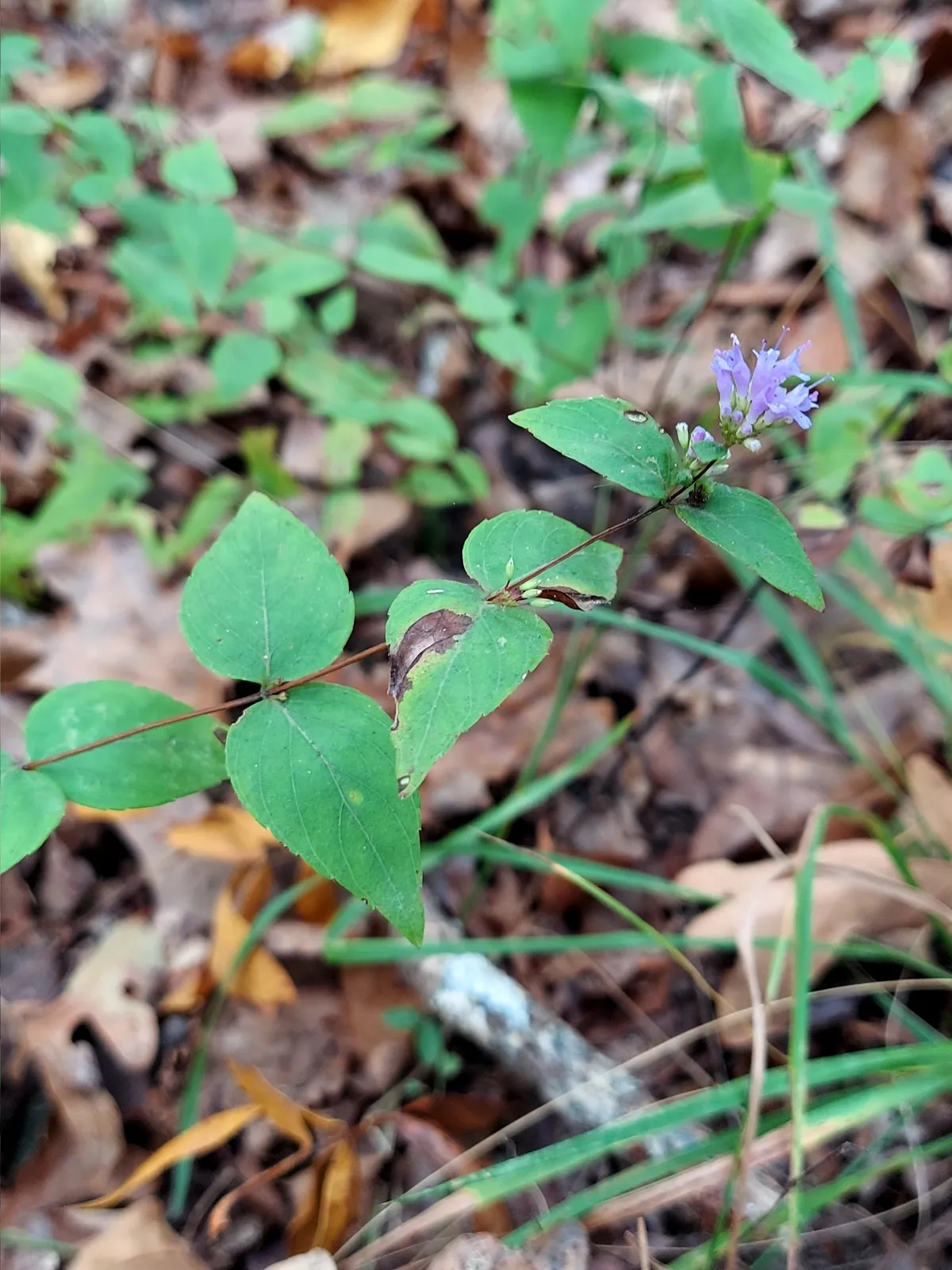
Toxicity unknown
American Dittany (Cunila origanoides) is not listed by the ASPCA Animal Poison Control Center (opens in new tab) or the other sources we check, so we have no verdict for it either way. Absence from those lists is not a clearance. If your pet shows symptoms after eating any plant, call the ASPCA at (888) 426-4435.
Light
part sun
Water
low
Size
12"–24" H × 12"–18" W
Bloom
Jul, Aug, Sep
Native to
AL, AR, DE, FL and 18 more states
Pollinators
bees, butterflies, moths
Before you buy
Your city may pay you to plant this
Cities and water utilities offer rebates for replacing lawn with native and water-wise plants. We track 459 programs across 44 states, each with a link to the provider and the date we last checked it.
Find rebates in your areaPicture natives in your own yard
Upload a photo of your yard and Patch Vision shows a rendering of it planted with natives for your region, like American Dittany.


Browse plants for this ecoregion
American dittany is a compact native perennial with small, aromatic leaves and tiny white or pink flowers that bloom from summer into fall. This low-maintenance plant forms neat, mounded clumps and tolerates dry conditions well once established. The foliage has a pleasant minty fragrance when brushed against.
How to care for American Dittany, by region
How to care for American Dittany where it is actually grown: year-round basics plus what to do each season, region by region, with the sources for each.
Care guidance last updated: September 2026
Ouachita Mountains (includes Hot Springs, AR)
Year-round
American dittany is a low, woody-based mint-family perennial that stays under a foot and a half tall and about as wide, with narrow aromatic leaves and small purple to white flowers late in the season. It wants full sun to light shade, lean rocky or sandy soil with sharp drainage, and very little supplemental water once it settles in.
- Full sun to partial shade works well, meaning a few hours of shade a day is fine
- Give it dry, shallow, rocky or sandy soil with fast drainage and a slightly acidic pH. Heavy wet clay is the one thing to avoid
- Mature size runs about 9 to 18 inches tall and just as wide, so space plants roughly a foot apart
- Once established, rainfall alone carries it through Hot Springs dry spells, no regular watering needed
- Comfortably hardy through Hot Springs winters, in the USDA zone 7b to 8a range for this part of Arkansas
Fall
Fall is American dittany's showiest season, with its purple to white flowers peaking and then, after the first hard freeze, thin curls of frozen moisture known as frost flowers forming at the base of the stems.
- Flowers continue from late summer into September and often into October
- After the season's first hard freeze, commonly in early November around Hot Springs, the foliage shifts from green to a deep reddish purple
- That first hard freeze is also when frost flowers can form, thin curls of ice that push out from splits at the base of the stems, a well-known feature of this species
- No deadheading is required. Seed heads can stay for winter interest or be cut back once the frost flower show is over
Cutting the spent stems back once the frost flowers have finished keeps the front bed tidy for winter, an HOA-friendly fall task.
Winter
Winter is dormant season for American dittany. Top growth dies back to a low woody crown, and the same cold, humid mornings that make frost flowers in fall can bring more of them through winter after any hard freeze.
- Top growth goes fully dormant. Cut the dead stems down to a couple of inches for a clean winter look, or leave them standing for more frost flower shows on cold mornings
- Well-drained, rocky or sandy soil matters most in winter. Wet, cold soil is the main way this plant struggles
- It is comfortably hardy through typical Hot Springs winter lows without mulch or covering, in the USDA zone 7b to 8a range
- New growth will not resume until spring warmth returns, so bare stems through winter are normal, not a problem
A late-winter cutback to a low, even mound gives the bed a clean look before spring growth starts, an HOA-conscious way to close out the dormant season.
Spring
Spring is when American dittany wakes up from its winter crown and pushes new aromatic foliage, usually once nights warm up after the last frost in the Hot Springs area.
- New leafy growth comes up from the woody base as soil warms in April, once the area's typical last frost has passed (commonly late March around Hot Springs)
- If you did not cut back last year's dead stems in late winter, trim them to a low mound now before new growth gets tall
- Spring is a good time to dig and divide an established clump if you want more plants for another bed
- Water new spring transplants regularly for the first few weeks. Established plants can rely on rain
A quick spring cutback of last year's stems keeps the bed looking tidy just as the rest of the yard wakes up, an HOA-friendly start to the season.
Summer
Summer is dittany's easiest season, since Hot Springs' heat and dry stretches are exactly the lean, rocky, well-drained conditions this plant is built for.
- Full sun to part shade suits it well, and established plants take Arkansas' hot, humid summer stretches in stride
- Skip supplemental watering on established plants. Soggy summer soil is more likely to hurt this plant than a dry spell
- The narrow aromatic leaves and low mounded shape, 9 to 18 inches, hold their form through summer without staking or shearing
- Flower buds are setting through mid to late summer, with the purple to white blooms opening toward August
Its compact, self-contained mound needs no summer shearing to stay neat along a front walk or bed edge, an HOA-friendly low-maintenance look.
Sources: NC State Extension Gardener Plant Toolbox: Cunila origanoides, Lady Bird Johnson Wildflower Center Native Plant Database: Cunila origanoides, Almanac.com Frost Dates for Hot Springs, Arkansas (community tip), University of Arkansas Cooperative Extension: USDA Hardiness Zones
In an HOA neighborhood
American Dittany takes more care to keep looking intentional in a front yard. Maintenance level: low. Consider it for backyard or mid-zone beds rather than the street edge.
Works well in: backyard only.
- Very small flowers may appear weedy to untrained eyes
- Uncommon plant that HOAs might not recognize as intentional landscaping
- Dies back completely in winter leaving bare ground
Wildlife value
The small flowers are particularly valuable for native bees and smaller butterflies during late summer when many other blooms have faded. Moths are also attracted to the fragrant foliage and nectar.
Common questions
- How much sun does American Dittany need?
- American Dittany grows best in part sun conditions.
- When does American Dittany bloom?
- American Dittany blooms in July, August, and September.
- Where is American Dittany native?
- American Dittany (Cunila origanoides) is native to AL, AR, DE, FL and 18 more states, per vouchered herbarium specimen records and regional native plant society lists.
- What pollinators does American Dittany attract?
- American Dittany draws bees, butterflies, and moths.
- Is American Dittany HOA-friendly?
- American Dittany takes more care to look intentional in a front yard. Consider it for backyard or mid-zone beds rather than the street edge.
Native range data from vouchered herbarium specimen records and regional native plant society lists. Pollinator and host plant associations compiled from GBIF, iNaturalist, and published ecological literature.
If something looks wrong
Common plant problems, and what to check first
These come up on almost any plant. Each guide lists the likely causes in the order they are worth ruling out, with one thing to check before you act on any of them, and links to the source it came from.
- It is dying right after planting
- Leaves turning yellow
- Wilting even though I watered it
- Brown crispy leaf tips
- Bugs on the plant
Ready to grow American Dittany? Add it to your garden in Pollinator Patch to track it and get season-by-season care guidance.