American Hazelnut
Corylus americana
Last reviewed: October 2026
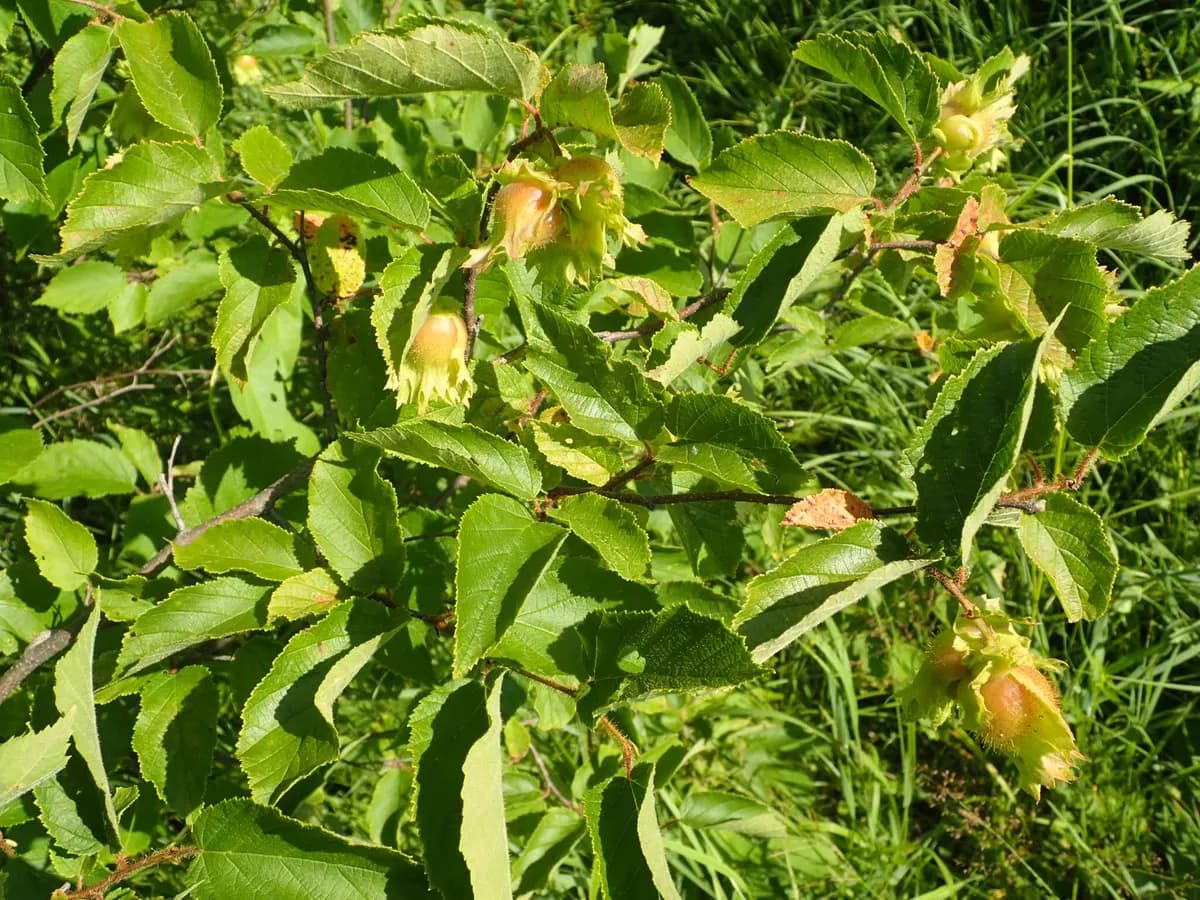
American hazelnut is a multi-stemmed shrub that blooms from March to May with small catkins before its leaves emerge, doing well in part sun and average garden soil.
Toxicity unknown
American Hazelnut (Corylus americana) is not listed by the ASPCA Animal Poison Control Center (opens in new tab) or the other sources we check, so we have no verdict for it either way. Absence from those lists is not a clearance. If your pet shows symptoms after eating any plant, call the ASPCA at (888) 426-4435.
The USDA PLANTS Database (opens in new tab) does not flag American Hazelnut as toxic to livestock.
Light
part sun
Water
medium
Size
60"–120" H × 60"–120" W
Bloom
Mar, Apr, May
Native to
AL, AR, CT, DE and 31 more states
Pollinators
bees, beetles
Before you buy
Your city may pay you to plant this
Cities and water utilities offer rebates for replacing lawn with native and water-wise plants. We track 459 programs across 44 states, each with a link to the provider and the date we last checked it.
Find rebates in your areaPicture natives in your own yard
Upload a photo of your yard and Patch Vision shows a rendering of it planted with natives for your region, like American Hazelnut.


Browse plants for this ecoregion
American hazelnut is a native shrub that produces edible nuts in fall and displays attractive yellow autumn foliage. It forms a rounded, multi-stemmed growth habit and blooms with dangling catkins in early spring before the leaves emerge.
Growing American Hazelnut
Grow American Hazelnut in part sun and medium water. Mature plants reach 60 to 120 inches tall and spread 60 to 120 inches wide. Expect moderate maintenance to keep it looking intentional in a front yard.
How to care for American Hazelnut, by region
How to care for American Hazelnut where it is actually grown: year-round basics plus what to do each season, region by region, with the sources for each.
Care guidance last updated: September 2026
Southeastern Plains (includes Tallahassee, FL)
Year-round
American hazelnut is a tough, low-fuss shrub that grows well in north Florida once it settles in, and Tallahassee's climate falls right in its comfort zone.
- Give it part shade to part sun. UF/IFAS lists this shrub as hardy from USDA zone 7 through zone 9, and Tallahassee sits in zone 9a, so it is within range.
- It handles a lot of different soils, sandy, clay, acidic, or alkaline, as long as the spot drains reasonably well.
- Water it regularly while it gets established. Once it has settled in, it usually needs little or no extra water if it is planted somewhere that stays naturally moist.
- It grows into a wide, multi-stemmed shrub and spreads by sending up new shoots from its roots over time, so plan for it to widen.
- No major pest or disease problems are typically reported on this plant.
This shrub spreads by root suckers into a wide, multi-stem thicket over time. For an HOA-friendly look, give it room away from the property line and walkways, and plan to cut back suckers if you want to keep it tidy and contained.
Fall
Fall is when this shrub puts on its best show in Tallahassee, with nuts ripening and the leaves turning color as the weather finally cools off.
- Nuts ripen and drop in fall. Birds and squirrels eat them, so expect some cleanup or wildlife visitors underneath the shrub.
- The foliage turns a bright color before it drops for the season.
- Tallahassee's average first frost usually lands in mid-to-late November. Once the leaves are down and the plant has gone dormant, this is a good window for any structural pruning or thinning out suckers.
- Keep watering through fall if the weather stays dry. Once the plant is dormant, established shrubs generally do not need it.
Winter
Winters in Tallahassee are mild with just a few real cold snaps, which makes this the easiest season for the shrub and the best window for major pruning.
- Tallahassee's zone 9a winters rarely drop below the low 20s Fahrenheit, well within what this shrub can take since it is listed hardy down through zone 7.
- Late winter, while the shrub is still bare and dormant, is the best time for any major structural pruning or removing old, crowded stems.
- It does not need winter watering once established, unless the season turns unusually dry.
- Watch for new root suckers to start popping up again as the shrub wakes up toward the end of winter.
Spring
Spring in Tallahassee is establishment and light cleanup season for this shrub, and new growth can still get caught by a late cold snap.
- Tallahassee's average last frost usually falls in early-to-mid March, and north Florida sees more late-frost risk than the rest of the state, so keep an eye on the forecast if you just planted or pruned hard.
- Water a young or newly planted hazelnut regularly through spring while its roots are still establishing.
- This is a good time to cut back extra root suckers around the base if you want to keep the shrub's footprint under control.
- No spraying needed. This plant does not have significant pest problems reported in Florida landscapes.
Summer
Summer in Tallahassee is hot, humid, and usually wet, so an established hazelnut mostly takes care of itself.
- Once established, this shrub handles Tallahassee's summer heat and regular rainfall well and usually does not need extra watering except during a longer dry stretch.
- If it is still young, in its first year or two, check the soil during any multi-week dry spell and water at the base if it feels dry a few inches down.
- This shrub can technically be pruned any time of year, but summer heat is harder on it, so save any major cuts for a cooler month if you can.
- No significant summer pest or disease issues are typically reported on it in Florida.
Sources: UF/IFAS EDIS FPS146: Corylus americana, American Filbert, Lady Bird Johnson Wildflower Center: Corylus americana (American hazelnut), UF/IFAS EDIS VH021/SP103: Florida Vegetable Gardening Guide (north Florida late-frost note)
In an HOA neighborhood
American Hazelnut is an HOA-friendly choice. Maintenance level: moderate. Tidiness: 3 out of 5.
Works well in: foundation, mid zone.
- Large mature size may overwhelm smaller spaces
- Can sucker and spread if not managed
Wildlife value
Host plant for henry's elfin, green comma, banded hairstreak.
The early spring catkins provide crucial pollen for native bees and beetles when few other food sources are available. The nuts feed squirrels, chipmunks, and various bird species throughout fall and winter.
Common questions
- When does American hazelnut bloom?
- American hazelnut produces its small, drooping male catkins and tiny red female flowers from March through May, usually before the leaves fully unfurl.
- What pollinates American hazelnut?
- The flowers are mainly wind pollinated, but bees and beetles also visit to collect pollen from the catkins in early spring.
- How much light and water does American hazelnut need?
- It grows best in part sun with medium moisture but tolerates a range of light from full sun to part shade and can handle drier soils once established.
- What is the growth habit of American hazelnut?
- It grows as a dense, multi-stemmed shrub, often forming thickets through root suckers, and typically reaches modest heights suited to hedgerows and woodland edges.
- Is American Hazelnut toxic to livestock?
- The USDA PLANTS Database does not flag American Hazelnut as toxic to livestock.
- Is American Hazelnut HOA-friendly?
- American Hazelnut is generally an HOA-friendly choice in the right placement, with moderate maintenance.
These answers were drafted with an AI model from this plant's data. Verify care details with a local expert.
Native range data from vouchered herbarium specimen records and regional native plant society lists. Pollinator and host plant associations compiled from GBIF, iNaturalist, and published ecological literature.
If something looks wrong
Common plant problems, and what to check first
These come up on almost any plant. Each guide lists the likely causes in the order they are worth ruling out, with one thing to check before you act on any of them, and links to the source it came from.
- It is dying right after planting
- Leaves turning yellow
- Wilting even though I watered it
- Brown crispy leaf tips
- Bugs on the plant
Ready to grow American Hazelnut? Add it to your garden in Pollinator Patch to track it and get season-by-season care guidance.