Calico Or One-sided Or White Woodland Or Starved Aster
Aster lateriflorus
Last reviewed: July 2026
Aster lateriflorus (Calico Aster) is a native Vermont wildflower that blooms from August through October with small white flowers. This adaptable perennial thrives in partial sun and attracts bees, butterflies, and beetles.
Light
part sun
Water
medium
Size
12"–36" H × 12"–24" W
Bloom
Aug, Sep, Oct
Native to
AL, AR, CT, DE and 31 more states
Pollinators
bees, butterflies, beetles
Browse plants for this ecoregion
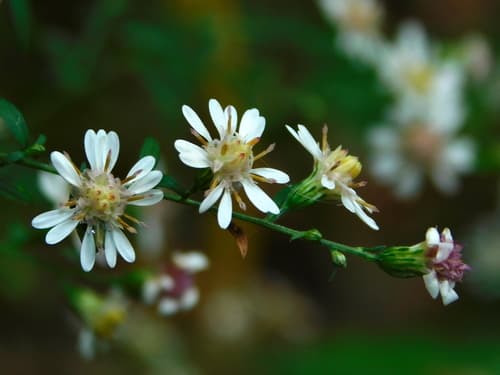
Calico aster produces masses of small white flowers with yellow centers that age to pink or purple, creating a delicate cloud-like display from late summer through fall. This compact native perennial forms neat clumps and provides extended seasonal interest when many other plants are finishing their bloom cycles.
Growing Calico Or One-sided Or White Woodland Or Starved Aster
Grow Calico Or One-sided Or White Woodland Or Starved Aster in part sun and medium water. Mature plants reach 12 to 36 inches tall and spread 12 to 24 inches wide. Expect low maintenance to keep it looking intentional in a front yard.
In an HOA neighborhood
Calico Or One-sided Or White Woodland Or Starved Aster takes more care to keep looking intentional in a front yard. Maintenance level: low. Consider it for backyard or mid-zone beds rather than the street edge.
Works well in: mid zone, backyard only.
- Small white flowers can appear weedy to traditional gardeners
- May self-seed and spread beyond intended area
- Informal cottage garden appearance conflicts with formal landscaping
Wildlife value
Host plant for pearl crescent butterfly.
The abundant small flowers attract bees, butterflies, and beneficial beetles during the critical late-season pollinator period. Seeds provide food for birds through winter.
Common questions
- When does Calico Aster bloom?
- Aster lateriflorus blooms from August through October, providing late-season nectar when many other flowers have finished.
- What pollinators visit Calico Aster?
- Calico Aster attracts bees, butterflies, and beetles. Its small white flowers provide important late-season nectar sources for migrating butterflies and other pollinators preparing for winter.
- Where is Aster lateriflorus native?
- Aster lateriflorus is native to Vermont and much of eastern and central North America. It naturally occurs in woodlands, prairies, and disturbed areas.
- What growing conditions does Calico Aster prefer?
- This adaptable aster grows well in full sun to partial shade with medium moisture levels. It tolerates a range of soil conditions and can handle some drought once established.
- Is Calico Or One-sided Or White Woodland Or Starved Aster HOA-friendly?
- Calico Or One-sided Or White Woodland Or Starved Aster takes more care to look intentional in a front yard. Consider it for backyard or mid-zone beds rather than the street edge.
Native range data from the USDA PLANTS Database and regional native plant society lists. Pollinator and host plant associations compiled from GBIF, iNaturalist, and published ecological literature.
Ready to grow Calico Or One-sided Or White Woodland Or Starved Aster? Add it to your garden in Pollinator Patch to track it and get season-by-season care guidance.
Not sure where to start? Take the 2-minute yard quiz