Coastal Buckwheat
Eriogonum cinereum
Last reviewed: September 2026
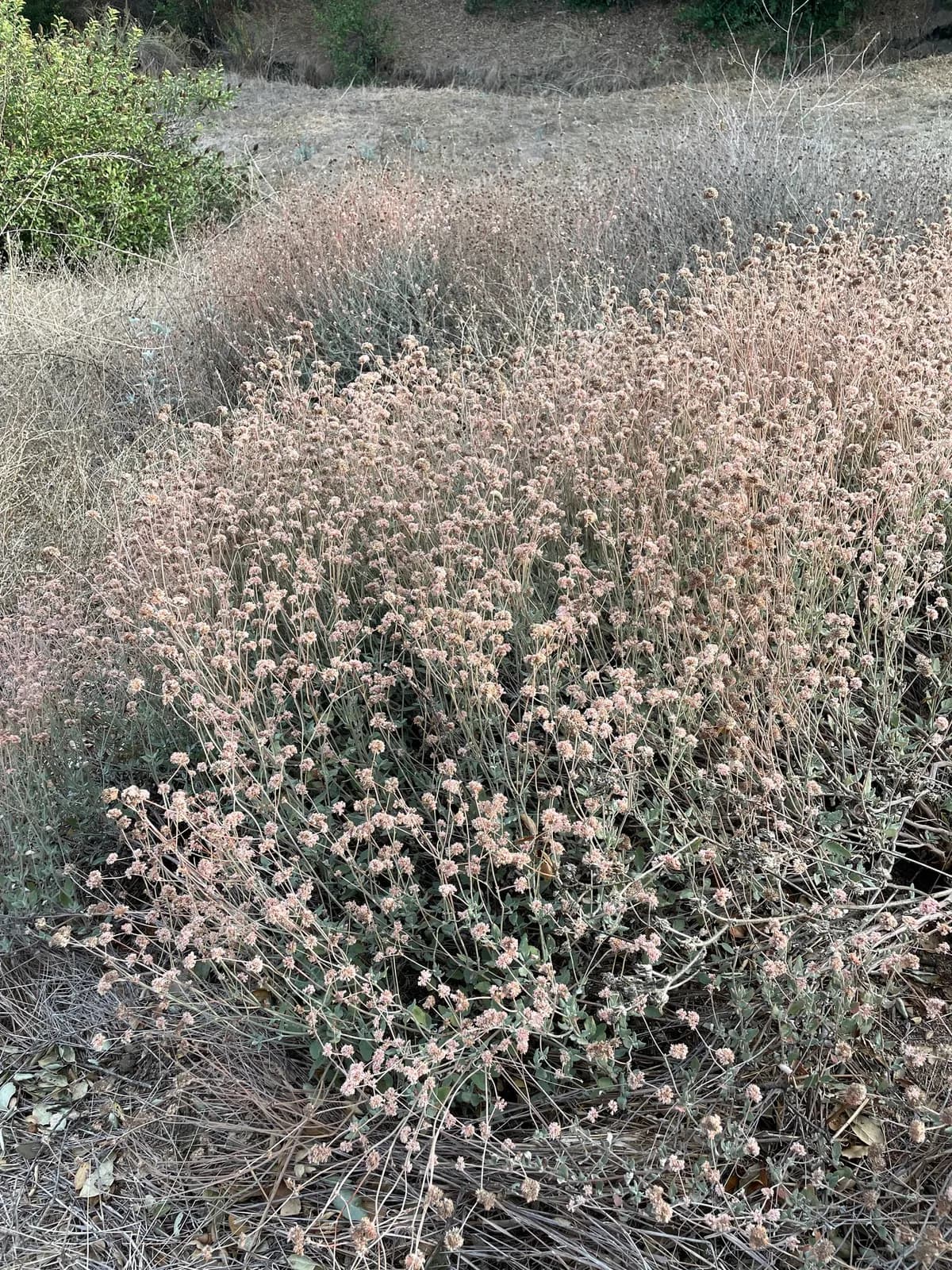
Coastal Buckwheat is a low-water, full-sun shrub with gray-green foliage and white to rose flower clusters that bloom from May through September, often seen on coastal bluffs and scrub in California.
Coastal Buckwheat (Eriogonum cinereum) is not flagged as toxic to dogs or cats by Plants For A Future (PFAF) (opens in new tab) (last reviewed 2026-05-21). This verdict does not come from the ASPCA. If your pet shows symptoms after eating any plant, call the ASPCA at (888) 426-4435.
Light
full sun
Water
low
Size
12"–36" H × 24"–48" W
Bloom
May, Jun, Jul, Aug, Sep
Native to
CA
Pollinators
bees, butterflies, beetles
Before you buy
Your city may pay you to plant this
Cities and water utilities offer rebates for replacing lawn with native and water-wise plants. We track 459 programs across 44 states, each with a link to the provider and the date we last checked it.
Find rebates in your areaPicture natives in your own yard
Upload a photo of your yard and Patch Vision shows a rendering of it planted with natives for your region, like Coastal Buckwheat.


Browse plants for this ecoregion
Coastal buckwheat is a tidy evergreen shrub with attractive gray-green foliage and clusters of cream to pinkish flowers that bloom from spring through fall. Its compact rounded form maintains good structure year-round and provides excellent drought tolerance once established.
Growing Coastal Buckwheat
Grow Coastal Buckwheat in full sun and low water. Mature plants reach 12 to 36 inches tall and spread 24 to 48 inches wide. Expect low maintenance to keep it looking intentional in a front yard.
How to care for Coastal Buckwheat, by region
How to care for Coastal Buckwheat where it is actually grown: year-round basics plus what to do each season, region by region, with the sources for each.
Care guidance last updated: August 2026
Southern California/Northern Baja Coast (includes Los Angeles, CA)
Year-round
Ashyleaf buckwheat, also called coast buckwheat, is a tough, gray-leaved native shrub that fits the dry, mild climate around Los Angeles well. The first year after planting, give it regular deep water, about once a week when it is hot and dry, so the roots can grow deep into the soil. After that first year, back off water almost completely. Once established, this buckwheat wants little to no extra water, at most an occasional deep soak once a month during the hottest stretch of summer, and many gardeners in the LA area never water it again after year one. The single biggest way people kill this plant is treating it like the rest of a green, lawn-style yard: regular sprinklers in summer heat let soil pathogens attack the roots, even on a plant that looks perfectly healthy. Give it full sun and fast-draining soil, and skip rich compost or heavy wood mulch piled against the base, since both hold moisture right where you do not want it. A thin layer of gravel or coarse mulch, pulled back a few inches from the stem, works well and matches the look of a Mediterranean-climate front yard.
- Water deeply about once a week for the first summer after planting, then stop.
- After year one, skip regular watering entirely except an occasional deep soak in the hottest months.
- Plant in full sun with fast-draining soil; avoid low spots that stay wet.
- Use a thin layer of gravel or coarse mulch, kept a few inches back from the base of the plant.
- Don't put it on the same sprinkler zone as lawn or other thirsty plants; summer water is the top killer of this species.
Fall
Fall, roughly October through November, in Los Angeles is when the weather finally cools and the first rains usually arrive, which makes it the best season to do maintenance on this buckwheat and also the best season to plant new ones. Cut off the dead, brown seed heads left over from the year's blooming, and prune out any dead branches, this keeps the plant looking tidy for a front yard. If an older plant has gotten woody, sparse, or overgrown, fall is the time to cut it back hard, down to about 8 inches, so it can regrow a fuller, neater shape. Do this cleanup once, in fall, rather than repeatedly through the year, since pruning at the wrong time, like late spring, removes next season's flower buds. As rain returns, established plants generally do not need any supplemental water at all; new fall plantings still need regular deep watering to get established before next summer's dry season.
- Remove dead, brown seed heads and any dead branches for a tidy look.
- Cut overgrown, woody plants back to about 8 inches to reshape for next year.
- Fall is the best time to plant new ashyleaf buckwheat, ahead of winter rain.
- Established plants usually need no extra water once fall rain starts.
- New fall plantings still need deep, regular water until they are established.
A fall cutback keeps this shrub looking tidy and intentional along the front yard, which reads as HOA-friendly rather than overgrown or messy.
Winter
Winter, roughly December through February, in the Los Angeles area is the rainy season, and this is when ashyleaf buckwheat does most of its passive growing on rainfall alone. Established plants need no supplemental water in a normal winter, seasonal rain is enough. This is also a good window to plant new nursery stock, since cool, wet weather helps new roots settle in before summer heat arrives. The plant keeps its silvery gray leaves and shrubby shape through winter, so there is no dieback to clean up the way there is with deciduous plants. In a dry winter with little rain, an occasional deep soak is reasonable, but skip watering after any real rain event. Avoid walking on or compacting the soil around the root zone when it is wet, since wet clay soil compacts easily and can crowd air out of the root zone.
- Skip supplemental water during a normal rainy winter; seasonal rain covers it.
- Winter is a good window to plant new nursery stock before summer heat.
- No major pruning needed, the plant holds its shape and leaves through winter.
- In a dry winter with little rain, an occasional deep soak is reasonable.
- Stay off wet soil around the base to avoid compacting it.
Spring
In the Los Angeles area, spring, roughly March through May, is when this buckwheat is actively growing and starting to bloom, with flower clusters opening at the tips of the branches. If the plant is still in its first year, spring is a good stretch to keep up deep, infrequent watering as the rains taper off, since spring is normally the last wet season before the long dry summer. Do not do any hard pruning in late spring, because that cuts off the buds that are about to become this season's flowers. Deadheading is not needed now, this species' dead seed heads get removed later in fall instead. New spring growth is normal and not a sign the plant needs extra water or feeding. The blooms this time of year are the main draw for native bees and butterflies, so let the plant flower undisturbed.
- Keep first-year plants on a deep, once-a-week watering as spring rain tapers off.
- Skip hard pruning in late spring, it removes the buds forming into this season's flowers.
- Let it flower undisturbed; native bees and butterflies are the main visitors.
- Established (2+ year) plants need no extra water this season beyond rainfall.
- New spring growth is normal, this is not a sign it needs extra water or feeding.
Summer
Summer, June through September, in the Los Angeles area is hot and completely dry, and it is the season this buckwheat is built for, but it is also the season people accidentally kill it. Do not water established ashyleaf buckwheat on a regular schedule in summer. University of California extension research found that watering an established native plant even once a month during summer heat can be enough to kill it, because warm, wet soil lets fungal and bacterial pathogens attack the plant's roots and the beneficial soil fungi it depends on. If the plant is more than a year old and already looks full and healthy, the best choice is genuinely no water at all through summer. If an older plant truly looks stressed, wilting or dropping leaves, give it one deep soak and let the soil dry out completely before considering water again; this is a low-stress amount, not a routine. Group this plant away from lawns, vegetables, or any other water-loving plants so a sprinkler timer cannot accidentally hit it. The gray, dusty-looking leaves in summer heat are normal, they reflect heat and reduce water loss, and are not a sign of drought stress.
- Do not water established plants on a routine summer schedule; this species is commonly killed by summer irrigation.
- If you water at all, limit it to one deep soak a month, only if the plant shows real stress like wilting.
- Let soil dry out completely between any waters; warm, wet soil breeds root-rotting pathogens.
- Keep this shrub off the same irrigation zone as lawns or thirsty plants.
- Gray, dusty-looking leaves in summer heat are normal and not a sign it needs water.
Sources: Calscape: Ashyleaf Buckwheat (Eriogonum cinereum) plant profile, Calscape: Watering California Native Plants, UC ANR Garden Notes: Summer Care for California Native Plants
In an HOA neighborhood
Coastal Buckwheat is an HOA-friendly choice. Maintenance level: low. Tidiness: 4 out of 5.
Works well in: front yard, foundation, street edge, mid zone.
- May need light pruning once yearly to maintain neat appearance
Wildlife value
This native buckwheat is a valuable pollinator plant that attracts numerous native bees, butterflies, and beneficial beetles. The seeds also provide food for birds.
Common questions
- When does Coastal Buckwheat bloom?
- It typically flowers from May through September, producing rounded clusters of small white to pale pink blooms that age to a rusty rose color.
- What pollinators does Coastal Buckwheat attract?
- Bees, butterflies, and beetles regularly visit the flower clusters for nectar and pollen throughout the bloom season.
- How much water does Coastal Buckwheat need once established?
- It performs best with low supplemental water and is well suited to dry, well-drained slopes and coastal scrub settings.
- What growing conditions suit Coastal Buckwheat?
- It grows as a rounded shrub in full sun and tolerates sandy or rocky soils typical of coastal bluffs and chaparral edges.
- Does Coastal Buckwheat keep its leaves year round?
- Yes, it holds on to its gray green foliage through the year, giving the shrub structure even outside the bloom period.
- Is Coastal Buckwheat toxic to dogs?
- Coastal Buckwheat is not flagged as toxic to dogs by Plants For A Future (PFAF). This verdict does not come from the ASPCA.
- Is Coastal Buckwheat toxic to cats?
- Coastal Buckwheat is not flagged as toxic to cats by Plants For A Future (PFAF). This verdict does not come from the ASPCA.
- Is Coastal Buckwheat HOA-friendly?
- Coastal Buckwheat is generally an HOA-friendly choice in the right placement, with low maintenance.
These answers were drafted with an AI model from this plant's data. Verify care details with a local expert.
Native range data from vouchered herbarium specimen records and regional native plant society lists. Pollinator and host plant associations compiled from GBIF, iNaturalist, and published ecological literature.
If something looks wrong
Common plant problems, and what to check first
These come up on almost any plant. Each guide lists the likely causes in the order they are worth ruling out, with one thing to check before you act on any of them, and links to the source it came from.
- It is dying right after planting
- Leaves turning yellow
- Wilting even though I watered it
- Brown crispy leaf tips
- Bugs on the plant
Ready to grow Coastal Buckwheat? Add it to your garden in Pollinator Patch to track it and get season-by-season care guidance.