Coral bells
Heuchera macrorhiza
Last reviewed: September 2026
Coral bells (Heuchera macrorhiza) is a perennial forb native to AL, GA, IN, KY and 10 more states. It blooms in May and June. The flowers draw bees and hummingbirds.
Toxicity unknown
Coral bells (Heuchera macrorhiza) is not listed by the ASPCA Animal Poison Control Center (opens in new tab) or the other sources we check, so we have no verdict for it either way. Absence from those lists is not a clearance. If your pet shows symptoms after eating any plant, call the ASPCA at (888) 426-4435.
Light
part shade
Water
medium
Size
6"–18" H × 12"–18" W
Bloom
May, Jun
Native to
AL, GA, IN, KY and 10 more states
Pollinators
bees, hummingbirds
Before you buy
Your city may pay you to plant this
Cities and water utilities offer rebates for replacing lawn with native and water-wise plants. We track 458 programs across 44 states, each with a link to the provider and the date we last checked it.
Find rebates in your areaBrowse plants for this ecoregion
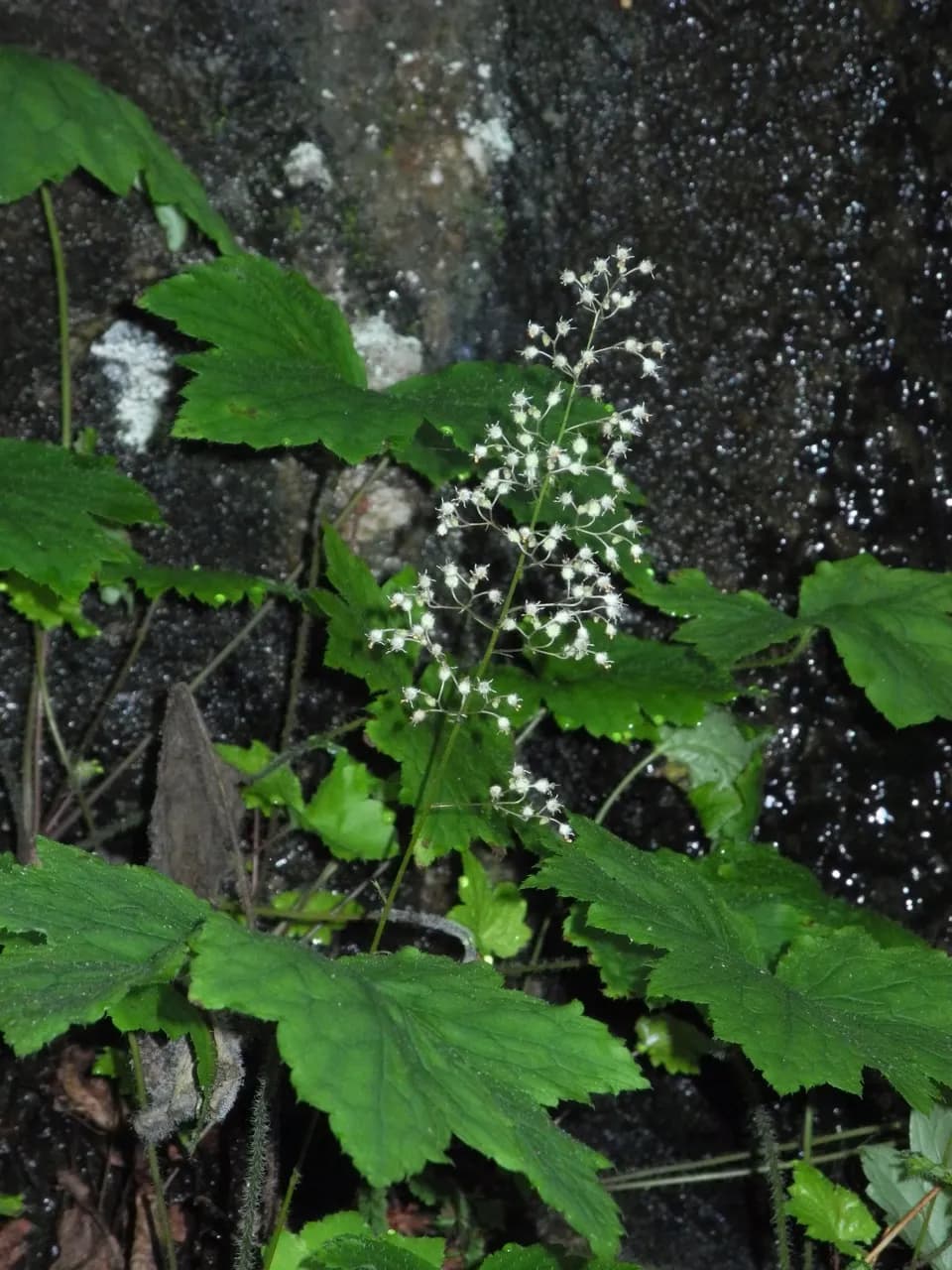
A low, mounding coral bells relative with rounded, lobed leaves forming a neat basal clump, and slender wiry stems of small white to pale pink flowers rising above the foliage in late spring. Grows on shaded rocky ledges.
Growing Coral bells
Grow Coral bells in part shade and medium water. Mature plants reach 6 to 18 inches tall and spread 12 to 18 inches wide.
How to care for Coral bells, by region
How to care for Coral bells where it is actually grown: year-round basics plus what to do each season, region by region, with the sources for each.
Care guidance last updated: September 2026
Southeastern Plains (includes Tallahassee, FL)
Year-round
Coral bells like this one want light to part shade with rich, well drained soil kept evenly moist. In Tallahassee's climate that usually means morning sun with shade for the hottest afternoon hours, since a full day of Florida sun will scorch the leaves. Once settled in, a clump reaches about knee high and a little wider and holds up well through humid heat.
- Plant in part shade, ideally morning sun with shade during the hottest afternoon hours
- Use rich, well drained soil with added compost or leaf mulch, this species does not like soggy roots
- Water enough to keep the soil evenly moist, letting it dry out completely can scorch the leaves
- Expect a mature clump around 1 to 2.5 feet tall and 1.5 to 2 feet wide
Fall
Fall stays warm in Tallahassee well into October, and this is when hairy alumroot often puts out a smaller second flush of blooms. As nights cool toward the first frost around mid November, growth slows and the foliage settles in for winter.
- Enjoy a possible rebloom of small flower spikes into September and October
- Keep watering through any dry fall stretches, Tallahassee's rain often tapers off once the summer storm season ends
- Leave the semi-evergreen foliage in place, it stays attractive through fall and gives some cover for the crown over winter
- First frost typically arrives around mid November, your cue that active growth is winding down
The semi-evergreen foliage keeps this bed looking tidy and HOA-friendly through fall instead of going bare.
Winter
Winters in Tallahassee are mild for this plant, usually staying in USDA zone 8b to 9a, though an occasional hard freeze can still dip into the low 20s. It keeps at least some of its leaves through a normal winter here.
- Expect the foliage to stay semi-evergreen through a typical Tallahassee winter, only cutting back leaves that turn mushy or black
- On nights when a hard freeze is forecast into the low 20s or colder, a layer of mulch or a light frost cloth over the crown adds protection
- Hold off on fertilizing until new spring growth starts
- Cut back on watering compared to summer, the plant needs much less in cooler, often drier winter weather
Spring
Spring in Tallahassee warms up fast, with the last frost usually passing by mid March. This is the best window to divide a crowded clump, clear away any leaves that browned over winter, and refresh the mulch before summer heat sets in.
- Wait until after your last frost, typically mid March in the Tallahassee area, before dividing or transplanting
- Trim off any leaves that browned or went mushy over winter to make room for new growth
- Refresh a couple inches of mulch around the base to help hold moisture once the weather turns hot
- New leaves should pick up quickly as days warm, no need for heavy fertilizing this early
Summer
Tallahassee summers are hot, sticky, and stormy, with afternoon thunderstorms rolling through most days from June into September. This species handles that heat and humidity better than many coral bells, but good air movement around the crown still matters.
- Afternoon shade matters now, midday Florida sun on top of high heat can scorch leaves even on a tough plant
- Let the frequent summer storms handle most of the watering, only add extra if a stretch goes dry for a week or more
- Space plants so air can move between the leaves, Tallahassee's humidity raises the risk of fungal leaf spots without it
- Skip fertilizer during the hottest weeks, feeding pushes soft growth that struggles in the heat
Sources: Heuchera villosa care guide, NC State Extension Gardener Plant Toolbox, Coral bells varieties and Southeast humidity tolerance, Plant Delights Nursery
Wildlife value
Its airy flower spikes attract small native bees and are occasionally visited by hummingbirds.
Common questions
- How much sun does Coral bells need?
- Coral bells grows best in part shade conditions.
- When does Coral bells bloom?
- Coral bells blooms in May and June.
- Where is Coral bells native?
- Coral bells (Heuchera macrorhiza) is native to AL, GA, IN, KY and 10 more states, per the World Checklist of Vascular Plants (Kew).
- What pollinators does Coral bells attract?
- Coral bells draws bees and hummingbirds.
Native range data from the World Checklist of Vascular Plants (Kew). Pollinator and host plant associations compiled from GBIF, iNaturalist, and published ecological literature.
If something looks wrong
Common plant problems, and what to check first
These come up on almost any plant. Each guide lists the likely causes in the order they are worth ruling out, with one thing to check before you act on any of them, and links to the source it came from.
- It is dying right after planting
- Leaves turning yellow
- Wilting even though I watered it
- Brown crispy leaf tips
- Bugs on the plant
Ready to grow Coral bells? Add it to your garden in Pollinator Patch to track it and get season-by-season care guidance.