Dwarf witch-alder
Fothergilla gardenii
Last reviewed: October 2026
Dwarf witch-alder (Fothergilla gardenii) is a perennial shrub native to GA, NC, SC. It blooms in April and May. The flowers draw bees.
Toxicity unknown
Dwarf witch-alder (Fothergilla gardenii) is not listed by the ASPCA Animal Poison Control Center (opens in new tab) or the other sources we check, so we have no verdict for it either way. Absence from those lists is not a clearance. If your pet shows symptoms after eating any plant, call the ASPCA at (888) 426-4435.
Light
part sun
Water
medium
Size
24"–36" H × 24"–36" W
Bloom
Apr, May
Native to
GA, NC, SC
Pollinators
bees
Before you buy
Your city may pay you to plant this
Cities and water utilities offer rebates for replacing lawn with native and water-wise plants. We track 459 programs across 44 states, each with a link to the provider and the date we last checked it.
Find rebates in your areaPicture natives in your own yard
Upload a photo of your yard and Patch Vision shows a rendering of it planted with natives for your region, like Dwarf witch-alder.


Browse plants for this ecoregion
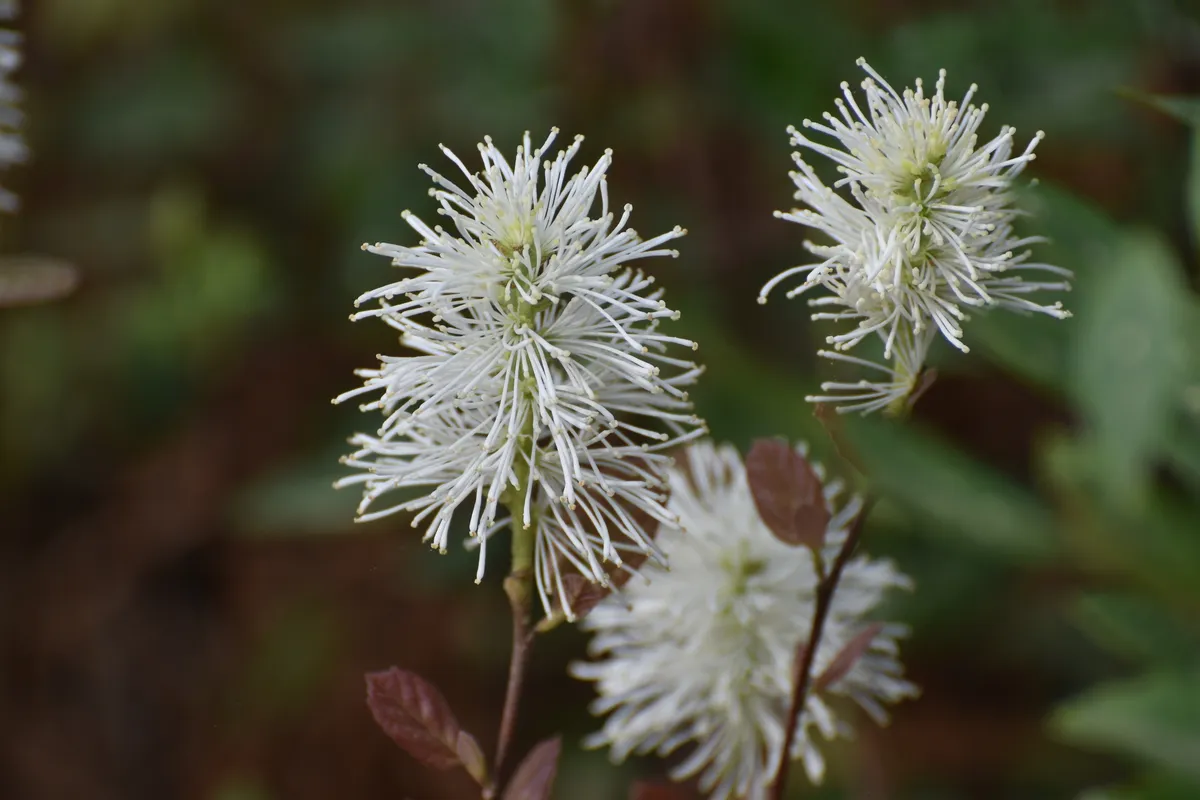
A compact deciduous shrub with fragrant white bottlebrush flower spikes that appear in spring before the leaves emerge. Blue-green summer foliage turns yellow, orange, and red in fall, often on the same plant at once.
Growing Dwarf witch-alder
Grow Dwarf witch-alder in part sun and medium water. Mature plants reach 24 to 36 inches tall and spread 24 to 36 inches wide.
How to care for Dwarf witch-alder, by region
How to care for Dwarf witch-alder where it is actually grown: year-round basics plus what to do each season, region by region, with the sources for each.
Care guidance last updated: October 2026
Piedmont (includes Atlanta, GA)
Year-round
Dwarf fothergilla is a small shrub that lights up with white bottlebrush blooms in spring and then puts on one of the best fall color shows of any small shrub, in yellows, oranges and reds. It wants consistently moist, well drained, acidic soil and does best with at least a half day of sun.
- Give it full sun to light shade. More sun generally means more flowers and brighter fall color.
- Keep the soil moist and acidic. It struggles in soil that dries out or that has lime in it.
- It stays small, usually two to three feet tall and wide, so it fits well near a foundation, walkway, or as a low border shrub.
- According to the Lady Bird Johnson Wildflower Center, this species naturally grows in parts of the coastal Southeast, including Georgia.
- It holds up well against most pests and diseases when it has the moisture and soil it wants.
Fall
Fall is the payoff season, when dwarf fothergilla turns shades of yellow, orange and red, often all on the same shrub.
- Color usually peaks around November in the Atlanta area, and it varies year to year with sun, rainfall and temperature, per Clemson Extension.
- No pruning now. Cutting back in fall removes flower buds that are already set for next spring.
- Rake up fallen leaves under the shrub to reduce leaf spot disease carrying over into next year.
- Check that the soil is still moist and acidic heading into winter, since fall dryness can stress the roots.
Raking fallen leaves promptly keeps the bed looking maintained for street view, especially if a fall yard check is expected.
Winter
Dwarf fothergilla has little winter work. Once the leaves drop, its zig zag branches are the main show.
- Leave the bare branches alone. Their naturally crooked, zig zag pattern is a winter interest feature, not something to prune away.
- Do not prune now. Wait until right after next spring's bloom so you do not cut off flower buds.
- Refresh mulch over the root zone to buffer freeze thaw swings and keep the soil acidic.
- Check that the bed drains well. Soggy winter soil combined with cold is harder on this shrub than cold alone.
A fresh mulch ring each winter is the one tidy up move that keeps a leafless, dormant shrub still looking intentional from the street.
Spring
Spring is when dwarf fothergilla puts on its show, with white bottlebrush flowers opening on bare stems before the leaves come out.
- Expect blooms roughly February through April in the Atlanta area, per the Lady Bird Johnson Wildflower Center.
- Feed it twice this season with an acid forming fertilizer, once in early April and again in mid May, per Clemson Extension.
- If you need to prune, do it right after the flowers fade. Pruning any later removes next year's flower buds.
- Keep any pruning light. This shrub has a naturally attractive rounded shape and does not want to be sheared hard.
For a tidy street facing planting, finish any shaping within a week or two of bloom fade rather than later in the season.
Summer
Summer care for dwarf fothergilla in the Atlanta area is mostly about keeping the roots consistently moist through hot, humid stretches.
- Water deeply during dry spells. This plant does not like to dry out, especially if it is in full sun.
- If it is in full sun with no supplemental watering, afternoon shade helps it get through the hottest weeks, per Clemson Extension.
- Water at the soil line in the morning rather than overhead. Wet leaves overnight invite leaf spot disease in a humid climate.
- A layer of mulch over the root zone helps hold moisture and keeps the soil acidic.
Sources: Fothergilla gardenii, Lady Bird Johnson Wildflower Center Native Plant Database, Fothergilla, Clemson Cooperative Extension Home & Garden Information Center
Southeastern Plains (includes Tallahassee, FL)
Year-round
Dwarf fothergilla is a slow, low-care shrub for sun to part shade. It is listed for zones 5 to 8b, so Tallahassee is near its warm limit. It likes acidic, rich, well-drained soil and handles both dry spells and wet soil once established.
- Plant in morning sun and afternoon shade for the best results
- Use acidic, organic soil. Mix compost into sandy soil
- Water regularly the first year or two
- Remove suckers if you do not want it to spread
A slow, tidy shrub that fits most front beds.
Fall
Leaves turn orange, yellow, or red in fall. Color is usually best with good sun, though Tallahassee warmth may mute it.
- Water if fall is dry
- Leave leaves in place for mulch under the shrub
- Plant new shrubs now while soil is warm
- Skip heavy fertilizer
Winter
The shrub drops its leaves and rests. Mild winters make this an easy season.
- Water only if the soil dries for weeks
- Add fresh mulch
- Prune lightly for shape or remove suckers
- Do not cut hard, since flower buds form before spring
Spring
Spring is bloom time and a good planting season. Water new shrubs so roots settle before summer.
- Plant in spring or fall in acidic, organic soil
- Water deeply once or twice a week for new plants
- Mulch 2 to 3 inches, keeping mulch off the stem
- Prune lightly after bloom if needed
Summer
Established plants handle dry spells, but heat is the test here. Give extra water in long dry periods.
- Water deeply every 7 to 10 days if rain is missing
- Afternoon shade helps leaves stay healthy
- Keep mulch refreshed
- Pull suckers that pop up where you do not want them
Sources: NC State Extension Plant Toolbox: Fothergilla gardenii
Wildlife value
The honey-scented spring flowers are an early nectar source for bees emerging from winter dormancy.
Common questions
- How much sun does Dwarf witch-alder need?
- Dwarf witch-alder grows best in part sun conditions.
- When does Dwarf witch-alder bloom?
- Dwarf witch-alder blooms in April and May.
- Where is Dwarf witch-alder native?
- Dwarf witch-alder (Fothergilla gardenii) is native to GA, NC, SC, per the World Checklist of Vascular Plants (Kew).
- What pollinators does Dwarf witch-alder attract?
- Dwarf witch-alder draws bees.
Native range data from the World Checklist of Vascular Plants (Kew). Pollinator and host plant associations compiled from GBIF, iNaturalist, and published ecological literature.
If something looks wrong
Common plant problems, and what to check first
These come up on almost any plant. Each guide lists the likely causes in the order they are worth ruling out, with one thing to check before you act on any of them, and links to the source it came from.
- It is dying right after planting
- Leaves turning yellow
- Wilting even though I watered it
- Brown crispy leaf tips
- Bugs on the plant
Ready to grow Dwarf witch-alder? Add it to your garden in Pollinator Patch to track it and get season-by-season care guidance.