Elliott's lovegrass
Eragrostis elliottii
Last reviewed: August 2026
Eragrostis elliottii, or Elliott's lovegrass, is a clumping warm season grass that blooms from August through October and thrives in full sun with well drained, sandy soils.
Toxicity unknown
Elliott's lovegrass (Eragrostis elliottii) is not listed by the ASPCA Animal Poison Control Center (opens in new tab) or the other sources we check, so we have no verdict for it either way. Absence from those lists is not a clearance. If your pet shows symptoms after eating any plant, call the ASPCA at (888) 426-4435.
Light
full sun
Water
low
Size
18"–30" H × 18"–24" W
Bloom
Aug, Sep, Oct
Native to
AL, AR, FL, GA and 8 more states
Before you buy
Your city may pay you to plant this
Cities and water utilities offer rebates for replacing lawn with native and water-wise plants. We track 459 programs across 44 states, each with a link to the provider and the date we last checked it.
Find rebates in your areaPicture natives in your own yard
Upload a photo of your yard and Patch Vision shows a rendering of it planted with natives for your region, like Elliott's lovegrass.


Browse plants for this ecoregion
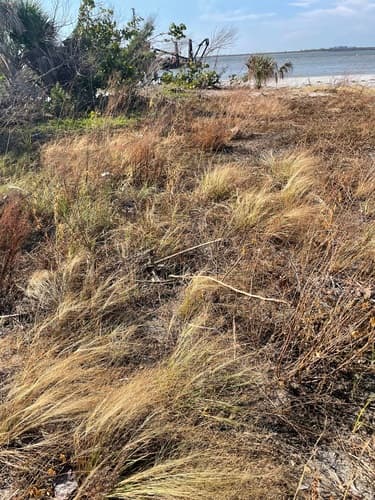
Fine-textured clumping ornamental grass with wiry blue-green blades and airy silvery seed head plumes held well above the foliage. Forms a neat, rounded mound.
Growing Elliott's lovegrass
Grow Elliott's lovegrass in full sun and low water. Mature plants reach 18 to 30 inches tall and spread 18 to 24 inches wide. Expect low maintenance to keep it looking intentional in a front yard.
How to care for Elliott's lovegrass, by region
How to care for Elliott's lovegrass where it is actually grown: year-round basics plus what to do each season, region by region, with the sources for each.
Care guidance last updated: July 2026
Cross Timbers (includes Fort Worth, TX)
Year-round
Elliott's lovegrass is a low-maintenance clumping grass with fine blue green foliage that sends up airy, tan seed plumes from late summer into fall. It stays neat in a front bed with almost no watering once it is established.
- Give it full sun and well-drained soil, it will not perform well in shade or soggy spots that stay wet
- Expect a rounded clump 18 to 30 inches tall and about as wide at maturity
- Water regularly the first growing season to help roots establish, then cut back to occasional deep watering
- Leave the seed heads up through fall and winter for a soft, deliberate look rather than shearing the clump square
A tidy, rounded bunchgrass reads as an intentional ornamental grass planting rather than an overgrown weed patch, especially when kept in a defined bed edge.
Fall
Fall is the plant's showiest season, the seed heads open into a soft tan haze that catches afternoon light and holds through the first cool weeks.
- Peak bloom and seed head display runs September through October
- No cutting or deadheading needed, the tan seed heads are the display, not a sign of dying back
- Fall rains are usually enough on their own, cut back supplemental watering as temperatures drop
- This is also a good window to divide an overgrown clump if it has outgrown its space, dig and split the crown into sections and replant
The tan, feathery seed heads can look like dried-out weeds to an untrained eye, keeping the surrounding bed edge crisp and mulched helps the display read as intentional.
Winter
The clump goes dormant and turns tan to brown after the first hard freezes, this is normal and it will green back up in spring.
- Cut the whole clump back to about 4 to 6 inches sometime in late February, before new spring growth starts
- Do not cut it back in fall or early winter, the standing dead foliage protects the crown through the season's hard freezes
- A mild North Texas winter with only short cold snaps will not kill an established clump, occasional severe Arctic outbreaks can burn the foliage further but rarely kill the roots
- No watering needed during dormancy unless the season is unusually dry
A dormant, tan clump can look neglected if it is left uncut into March, cutting it back to a low mound by late February keeps the bed looking tended through the gap before spring growth returns.
Spring
Spring is the best time to get this grass in the ground in North Texas, while the soil is warming and rain is more frequent.
- Plant after the last frost (mid March) once nighttime lows are reliably above the mid 40s
- In heavy black clay, plant a little high on a slight mound or work in coarse compost so the crown does not sit in standing water; in the sandier soils west of the metro it drains fast enough on its own but will need more frequent watering through establishment
- Water two to three times a week for the first several weeks after planting, then taper off as new growth appears
- New spring foliage will be a fine blue green, low and grassy, before it starts to send up flower stalks in summer
A freshly planted clump looks sparse for the first few weeks, mulch the bed around it so the space still reads as a maintained planting while it fills in.
Summer
Once established, this grass handles the 100 degree stretches of a North Texas summer with little help, and it starts sending up its first flower stalks late in the season.
- A clump in its second summer or later needs supplemental water only during extended dry spells, roughly every 10 to 14 days with no rain
- A first-summer clump still needs regular water through the hottest weeks (July and August) since its roots are not deep yet
- Fine, airy flower stalks begin appearing in August above the foliage, ahead of the main fall bloom
- Skip fertilizer, this grass is bred for lean soil and heavy feeding makes the clump floppy instead of upright
Sources: Lady Bird Johnson Wildflower Center, Eragrostis elliottii, Texas A&M AgriLife Extension, planting ornamental grasses in North Texas, Florida Wildflower Foundation, Flower Friday: Eragrostis elliottii (community tip)
Texas Blackland Prairies (includes Dallas, TX)
Year-round
Elliott's lovegrass is a low-maintenance clumping grass with fine blue green foliage that sends up airy, tan seed plumes from late summer into fall. It stays neat in a front bed with almost no watering once it is established.
- Give it full sun and well-drained soil, it will not perform well in shade or soggy spots that stay wet
- Expect a rounded clump 18 to 30 inches tall and about as wide at maturity
- Water regularly the first growing season to help roots establish, then cut back to occasional deep watering
- Leave the seed heads up through fall and winter for a soft, deliberate look rather than shearing the clump square
A tidy, rounded bunchgrass reads as an intentional ornamental grass planting rather than an overgrown weed patch, especially when kept in a defined bed edge.
Fall
Fall is the plant's showiest season, the seed heads open into a soft tan haze that catches afternoon light and holds through the first cool weeks.
- Peak bloom and seed head display runs September through October
- No cutting or deadheading needed, the tan seed heads are the display, not a sign of dying back
- Fall rains are usually enough on their own, cut back supplemental watering as temperatures drop
- This is also a good window to divide an overgrown clump if it has outgrown its space, dig and split the crown into sections and replant
The tan, feathery seed heads can look like dried-out weeds to an untrained eye, keeping the surrounding bed edge crisp and mulched helps the display read as intentional.
Winter
The clump goes dormant and turns tan to brown after the first hard freezes, this is normal and it will green back up in spring.
- Cut the whole clump back to about 4 to 6 inches sometime in late February, before new spring growth starts
- Do not cut it back in fall or early winter, the standing dead foliage protects the crown through the season's hard freezes
- A mild North Texas winter with only short cold snaps will not kill an established clump, occasional severe Arctic outbreaks can burn the foliage further but rarely kill the roots
- No watering needed during dormancy unless the season is unusually dry
A dormant, tan clump can look neglected if it is left uncut into March, cutting it back to a low mound by late February keeps the bed looking tended through the gap before spring growth returns.
Spring
Spring is the best time to get this grass in the ground in North Texas, while the soil is warming and rain is more frequent.
- Plant after the last frost (mid March) once nighttime lows are reliably above the mid 40s
- In heavy black clay, plant a little high on a slight mound or work in coarse compost so the crown does not sit in standing water; in the sandier soils west of the metro it drains fast enough on its own but will need more frequent watering through establishment
- Water two to three times a week for the first several weeks after planting, then taper off as new growth appears
- New spring foliage will be a fine blue green, low and grassy, before it starts to send up flower stalks in summer
A freshly planted clump looks sparse for the first few weeks, mulch the bed around it so the space still reads as a maintained planting while it fills in.
Summer
Once established, this grass handles the 100 degree stretches of a North Texas summer with little help, and it starts sending up its first flower stalks late in the season.
- A clump in its second summer or later needs supplemental water only during extended dry spells, roughly every 10 to 14 days with no rain
- A first-summer clump still needs regular water through the hottest weeks (July and August) since its roots are not deep yet
- Fine, airy flower stalks begin appearing in August above the foliage, ahead of the main fall bloom
- Skip fertilizer, this grass is bred for lean soil and heavy feeding makes the clump floppy instead of upright
Sources: Lady Bird Johnson Wildflower Center, Eragrostis elliottii, Texas A&M AgriLife Extension, planting ornamental grasses in North Texas, Florida Wildflower Foundation, Flower Friday: Eragrostis elliottii (community tip)
In an HOA neighborhood
Elliott's lovegrass is an HOA-friendly choice. Maintenance level: low. Tidiness: 4 out of 5.
Works well in: front yard, foundation, street edge, mid zone.
Wildlife value
Seed heads provide food for songbirds, and the foliage offers shelter for small wildlife.
Common questions
- When does Elliott's lovegrass bloom?
- Elliott's lovegrass produces airy, purplish seed heads from August through October, adding texture to late summer and fall landscapes.
- How much water does Elliott's lovegrass need?
- This grass is drought tolerant once established and prefers low to medium moisture, growing best in well drained, sandy or rocky soils that do not stay wet.
- What growing conditions suit Elliott's lovegrass best?
- Full sun and well drained soil are ideal, making this grass a good fit for hot, dry sites with sandy or gravelly ground.
- Is Elliott's lovegrass HOA-friendly?
- Elliott's lovegrass is generally an HOA-friendly choice in the right placement, with low maintenance.
These answers were drafted with an AI model from this plant's data. Verify care details with a local expert.
Native range data from the World Checklist of Vascular Plants (Kew). Pollinator and host plant associations compiled from GBIF, iNaturalist, and published ecological literature.
If something looks wrong
Common plant problems, and what to check first
These come up on almost any plant. Each guide lists the likely causes in the order they are worth ruling out, with one thing to check before you act on any of them, and links to the source it came from.
- It is dying right after planting
- Leaves turning yellow
- Wilting even though I watered it
- Brown crispy leaf tips
- Bugs on the plant
Ready to grow Elliott's lovegrass? Add it to your garden in Pollinator Patch to track it and get season-by-season care guidance.