Fragrant Sand-verbena
Abronia fragrans
Last reviewed: October 2026
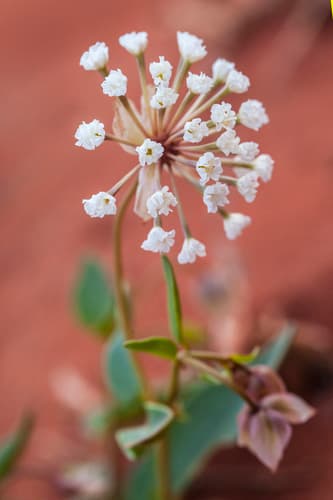
Fragrant Sand-verbena (Abronia fragrans) is not on the ASPCA Animal Poison Control Center toxic plant list for dogs or cats (aspca.org (opens in new tab), last reviewed 2026-05-21). If your pet shows symptoms after eating any plant, call the ASPCA at (888) 426-4435.
Light
full sun
Water
low
Size
6"–24" H × 12"–36" W
Bloom
May, Jun, Jul, Aug
Native to
AZ, CO, KS, MT and 8 more states
Pollinators
bees, butterflies, moths
Before you buy
Your city may pay you to plant this
Cities and water utilities offer rebates for replacing lawn with native and water-wise plants. We track 459 programs across 44 states, each with a link to the provider and the date we last checked it.
Find rebates in your areaPicture natives in your own yard
Upload a photo of your yard and Patch Vision shows a rendering of it planted with natives for your region, like Fragrant Sand-verbena.


Browse plants for this ecoregion
Fragrant sand-verbena is a low-growing perennial that forms spreading mats of small, fragrant white or pink flowers from late spring through summer. This drought-tolerant plant thrives in sandy or well-draining soils and full sun conditions. It works well as a groundcover in xeric gardens and rock gardens.
In an HOA neighborhood
Fragrant Sand-verbena takes more care to keep looking intentional in a front yard. Maintenance level: low. Consider it for backyard or mid-zone beds rather than the street edge.
Works well in: backyard only.
- Spreading groundcover habit may appear uncontrolled
- Can look sparse or patchy in some conditions
- Unknown dormancy appearance creates uncertainty
Wildlife value
The fragrant flowers attract bees, butterflies, and night-flying moths throughout the long blooming season. This plant provides nectar for pollinators during the peak summer months when many other natives have finished blooming.
Common questions
- How much sun does Fragrant Sand-verbena need?
- Fragrant Sand-verbena grows best in full sun conditions.
- When does Fragrant Sand-verbena bloom?
- Fragrant Sand-verbena blooms in May, June, July, and August.
- Where is Fragrant Sand-verbena native?
- Fragrant Sand-verbena (Abronia fragrans) is native to AZ, CO, KS, MT and 8 more states, per vouchered herbarium specimen records and regional native plant society lists.
- Is Fragrant Sand-verbena toxic to dogs?
- Fragrant Sand-verbena is not on the ASPCA Animal Poison Control Center toxic plant list for dogs (aspca.org).
- Is Fragrant Sand-verbena toxic to cats?
- Fragrant Sand-verbena is not on the ASPCA Animal Poison Control Center toxic plant list for cats (aspca.org).
- What pollinators does Fragrant Sand-verbena attract?
- Fragrant Sand-verbena draws bees, butterflies, and moths.
- Is Fragrant Sand-verbena HOA-friendly?
- Fragrant Sand-verbena takes more care to look intentional in a front yard. Consider it for backyard or mid-zone beds rather than the street edge.
Native range data from vouchered herbarium specimen records and regional native plant society lists. Pollinator and host plant associations compiled from GBIF, iNaturalist, and published ecological literature.
If something looks wrong
Common plant problems, and what to check first
These come up on almost any plant. Each guide lists the likely causes in the order they are worth ruling out, with one thing to check before you act on any of them, and links to the source it came from.
- It is dying right after planting
- Leaves turning yellow
- Wilting even though I watered it
- Brown crispy leaf tips
- Bugs on the plant
Ready to grow Fragrant Sand-verbena? Add it to your garden in Pollinator Patch to track it and get season-by-season care guidance.