Fringed Sedge
Carex crinita
Last reviewed: October 2026
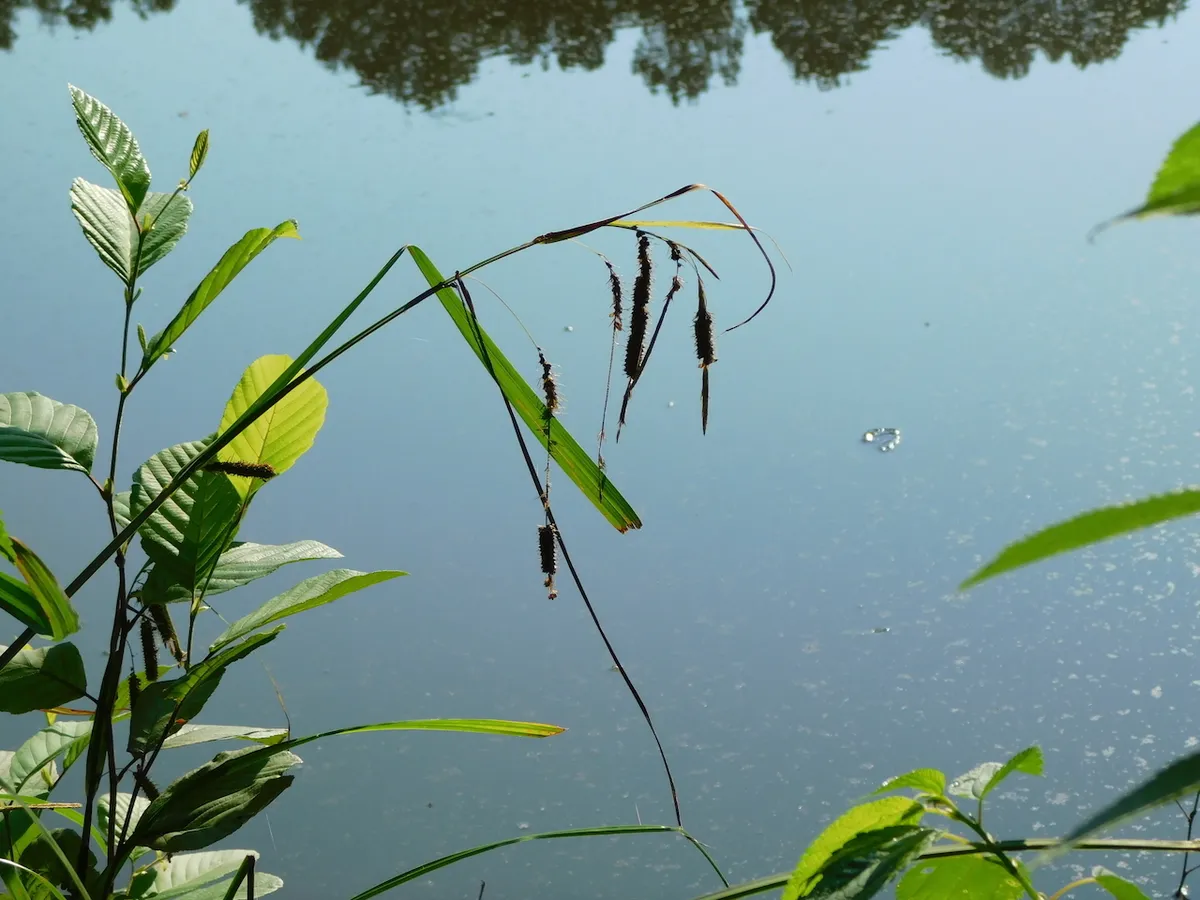
Carex crinita, or fringed sedge, is a clumping wetland sedge that blooms from May through July and thrives in consistently moist to wet, partly shaded sites such as stream banks and low woods.
Toxicity unknown
Fringed Sedge (Carex crinita) is not listed by the ASPCA Animal Poison Control Center (opens in new tab) or the other sources we check, so we have no verdict for it either way. Absence from those lists is not a clearance. If your pet shows symptoms after eating any plant, call the ASPCA at (888) 426-4435.
The USDA PLANTS Database (opens in new tab) does not flag Fringed Sedge as toxic to livestock.
Light
part shade
Water
high
Size
12"–36" H × 12"–24" W
Bloom
May, Jun, Jul
Native to
AL, AR, CT, DE and 28 more states
Before you buy
Your city may pay you to plant this
Cities and water utilities offer rebates for replacing lawn with native and water-wise plants. We track 459 programs across 44 states, each with a link to the provider and the date we last checked it.
Find rebates in your areaPicture natives in your own yard
Upload a photo of your yard and Patch Vision shows a rendering of it planted with natives for your region, like Fringed Sedge.


Browse plants for this ecoregion
Fringed sedge is a clumping grass-like perennial that thrives in moist to wet soils and partial shade. It produces delicate, drooping flower clusters in late spring and early summer, followed by attractive seed heads. This native sedge forms neat tufts and works well in rain gardens or naturalized areas where consistent moisture is available.
Growing Fringed Sedge
Grow Fringed Sedge in part shade and high water. Mature plants reach 12 to 36 inches tall and spread 12 to 24 inches wide. Expect low maintenance to keep it looking intentional in a front yard.
How to care for Fringed Sedge, by region
How to care for Fringed Sedge where it is actually grown: year-round basics plus what to do each season, region by region, with the sources for each.
Care guidance last updated: September 2026
Ouachita Mountains (includes Hot Springs, AR)
Year-round
Fringed sedge is an easygoing clumping sedge that wants consistent moisture more than anything else. Give it wet to moist soil and it fills in steadily over a few seasons.
- Full sun to partial shade works. It handles standing water and low, soggy spots, but it also gets by in regular garden soil as long as that soil does not dry out completely.
- Clumps reach about 2 to 3 feet tall without the flower stalks and 1 to 2 feet wide. Space new plants 18 to 24 inches apart for a solid-looking planting.
- It is an evergreen sedge, so the grassy foliage stays green through much of the year in mild climates instead of dying back completely each winter.
- The best spots have reliable moisture: a rain garden, the low end of a downspout, or the edge of a pond or stream. In a regular bed, plan on extra watering during dry stretches.
Fall
Growth slows as the weather cools, and fall is a good window to divide or move plants while the ground is still workable.
- Hot Springs usually sees its first frost in early to mid November. This sedge stays mostly green well past that point since it only goes lightly dormant here.
- If you want to divide an overgrown clump or move it to a new spot, do it now while the soil is still easy to work and before it turns cold.
- Cut back any tan or broken blades for a neater look heading into winter. Leave the healthy green foliage alone. It keeps working through the cold months.
Tidying the ragged outer blades in fall gives the clump a neater winter shape, a simple way to keep a visible bed looking HOA-conscious going into the off season.
Winter
Winters in Hot Springs, USDA zone 8a, are mild enough that fringed sedge holds onto much of its green color instead of going fully dormant.
- No extra watering is needed beyond normal rainfall unless the season turns unusually dry. The plant is resting, and its wet-soil habitat naturally holds more moisture through winter anyway.
- Skip fertilizer and any heavy pruning until new growth starts up again in spring.
- If a hard freeze browns some tips, leave them on the plant rather than cutting right away. They still add a bit of winter structure and some cold protection for the crown.
The clump's low, grassy winter shape reads as neat and intentional from the street, which fits an HOA-friendly foundation bed or drainage-area planting.
Spring
Spring is when fringed sedge wakes up and sends up its flowering stems. It is also a fine time to plant or divide once the frost risk has passed.
- New growth picks up as the soil warms in March and April. Hot Springs typically clears its last frost by late March, so that is a reasonable marker for planting new divisions.
- Flowering stems come up in May, arching above the leaves with thin, drooping spikelets. It is not a showy bloom, more of a textural one.
- If winter left the foliage looking rough, comb out the dead blades by hand or give the clump a light trim, taking off no more than the top third. A hard cutback in spring can set a wet-soil sedge like this one back, so go easy.
A light spring grooming keeps the clump looking tidy from the street, an easy way to keep a wet-soil planting looking HOA-friendly along a front walk or drainage swale.
Summer
Summers in the Ouachita Mountains run hot and humid, and this is the season fringed sedge most needs steady water.
- Keep the soil from drying out. This is not a drought plant, and the leaf tips will brown if it goes too long without water during a Hot Springs summer.
- A couple inches of mulch around the base helps hold moisture and keeps the root zone cooler through the hottest weeks.
- No real pruning needed in summer. Just snip off any fully browned, sun-scorched blades if you want a cleaner look.
Sources: Missouri Botanical Garden Plant Finder, Carex crinita, Lady Bird Johnson Wildflower Center plant profile, Carex crinita, USDA Plant Hardiness Zone Map
In an HOA neighborhood
Fringed Sedge takes more care to keep looking intentional in a front yard. Maintenance level: low. Consider it for backyard or mid-zone beds rather than the street edge.
Works well in: backyard only.
- Requires consistently wet conditions that may appear unkempt
- Wild, informal appearance doesn't fit typical landscaping standards
- May spread beyond intended boundaries in wet conditions
Wildlife value
This sedge provides nesting material and cover for birds, while its seeds feed various songbirds and waterfowl. The dense clumps offer shelter for small wildlife and beneficial insects.
Common questions
- When does fringed sedge bloom?
- Fringed sedge produces its drooping, fringe-like flower spikes from May through July.
- What growing conditions does fringed sedge prefer?
- It grows best in part shade with consistently high soil moisture, making it well suited to stream banks, floodplains, and low, wet woodland edges.
- Can fringed sedge handle drier soil?
- It tolerates medium moisture for short periods but performs poorly if the soil dries out for long stretches, since it is adapted to wet ground.
- Is fringed sedge evergreen?
- No, fringed sedge is a deciduous perennial sedge that dies back after the growing season and regrows from its base each spring.
- What does fringed sedge look like when not in bloom?
- Outside of bloom it forms a mounding clump of narrow green grass-like leaves, which spreads slowly to form colonies in consistently damp ground.
- Is Fringed Sedge toxic to livestock?
- The USDA PLANTS Database does not flag Fringed Sedge as toxic to livestock.
- Is Fringed Sedge HOA-friendly?
- Fringed Sedge takes more care to look intentional in a front yard. Consider it for backyard or mid-zone beds rather than the street edge.
These answers were drafted with an AI model from this plant's data. Verify care details with a local expert.
Native range data from vouchered herbarium specimen records and regional native plant society lists. Pollinator and host plant associations compiled from GBIF, iNaturalist, and published ecological literature.
If something looks wrong
Common plant problems, and what to check first
These come up on almost any plant. Each guide lists the likely causes in the order they are worth ruling out, with one thing to check before you act on any of them, and links to the source it came from.
- It is dying right after planting
- Leaves turning yellow
- Wilting even though I watered it
- Brown crispy leaf tips
- Bugs on the plant
Ready to grow Fringed Sedge? Add it to your garden in Pollinator Patch to track it and get season-by-season care guidance.