Hummingbird Sage
Salvia spathacea
Last reviewed: September 2026
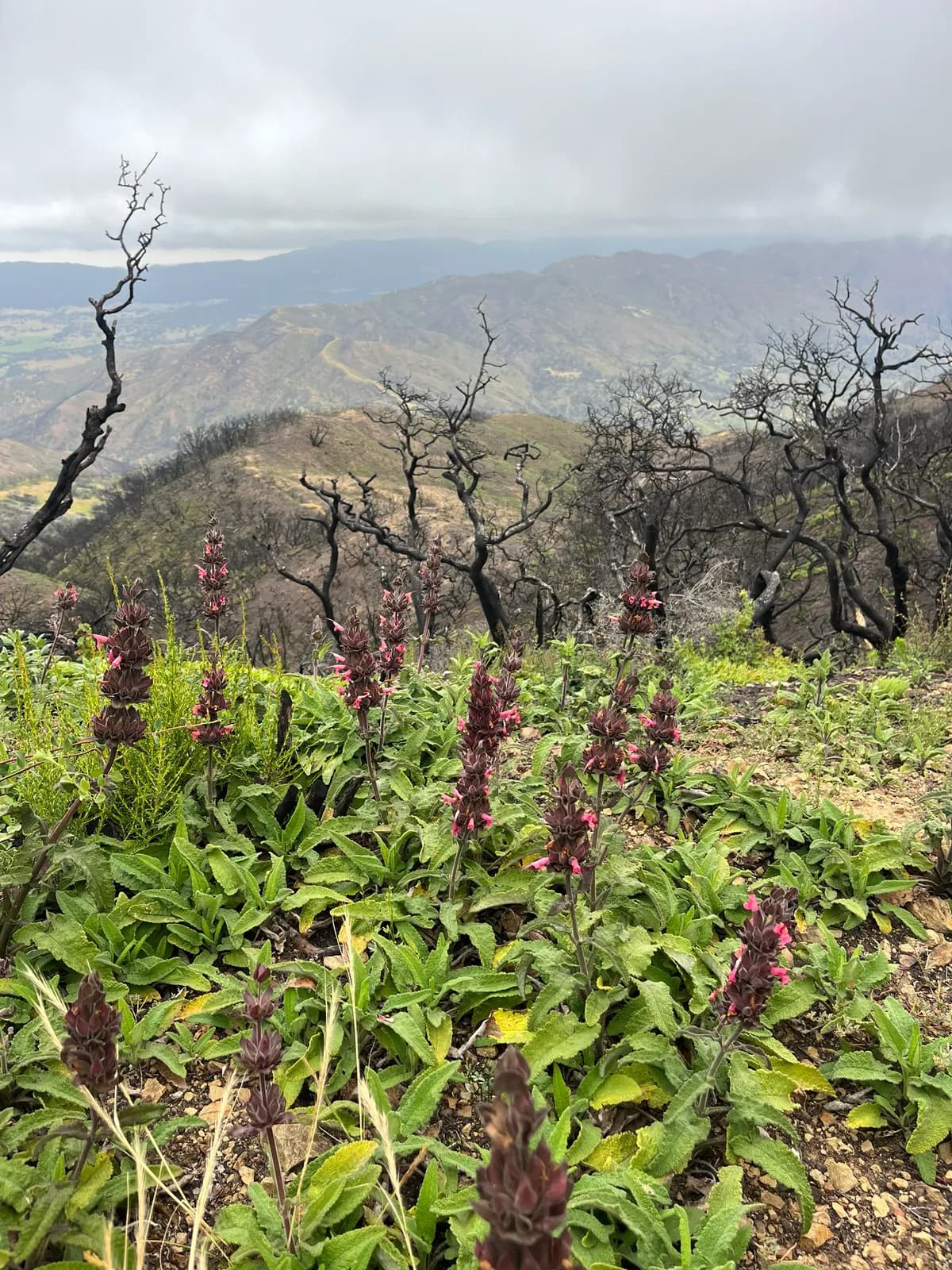
Hummingbird Sage is a low water forb that blooms from March through June with tall spikes of magenta flowers, thriving in dry, part sun garden spots and open woodland edges.
Hummingbird Sage (Salvia spathacea) is not flagged as toxic to dogs or cats by Plants For A Future (PFAF) (opens in new tab) (last reviewed 2026-05-21). This verdict does not come from the ASPCA. If your pet shows symptoms after eating any plant, call the ASPCA at (888) 426-4435.
Light
part sun
Water
low
Size
12"–24" H × 12"–36" W
Bloom
Mar, Apr, May, Jun
Native to
CA
Pollinators
hummingbirds, bees
Before you buy
Your city may pay you to plant this
Cities and water utilities offer rebates for replacing lawn with native and water-wise plants. We track 459 programs across 44 states, each with a link to the provider and the date we last checked it.
Find rebates in your areaPicture natives in your own yard
Upload a photo of your yard and Patch Vision shows a rendering of it planted with natives for your region, like Hummingbird Sage.


Browse plants for this ecoregion
Hummingbird sage is a native perennial with velvety, aromatic leaves and showy spikes of magenta-red flowers in spring and early summer. It forms attractive groundcover clumps and thrives in part shade with low water needs once established.
Growing Hummingbird Sage
Grow Hummingbird Sage in part sun and low water. Mature plants reach 12 to 24 inches tall and spread 12 to 36 inches wide. Expect moderate maintenance to keep it looking intentional in a front yard.
How to care for Hummingbird Sage, by region
How to care for Hummingbird Sage where it is actually grown: year-round basics plus what to do each season, region by region, with the sources for each.
Care guidance last updated: October 2026
Central California Foothills and Coastal Mountains (includes San Francisco, CA)
Year-round
Hummingbird Sage is a shade-loving California native groundcover that fits well under oaks in a San Francisco Bay Area yard.
- Native to the California Coast Ranges including the Bay Area, with documented range from San Bruno Mountain in San Mateo County north to around Napa Valley, confirmed by Calscape (CNPS) and the Lady Bird Johnson Wildflower Center.
- Thrives in part shade to deep shade and is often found growing naturally under live oaks, which is unusual among salvias since most prefer full sun.
- Spreads slowly by underground rhizomes into a low, dense mat, so give it a few feet of room rather than crowding it against other groundcovers.
- Fragrant foliage and magenta-red tubular flower spikes make it a strong hummingbird draw, and bees and butterflies visit it too.
- It is not specifically listed on the ASPCA's toxic or non-toxic plant list. The ASPCA page called "Sage" covers common culinary sage (Salvia officinalis), a different species, so treat pet safety here as an open question rather than a confirmed answer, and keep an eye on any pet that chews heavily on garden foliage.
Fall
Fall is generally the best time for the yearly hard cutback in the Bay Area, since the coastal climate rarely brings the hard freezes that would make spring safer instead.
- Cut all the tall flowering stems down to the ground, and leave the low leafy rosettes at the base alone, following UC Marin Master Gardeners guidance for rosette-forming salvias like this one.
- This fall cutback strengthens the roots and sets up a fuller flush of new growth the following spring.
- UC Marin Master Gardeners ties the fall-versus-spring choice to how often a garden sees freezing nights, mild San Francisco Bay Area winters generally favor doing it in fall, but a colder inland microclimate or an unusually cold winter is a reason to wait until spring so old growth can protect new buds instead.
- Some Bay Area plants put out a light repeat bloom into early fall before this cutback, per UC Master Gardeners.
The fall cutback keeps the bed from looking overgrown or leggy heading into winter.
Winter
Winters are mild in the Bay Area and Hummingbird Sage stays low and evergreen through the season with little care needed.
- The plant is hardy to about 20 degrees Fahrenheit, which covers nearly all San Francisco Bay Area winters, so frost damage is not usually a concern here.
- Winter rain typically supplies all the water this plant needs, no supplemental irrigation is normally required.
- If the fall cutback was skipped, late winter into very early spring is the fallback pruning window, especially in a colder inland microclimate where freezing nights are more common.
- The low foliage rosettes stay in place through winter, holding the groundcover mat together and keeping fragrant leaves nearby.
Spring
Spring is peak bloom for Hummingbird Sage in the Bay Area, and the main season to enjoy hummingbird visits.
- Main bloom window runs March through June in this region, with magenta-red flower spikes reaching one to three feet tall, per UC Master Gardeners.
- Spring rain is normally enough water on its own, established plants only need a supplemental drink if the season runs unusually dry.
- Deadheading spent flower spikes is optional for rebloom, but doing it once spikes brown redirects energy into the spreading rhizomes instead of seed production.
- Expect the heaviest hummingbird activity of the year on the flower spikes during this window.
A quick deadheading pass once the spring flower spikes brown keeps the front bed looking cared for without changing the plant's shape.
Summer
Bay Area summers are cool and dry near the coast, so an established plant needs very little supplemental water.
- Once established, water at most twice a month through summer, and plants growing in shade under oaks usually need even less than that.
- If the foliage starts looking ragged by late summer, a light trim tidies it up without harming the plant or its rhizomes.
- Avoid heavy summer irrigation right at the base of oak trees the sage is growing under, since established oaks can be stressed by extra summer water in their root zone.
- A few repeat blooms can carry into early summer in mild Bay Area microclimates, keeping some hummingbird visits going.
A light trim if the foliage looks scraggly by late summer keeps a front walk or bed edge looking tended.
Sources: Calscape (CNPS) - Hummingbird Sage (Salvia spathacea), Lady Bird Johnson Wildflower Center - Salvia spathacea, ASPCA Toxic and Non-Toxic Plants: Sage, UC Master Gardeners San Luis Obispo - Salvia spathacea, Las Pilitas Nursery - Salvia spathacea, UC Marin Master Gardeners - Pruning Salvia, Rosette-Forming
Southern California Mountains (includes Big Bear Lake)
Year-round
Year-round care for hummingbird sage around Big Bear Lake: part shade, medium-drainage soil, and little water once established.
- Calscape lists deep shade, part shade, or full sun, and the Wildflower Center prefers part shade.
- It adapts to various soils with medium drainage.
- Once established, it needs water about twice a month at most in summer.
- It grows 1 to 3 feet tall and about 3 feet wide, spreading by rhizomes as a groundcover.
- Deadhead and prune lightly in summer for a neater look.
- Calscape lists cold tolerance to 0 F.
- Calscape lists cold tolerance only to 0 F, so treat it as a trial plant where winters are colder than that.
A spreading mat in a shaded bed reads as a deliberate groundcover.
Sources: Calscape: Salvia spathacea (Hummingbird Sage), Lady Bird Johnson Wildflower Center: Salvia spathacea
Southern California/Northern Baja Coast (includes Los Angeles, CA)
Year-round
Hummingbird sage is a low evergreen groundcover that is genuinely native to the coastal Southern California chaparral and oak woodland this ecoregion covers, including sites right in the LA basin like Malibu's Latigo Canyon. It wants shade to filtered sun, very little summer water once established, and rewards you with fragrant leaves and magenta flower spikes that hummingbirds visit. The ASPCA lists sage as non-toxic to dogs and cats, so it is a reasonable pick in a yard shared with pets.
- Plant it in light shade to filtered sun, since it naturally grows under oaks and in chaparral understory, not blasted full sun.
- It spreads slowly by rhizomes into a dense mat, so give it room or expect to divide it every couple of years.
- Established plants need very little supplemental water, at most a deep soak once or twice a month in the dry season.
- The ASPCA's sage listing covers this plant as non-toxic to dogs and cats.
Fall
Fall is considered the best planting window for hummingbird sage in Southern California, since the soil is still warm and the rainy season is on its way to help new roots settle in before winter.
- If you are adding hummingbird sage to the yard, fall is the time, warm soil plus incoming rain helps it build a strong root system.
- Water new plantings regularly until the rain takes over, established plants need little extra help once the season turns wet.
- Some plants put out a smaller second round of flower spikes as the weather cools.
Winter
Winter is actually the plant's main growing season in LA, since it stays evergreen year round instead of going summer dormant. Rain usually covers its water needs, and it takes the occasional cold snap in the LA basin in stride.
- This is the plant's active growing season here, it stays evergreen through winter rather than dying back.
- Let rain do the watering, cut back on any supplemental irrigation once the rainy season is reliably underway.
- It tolerates the light frost the LA basin sees most winters without protection, per its nursery-listed cold hardiness.
Spring
Spring is bloom season for hummingbird sage in the LA area. Flower spikes in pink to magenta shades come up now and draw in hummingbirds, and this is also a fine window to tuck in new plants while the weather is still mild.
- Let the flower spikes run their course, they can bloom from late winter into spring and are the main hummingbird draw.
- Only trim off spent flower stalks once the color has faded, leave the fresh green growth alone.
- If you are planting new starts, mild spring weather still gives roots a chance to settle in before summer heat arrives.
Summer
LA summers are dry, and hummingbird sage handles that fine once it is established, it just wants to be left mostly alone. It can start to look a little tired or ragged by late summer, which is when a light trim tidies it up for anyone glancing at the front bed.
- Cut way back on watering, this plant does not want soggy soil through the dry months and handles drought well once rooted in.
- If the foliage looks tired or tattered by late summer, a light trim cleans it up without hurting the plant.
- Hold off on any hard cutback now, save real pruning for late winter when new growth is about to start.
A light late-summer trim keeps the bed looking neat if the foliage starts looking a little rough from the dry season.
Sources: Calscape: Hummingbird Sage (Salvia spathacea), ASPCA Toxic and Non-Toxic Plants: Sage, Las Pilitas Nursery: Salvia spathacea, Hummingbird Sage, Flowers by the Sea: A Gardener's Guide to Hummingbird Sage
In an HOA neighborhood
Hummingbird Sage is an HOA-friendly choice in the right placement. Maintenance level: moderate. Tidiness: 3 out of 5.
Works well in: mid zone, foundation.
- Can look somewhat unkempt if not maintained
- Spreads via underground rhizomes and may need containment
- Summer dormancy can make it appear less tidy
Wildlife value
A standout plant for attracting hummingbirds, which are drawn to its tubular red flowers. Bees also frequently visit the blooms for nectar.
Common questions
- When does Hummingbird Sage bloom?
- Hummingbird Sage typically flowers from March through June, sending up tall maroon to magenta bloom spikes above its wrinkled, aromatic leaves.
- What pollinators visit Hummingbird Sage?
- The tubular flowers of Hummingbird Sage are especially attractive to hummingbirds and are also visited by bees seeking nectar during the spring bloom period.
- How much water does Hummingbird Sage need?
- Hummingbird Sage is drought tolerant once established and prefers low water, though it can handle occasional deeper watering in well drained soil.
- What light conditions suit Hummingbird Sage best?
- Hummingbird Sage grows well in part sun to part shade, often thriving under open tree canopies or along the dappled edges of shrubby slopes.
- Is Hummingbird Sage toxic to dogs?
- Hummingbird Sage is not flagged as toxic to dogs by Plants For A Future (PFAF). This verdict does not come from the ASPCA.
- Is Hummingbird Sage toxic to cats?
- Hummingbird Sage is not flagged as toxic to cats by Plants For A Future (PFAF). This verdict does not come from the ASPCA.
- Is Hummingbird Sage HOA-friendly?
- Hummingbird Sage is generally an HOA-friendly choice in the right placement, with moderate maintenance.
These answers were drafted with an AI model from this plant's data. Verify care details with a local expert.
Native range data from vouchered herbarium specimen records and regional native plant society lists. Pollinator and host plant associations compiled from GBIF, iNaturalist, and published ecological literature.
If something looks wrong
Common plant problems, and what to check first
These come up on almost any plant. Each guide lists the likely causes in the order they are worth ruling out, with one thing to check before you act on any of them, and links to the source it came from.
- It is dying right after planting
- Leaves turning yellow
- Wilting even though I watered it
- Brown crispy leaf tips
- Bugs on the plant
Ready to grow Hummingbird Sage? Add it to your garden in Pollinator Patch to track it and get season-by-season care guidance.