Island pitchersage
Lepechinia fragrans
Last reviewed: September 2026
Toxicity unknown
Island pitchersage (Lepechinia fragrans) is not listed by the ASPCA Animal Poison Control Center (opens in new tab) or the other sources we check, so we have no verdict for it either way. Absence from those lists is not a clearance. If your pet shows symptoms after eating any plant, call the ASPCA at (888) 426-4435.
Light
full sun
Water
low
Size
36"–72" H × 36"–60" W
Bloom
Apr, May, Jun, Jul
Native to
CA
Pollinators
bumble bees, hummingbirds
Before you buy
Your city may pay you to plant this
Cities and water utilities offer rebates for replacing lawn with native and water-wise plants. We track 452 programs across 44 states, each with a link to the provider and the date we last checked it.
Find rebates in your areaBrowse plants for this ecoregion
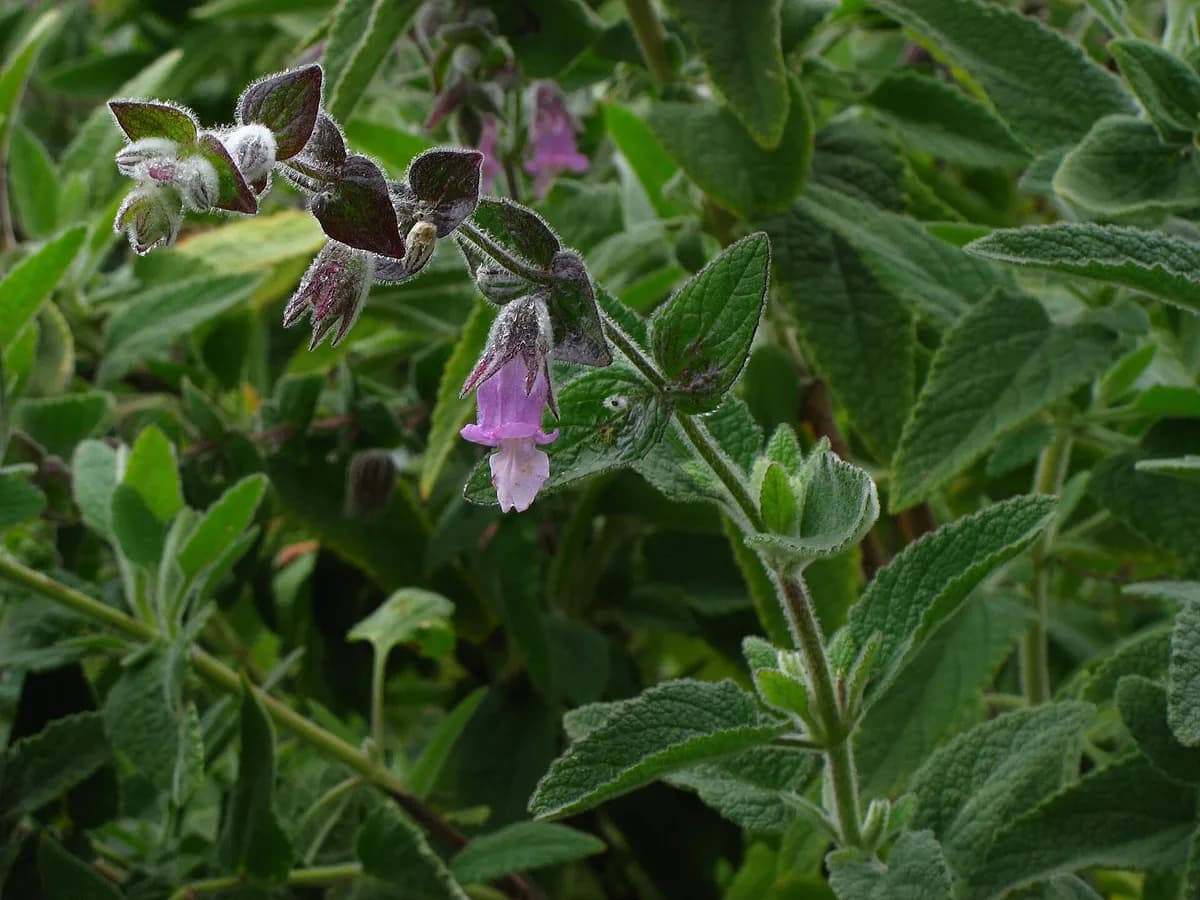
An aromatic evergreen subshrub with soft, gray-green, felted leaves and spikes of pale lavender-white, pitcher-shaped flowers held above the foliage. Forms a loose mound and spreads slowly by rhizomes on coastal bluffs and canyon slopes.
How to care for Island pitchersage, by region
How to care for Island pitchersage where it is actually grown: year-round basics plus what to do each season, region by region, with the sources for each.
Care guidance last updated: August 2026
Southern California/Northern Baja Coast (includes Los Angeles, CA)
Year-round
Island pitcher sage is an evergreen chaparral shrub in the mint family that wants fast draining soil, plenty of sun, and very little water once it settles in. Calscape lists its native range as the Santa Monica and San Gabriel Mountains plus the northern Channel Islands, so it already grows in the hills that ring the Los Angeles basin.
- Plant it in full sun close to the coast, or morning sun with afternoon shade if your yard runs hot inland.
- Give it fast draining soil. It tolerates clay but does not want to sit in wet ground.
- Once it is established, water deeply but rarely, no more than about once a month in summer.
- Expect a rounded shrub 3 to 5 feet tall and wide, so give it room to spread.
- The lavender flower spikes bring in native bees, carpenter bees, and hummingbirds for months at a stretch.
Fall
Fall in the Los Angeles basin brings Santa Ana wind events and the tail end of fire season, plus the return of rain by November or December. It is also one of the best times to plant California native shrubs, since the soil is still warm but rain is coming back to help roots settle in.
- Fall is a good planting window, warm soil plus returning rain helps new roots establish before next summer's heat.
- Cut out any dead or dried branches ahead of Santa Ana wind season, dry wood near a shrub adds fire risk.
- Avoid heavy cuts into old woody stems, this plant does not recover well from hard pruning of mature growth.
- Watch for the last flower spikes of the year before the shrub slows down for winter.
A light fall cleanup that removes only dead wood keeps the shrub looking neat from the street without cutting into the older growth it needs to hold its shape.
Winter
Winter is the rainy season in the Los Angeles basin, so island pitcher sage does most of its own watering now and needs very little from you. Hard freezes are rare in the LA basin, and in its native range the plant has held up to cold down to about 20 degrees Fahrenheit.
- Let winter rain handle the watering, this plant is built for a wet winter, dry summer rhythm.
- Skip fertilizer during winter dormancy, it is a low input chaparral native.
- If a rare hard freeze is forecast for the basin, established plants have tolerated cold down to around 20 degrees Fahrenheit without damage.
- The bare winter structure is a good time to spot any broken or crossing branches to clean up later.
Spring
Spring is when island pitcher sage puts out its first big flush of lavender flowers and new growth. In the Los Angeles basin the rainy season is usually winding down by March or April, so this is also the season to decide how much you need to water by hand.
- Plant new nursery starts in early spring while the soil is still holding winter rain.
- Pinch back the tips of new growth to keep the shrub dense and compact instead of leggy.
- Let the last of the spring rain do the watering, hold off on the hose while the ground is still damp.
- Watch for the first flower spikes, they can open as early as March in a mild year.
Pinching new spring growth keeps a front-yard plant compact and full instead of sprawling into the walkway.
Summer
Summer is the dry season this plant is built for. In the Los Angeles basin that means hot, mostly rainless months from June through September, and island pitcher sage wants infrequent deep watering rather than a regular sprinkler schedule.
- Water established plants no more than about once a month, deeply, then let the soil dry back out.
- In a cool coastal summer you can often skip watering it altogether if the plant still looks full.
- A layer of mulch over the root zone holds moisture and keeps roots cooler, just keep it a few inches back from the main stems.
- Flowering can carry into summer, so native bees and hummingbirds keep visiting.
Snipping off spent flower spikes through summer keeps a front-yard shrub looking tended without hurting next year's bloom.
Sources: Calscape: Fragrant Pitcher Sage plant profile, Las Pilitas Nursery: Lepechinia fragrans
Want these tasks as reminders timed to your yard? Pollinator Patch turns this guidance into a season-by-season care plan for the plants you actually grow.
Wildlife value
Its tubular flowers attract hummingbirds and long-tongued bumble bees, and the fragrant foliage discourages browsing by deer.
Common questions
- How much sun does Island pitchersage need?
- Island pitchersage grows best in full sun conditions.
- When does Island pitchersage bloom?
- Island pitchersage blooms in April, May, June, and July.
- Where is Island pitchersage native?
- Island pitchersage (Lepechinia fragrans) is native to CA, per the World Checklist of Vascular Plants (Kew).
- What pollinators does Island pitchersage attract?
- Island pitchersage draws bumble bees and hummingbirds.
Native range data from the World Checklist of Vascular Plants (Kew). Pollinator and host plant associations compiled from GBIF, iNaturalist, and published ecological literature.
If something looks wrong
Common plant problems, and what to check first
These come up on almost any plant. Each guide lists the likely causes in the order they are worth ruling out, with one thing to check before you act on any of them, and links to the source it came from.
- It is dying right after planting
- Leaves turning yellow
- Wilting even though I watered it
- Brown crispy leaf tips
- Bugs on the plant
Ready to grow Island pitchersage? Add it to your garden in Pollinator Patch to track it and get season-by-season care guidance.
Planning a bed around it? Start a free plan with this plant
Not sure where to start? Take the 2-minute yard quiz