Lechuguilla
Agave lechuguilla
Last reviewed: August 2026
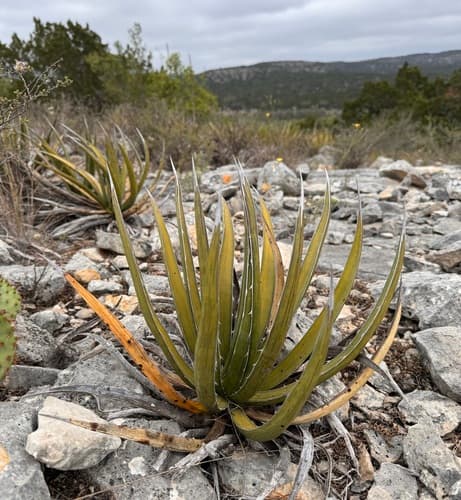
Agave lechuguilla is a small, spine-tipped rosette succulent that grows on rocky, limestone-rich slopes of the Chihuahuan Desert. It thrives in full sun with very little water and sends up a tall flower stalk once in its lifetime.
Toxicity unknown
Lechuguilla (Agave lechuguilla) is not listed by the ASPCA Animal Poison Control Center (opens in new tab) or the other sources we check, so we have no verdict for it either way. Absence from those lists is not a clearance. If your pet shows symptoms after eating any plant, call the ASPCA at (888) 426-4435.
Light
full sun
Water
low
Size
12"–18" H × 18"–24" W
Bloom
N/A
Native to
TX, NM
Pollinators
bees, moths
Before you buy
Your city may pay you to plant this
Cities and water utilities offer rebates for replacing lawn with native and water-wise plants. We track 459 programs across 44 states, each with a link to the provider and the date we last checked it.
Find rebates in your areaPicture natives in your own yard
Upload a photo of your yard and Patch Vision shows a rendering of it planted with natives for your region, like Lechuguilla.


Browse plants for this ecoregion
A small, clustering succulent with narrow, rigid gray-green leaves tipped in sharp spines, forming dense low colonies by offsetting. Its compact, spiky rosettes give a distinctly rugged, low-water character.
Growing Lechuguilla
Grow Lechuguilla in full sun and low water. Mature plants reach 12 to 18 inches tall and spread 18 to 24 inches wide. Expect low maintenance to keep it looking intentional in a front yard.
How to care for Lechuguilla, by region
How to care for Lechuguilla where it is actually grown: year-round basics plus what to do each season, region by region, with the sources for each.
Care guidance last updated: July 2026
Cross Timbers (includes Fort Worth, TX)
Year-round
Lechuguilla is a small desert agave from far West Texas, so in North Texas the whole job is keeping water away from its roots. Give it the sunniest, driest, fastest draining spot you have and then mostly leave it alone.
- Give it full sun, six hours or more, and expect a rosette about 12 to 18 inches tall spreading to roughly 2 feet as it puts out pups.
- In heavy black clay, plant it high on a mound 6 to 8 inches above the bed and mix several inches of coarse gravel or decomposed granite into the hole, because clay holds water and root rot is the main way this plant dies in our area. In the sandier soils west of the metro, drainage is already good, so plant at grade and just plan on watering a bit more often through the first summer. Either way, skip compost and lawn fertilizer, because it grows wild in thin rocky limestone ground and needs nothing added.
- Set it at least 3 feet back from sidewalks, driveways, doorways and anywhere a child or dog runs. Every leaf ends in a stiff needle sharp point that will go through a shoe, a tire or an animal's hide.
- It is native to far West Texas, southern New Mexico and northern Mexico, not to North Texas, so plant it as a desert accent and not as a local native.
- The compounds in this plant are documented as poisonous to grazing animals, and sheep and goats can die from eating it during a drought, so it is not a plant for a pasture or a livestock pen.
An evergreen rosette holds the exact same neat shape all twelve months, which reads as intentional from the street. Set it inside its own gravel or stone circle so the edge line stays crisp and the planting looks planned rather than volunteer.
Fall
Autumn rain is the risk in fall, not the cooling temperatures. This is the season to tidy the plant up and make sure water still runs away from it.
- No fall fertilizer and no fall watering. Our autumn storms already bring more water than this plant wants.
- In October, cut off any leaf that has gone fully brown or collapsed, slicing it flush at the base with a clean knife. Wear thick gloves and eye protection, because the leaf tips are stiff enough to puncture skin.
- Rake fallen tree leaves out of the center of the rosette in November. Wet leaf litter sitting in there is what starts crown rot.
- Before the first frost in mid November, replace any gravel that autumn rain washed off the mound so the crown still sits above the surrounding soil.
- Do not divide or move it in fall. Save pup removal for late winter or early spring.
Doing the brown leaf trim and the trapped litter cleanout in one October pass is the single thing that keeps this plant reading as intentional from the street instead of looking dead.
Winter
A normal North Texas winter is easy on this plant, since it handles cold and stays green right through it. The thing to plan for is a rare deep Arctic freeze landing while the ground is soaked.
- Leave it alone from December through February. It is evergreen and keeps its shape with no cutting back at all.
- Give it no winter water. Cold plus wet clay is the combination that rots the roots.
- When a hard freeze into the teens or lower is forecast, drape a breathable frost cloth or an old sheet over the rosette for those two or three days, then take it back off so the plant gets sun and air.
- After a freeze, wait until March before cutting anything. Leaves that look scorched in January often firm back up, and fresh cuts made in cold wet weather invite rot.
- Late February is a fine time to lift and separate pups if the clump has crowded its space.
Because it keeps its tight green rosette all winter, it holds the front bed together in the months when most perennials are cut to the ground, which is the kind of year round tidiness neighbors read as intentional.
Spring
Spring is when you plant it and the only season you water it much. Get it in the ground after mid March so the roots settle in before the summer heat arrives.
- Plant after the last frost, roughly mid March, so it has three cool months to root before July.
- Water a brand new plant once a week for the first four to six weeks, then stop. An established plant needs no spring watering at all in a normal rainy spring.
- Pull weeds and creeping grass out of the gravel by hand in March and April, wearing thick gloves and working from the side of the plant so you are never reaching over the leaf points.
- If small pups have grown around the base, slice them off with a spade in late winter or early spring and either replant them 2 feet away or hand them to a neighbor.
- Do not add spring fertilizer. Feeding pushes soft floppy growth that rots in the first wet spell.
A March weeding plus a fresh top up of gravel is what makes the planting read as tended, since a bare desert plant ringed by spring weeds looks neglected to anyone walking past.
Summer
The 100 degree afternoons and the weeks without rain do not bother this plant at all. What can kill it in summer is a heavy storm sitting in wet clay around its base.
- Do not water an established plant in June, July or August, even through a long dry stretch. It stores its own water in those thick leaves.
- Water a first year plant only when the soil 3 inches down is bone dry, and then only about once every two to three weeks.
- After a heavy downpour, check that water is not standing in the dip around the plant. If it is, break the rim of the basin so the water runs off.
- Use gravel around the base, never bark or shredded wood mulch, and keep all mulch pulled back a few inches from the center of the rosette.
- If a leaf suddenly goes soft, wilted or jelly like near the base, that is usually agave weevil or rot. Dig the plant out and get rid of it before it spreads to the next one.
Sources: Lady Bird Johnson Wildflower Center, Agave lechuguilla, Native Plant Society of Texas, Agave lechuguilla, Texas Master Gardeners (Henderson County), Agave plant library
Texas Blackland Prairies (includes Dallas, TX)
Year-round
Lechuguilla is a small desert agave from far West Texas, so in North Texas the whole job is keeping water away from its roots. Give it the sunniest, driest, fastest draining spot you have and then mostly leave it alone.
- Give it full sun, six hours or more, and expect a rosette about 12 to 18 inches tall spreading to roughly 2 feet as it puts out pups.
- In heavy black clay, plant it high on a mound 6 to 8 inches above the bed and mix several inches of coarse gravel or decomposed granite into the hole, because clay holds water and root rot is the main way this plant dies in our area. In the sandier soils west of the metro, drainage is already good, so plant at grade and just plan on watering a bit more often through the first summer. Either way, skip compost and lawn fertilizer, because it grows wild in thin rocky limestone ground and needs nothing added.
- Set it at least 3 feet back from sidewalks, driveways, doorways and anywhere a child or dog runs. Every leaf ends in a stiff needle sharp point that will go through a shoe, a tire or an animal's hide.
- It is native to far West Texas, southern New Mexico and northern Mexico, not to North Texas, so plant it as a desert accent and not as a local native.
- The compounds in this plant are documented as poisonous to grazing animals, and sheep and goats can die from eating it during a drought, so it is not a plant for a pasture or a livestock pen.
An evergreen rosette holds the exact same neat shape all twelve months, which reads as intentional from the street. Set it inside its own gravel or stone circle so the edge line stays crisp and the planting looks planned rather than volunteer.
Fall
Autumn rain is the risk in fall, not the cooling temperatures. This is the season to tidy the plant up and make sure water still runs away from it.
- No fall fertilizer and no fall watering. Our autumn storms already bring more water than this plant wants.
- In October, cut off any leaf that has gone fully brown or collapsed, slicing it flush at the base with a clean knife. Wear thick gloves and eye protection, because the leaf tips are stiff enough to puncture skin.
- Rake fallen tree leaves out of the center of the rosette in November. Wet leaf litter sitting in there is what starts crown rot.
- Before the first frost in mid November, replace any gravel that autumn rain washed off the mound so the crown still sits above the surrounding soil.
- Do not divide or move it in fall. Save pup removal for late winter or early spring.
Doing the brown leaf trim and the trapped litter cleanout in one October pass is the single thing that keeps this plant reading as intentional from the street instead of looking dead.
Winter
A normal North Texas winter is easy on this plant, since it handles cold and stays green right through it. The thing to plan for is a rare deep Arctic freeze landing while the ground is soaked.
- Leave it alone from December through February. It is evergreen and keeps its shape with no cutting back at all.
- Give it no winter water. Cold plus wet clay is the combination that rots the roots.
- When a hard freeze into the teens or lower is forecast, drape a breathable frost cloth or an old sheet over the rosette for those two or three days, then take it back off so the plant gets sun and air.
- After a freeze, wait until March before cutting anything. Leaves that look scorched in January often firm back up, and fresh cuts made in cold wet weather invite rot.
- Late February is a fine time to lift and separate pups if the clump has crowded its space.
Because it keeps its tight green rosette all winter, it holds the front bed together in the months when most perennials are cut to the ground, which is the kind of year round tidiness neighbors read as intentional.
Spring
Spring is when you plant it and the only season you water it much. Get it in the ground after mid March so the roots settle in before the summer heat arrives.
- Plant after the last frost, roughly mid March, so it has three cool months to root before July.
- Water a brand new plant once a week for the first four to six weeks, then stop. An established plant needs no spring watering at all in a normal rainy spring.
- Pull weeds and creeping grass out of the gravel by hand in March and April, wearing thick gloves and working from the side of the plant so you are never reaching over the leaf points.
- If small pups have grown around the base, slice them off with a spade in late winter or early spring and either replant them 2 feet away or hand them to a neighbor.
- Do not add spring fertilizer. Feeding pushes soft floppy growth that rots in the first wet spell.
A March weeding plus a fresh top up of gravel is what makes the planting read as tended, since a bare desert plant ringed by spring weeds looks neglected to anyone walking past.
Summer
The 100 degree afternoons and the weeks without rain do not bother this plant at all. What can kill it in summer is a heavy storm sitting in wet clay around its base.
- Do not water an established plant in June, July or August, even through a long dry stretch. It stores its own water in those thick leaves.
- Water a first year plant only when the soil 3 inches down is bone dry, and then only about once every two to three weeks.
- After a heavy downpour, check that water is not standing in the dip around the plant. If it is, break the rim of the basin so the water runs off.
- Use gravel around the base, never bark or shredded wood mulch, and keep all mulch pulled back a few inches from the center of the rosette.
- If a leaf suddenly goes soft, wilted or jelly like near the base, that is usually agave weevil or rot. Dig the plant out and get rid of it before it spreads to the next one.
Sources: Lady Bird Johnson Wildflower Center, Agave lechuguilla, Native Plant Society of Texas, Agave lechuguilla, Texas Master Gardeners (Henderson County), Agave plant library
In an HOA neighborhood
Lechuguilla is an HOA-friendly choice in the right placement. Maintenance level: low. Tidiness: 2 out of 5.
Works well in: street edge, mid zone.
- sharp spine-tipped leaves pose a hazard near walkways
- forms dense colonial clusters over time
Wildlife value
The rare tall flowering stalk provides nectar for bees and night-flying moths.
Common questions
- How much light does Agave lechuguilla need?
- It needs full, direct sun for most of the day. Heavy shade causes weak, stretched growth and poor rosette form.
- How often should Agave lechuguilla be watered?
- Very little. Once established, it relies on infrequent rainfall and can rot if kept consistently moist, especially in winter.
- When does Agave lechuguilla flower?
- Like most agaves, each rosette blooms only once, sending up a tall flowering stalk before that rosette dies back, with new offshoots continuing the plant.
- What pollinates Agave lechuguilla flowers?
- Bees and moths are commonly recorded visiting and pollinating the flower stalks of this agave.
- Does Agave lechuguilla keep its leaves year round?
- Yes, it is evergreen. The stiff, narrow leaves persist through the year and do not drop seasonally.
- Is Lechuguilla HOA-friendly?
- Lechuguilla is generally an HOA-friendly choice in the right placement, with low maintenance.
These answers were drafted with an AI model from this plant's data. Verify care details with a local expert.
Native range data from vouchered herbarium specimen records and regional native plant society lists. Pollinator and host plant associations compiled from GBIF, iNaturalist, and published ecological literature.
If something looks wrong
Common plant problems, and what to check first
These come up on almost any plant. Each guide lists the likely causes in the order they are worth ruling out, with one thing to check before you act on any of them, and links to the source it came from.
- It is dying right after planting
- Leaves turning yellow
- Wilting even though I watered it
- Brown crispy leaf tips
- Bugs on the plant
Ready to grow Lechuguilla? Add it to your garden in Pollinator Patch to track it and get season-by-season care guidance.