Northern Red Oak
Quercus rubra
Last reviewed: October 2026
Quercus rubra is a large deciduous shade tree suited to full sun or part shade with medium water needs. It flowers with small catkins in May and June and is common in forests and woodlands across the eastern and midwestern United States.
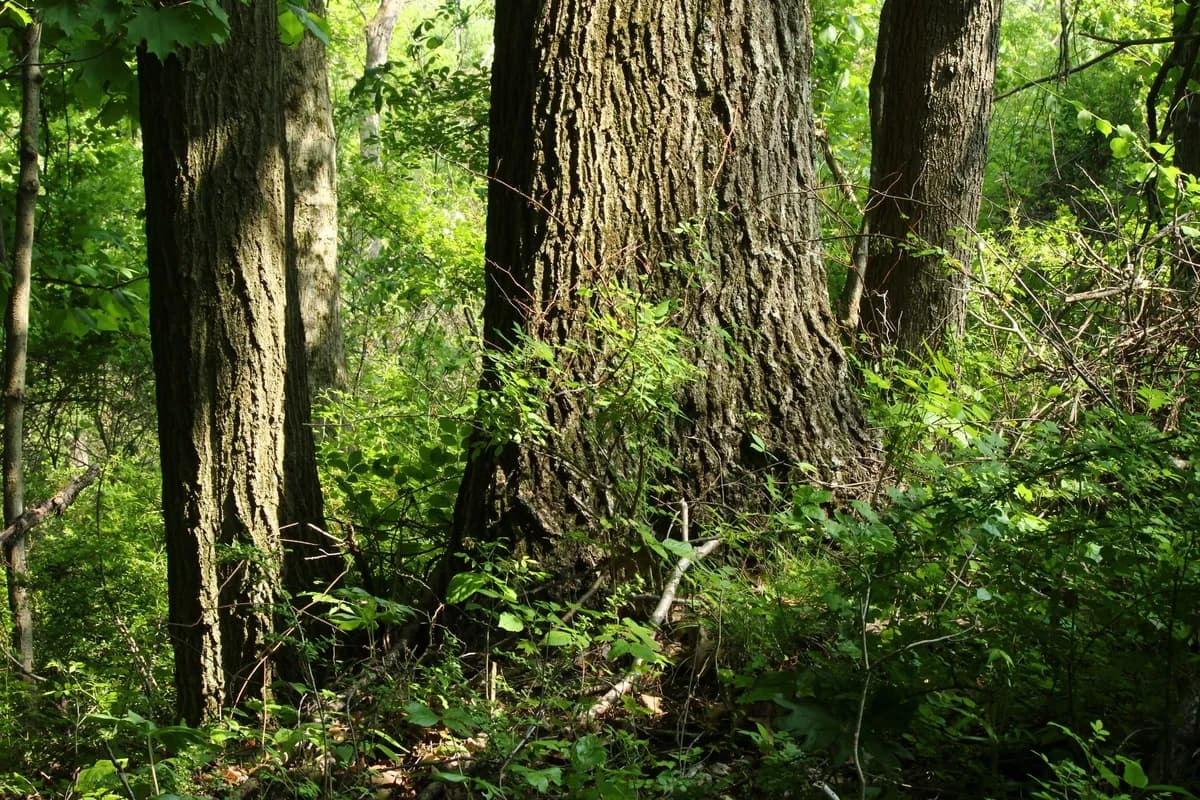
Northern Red Oak (Quercus rubra) is not on the ASPCA Animal Poison Control Center toxic plant list for dogs or cats (aspca.org (opens in new tab), last reviewed 2026-05-21). If your pet shows symptoms after eating any plant, call the ASPCA at (888) 426-4435.
The USDA PLANTS Database (opens in new tab) does not flag Northern Red Oak as toxic to livestock.
Light
full sun
Water
medium
Size
600"–900" H × 480"–720" W
Bloom
May, Jun
Native to
AL, AR, CT, DE and 29 more states
Pollinators
bees, beetles
Before you buy
Your city may pay you to plant this
Cities and water utilities offer rebates for replacing lawn with native and water-wise plants. We track 459 programs across 44 states, each with a link to the provider and the date we last checked it.
Find rebates in your areaPicture natives in your own yard
Upload a photo of your yard and Patch Vision shows a rendering of it planted with natives for your region, like Northern Red Oak.


Browse plants for this ecoregion
Northern red oak is a large, stately shade tree with distinctive lobed leaves that turn brilliant red to orange in fall. This long-lived native can reach 50-75 feet tall and wide, making it an excellent choice for spacious properties where it has room to develop its classic rounded crown.
Growing Northern Red Oak
Grow Northern Red Oak in full sun and medium water. Mature plants reach 600 to 900 inches tall and spread 480 to 720 inches wide. Expect moderate maintenance to keep it looking intentional in a front yard.
How to care for Northern Red Oak, by region
How to care for Northern Red Oak where it is actually grown: year-round basics plus what to do each season, region by region, with the sources for each.
Care guidance last updated: October 2026
Atlantic Coastal Pine Barrens (includes Riverhead, NY)
Year-round
A fast-growing shade tree that is drought tolerant once established.
- It prefers full sun and moist to dry, well-drained, acidic, fertile, sandy to loamy soils.
- Once established, it is drought tolerant.
- It is easily transplanted and hardy in USDA zones 4a to 8b.
- It reaches 50 to 75 feet tall and about as wide.
Fall
Fall is for a last watering and acorns.
- Mid August through September is the most important time to prepare plants for winter.
- Water a first-year tree about once every four weeks in autumn.
- Acorns feed woodpeckers, blue jays, small mammals, wild turkeys, deer and black bears.
- Nut weevils, filbert worms and acorn moths can damage the acorns.
Winter
Winter is the time to prune.
- Prune oaks in winter, not in the growing season.
- Plants should enter winter with ample moisture.
- Do not move firewood from an infected tree.
- Oak wilt spreads when firewood from an infected tree is moved, and beetles can then carry the fungus to healthy trees.
Spring
Spring is for watering a young tree and skipping pruning.
- It is susceptible to oak wilt.
- Oak wilt is contagious during warm months from April to November, so avoid fresh cuts then.
- The state asks homeowners to prune oaks in winter.
- Chlorosis can occur when soil is not acidic enough.
Summer
Summer water matters most for young trees.
- Water a first-year tree deeply at least once a week in dry spells.
- In the second year, water about once every three weeks in summer.
- Established trees are drought tolerant.
- Gypsy moth is described as the most destructive pest because it defoliates the trees.
Sources: NC State Extension Plant Toolbox, Quercus rubra, Cornell Chronicle, Oak wilt found in six new New York locations, Cornell Cooperative Extension Suffolk, Prune Your Oak Trees in Winter, Cornell Cooperative Extension Suffolk, Watering Trees and Shrubs on Long Island
In an HOA neighborhood
Northern Red Oak is an HOA-friendly choice. Maintenance level: moderate. Tidiness: 4 out of 5.
Works well in: front yard, street edge, mid zone.
- Requires large space to mature properly
- Acorn drop in fall may need cleanup
Wildlife value
Host plant for banded hairstreak, rosy maple moth, gypsy moth.
Supports over 500 species of butterflies and moths as a host plant, plus provides acorns for squirrels, deer, and birds. Flowers attract bees and beetles in late spring.
Common questions
- When does Northern Red Oak bloom?
- Northern Red Oak produces small greenish yellow catkins in May and June, usually appearing as the leaves begin to unfold.
- What pollinates Quercus rubra?
- The catkins of Northern Red Oak are mainly wind pollinated, but bees and beetles will visit the flowers to collect pollen.
- How much light does Northern Red Oak need?
- This tree grows best in full sun once established but young trees can tolerate part sun to part shade beneath a forest canopy.
- What soil moisture does Northern Red Oak prefer?
- It does well in medium moisture, well drained soils and adapts to a variety of upland forest and woodland sites.
- Does Northern Red Oak keep its leaves in winter?
- It is deciduous, though some dried leaves may cling to the branches into winter before finally dropping.
- Is Northern Red Oak toxic to dogs?
- Northern Red Oak is not on the ASPCA Animal Poison Control Center toxic plant list for dogs (aspca.org).
- Is Northern Red Oak toxic to cats?
- Northern Red Oak is not on the ASPCA Animal Poison Control Center toxic plant list for cats (aspca.org).
- Is Northern Red Oak toxic to livestock?
- The USDA PLANTS Database does not flag Northern Red Oak as toxic to livestock.
- Is Northern Red Oak HOA-friendly?
- Northern Red Oak is generally an HOA-friendly choice in the right placement, with moderate maintenance.
These answers were drafted with an AI model from this plant's data. Verify care details with a local expert.
Native range data from vouchered herbarium specimen records and regional native plant society lists. Pollinator and host plant associations compiled from GBIF, iNaturalist, and published ecological literature.
If something looks wrong
Common plant problems, and what to check first
These come up on almost any plant. Each guide lists the likely causes in the order they are worth ruling out, with one thing to check before you act on any of them, and links to the source it came from.
- It is dying right after planting
- Leaves turning yellow
- Wilting even though I watered it
- Brown crispy leaf tips
- Bugs on the plant
Ready to grow Northern Red Oak? Add it to your garden in Pollinator Patch to track it and get season-by-season care guidance.