Palmer's abutilon
Abutilon palmeri
Last reviewed: October 2026
Palmer's abutilon is a soft-leaved desert shrub that thrives in full sun with low water and blooms from March through October, drawing bees and hummingbirds to its apricot-orange flowers.
Toxicity unknown
Palmer's abutilon (Abutilon palmeri) is not listed by the ASPCA Animal Poison Control Center (opens in new tab) or the other sources we check, so we have no verdict for it either way. Absence from those lists is not a clearance. If your pet shows symptoms after eating any plant, call the ASPCA at (888) 426-4435.
Light
full sun
Water
low
Size
36"–72" H × 36"–72" W
Bloom
Mar, Apr, May, Jun, Jul, Aug, Sep, Oct
Native to
AZ, CA
Pollinators
bees, hummingbirds
Before you buy
Your city may pay you to plant this
Cities and water utilities offer rebates for replacing lawn with native and water-wise plants. We track 459 programs across 44 states, each with a link to the provider and the date we last checked it.
Find rebates in your areaPicture natives in your own yard
Upload a photo of your yard and Patch Vision shows a rendering of it planted with natives for your region, like Palmer's abutilon.


Browse plants for this ecoregion
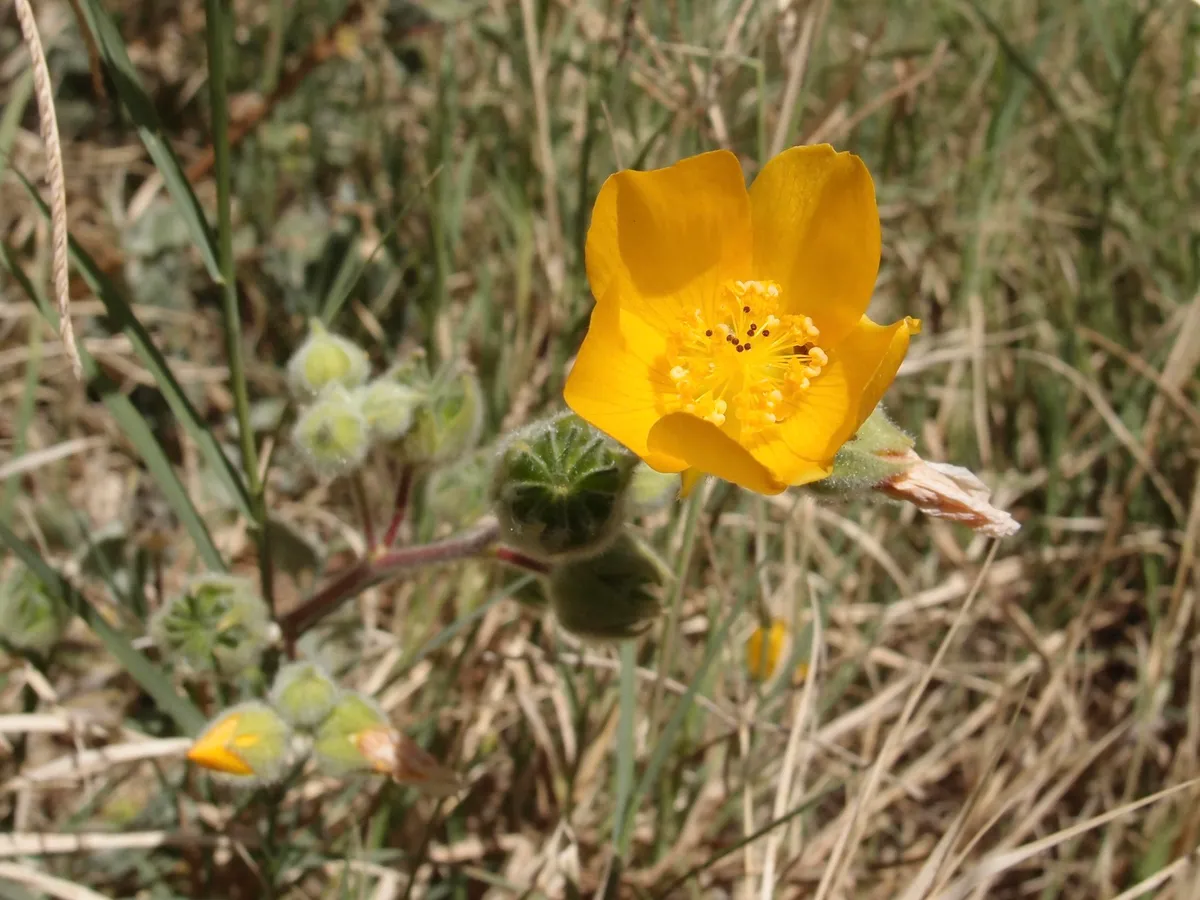
A rounded, mounding shrub with soft, velvety gray-green leaves and cup-shaped, apricot-orange flowers held above the foliage nearly year-round. Its dense, drought-tolerant form works well as an informal accent or low screen.
Growing Palmer's abutilon
Grow Palmer's abutilon in full sun and low water. Mature plants reach 36 to 72 inches tall and spread 36 to 72 inches wide. Expect moderate maintenance to keep it looking intentional in a front yard.
How to care for Palmer's abutilon, by region
How to care for Palmer's abutilon where it is actually grown: year-round basics plus what to do each season, region by region, with the sources for each.
Care guidance last updated: July 2026
Cross Timbers (includes Fort Worth, TX)
Year-round
Palmer's abutilon is a Southwestern desert shrub from the Sonoran Desert country of Arizona and southern California, so in North Texas you are growing it outside the range it comes from. Winter cold, not heat, is the thing that decides whether it lives here.
- Put it in full sun in the warmest, most sheltered spot you have, ideally a few feet out from a south or west facing wall or fence where the masonry holds heat overnight.
- Drainage matters more than rich soil. In heavy black clay, plant it high on a slight mound 4 to 6 inches above grade or mix in expanded shale so water moves through; in the sandier soils west of the metro it drains on its own but will need water more often through its first summer.
- Expect roughly 3 to 6 feet tall and close to as wide, with fuzzy grey green leaves and orange to yellow cup shaped flowers about an inch across.
- Water deeply once a week for the first growing season. After it is established it wants water no more than about once a month in summer.
- Plan for the honest worst case. It takes cold to about 25F, and a hard North Texas freeze goes well below that, so keep a rooted cutting or accept that you may replace it after a bad winter.
One rounded shrub set against the house with a clean mulch ring and a crisp bed edge reads as an intentional planting while it fills in, which is the look that keeps a front yard HOA-friendly.
Fall
Fall is for getting the plant settled and for stopping any push of soft new growth. Tender young shoots heading into winter are the first thing a freeze takes.
- Stop fertilizing after August. Late feeding forces tender growth that cold damages first.
- Do not do a hard cutback in fall. Leave the woody framework standing to take the cold and save real pruning for late March.
- Autumn rains usually cover the watering. Water only if about three weeks pass with no rain, and water lightly.
- In late October or November, spread 3 to 4 inches of shredded leaves or bark over the root zone so the crown has insulation before the first hard freeze.
- By mid November, which is about when the first frost shows up here, have a frost blanket or an old sheet and a few bricks set aside where you can grab them after dark.
Refreshing the mulch and re cutting the bed edge in November, while leaving the shrub's shape alone, gives the bed a finished look through winter so a resting plant does not read as a neglected one.
Winter
Winter is the real risk with this shrub. It handles cold only to about 25F, and North Texas drops below that in most winters, so what you do on a hard freeze night decides whether it comes back.
- Watch the forecast for nights below about 28F. Water the soil deeply a day ahead, because damp soil soaks up daytime warmth and gives it back overnight.
- Cover the entire plant with a frost blanket, sheet or blanket that reaches all the way down to the ground, and weight the edges with bricks. A cover draped over just the top does almost nothing.
- Do not lay plastic straight onto the leaves. If plastic is all you have, hold it off the foliage with a few stakes.
- Pull the covers off on sunny days so the soil can warm back up, then put them on again before dark.
- After freeze damage, leave the brown stems standing until mid March. The dead top shelters the crown, and you cannot tell what survived until new growth starts.
Leaving frost bitten stems until spring is the right call for the plant, so carry the tidiness elsewhere: keep the edge crisp and the mulch fresh, and take the cover off during the day, because a shrub left under a sheet for weeks is what draws notice from the street.
Spring
Spring is the planting window and the start of the long bloom season. It is also when you find out how much of the plant the winter took.
- Wait until after the average last frost in mid March before you plant or cut anything back.
- In late March, scratch a fingernail into each stem. Green underneath means alive, brown and brittle means dead. Cut dead wood back to the highest live bud.
- If a hard winter took it to the ground, give it until early May before you call it gone. It often pushes new shoots from the base.
- Set out new plants between mid March and late April so the roots get established before July heat arrives.
- Water new plants deeply once a week through spring, roughly 1 to 2 gallons each, and skip a week after a soaking spring storm.
Doing the winter cleanup in one pass in late March, rather than snipping a little at a time for weeks, leaves a clean rounded shape that reads as intentional pruning instead of a dead shrub out front.
Summer
This is a desert shrub, so a North Texas July is the easy part of its year. Watering is the whole job in summer, and too much water is the bigger risk than too little.
- Keep watering first year plants deeply once a week through July and August. A plant that has been in the ground a year or more needs water only about once a month, even in 100F weather.
- Water at the base in the early morning, not over the leaves, and never let the soil stay soggy. Wet soil plus summer heat kills this shrub faster than drought does.
- In heavy black clay, watch that the water soaks in instead of pooling on top; in the sandier soils west of the metro plan on watering about twice as often through the first summer.
- Keep 2 to 3 inches of mulch over the root zone and pull it back an inch or two away from the stems so the base stays dry.
- Pinch or snip the spent flower pods off every few weeks. It flowers over a long warm season, and deadheading keeps new buds coming and the shrub looking cared for.
One light tip trim in midsummer along with the deadheading keeps the shrub compact and in flower, which is the tidy, in bloom look most HOA-conscious homeowners want in a front bed.
Sources: Lady Bird Johnson Wildflower Center, Abutilon palmeri (Palmer's Indian mallow), Calscape (California Native Plant Society), Palmer's Indian Mallow, Texas A&M AgriLife Extension, Travis County, Frosts and Freezes
Texas Blackland Prairies (includes Dallas, TX)
Year-round
Palmer's abutilon is a Southwestern desert shrub from the Sonoran Desert country of Arizona and southern California, so in North Texas you are growing it outside the range it comes from. Winter cold, not heat, is the thing that decides whether it lives here.
- Put it in full sun in the warmest, most sheltered spot you have, ideally a few feet out from a south or west facing wall or fence where the masonry holds heat overnight.
- Drainage matters more than rich soil. In heavy black clay, plant it high on a slight mound 4 to 6 inches above grade or mix in expanded shale so water moves through; in the sandier soils west of the metro it drains on its own but will need water more often through its first summer.
- Expect roughly 3 to 6 feet tall and close to as wide, with fuzzy grey green leaves and orange to yellow cup shaped flowers about an inch across.
- Water deeply once a week for the first growing season. After it is established it wants water no more than about once a month in summer.
- Plan for the honest worst case. It takes cold to about 25F, and a hard North Texas freeze goes well below that, so keep a rooted cutting or accept that you may replace it after a bad winter.
One rounded shrub set against the house with a clean mulch ring and a crisp bed edge reads as an intentional planting while it fills in, which is the look that keeps a front yard HOA-friendly.
Fall
Fall is for getting the plant settled and for stopping any push of soft new growth. Tender young shoots heading into winter are the first thing a freeze takes.
- Stop fertilizing after August. Late feeding forces tender growth that cold damages first.
- Do not do a hard cutback in fall. Leave the woody framework standing to take the cold and save real pruning for late March.
- Autumn rains usually cover the watering. Water only if about three weeks pass with no rain, and water lightly.
- In late October or November, spread 3 to 4 inches of shredded leaves or bark over the root zone so the crown has insulation before the first hard freeze.
- By mid November, which is about when the first frost shows up here, have a frost blanket or an old sheet and a few bricks set aside where you can grab them after dark.
Refreshing the mulch and re cutting the bed edge in November, while leaving the shrub's shape alone, gives the bed a finished look through winter so a resting plant does not read as a neglected one.
Winter
Winter is the real risk with this shrub. It handles cold only to about 25F, and North Texas drops below that in most winters, so what you do on a hard freeze night decides whether it comes back.
- Watch the forecast for nights below about 28F. Water the soil deeply a day ahead, because damp soil soaks up daytime warmth and gives it back overnight.
- Cover the entire plant with a frost blanket, sheet or blanket that reaches all the way down to the ground, and weight the edges with bricks. A cover draped over just the top does almost nothing.
- Do not lay plastic straight onto the leaves. If plastic is all you have, hold it off the foliage with a few stakes.
- Pull the covers off on sunny days so the soil can warm back up, then put them on again before dark.
- After freeze damage, leave the brown stems standing until mid March. The dead top shelters the crown, and you cannot tell what survived until new growth starts.
Leaving frost bitten stems until spring is the right call for the plant, so carry the tidiness elsewhere: keep the edge crisp and the mulch fresh, and take the cover off during the day, because a shrub left under a sheet for weeks is what draws notice from the street.
Spring
Spring is the planting window and the start of the long bloom season. It is also when you find out how much of the plant the winter took.
- Wait until after the average last frost in mid March before you plant or cut anything back.
- In late March, scratch a fingernail into each stem. Green underneath means alive, brown and brittle means dead. Cut dead wood back to the highest live bud.
- If a hard winter took it to the ground, give it until early May before you call it gone. It often pushes new shoots from the base.
- Set out new plants between mid March and late April so the roots get established before July heat arrives.
- Water new plants deeply once a week through spring, roughly 1 to 2 gallons each, and skip a week after a soaking spring storm.
Doing the winter cleanup in one pass in late March, rather than snipping a little at a time for weeks, leaves a clean rounded shape that reads as intentional pruning instead of a dead shrub out front.
Summer
This is a desert shrub, so a North Texas July is the easy part of its year. Watering is the whole job in summer, and too much water is the bigger risk than too little.
- Keep watering first year plants deeply once a week through July and August. A plant that has been in the ground a year or more needs water only about once a month, even in 100F weather.
- Water at the base in the early morning, not over the leaves, and never let the soil stay soggy. Wet soil plus summer heat kills this shrub faster than drought does.
- In heavy black clay, watch that the water soaks in instead of pooling on top; in the sandier soils west of the metro plan on watering about twice as often through the first summer.
- Keep 2 to 3 inches of mulch over the root zone and pull it back an inch or two away from the stems so the base stays dry.
- Pinch or snip the spent flower pods off every few weeks. It flowers over a long warm season, and deadheading keeps new buds coming and the shrub looking cared for.
One light tip trim in midsummer along with the deadheading keeps the shrub compact and in flower, which is the tidy, in bloom look most HOA-conscious homeowners want in a front bed.
Sources: Lady Bird Johnson Wildflower Center, Abutilon palmeri (Palmer's Indian mallow), Calscape (California Native Plant Society), Palmer's Indian Mallow, Texas A&M AgriLife Extension, Travis County, Frosts and Freezes
In an HOA neighborhood
Palmer's abutilon is an HOA-friendly choice. Maintenance level: moderate. Tidiness: 3 out of 5.
Works well in: front yard, foundation, mid zone.
- can become leggy and open without periodic pruning
Wildlife value
Its abundant cup-shaped flowers provide a steady nectar source for bees and hummingbirds through most of the growing season.
Common questions
- How much water does Palmer's abutilon need?
- Very little once established. It is a low-water shrub suited to well-drained soil and does best with infrequent deep watering rather than regular irrigation.
- How much sun does Abutilon palmeri need?
- It grows best in full sun and also tolerates part sun, especially in hotter inland locations where a little afternoon shade can help.
- When does Palmer's abutilon bloom?
- Flowering typically runs from March into October, giving a long stretch of spring, summer, and early fall bloom.
- What pollinators does Palmer's abutilon attract?
- The open bell-shaped flowers are visited mainly by bees and hummingbirds throughout the bloom season.
- Does Palmer's abutilon lose its leaves in winter?
- It generally holds its gray-green, velvety leaves year-round, behaving as an evergreen shrub in mild climates.
- Is Palmer's abutilon HOA-friendly?
- Palmer's abutilon is generally an HOA-friendly choice in the right placement, with moderate maintenance.
These answers were drafted with an AI model from this plant's data. Verify care details with a local expert.
Native range data from vouchered herbarium specimen records and regional native plant society lists. Pollinator and host plant associations compiled from GBIF, iNaturalist, and published ecological literature.
If something looks wrong
Common plant problems, and what to check first
These come up on almost any plant. Each guide lists the likely causes in the order they are worth ruling out, with one thing to check before you act on any of them, and links to the source it came from.
- It is dying right after planting
- Leaves turning yellow
- Wilting even though I watered it
- Brown crispy leaf tips
- Bugs on the plant
Ready to grow Palmer's abutilon? Add it to your garden in Pollinator Patch to track it and get season-by-season care guidance.