Persian lime
Citrus x latifolia
Last reviewed: November 2026
Watering reminders and freeze alerts for Persian lime, free in the app.


Toxicity unknown
Persian lime (Citrus x latifolia) is not listed by the ASPCA Animal Poison Control Center (opens in new tab) or the other sources we check, so we have no verdict for it either way. Absence from those lists is not a clearance. If your pet shows symptoms after eating any plant, call the ASPCA at (888) 426-4435.
Light
full sun
Water
medium
Size
120"–240" H × 120"–240" W
Bloom
N/A
Pollinators
bees
Before you buy
Your city may pay you to plant this
Cities and water utilities offer rebates for replacing lawn with native and water-wise plants. We track 464 programs across 44 states, each with a link to the provider and the date we last checked it.
Find rebates in your areaPicture natives in your own yard
Wondering what could grow where Persian lime is now? Upload a photo of the spot and Patch Vision shows a rendering of it replanted with natives for your region.
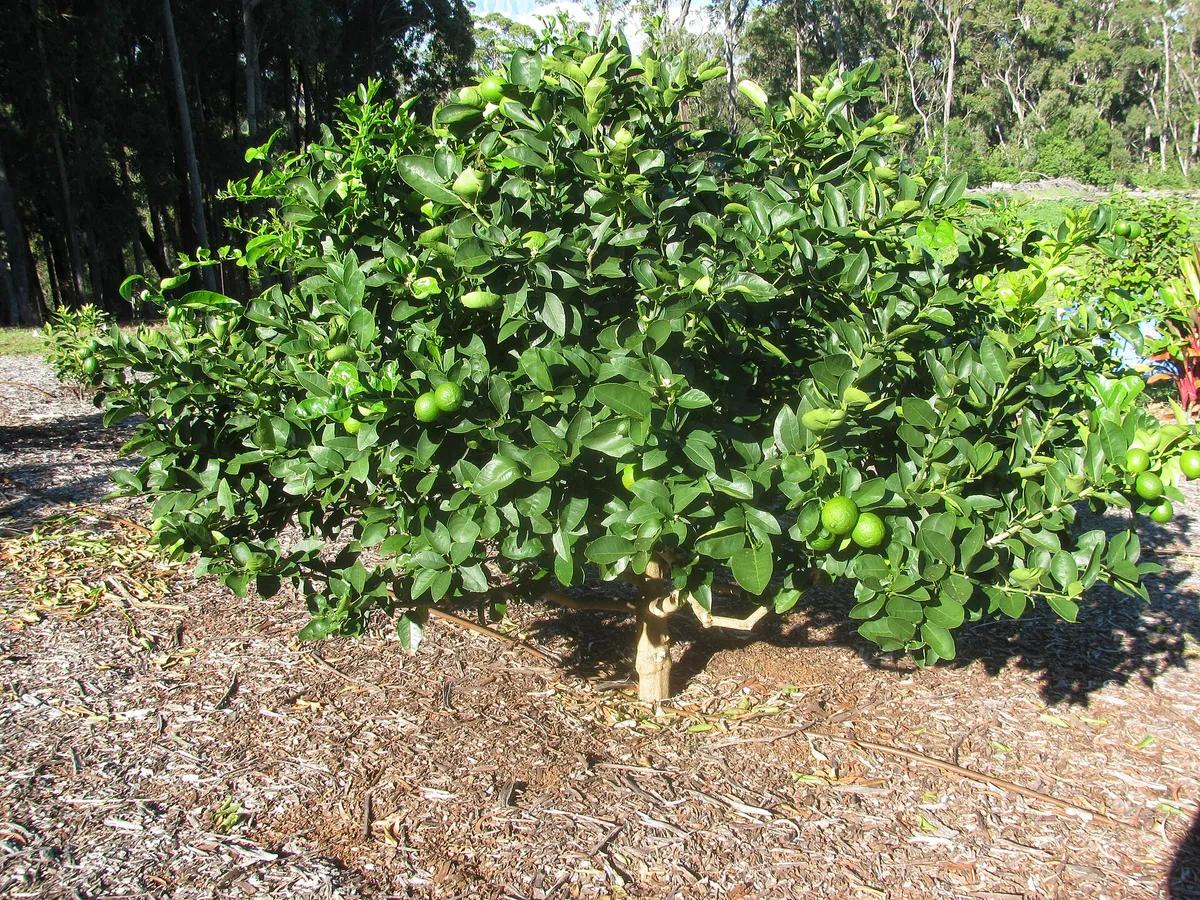
An evergreen citrus tree grown for seedless green limes. It is not native and needs freeze protection.
How to care for Persian lime, by region
How to care for Persian lime where it is actually grown: year-round basics plus what to do each season, region by region, with the sources for each.
Care guidance last updated: November 2026
Western Gulf Coastal Plain (includes Houston, TX)
Year-round
Year-round care for Persian lime around Houston, TX: plant it in full sun on the sheltered south side, buy it from a local grower, and plan for freeze protection.
- Harris County Extension lists Persian lime as a handsome, compact, medium size tree with very few small thorns. Its list gives no cold limit and no mature size for Persian, so allow it room.
- Galveston County Extension says limes and lemons are among the citrus most easily killed by freezing weather, and that temperatures in the high 20s F will kill or severely damage them.
- Texas A&M says citrus needs full sun, and to plant most citrus 6 to 8 feet from buildings, driveways, walkways and fences.
- Texas A&M AgriLife (May 2024) lists Harris, Fort Bend and Montgomery counties under a citrus greening quarantine. Citrus plants bought inside the quarantined area must stay inside it, so buy locally.
Fall
Fall care for Persian lime around Houston, TX: plant now through late winter, pick limes from mid-September, and finish feeding by October.
- Texas A&M says the best results come from planting citrus from fall to late winter. Do not set the tree too deep: a bud union that sits too low can lead to foot rot.
- Harris County Extension says Persian ripens from mid-September to early October, can be used while still green, and does not hold well on the tree after reaching full maturity.
- Feed a young tree monthly through October, then stop.
- A tree carrying a heavy crop is less cold hardy than one without fruit. Fruit can freeze at 26 to 28 F when that cold lasts several hours.
Winter
Winter care for Persian lime around Houston, TX: cover the tree before a freeze below 27 F, protect young trees most, and leave freeze damage alone until spring.
- Galveston County Extension says temperatures in the high 20s F will kill or severely damage limes. Protect citrus when temperatures are expected below 27 F for an extended period.
- No Texas extension source we read gives a cold limit for Persian lime itself. Treat it as one of the most cold-tender citrus and protect it early.
- A cover must go over the whole plant, reach the ground, and come off the next morning once temperatures rise.
- For a young tree, Texas A&M says soil banks around the trunk go up around Thanksgiving and come down about the first of March, for the first two to four winters.
- After a freeze, do not prune until spring growth shows how much was lost.
Spring
Spring care for Persian lime around Houston, TX: wait for new growth before cutting out freeze damage, start feeding when growth begins, and strip fruit from a young tree.
- If winter cold hurt the tree, do not prune until spring growth shows the full extent of the injury.
- Do not feed a newly planted tree until it starts new growth. Texas A&M then says to feed a young tree monthly through October. For an established tree it recommends two feedings, two thirds in February and the rest in May.
- Harris County Master Gardeners recommend a good organic fruit tree food. Scatter it at least a foot from the trunk and water it in.
- Pick the fruit off a newly planted tree for its first couple of years, so the tree puts its energy into getting established.
Summer
Summer care for Persian lime around Houston, TX: water deeply when the soil dries, keep irrigation 3 feet from the trunk, and skip the mulch.
- Texas A&M says to set out shallow cans and give established citrus 1.5 inches of water when the cans are completely dry, from mid-April through mid-September.
- Keep any drip or spray line 3 feet from the trunk. Watering at the trunk invites rot and soil diseases.
- Galveston County Master Gardeners say not to mulch citrus. They let St. Augustine grass grow at the base, but not Bermuda.
- Root damage from too much water or poor drainage is a common citrus problem. Check drainage if leaves yellow and drop.
- Texas A&M notes limes can flower and set fruit almost year-round.
Sources: Texas A&M AgriLife Extension, Harris County: Recommended Fruit and Nut Varieties, Texas A&M AgriLife Extension, Galveston County: Cold Weather Damage on Citrus, Texas A&M AgriLife Extension: Citrus (Fruit & Nut Resources), Texas A&M AgriLife Extension: Gulf Coast Citrus Greening Quarantine (PLPM-PU-109, May 2024), Harris County Master Gardener Association: 2023 Fruit Tree Handbook, Texas A&M AgriLife Extension, Galveston County Master Gardeners: Our Edible Landscape (citrus tips)
In an HOA neighborhood
Persian lime takes more care to keep looking intentional in a front yard. Maintenance level: moderate. Consider it for backyard or mid-zone beds rather than the street edge.
- Dropped fruit
Common questions
- How much sun does Persian lime need?
- Persian lime grows best in full sun conditions.
- What pollinators does Persian lime attract?
- Persian lime draws bees.
- Is Persian lime HOA-friendly?
- Persian lime takes more care to look intentional in a front yard. Consider it for backyard or mid-zone beds rather than the street edge.
Pollinator and host plant associations compiled from GBIF, iNaturalist, and published ecological literature.
If something looks wrong
Common plant problems, and what to check first
These come up on almost any plant. Each guide lists the likely causes in the order they are worth ruling out, with one thing to check before you act on any of them, and links to the source it came from.
- It is dying right after planting
- Leaves turning yellow
- Wilting even though I watered it
- Brown crispy leaf tips
- Bugs on the plant
Ready to grow Persian lime? Add it to your garden in the Pollinator Patch App to track it and get season-by-season care guidance.