Purple prickly pear
Opuntia violacea
Last reviewed: September 2026
Opuntia violacea, the purple prickly pear, is a low-water succulent that thrives in full sun and typically blooms yellow flowers in April and May in hot, arid climates.
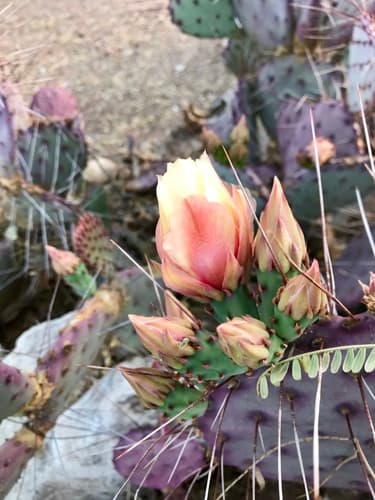
Purple prickly pear (Opuntia violacea) is not on the ASPCA Animal Poison Control Center toxic plant list for dogs or cats (aspca.org (opens in new tab), last reviewed 2026-08-15). If your pet shows symptoms after eating any plant, call the ASPCA at (888) 426-4435.
Light
full sun
Water
low
Size
12"–36" H × 36"–72" W
Bloom
Apr, May
Native to
AZ, NM, TX
Pollinators
bees
Before you buy
Your city may pay you to plant this
Cities and water utilities offer rebates for replacing lawn with native and water-wise plants. We track 459 programs across 44 states, each with a link to the provider and the date we last checked it.
Find rebates in your areaPicture natives in your own yard
Upload a photo of your yard and Patch Vision shows a rendering of it planted with natives for your region, like Purple prickly pear.


Browse plants for this ecoregion
A low, spreading cactus with flattened pads that turn a striking purple-violet under cold or drought stress, contrasting with bright yellow spring flowers. Forms a wide, mounding clump and is prized for its seasonal color shift as much as its extreme drought tolerance.
Growing Purple prickly pear
Grow Purple prickly pear in full sun and low water. Mature plants reach 12 to 36 inches tall and spread 36 to 72 inches wide. Expect low maintenance to keep it looking intentional in a front yard.
How to care for Purple prickly pear, by region
How to care for Purple prickly pear where it is actually grown: year-round basics plus what to do each season, region by region, with the sources for each.
Care guidance last updated: July 2026
Cross Timbers (includes Fort Worth, TX)
Year-round
Purple prickly pear is a low, spreading pad cactus that needs full sun and very little water once established. The pads often turn a deep purple in winter cold or summer drought, which is a normal color change, not a sign of trouble.
- Give it full sun and well drained soil. In heavy black clay soils, plant it on a raised mound or bed amended with coarse sand or decomposed granite so roots do not sit in wet clay; in the sandier soils west of the metro it usually does fine planted directly in the ground.
- Space plants at least 3 feet apart so pads can spread to their mature 12 to 36 inch height and width without crowding a walkway.
- Once established, skip regular watering and only water during stretches of 4 or more weeks with no rain.
- Wear thick gloves and use tongs when handling pads. The tiny barbed glochid spines detach easily and lodge in skin.
- This plant is not on the ASPCA toxic plant list for dogs or cats, though the glochid spines are a physical hazard to curious pets and people, not a poisoning risk.
A single, well spaced clump on a mound reads as an intentional xeriscape accent rather than an unkempt cactus patch.
Fall
Fall, once the worst heat has broken, is a good time to divide or transplant pads, and the plant needs little care heading into North Texas's mild winter.
- Wait until nighttime temperatures are reliably below 90 degrees, usually late September, before dividing or moving pads.
- To propagate, cut a healthy pad with a knife rather than tearing it and let the cut end callus for several days before replanting in well drained, gritty soil.
- Stop supplemental watering by late October so pads harden off before the average first frost in mid November.
- Clear fallen leaves or other debris from under the clump so pads keep full sun exposure and air movement.
Clearing debris around the base keeps the planting looking deliberate through fall cleanup season.
Winter
Purple prickly pear handles typical North Texas winters (USDA zone 8a to 8b) without help, and pads often deepen to a richer purple in cold weather, a normal seasonal color shift rather than damage.
- Leave established plants alone. They need no winter watering or covering during normal freezes.
- Ahead of a forecast severe Arctic outbreak, a light frost cloth draped over the clump can help prevent pad splitting, though most mature plants recover without one.
- Hold off on pruning, dividing, or transplanting until spring growth resumes.
- If pads look shriveled or deflated after a hard freeze, wait until spring before removing anything. Many recover once temperatures warm.
Deeper purple winter color reads as an intentional seasonal accent, worth mentioning if a neighbor asks why the plant changed color.
Spring
Spring is the best time to plant purple prickly pear in North Texas, and established plants put out bright yellow flowers with a reddish center from March into June, peaking in April.
- Plant new pads or nursery pots any time from mid March (after the average last frost) through May so roots settle in before summer heat.
- If planting a cut pad, let the cut end callus (dry out) for 5 to 7 days before setting it in soil to help prevent rot.
- Water a new planting about once a week for the first month, then taper off as roots establish.
- Watch for the flush of yellow blooms through April; leave spent flowers in place, they will swell into fruit later in the season.
The spring bloom of bright yellow flowers reads as an intentional, cared for planting rather than an untended cactus patch.
Summer
Summer heat is when purple prickly pear needs the least attention. It is one of the few plants that holds up through 100 degree afternoons and weeks with no rain.
- Do not water established plants during summer dry spells. Overwatering in heat is the most common way to lose this cactus to rot.
- Check pads monthly for cochineal scale (white cottony patches) and knock off small infestations with a strong spray of water.
- If fruit (tunas) ripen to a deep red purple, they can be harvested with tongs and are edible once the skin and glochids are removed; wear gloves throughout.
- Keep any first year, not yet established planting on a once a week deep watering through the hottest stretch.
Sources: Lady Bird Johnson Wildflower Center, Opuntia macrocentra (Purple Pricklypear), ASPCA Toxic and Non-Toxic Plant List, Dogs, Lady Bird Johnson Wildflower Center magazine, Don't Fear the Reaping (Opuntia harvesting and glochid handling)
Texas Blackland Prairies (includes Dallas, TX)
Year-round
Purple prickly pear is a low, spreading pad cactus that needs full sun and very little water once established. The pads often turn a deep purple in winter cold or summer drought, which is a normal color change, not a sign of trouble.
- Give it full sun and well drained soil. In heavy black clay soils, plant it on a raised mound or bed amended with coarse sand or decomposed granite so roots do not sit in wet clay; in the sandier soils west of the metro it usually does fine planted directly in the ground.
- Space plants at least 3 feet apart so pads can spread to their mature 12 to 36 inch height and width without crowding a walkway.
- Once established, skip regular watering and only water during stretches of 4 or more weeks with no rain.
- Wear thick gloves and use tongs when handling pads. The tiny barbed glochid spines detach easily and lodge in skin.
- This plant is not on the ASPCA toxic plant list for dogs or cats, though the glochid spines are a physical hazard to curious pets and people, not a poisoning risk.
A single, well spaced clump on a mound reads as an intentional xeriscape accent rather than an unkempt cactus patch.
Fall
Fall, once the worst heat has broken, is a good time to divide or transplant pads, and the plant needs little care heading into North Texas's mild winter.
- Wait until nighttime temperatures are reliably below 90 degrees, usually late September, before dividing or moving pads.
- To propagate, cut a healthy pad with a knife rather than tearing it and let the cut end callus for several days before replanting in well drained, gritty soil.
- Stop supplemental watering by late October so pads harden off before the average first frost in mid November.
- Clear fallen leaves or other debris from under the clump so pads keep full sun exposure and air movement.
Clearing debris around the base keeps the planting looking deliberate through fall cleanup season.
Winter
Purple prickly pear handles typical North Texas winters (USDA zone 8a to 8b) without help, and pads often deepen to a richer purple in cold weather, a normal seasonal color shift rather than damage.
- Leave established plants alone. They need no winter watering or covering during normal freezes.
- Ahead of a forecast severe Arctic outbreak, a light frost cloth draped over the clump can help prevent pad splitting, though most mature plants recover without one.
- Hold off on pruning, dividing, or transplanting until spring growth resumes.
- If pads look shriveled or deflated after a hard freeze, wait until spring before removing anything. Many recover once temperatures warm.
Deeper purple winter color reads as an intentional seasonal accent, worth mentioning if a neighbor asks why the plant changed color.
Spring
Spring is the best time to plant purple prickly pear in North Texas, and established plants put out bright yellow flowers with a reddish center from March into June, peaking in April.
- Plant new pads or nursery pots any time from mid March (after the average last frost) through May so roots settle in before summer heat.
- If planting a cut pad, let the cut end callus (dry out) for 5 to 7 days before setting it in soil to help prevent rot.
- Water a new planting about once a week for the first month, then taper off as roots establish.
- Watch for the flush of yellow blooms through April; leave spent flowers in place, they will swell into fruit later in the season.
The spring bloom of bright yellow flowers reads as an intentional, cared for planting rather than an untended cactus patch.
Summer
Summer heat is when purple prickly pear needs the least attention. It is one of the few plants that holds up through 100 degree afternoons and weeks with no rain.
- Do not water established plants during summer dry spells. Overwatering in heat is the most common way to lose this cactus to rot.
- Check pads monthly for cochineal scale (white cottony patches) and knock off small infestations with a strong spray of water.
- If fruit (tunas) ripen to a deep red purple, they can be harvested with tongs and are edible once the skin and glochids are removed; wear gloves throughout.
- Keep any first year, not yet established planting on a once a week deep watering through the hottest stretch.
Sources: Lady Bird Johnson Wildflower Center, Opuntia macrocentra (Purple Pricklypear), ASPCA Toxic and Non-Toxic Plant List, Dogs, Lady Bird Johnson Wildflower Center magazine, Don't Fear the Reaping (Opuntia harvesting and glochid handling)
In an HOA neighborhood
Purple prickly pear is an HOA-friendly choice. Maintenance level: low. Tidiness: 2 out of 5.
Works well in: front yard, mid zone.
- long spines pose an injury risk near walkways
Wildlife value
Bees visit the vivid yellow blooms, and the fruit provides food for birds and small mammals.
Common questions
- How much water does purple prickly pear need?
- This cactus is drought-tolerant and does best with infrequent watering. In garden settings, water sparingly and let the soil dry out completely between waterings, especially in winter.
- When does Opuntia violacea bloom?
- Flowering typically occurs in April and May, with cup-shaped yellow blooms appearing along the edges of the purple-tinged pads.
- Do pollinators visit purple prickly pear flowers?
- Yes, the flowers are commonly visited by bees, which collect pollen and help with fertilization.
- What kind of light does this plant need?
- Full sun exposure produces the best flowering and the most vivid purple coloration on the pads. Reduced light can cause the pads to stay greener and grow more slowly.
- What soil conditions suit this cactus best?
- Well-drained, sandy or rocky soil similar to that found in arid desert regions works best, since standing moisture around the roots can lead to rot.
- Is Purple prickly pear toxic to dogs?
- Purple prickly pear is not on the ASPCA Animal Poison Control Center toxic plant list for dogs (aspca.org).
- Is Purple prickly pear toxic to cats?
- Purple prickly pear is not on the ASPCA Animal Poison Control Center toxic plant list for cats (aspca.org).
- Is Purple prickly pear HOA-friendly?
- Purple prickly pear is generally an HOA-friendly choice in the right placement, with low maintenance.
These answers were drafted with an AI model from this plant's data. Verify care details with a local expert.
Native range data from vouchered herbarium specimen records and regional native plant society lists. Pollinator and host plant associations compiled from GBIF, iNaturalist, and published ecological literature.
If something looks wrong
Common plant problems, and what to check first
These come up on almost any plant. Each guide lists the likely causes in the order they are worth ruling out, with one thing to check before you act on any of them, and links to the source it came from.
- It is dying right after planting
- Leaves turning yellow
- Wilting even though I watered it
- Brown crispy leaf tips
- Bugs on the plant
Ready to grow Purple prickly pear? Add it to your garden in Pollinator Patch to track it and get season-by-season care guidance.