Purple Sage
Salvia leucophylla
Last reviewed: September 2026
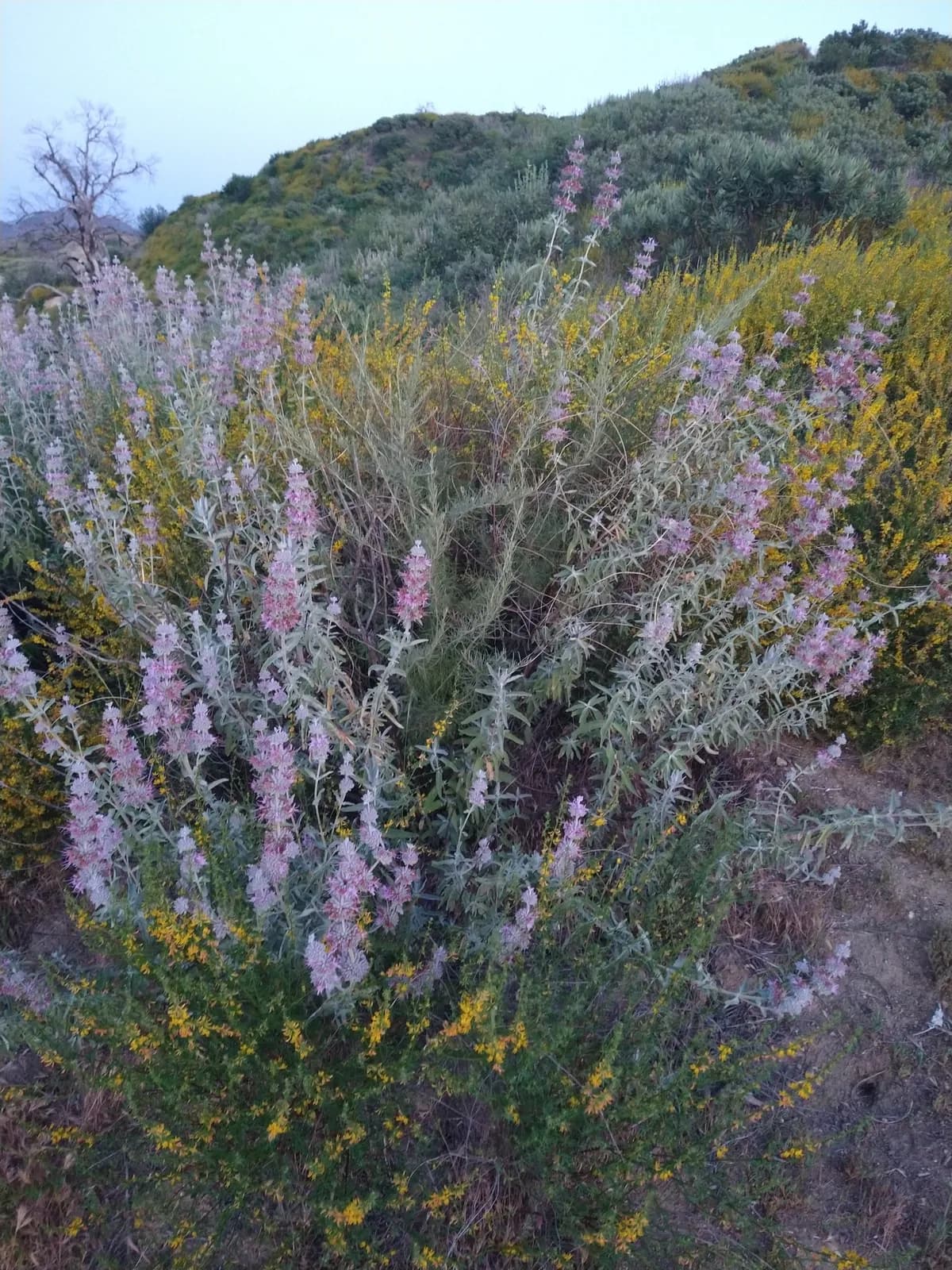
Purple sage is a drought tolerant shrub that blooms from March through June with spikes of lavender flowers. It thrives in full sun and low water conditions typical of coastal sage scrub and dry hillside gardens.
Purple Sage (Salvia leucophylla) is not flagged as toxic to dogs or cats by Plants For A Future (PFAF) (opens in new tab) (last reviewed 2026-05-21). This verdict does not come from the ASPCA. If your pet shows symptoms after eating any plant, call the ASPCA at (888) 426-4435.
Light
full sun
Water
low
Size
24"–48" H × 24"–48" W
Bloom
Mar, Apr, May, Jun
Native to
CA
Pollinators
bees, hummingbirds, butterflies
Before you buy
Your city may pay you to plant this
Cities and water utilities offer rebates for replacing lawn with native and water-wise plants. We track 459 programs across 44 states, each with a link to the provider and the date we last checked it.
Find rebates in your areaPicture natives in your own yard
Upload a photo of your yard and Patch Vision shows a rendering of it planted with natives for your region, like Purple Sage.


Browse plants for this ecoregion
Purple sage is a fragrant native shrub with silvery-gray foliage and striking whorls of lavender-purple flowers in spring and early summer. It forms a rounded mound that works well in drought-tolerant landscapes and on slopes for erosion control.
Growing Purple Sage
Grow Purple Sage in full sun and low water. Mature plants reach 24 to 48 inches tall and spread 24 to 48 inches wide. Expect low maintenance to keep it looking intentional in a front yard.
How to care for Purple Sage, by region
How to care for Purple Sage where it is actually grown: year-round basics plus what to do each season, region by region, with the sources for each.
Care guidance last updated: August 2026
Central California Foothills and Coastal Mountains (includes San Francisco, CA)
Year-round
Purple sage is a fast growing, drought loving shrub that wants full sun and almost no water once it settles in. Its native range runs from around Monterey County south into Baja California, not up into the San Francisco Bay Area, so in San Francisco's cooler, foggier climate it grows a bit slower and stays a bit smaller than it does in hotter inland California gardens, but the basic care is the same.
- Give it the sunniest spot available. San Francisco's summer fog shades a garden more than this plant is used to, so avoid spots under trees or against tall north facing fences.
- Plant in fast draining soil. It tolerates clay, but it does not like sitting in soggy, low spots that collect winter rain.
- Water it in during the first year or two to help roots establish, then stop. Extra water on an established plant makes it grow tall, floppy, and open instead of full and tidy.
- It tolerates cold down to around 0 degrees Fahrenheit, so San Francisco's rare light frost is not something this plant needs protection from.
- It flowers on wood it grew the previous year, so save any real pruning for after bloom rather than doing it in late winter.
Fall
Fall in San Francisco stays mild, with the first real rain usually arriving in October or November. This is a good window for planting or light shaping before the wet season takes over.
- Fall's cooler air and returning rain make it a good time to plant purple sage or do minor shaping, since roots can establish before next summer's dry stretch.
- If the plant grew floppy over summer, do one more light shaping pass, cutting stray stems back to a point with healthy leaves and never into bare wood.
- Hold off on extra watering. Let the season's first rains do the work instead of adding irrigation on top of them.
- San Francisco rarely sees a hard freeze, so the bigger fall concern for this plant is wind and heavy rain knocking over top growth, not cold.
A fall shaping pass before the rainy season keeps the shrub from sprawling into a walkway or over a property line, which reads as tended rather than overgrown heading into winter.
Winter
Winter is San Francisco's rainy season, and purple sage sits mostly dormant this time of year. Real frost is rare in the city itself, and this species tolerates cold far past anything San Francisco typically sees.
- Avoid hard pruning in winter. Purple sage sets its spring flowers on wood it grew the previous year, so cutting it back hard now removes next spring's bloom.
- Let winter rain provide the water. This plant does not want supplemental irrigation during San Francisco's wet season.
- Frost is uncommon in San Francisco proper, and this species has been observed to handle cold down to around 0 degrees Fahrenheit, so freeze protection is generally not needed here.
- If a winter storm breaks a stem, it is fine to remove just that damaged stem back to a healthy leaf, but leave the rest of the plant alone until after bloom.
Leaving the silvery winter form mostly untouched through the rainy season still reads as an intentional evergreen shrub, since it is not going bare like a deciduous plant would.
Spring
Spring is bloom season for purple sage in the Bay Area, with flower spikes typically opening from April into June or a bit later where fog keeps things cool. This is a season to mostly leave the plant alone rather than prune it.
- Let it bloom. The purple to lavender flower spikes grow from wood the plant made last year, so a hard prune now removes this year's flowers.
- If any tips look frost damaged from winter, which is uncommon in San Francisco proper, wait for new growth to appear before trimming those tips back to living leaves.
- Skip extra watering. Spring rain is normally enough, and this plant prefers to dry out between any drinks even while it is still getting established.
- Bees and hummingbirds use the flower spikes heavily this time of year, so leaving the plant undisturbed through bloom benefits them too.
A blooming purple sage in spring reads as a flowering ornamental shrub doing exactly what it should, not an overgrown one, which helps if a neighbor or HOA-conscious eye is watching for tidiness.
Summer
San Francisco summers stay cool and often foggy, which is milder than the hot inland climates this plant naturally deals with, but the no extra water rule still applies once the plant is established.
- Do not add supplemental water once the plant is past its first year or two. Extra summer water causes rangy, floppy growth instead of the tight, silvery form the plant is known for.
- After bloom wraps up, usually by early to mid summer here, do a light trim of spent flower spikes and any straggly stems, cutting back to a point with live leaves and never into bare, leafless wood.
- If your yard runs warmer or sunnier than San Francisco's foggiest neighborhoods, expect the plant to slow down and go semi dormant in the heat. That is normal, not a problem to fix.
- Keep mulch pulled back a few inches from the base of the stems so moisture does not sit against the crown.
A light after bloom trim keeps the shrub compact for the rest of summer, which reads as maintained rather than neglected from the sidewalk.
Sources: Calscape (California Native Plant Society), Purple Sage plant profile, Theodore Payne Foundation Native Plant Database, Salvia leucophylla, Las Pilitas Nursery, Salvia leucophylla, Purple Sage, Jack Wallington, how to prune salvias in three pruning groups (community tip), Lady Bird Johnson Wildflower Center, Salvia leucophylla plant profile
Southern California/Northern Baja Coast (includes Los Angeles, CA)
Year-round
Purple sage is a true Los Angeles native, growing wild in coastal sage scrub and chaparral from Santa Barbara County down into Baja California. It wants full sun and fast-draining soil, and once it settles in it thrives on neglect. This is one of the easiest natives to get right in an LA yard.
- Give it full sun and fast to medium draining soil. It tolerates clay but sulks in low, soggy spots.
- Once established it needs very little water, at most an occasional deep soak in summer, and can get floppy and overgrown if it gets more than that.
- It stays evergreen with fragrant, gray green leaves and usually settles between 3 and 6 feet tall, though a spreading form can reach 10 feet wide.
- It is a genuine wildlife magnet, supporting native bees, hummingbirds, and dozens of butterfly and moth species that use it as a host plant for their caterpillars.
Fall
Fall is the best time of year to plant or add companion natives around an existing purple sage in the LA area, since cooling temperatures and the start of the rainy season let roots establish before next summer's heat. It is also a good window for a light shaping prune.
- If you are adding new native plants nearby, fall through early spring is the recommended planting window in Southern California, timed just before or during the winter rains.
- Give an established purple sage a light prune in late fall to keep it dense and prevent the woody, leggy growth that comes from too much water or an unpruned season.
- Avoid a hard, heavy cutback. This species flowers on growth from the previous season, so aggressive pruning now can reduce next spring's bloom.
- As the first rains arrive, you can taper off any supplemental watering and let natural rainfall take over.
Winter
Winter is the easy season for purple sage in the LA area. Rain does most of the watering work, and the plant's main job is just sitting through the cool, wet months while it rebuilds the roots and growth it will bloom on come spring.
- Let winter rain handle watering for an established plant. Extra irrigation on top of a wet, cool soil raises the risk of root and crown rot far more than it helps.
- This species tolerates real cold, showing no damage in containers down to about 8 degrees Fahrenheit and only slight damage in the ground near freezing, so a typical LA winter is not a concern.
- If a rain-free stretch runs several weeks long, a single deep soak is reasonable, but there is no need for a regular winter watering schedule.
- This is a low-maintenance season. No pruning is needed here since the plant is building the wood that next spring's flower spikes will grow from.
Spring
Spring is bloom season for purple sage in the LA area, usually running from around April into June or July along the coast. Tall spikes of pale lavender flowers open up and draw in native bees and hummingbirds right when the garden needs the color most.
- Expect flower spikes from roughly April through June, sometimes later in cooler coastal spots.
- This is the plant's biggest water need of the year. If the rainy season was dry, an occasional deep soak can help the bloom hold, but skip watering after a good rain.
- Deadheading is optional. Many gardeners leave the dried flower spikes standing since seed-eating birds use them.
- If new growth is shooting up fast and starting to flop, a light shaping cut once bloom finishes keeps the plant from getting rangy later in the year.
The upright purple bloom spikes read as tidy and intentional from the street, which fits well in an HOA-friendly front yard.
Summer
Summer is purple sage's rest period. In its native coastal sage scrub habitat it goes semi-dormant in the dry months, so the best thing to do in an LA summer is mostly leave it alone and water sparingly.
- Cut back supplemental water to at most a couple of deep soaks a month, and skip it entirely if the plant is well established in the ground.
- Some leaf drop and a grayer, drier look in late summer is normal semi-dormant behavior, not a sign of a dying plant.
- Avoid daily or shallow watering. Warm, consistently wet soil around the roots is the main way established California natives like this one get root rot.
- A layer of mulch over the root zone helps keep roots cooler and cuts down on how often you need to think about watering at all.
A duller, grayer look in late summer is the plant's normal seasonal dormancy, not neglect, and is worth expecting rather than fighting with extra water.
Sources: Calscape: Salvia leucophylla (Purple Sage), Las Pilitas Nursery: Salvia leucophylla, Purple Sage, California Native Plant Society: Watering Native Plants, UC Master Gardeners of Placer County: California Native Shrubs for Fall Planting, California Native Plant Society: Planting California Natives
In an HOA neighborhood
Purple Sage is an HOA-friendly choice. Maintenance level: low. Tidiness: 3 out of 5.
Works well in: foundation, mid zone.
- Can appear rangy if not occasionally pruned
- Gray foliage may not match traditional landscape aesthetics
- May look somewhat sparse during summer dormancy
Wildlife value
Host plant for alfalfa looper moth, bilobed looper moth.
Purple sage is highly attractive to native bees, butterflies, and hummingbirds, serving as an excellent nectar source during its extended bloom period.
Common questions
- How much water does purple sage need?
- Purple sage is a low water shrub once established. It performs best with infrequent irrigation and good drainage, similar to the dry hillsides and coastal scrub sites where it naturally thrives.
- When does purple sage bloom?
- Purple sage typically blooms from March through June, producing whorled spikes of pale lavender to purple flowers along its stems.
- What pollinators visit purple sage?
- Purple sage flowers attract bees, hummingbirds, and butterflies, making it a useful plant for pollinator gardens during its spring bloom period.
- What kind of light does purple sage need?
- Purple sage grows best in full sun, though it can tolerate some part sun in hotter inland locations.
- Is Purple Sage toxic to dogs?
- Purple Sage is not flagged as toxic to dogs by Plants For A Future (PFAF). This verdict does not come from the ASPCA.
- Is Purple Sage toxic to cats?
- Purple Sage is not flagged as toxic to cats by Plants For A Future (PFAF). This verdict does not come from the ASPCA.
- Is Purple Sage HOA-friendly?
- Purple Sage is generally an HOA-friendly choice in the right placement, with low maintenance.
These answers were drafted with an AI model from this plant's data. Verify care details with a local expert.
Native range data from vouchered herbarium specimen records and regional native plant society lists. Pollinator and host plant associations compiled from GBIF, iNaturalist, and published ecological literature.
If something looks wrong
Common plant problems, and what to check first
These come up on almost any plant. Each guide lists the likely causes in the order they are worth ruling out, with one thing to check before you act on any of them, and links to the source it came from.
- It is dying right after planting
- Leaves turning yellow
- Wilting even though I watered it
- Brown crispy leaf tips
- Bugs on the plant
Ready to grow Purple Sage? Add it to your garden in Pollinator Patch to track it and get season-by-season care guidance.