Reflexed Rockcress
Boechera retrofracta
Last reviewed: November 2026
Watering reminders and freeze alerts for Reflexed Rockcress, free in the app.


Toxicity unknown
Reflexed Rockcress (Boechera retrofracta) is not listed by the ASPCA Animal Poison Control Center (opens in new tab) or the other sources we check, so we have no verdict for it either way. Absence from those lists is not a clearance. If your pet shows symptoms after eating any plant, call the ASPCA at (888) 426-4435.
Light
full sun
Water
low
Size
12"–36" H × 4"–10" W
Bloom
Apr, May, Jun
Native to
CA, CO, ID, MI and 6 more states
Pollinators
bees, flies
Before you buy
Your city may pay you to plant this
Cities and water utilities offer rebates for replacing lawn with native and water-wise plants. We track 465 programs across 44 states, each with a link to the provider and the date we last checked it.
Find rebates in your areaPicture natives in your own yard
Upload a photo of your yard and Patch Vision shows a rendering of it planted with natives for your region, like Reflexed Rockcress.
Browse plants for this ecoregion
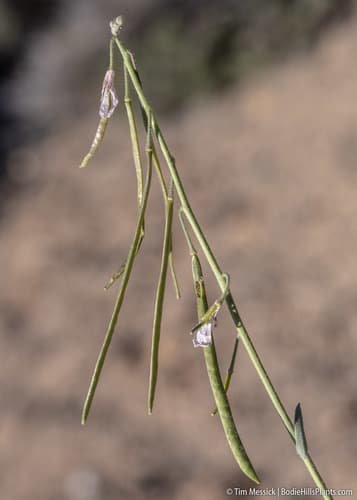
Reflexed rockcress is a short-lived, upright mustard-family wildflower with a basal rosette of gray-green leaves and slender stems of small white to pale lavender flowers, followed by narrow downward-curving seedpods. It suits dry, well-drained rocky or gravelly sites.
How to care for Reflexed Rockcress, by region
How to care for Reflexed Rockcress where it is actually grown: year-round basics plus what to do each season, region by region, with the sources for each.
Care guidance last updated: November 2026
Snake River Plain (includes Boise)
Year-round
Reflexed rockcress is a short-lived native wildflower of dry, open, rocky ground, with small pale flowers on upright stems.
- It grows best in full sun and well-drained gravelly or sandy soil.
- It is short-lived and renews itself from seed.
- Plan on little to no extra water once established.
Cutting spent stems after seed drop keeps the bed tidy.
Fall
Fall is when new seedlings settle in.
- Leave bare gravelly patches open for seedlings.
- Cut spent stems back only after seed has dropped.
- Water seedlings lightly if fall stays dry.
Clearing old stems after seed drop keeps the bed neat.
Winter
Winter is a quiet season for the low rosettes.
- Leave the rosettes in place.
- Keep heavy mulch off the crown.
- No watering is needed.
Low rosettes stay tidy through winter.
Spring
Spring is bloom time for the small pale flowers.
- Leave stems standing while flowers and seedpods form.
- Skip fertilizer, which makes plants floppy.
- Water only during a long dry spell.
A gravel mulch edge keeps the bed looking planned.
Summer
Summer is dry-season rest.
- Let seedpods ripen and drop seed where you want new plants.
- Avoid regular irrigation near the base.
- Keep nearby plants from crowding the rosette.
Trimming spent stems keeps it tidy.
Sources: Wikipedia, Boechera retrofracta (biennial or short-lived perennial rockcress native to western North America, small white to pale flowers, dry rocky or open sites) (community tip)
Wildlife value
Small bees and flies visit the early flowers.
Common questions
- How much sun does Reflexed Rockcress need?
- Reflexed Rockcress grows best in full sun conditions.
- When does Reflexed Rockcress bloom?
- Reflexed Rockcress blooms in April, May, and June.
- Where is Reflexed Rockcress native?
- Reflexed Rockcress (Boechera retrofracta) is native to CA, CO, ID, MI and 6 more states, per vouchered herbarium specimen records and regional native plant society lists.
- What pollinators does Reflexed Rockcress attract?
- Reflexed Rockcress draws bees and flies.
Native range data from vouchered herbarium specimen records and regional native plant society lists. Pollinator and host plant associations compiled from GBIF, iNaturalist, and published ecological literature.
If something looks wrong
Common plant problems, and what to check first
These come up on almost any plant. Each guide lists the likely causes in the order they are worth ruling out, with one thing to check before you act on any of them, and links to the source it came from.
- It is dying right after planting
- Leaves turning yellow
- Wilting even though I watered it
- Brown crispy leaf tips
- Bugs on the plant
Ready to grow Reflexed Rockcress? Add it to your garden in the Pollinator Patch App to track it and get season-by-season care guidance.