Rock Rose
Pavonia lasiopetala
Last reviewed: September 2026
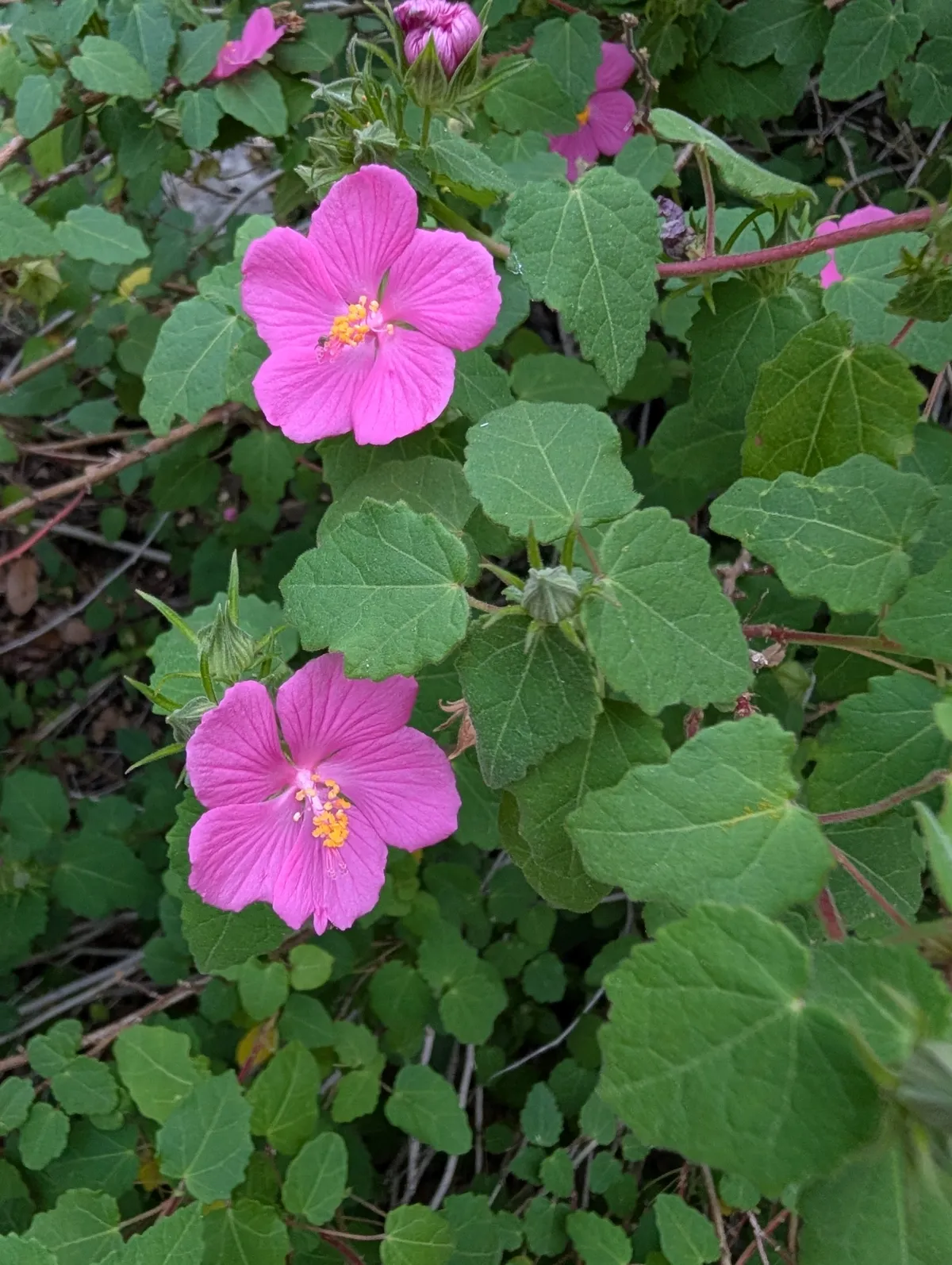
Rock Rose is a small rounded shrub with pink hibiscus-like flowers that open in the morning and fade by afternoon. It blooms from spring through fall and thrives in full sun with low water once established.
Toxicity unknown
Rock Rose (Pavonia lasiopetala) is not listed by the ASPCA Animal Poison Control Center (opens in new tab) or the other sources we check, so we have no verdict for it either way. Absence from those lists is not a clearance. If your pet shows symptoms after eating any plant, call the ASPCA at (888) 426-4435.
Light
full sun
Water
low
Size
36"–48" H × 36"–48" W
Bloom
Mar, Apr, May, Jun, Jul, Aug, Sep, Oct, Nov
Native to
TX
Pollinators
butterflies, moths, hummingbirds
Before you buy
Your city may pay you to plant this
Cities and water utilities offer rebates for replacing lawn with native and water-wise plants. We track 452 programs across 44 states, each with a link to the provider and the date we last checked it.
Find rebates in your areaBrowse plants for this ecoregion
Rock Rose is a compact native shrub that produces cheerful orange-red hibiscus-like flowers from spring through fall. This drought-tolerant plant forms a neat, rounded mound and goes dormant in winter, returning each spring with fresh growth.
Growing Rock Rose
Grow Rock Rose in full sun and low water. Mature plants reach 36 to 48 inches tall and spread 36 to 48 inches wide. Expect moderate maintenance to keep it looking intentional in a front yard.
How to care for Rock Rose, by region
How to care for Rock Rose where it is actually grown: year-round basics plus what to do each season, region by region, with the sources for each.
Care guidance last updated: September 2026
Cross Timbers (includes Fort Worth, TX)
Year-round
Rock Rose is a low maintenance, heat loving Texas shrub with hot pink, hibiscus like blooms that run nearly all growing season. In the sandier soils west of the metro it stays a tidy, rounded shape with just one hard trim a year.
- Plant in full sun for the fullest bloom; it tolerates some afternoon shade but flowers less there.
- In the sandier loam soils here, water deeply once a week through the first summer to get roots established, then cut back to occasional deep watering once it is settled in.
- Cut the whole shrub back to about 12 inches in late February so it grows bushy instead of leggy and open in the middle.
- Space plants 3 to 4 feet apart since mature spread can match its height.
- Deadheading is not needed, spent blooms drop cleanly on their own.
Kept to its natural rounded shape with the annual late winter cutback, it reads as an intentional bed shrub rather than an overgrown patch.
Fall
Fall is actually the better season to plant Rock Rose as a woody shrub here, and it keeps blooming right up to the first hard freeze.
- Plant new shrubs in September or October so roots settle in before next summer's heat; this beats spring planting for a woody shrub like this one.
- Keep watering through fall since North Texas often sees dry stretches even as temperatures cool.
- Let blooms continue without deadheading through October and November.
- Hold off on any hard pruning until after the first hard freeze in mid November.
Winter
Rock Rose usually dies back to the ground or close to it after a hard freeze in North Texas, then regrows from the base the next spring.
- Expect top growth to blacken and die back after the first hard freeze in mid to late November; this is normal winter dieback, not plant loss.
- Leave the dead stems standing through winter, they help protect the crown during any Arctic cold outbreaks.
- Cut the whole plant back to about 12 inches in late February, just before new spring growth starts.
- Skip watering once it is dormant and temperatures are consistently below 50F.
Dead winter stems can look untidy from the curb; a light shaping cut in December, leaving at least 12 inches of stem for cold protection, keeps the bed looking tended without exposing the crown to freeze damage.
Spring
Spring is the planting window for Rock Rose in North Texas, and it is when the first big flush of pink blooms opens.
- Plant new Rock Rose anytime after the last frost (mid March) through May so roots have time to establish before summer heat arrives.
- Water newly planted shrubs deeply two to three times a week for the first six weeks.
- If you skipped the late winter cutback, prune any winter damaged stems back to green wood by mid March.
- Work compost into the sandier native soil at planting time to help new roots hold moisture through the first summer.
- Expect the first pink blooms by April; they will continue nearly nonstop into fall.
New spring plantings look intentional fastest when spaced evenly and mulched, rather than left as bare dirt rings around each shrub.
Summer
Once established, Rock Rose handles North Texas summer heat well, but first year plants still need regular water through the July and August dry stretches.
- Water first year plants deeply once or twice a week during 100F stretches with no rain; established plants (year two and beyond) can go two to three weeks between deep waterings.
- Expect blooming to slow slightly in the hottest, driest weeks and pick back up after any rain.
- If leaves develop a powdery white coating, thin nearby plants or move it to more sun rather than watering more.
- Skip fertilizer in summer, feeding pushes soft new growth that wilts fast in the heat.
A mildew dusted shrub can look neglected from the street; thinning nearby plants for airflow keeps it looking tended without extra water.
Sources: Lady Bird Johnson Wildflower Center: Pavonia lasiopetala
Texas Blackland Prairies (includes Dallas, TX)
Year-round
Rock rose is a tough, drought-loving little shrub that wants sun and sharp drainage. In the Dallas area the main job is good placement, one establishment year of steady water, then a hard late-winter cutback and light trims to keep it from getting leggy.
- Establishment: plant into a spot with full sun to part shade and well-drained soil. Blackland clay holds water, so work in some grit or plant on a slight mound so the roots never sit wet, and water the first season to build roots.
- Watering once established: switch to deep and infrequent. It is very drought tolerant and often wilts in afternoon heat, then bounces back overnight on its own, so do not water just because it looks droopy midday.
- Cutback and trimming: cut it back hard in late winter before new leaves push, then tip-prune lightly through the season after each flush of bloom to keep it dense and full of buds.
- Self-seeding: it can reseed modestly in open, sunny soil. If you do not want volunteers, deadhead spent flowers before they set seed. Stray seedlings pull easily while small. A common mistake is overwatering in clay, which rots the crown.
Fall
Fall keeps blooming in the Dallas area, often into November. Enjoy the late flowers, do light shaping, and decide how much you want it to reseed.
- Blooms continue into fall, often through November, so keep light trims going to hold a neat shape and extend the flowers.
- If you do not want volunteers next year, deadhead spent blooms before they set seed. If you want more plants, leave some seed heads to drop.
- Ease off watering as temperatures drop and rain picks up. This plant is short lived, so letting a few seedlings come up is a simple way to keep it going.
Reads as intentional and helps avoid a violation letter: light fall deadheading and shaping keep the front-yard plant looking maintained instead of ragged as the season winds down.
Winter
Winter is the quiet, dormant stretch in Dallas. The plant dies back toward its woody base and needs almost nothing until the late-winter cutback.
- Expect it to go bare and die back to the woody base after frost. This is normal and not a sign the plant is dead.
- Water only during long dry warm spells. It is drought tolerant and needs little to no water while dormant.
- Hold off on the hard cutback until late winter, right before new growth pushes, rather than cutting in early winter. Skip heavy mulch piled against the crown so it does not stay wet and rot in clay soil.
Reads as intentional and helps avoid a violation letter: leaving a low, tidy woody framework over winter and cutting back only in late winter keeps the spot looking like a maintained dormant perennial rather than a dead shrub.
Spring
Spring is cutback and cleanup time in Dallas. Trim the plant back hard before new foliage appears, then let the warming weather push fresh growth and the first flush of blooms.
- Cut back hard before new leaves emerge, usually February into early March here. The plant is only woody at the base, so it takes a hard shearing and comes back bushier.
- Once new growth starts, water enough to get it going, especially for a young plant, then ease off as spring rains do the work.
- Pull any winter weeds around the base and refresh a thin layer of mulch, keeping it back off the stem to avoid rot in clay soil.
Reads as intentional and helps avoid a violation letter: the late-winter hard cutback turns a bare, twiggy plant into a clean, deliberate shape before the neighborhood greens up, so it looks tended rather than dead.
Summer
Summer is peak bloom through Dallas heat. Water deeply but rarely, ignore the midday wilt, and give a light shear after each big flush to keep flowers coming.
- Water deeply and infrequently in the worst heat. It is highly drought tolerant, so soak the root zone occasionally rather than sprinkling often.
- Expect afternoon wilting on hot days. It perks back up overnight without watering, so do not overreact and drown it.
- After each heavy flush of bloom, tip-prune or lightly shear to spark new branching and more buds, which keeps it tidy instead of sprawling.
Sources: Lady Bird Johnson Wildflower Center Pavonia lasiopetala plant record, Lady Bird Johnson Wildflower Center expert answer trimming rock rose in Richardson TX, Native Plant Society of Texas Pavonia lasiopetala profile
Western Gulf Coastal Plain (includes Houston, TX)
Year-round
Rock rose is a Texas native shrub that blooms most of the growing season and asks for little once it settles in.
- Rock rose (Pavonia lasiopetala) is native to Texas, so it is already suited to the soil and rainfall patterns around Houston.
- Give it full sun to light shade. More shade means fewer flowers and a higher chance of powdery mildew in humid weather.
- Well-drained soil matters more than rich soil. It handles average to poor fertility but does not like sitting in water.
- Once it is established it handles dry spells well. Water new plants regularly for the first few months while the roots grow in.
- The pink flowers draw in hummingbirds, so it is a good choice near a window or patio.
Fall
Fall arrives late in Houston, so rock rose usually keeps flowering longer here than it would farther inland.
- Houston's first real cool front often does not arrive until October or November, so rock rose here tends to keep blooming later into the year than it would farther north or inland.
- Gulf Coast hurricane season runs through the end of November. After a heavy rain event, check that the bed drained within a day, since standing water is a bigger risk to this plant than wind.
- As the first frost date approaches, typically early to mid December in the Houston area, there is no need to cut the plant back. Spent blooms and seed heads can stay through the season.
Winter
Houston winters are mild most years, but a hard freeze can knock rock rose back to the ground, and it usually recovers.
- Houston winters are mild most years, but an occasional hard freeze can knock rock rose back to the ground.
- If a freeze browns or kills the top growth, leave the dead stems in place through the rest of winter. They help protect the crown, and cutting too soon can expose the plant to a second freeze.
- Once new leaves appear at the base, usually by mid to late spring, cut the dead wood back to a few inches above the new growth.
If a freeze browns the top growth, cut the dead stems back to a short, even height so the bed still looks tended rather than neglected until new growth fills in.
Spring
Spring in Houston brings quick new growth on rock rose, but a late cold snap is still possible.
- Frost risk in the Houston area can linger into late February or early March. If a late cold snap is forecast after new growth has started, cover the plant overnight with a frost cloth.
- As soil warms, expect a flush of new leaves and the first flowers of the year. Spring rain usually covers watering needs on its own.
- If a hard freeze cut the plant back to the ground over winter, wait to see new growth coming from the base before clearing away any leftover dead stems.
- Houston's spring rains plus clay soil can leave beds soggy. Skip the sprinkler during rainy stretches so roots are not sitting in water.
Summer
Rock rose keeps blooming through Houston's long hot summer, and the main risk is too much water rather than too little.
- Houston summers run hot and humid from June through September. An established rock rose handles the heat well once its roots are settled in.
- Give it a deep soak during multi-week dry spells, but let the top couple inches of soil dry out between waterings. This plant is more likely to struggle from too much water than too little.
- Humid weather and shadier spots can bring on powdery mildew, a white powdery coating on the leaves. If you see it, water in the morning instead of evening and keep sprinklers off the foliage.
- It keeps blooming right through summer heat. Deadheading spent flowers is optional, but it can tidy the look and encourage more blooms.
Sources: Lady Bird Johnson Wildflower Center - Pavonia lasiopetala plant profile, USDA PLANTS Database - Pavonia lasiopetala (PALA6) profile, Texas Superstar - Rock Rose (Pavonia lasiopetala) plant profile
Want these tasks as reminders timed to your yard? Pollinator Patch turns this guidance into a season-by-season care plan for the plants you actually grow.
In an HOA neighborhood
Rock Rose is an HOA-friendly choice in the right placement. Maintenance level: moderate. Tidiness: 4 out of 5.
Works well in: foundation, mid zone.
- Requires annual shaping to stay compact
Wildlife value
The bright flowers attract butterflies, moths, and hummingbirds throughout the long blooming season. This plant serves as both a nectar source and host plant for various native butterfly species.
Common questions
- How long does Rock Rose bloom?
- Rock Rose produces new flowers continuously from March through November, with individual blossoms lasting only a single day before dropping.
- What pollinators visit Rock Rose flowers?
- Butterflies, moths, and hummingbirds are regular visitors to Rock Rose blooms, drawn to the open pink flowers throughout the long blooming season.
- How much water does Rock Rose need?
- Rock Rose tolerates low water conditions once established and prefers well drained soil, though it will accept occasional medium moisture without trouble.
- How much sun does Rock Rose require?
- This shrub performs best in full sun but can also handle part sun or part shade locations, though flowering may be lighter with less light.
- What size and shape does Rock Rose grow into?
- Rock Rose forms a rounded, many branched shrub that generally stays a few feet tall and wide, making it useful as a low border or accent planting.
- Is Rock Rose HOA-friendly?
- Rock Rose is generally an HOA-friendly choice in the right placement, with moderate maintenance.
These answers were drafted with an AI model from this plant's data. Verify care details with a local expert.
Native range data from vouchered herbarium specimen records and regional native plant society lists. Pollinator and host plant associations compiled from GBIF, iNaturalist, and published ecological literature.
If something looks wrong
Common plant problems, and what to check first
These come up on almost any plant. Each guide lists the likely causes in the order they are worth ruling out, with one thing to check before you act on any of them, and links to the source it came from.
- It is dying right after planting
- Leaves turning yellow
- Wilting even though I watered it
- Brown crispy leaf tips
- Bugs on the plant
Ready to grow Rock Rose? Add it to your garden in Pollinator Patch to track it and get season-by-season care guidance.
Planning a bed around it? Start a free plan with this plant
Not sure where to start? Take the 2-minute yard quiz