Rocky Mountain Iris
Iris missouriensis
Last reviewed: September 2026
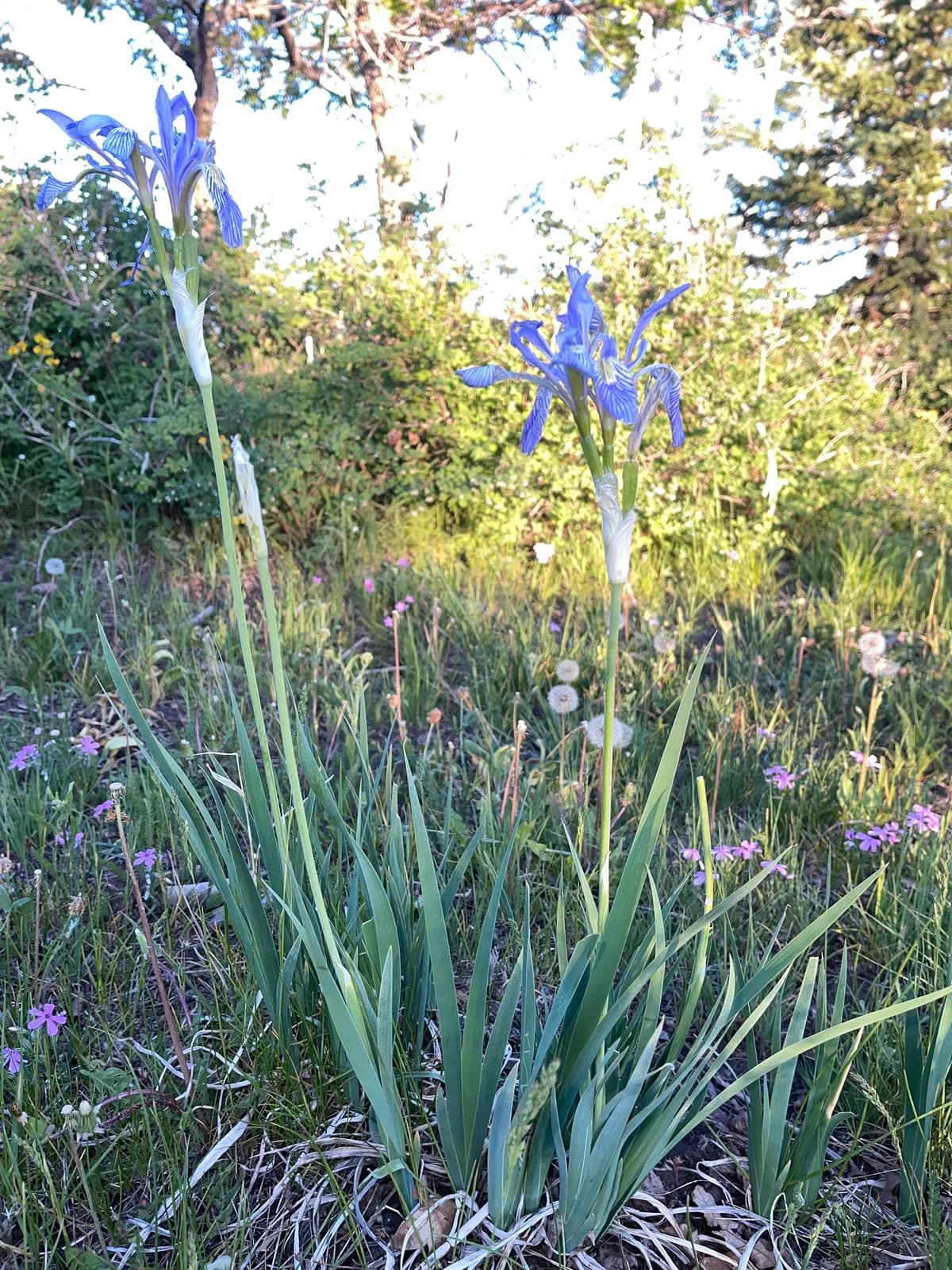
Rocky Mountain Iris is a clump-forming forb that blooms lavender-blue from May through July. It grows well in mountain meadows and along streambanks with part sun and medium water.
Rocky Mountain Iris is toxic to dogs and cats.
Listed as toxic by the ASPCA Animal Poison Control Center (opens in new tab) (last reviewed 2026-05-21). If your pet has been exposed, call the ASPCA Animal Poison Control Center at (888) 426-4435 and your veterinarian's emergency line.
Pollinator Patch flags toxic plants so you can choose a pet-safe native alternative for your yard.
Native swaps for a yard with pets
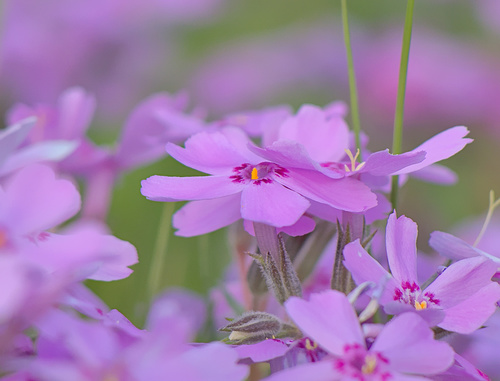
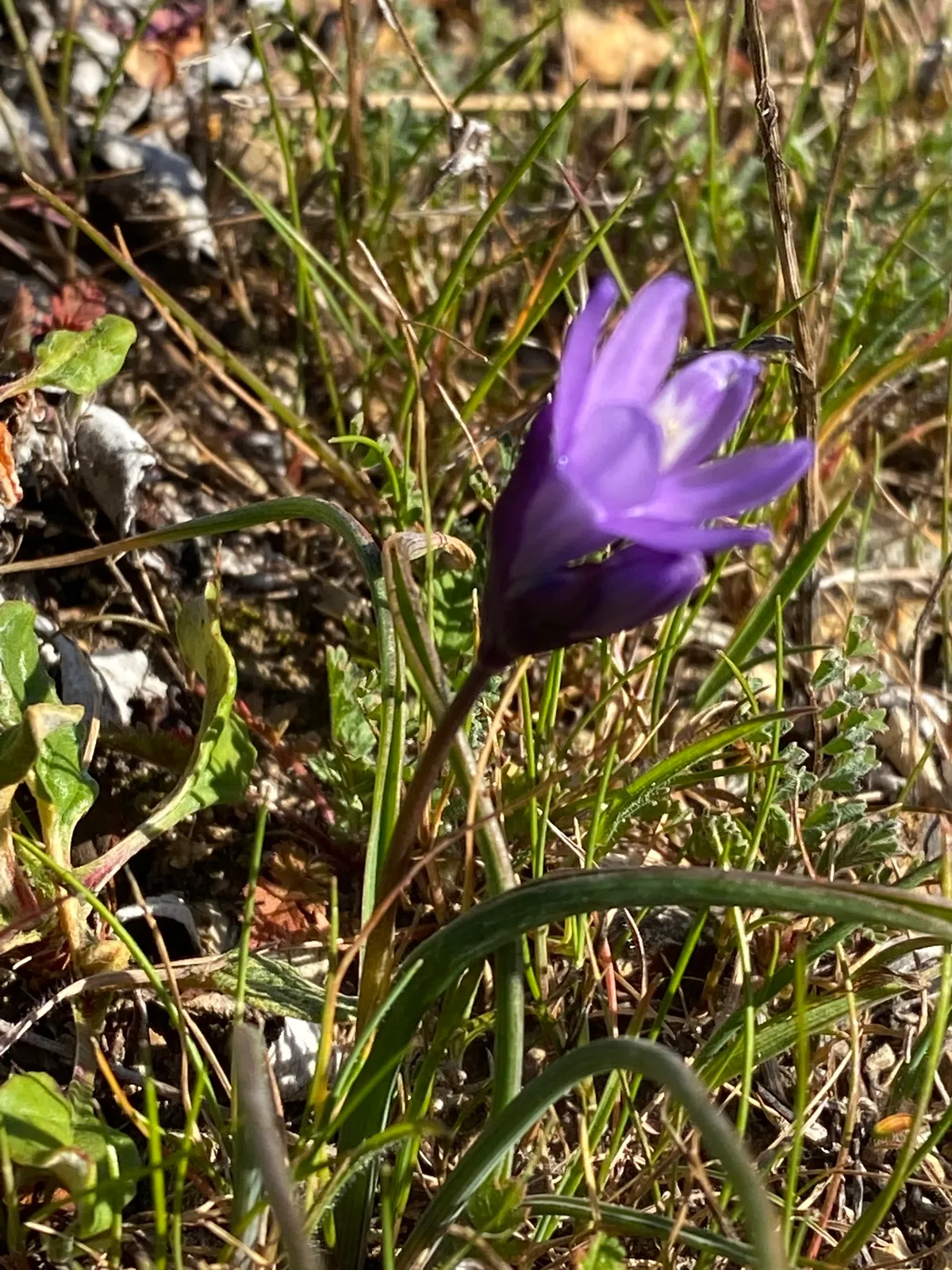
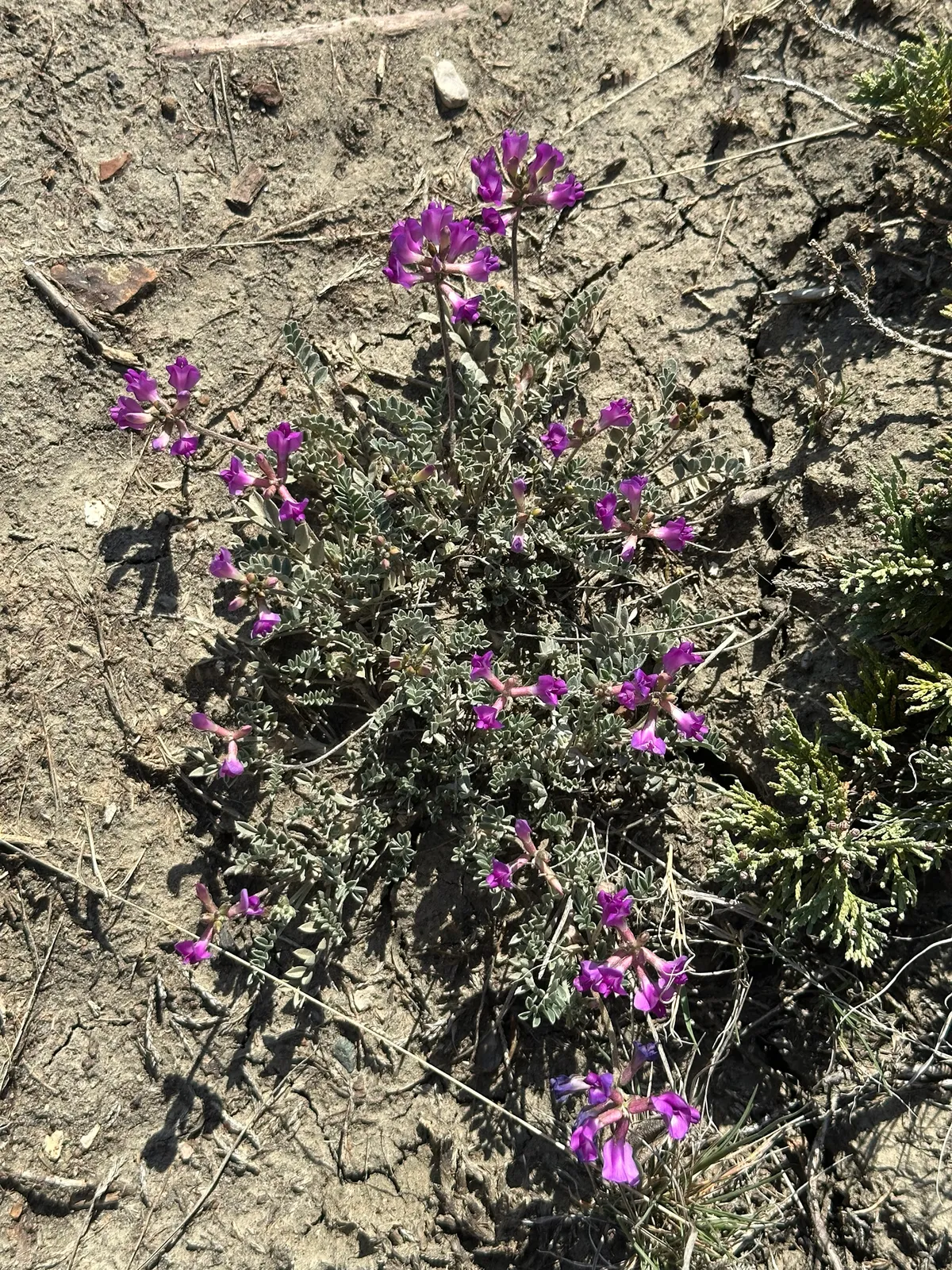
Rocky Mountain Iris is listed as toxic to dogs by the ASPCA Animal Poison Control Center. These natives fill a similar role in a planting and are not on the ASPCA toxic plant list for dogs or cats. Each plant's page carries its dated record.
The USDA PLANTS Database (opens in new tab) does not flag Rocky Mountain Iris as toxic to livestock.
Light
part sun
Water
medium
Size
6"–24" H × 6"–12" W
Bloom
May, Jun, Jul
Native to
AZ, CA, CO, ID and 9 more states
Pollinators
bees, butterflies
Before you buy
Your city may pay you to plant this
Cities and water utilities offer rebates for replacing lawn with native and water-wise plants. We track 459 programs across 44 states, each with a link to the provider and the date we last checked it.
Find rebates in your areaPicture natives in your own yard
Upload a photo of your yard and Patch Vision shows a rendering of it planted with natives for your region, like Rocky Mountain Iris.


Browse plants for this ecoregion
Rocky Mountain iris is a native perennial with elegant blue to purple flowers that bloom from May through July. This compact iris grows 6-24 inches tall with narrow, upright foliage that creates a tidy clump in the garden.
Growing Rocky Mountain Iris
Grow Rocky Mountain Iris in part sun and medium water. Mature plants reach 6 to 24 inches tall and spread 6 to 12 inches wide. Expect low maintenance to keep it looking intentional in a front yard.
How to care for Rocky Mountain Iris, by region
How to care for Rocky Mountain Iris where it is actually grown: year-round basics plus what to do each season, region by region, with the sources for each.
Care guidance last updated: September 2026
High Plains (includes Lubbock, TX)
Year-round
Rocky Mountain iris comes from wet mountain meadows out west, not from anywhere near Lubbock, so growing it here means making up for what the climate will not give it.
- This iris grows wild in wet mountain meadows in states like Colorado, Utah, Montana, and Wyoming. It is not native to Texas, so a Lubbock yard is not the climate it evolved for.
- It wants full sun to a little afternoon shade and consistently moist soil. In Lubbock's dry air and wind that usually means a spot near a pond edge, a low spot that collects runoff, or regular extra irrigation, since natural rainfall here will not keep it happy on its own.
- Plant rhizomes shallow, just barely covered with soil, spaced about 12 to 18 inches apart so each clump has room to grow before it needs dividing.
- Soil should hold some moisture but still drain. Heavy clay or caliche that stays soggy all summer can rot the rhizomes, so work in compost if your soil is dense.
- The rhizomes are toxic to both dogs and cats if chewed or dug up. Plant them where pets cannot easily reach, and call a vet or the ASPCA Poison Control line right away if you see drooling, vomiting, or lethargy after a pet has been near the roots.
Fall
Fall is the best time in Lubbock to divide crowded clumps and get the plant settled in before winter.
- Once temperatures cool in September and October, divide rhizomes that have gotten crowded. Every 3 to 4 years is typical for this iris.
- Dig up the clump, cut the rhizomes into sections with a fan of leaves attached, and discard any soft or hollow pieces before replanting.
- Replant divisions right away and water them in well so roots can establish before the first hard freeze, which usually lands in Lubbock by early to mid November.
- Cut back watering frequency as the plant slows down for the year, but do not let it dry out completely while it is still rooting in from division.
An overcrowded clump left undivided can start spreading untidily along a front walk or bed edge, so fall division doubles as tidiness upkeep for a visible spot.
Winter
Winter is dormant season here, so this iris needs very little water but does need help handling Lubbock's hard freezes.
- The plant goes dormant in winter and needs little to no supplemental water unless the season is unusually dry.
- Lubbock winters bring hard freezes and sometimes extreme cold snaps. A layer of mulch over the rhizomes helps buffer the roots from repeated freeze and thaw swings, which stress the plant more than steady cold does.
- Cut back any dead or mushy foliage once it has fully browned, but leave firm green growth alone since it may still be feeding the rhizome.
- Check that winter drainage is working. Rhizomes sitting in cold, wet soil for weeks are more likely to rot than ones in soil that drains between rains.
Spring
Spring is planting and establishment time in Lubbock, and this iris needs steady water while it works toward bloom.
- Plant new rhizomes after the last frost, usually mid to late April in the Lubbock area, once soil has warmed up.
- Give it steady moisture from when growth starts through about six weeks after it finishes blooming. This stretch matters most for good flowers.
- Lubbock's spring winds dry out soil fast, so check moisture at the root zone every few days rather than watering on a fixed schedule.
- Watch for a late hard freeze after new growth has emerged. A light frost cloth over the plant overnight can keep new leaf tips from getting burned.
Summer
Summer heat is the biggest mismatch for this plant in Lubbock, so watering has to cover for what the climate will not.
- This iris naturally slows down after spring bloom, but Lubbock summers run hotter and drier than the elevation it is adapted to, so plan on deep watering during the worst heat, maybe once a week, rather than letting it dry out completely.
- Do not let it sit in soggy soil during summer heat. Wet plus hot leads to rhizome rot, so water deeply and let the top couple inches of soil dry before watering again.
- Cut off spent flower stalks once blooms fade. This redirects the plant's energy into the rhizome instead of seed production.
- Afternoon shade helps during Lubbock's hottest stretches, since this plant would normally get relief from mountain elevation and cooler nights.
Deadheading spent stalks through summer keeps this from looking ragged in a front bed neighbors can see.
Sources: Lady Bird Johnson Wildflower Center: Iris missouriensis plant profile, USDA Forest Service: Western Blue Flag Iris, Plant of the Week, ASPCA Toxic and Non-Toxic Plants: Snake Lilly (Iris species)
In an HOA neighborhood
Rocky Mountain Iris is an HOA-friendly choice. Maintenance level: low. Tidiness: 4 out of 5.
Works well in: front yard, foundation, street edge, mid zone.
Wildlife value
The showy flowers attract bees and butterflies during the summer blooming period. This native iris provides important nectar sources for pollinators in late spring and early summer.
Common questions
- When does Rocky Mountain Iris bloom?
- Rocky Mountain Iris typically flowers from May through July, with timing shifting slightly depending on elevation and spring snowmelt.
- How much sun does Rocky Mountain Iris need?
- It grows best in part sun but tolerates conditions ranging from full sun to part shade, especially where soil moisture is higher.
- How much water does this plant need?
- Rocky Mountain Iris does best with medium moisture and can tolerate lower water once it is established, though it favors seasonally moist meadows and streambanks.
- What pollinators visit Rocky Mountain Iris?
- Bees and butterflies are the main visitors, drawn to the showy lavender-blue flowers during the spring and early summer bloom period.
- What kind of habitat suits this iris?
- It is often found in wet mountain meadows, along streams, and in seasonally moist grasslands at moderate to high elevations.
- Is Rocky Mountain Iris toxic to dogs?
- Yes. Rocky Mountain Iris is listed as toxic to dogs by the ASPCA Animal Poison Control Center (aspca.org). If your pet has been exposed, call the ASPCA Animal Poison Control Center at (888) 426-4435.
- Is Rocky Mountain Iris toxic to cats?
- Yes. Rocky Mountain Iris is listed as toxic to cats by the ASPCA Animal Poison Control Center (aspca.org). If your cat has been exposed, call the ASPCA Animal Poison Control Center at (888) 426-4435.
- Is Rocky Mountain Iris toxic to livestock?
- The USDA PLANTS Database does not flag Rocky Mountain Iris as toxic to livestock.
- Is Rocky Mountain Iris HOA-friendly?
- Rocky Mountain Iris is generally an HOA-friendly choice in the right placement, with low maintenance.
These answers were drafted with an AI model from this plant's data. Verify care details with a local expert.
Native range data from vouchered herbarium specimen records and regional native plant society lists. Pollinator and host plant associations compiled from GBIF, iNaturalist, and published ecological literature.
If something looks wrong
Common plant problems, and what to check first
These come up on almost any plant. Each guide lists the likely causes in the order they are worth ruling out, with one thing to check before you act on any of them, and links to the source it came from.
- It is dying right after planting
- Leaves turning yellow
- Wilting even though I watered it
- Brown crispy leaf tips
- Bugs on the plant
Pollinator Patch flags toxic plants like Rocky Mountain Iris and shows pet-safe natives for your ecoregion instead.