Baby sage
Salvia microphylla
Last reviewed: September 2026
Toxicity unknown
Baby sage (Salvia microphylla) is not listed by the ASPCA Animal Poison Control Center (opens in new tab) or the other sources we check, so we have no verdict for it either way. Absence from those lists is not a clearance. If your pet shows symptoms after eating any plant, call the ASPCA at (888) 426-4435.
Light
full sun
Water
low
Size
24"–48" H × 24"–36" W
Bloom
Apr, May, Jun, Jul, Aug, Sep, Oct
Native to
AZ
Pollinators
hummingbirds, bees
Before you buy
Your city may pay you to plant this
Cities and water utilities offer rebates for replacing lawn with native and water-wise plants. We track 452 programs across 44 states, each with a link to the provider and the date we last checked it.
Find rebates in your areaBrowse plants for this ecoregion
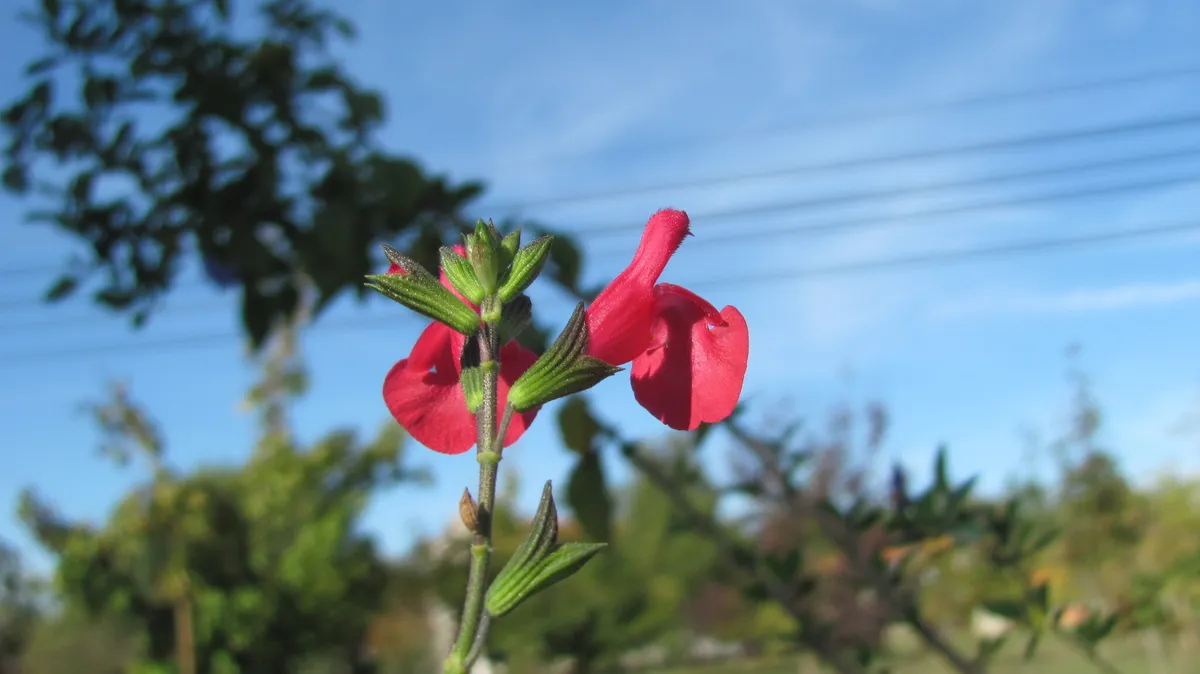
Small rounded shrub with aromatic leaves and spikes of tubular red flowers blooming through much of the year. Found on rocky slopes and in canyon washes.
How to care for Baby sage, by region
How to care for Baby sage where it is actually grown: year-round basics plus what to do each season, region by region, with the sources for each.
Care guidance last updated: August 2026
Cross Timbers (includes Fort Worth, TX)
Year-round
Baby sage is a small, tidy, heat tolerant flowering shrub that does well in Fort Worth's sandy Cross Timbers soils with a little care on watering and pruning.
- Give it a full sun spot, at least 6 hours of direct sun a day, and well drained soil. The sandy soils common across the Cross Timbers area already drain well, so just avoid low spots that hold water after rain.
- Water regularly the first growing season to help roots establish, then cut back to occasional deep watering. Once established this plant handles North Texas heat and dry spells well.
- It blooms over a long stretch, spring into fall, and draws hummingbirds, bees, and butterflies. Snip off spent flower spikes to keep new ones coming.
- It is not a heavy feeder. A light, slow release balanced fertilizer in spring is usually enough.
- It is generally considered deer resistant, which makes it a reasonable pick for an unfenced front bed.
Kept trimmed to a neat mound, it reads as a tidy, HOA-friendly foundation or border plant.
Fall
Fall brings North Texas' second wet season and cooling temperatures, a good window for a shaping prune and for new plantings to establish before winter.
- September through November is typically the second wettest stretch of the year in the Fort Worth area, behind only spring, which makes fall a good time to plant or transplant baby sage.
- Give the plant a light shaping prune after the summer bloom flush tapers off, but stop heavy fertilizing by late summer so new growth has time to harden off before the first freeze.
- The average first fall freeze in the area lands in mid to late November, so keep an eye on the forecast as that window approaches.
- Reduce watering frequency as temperatures cool and rainfall picks up.
Winter
Winters in the Fort Worth area are generally mild with occasional cold snaps, and established baby sage usually rides them out if you leave the top growth alone until spring.
- This plant is rated hardy across USDA zones 7 through 10, and the Fort Worth area sits solidly in zone 8, so an established, well rooted plant should survive a typical winter, though a hard freeze can knock stems back to the ground.
- Winters here are generally mild, with periodic cold fronts bringing brief cold spells rather than sustained deep freezes.
- Leave dead looking top growth in place through winter. It offers some insulation to the crown and roots, and cutting it back too early risks exposing tender tissue to a later freeze.
- Wait until you see new growth low on the stems in late winter or early spring before doing a hard cutback.
Spring
Spring is planting and shaping season in Fort Worth, timed around the area's last freeze and the wettest part of the year.
- The Fort Worth area's freeze free period typically begins in March, so hold off on a hard cutback until you see new growth low on the plant, then prune back to that live growth to remove winter damaged wood.
- Spring is one of the two wettest stretches of the year here, which makes it a good window to plant new baby sage or divide an existing clump. Just avoid working the soil while it is soggy.
- Once new growth is up, resume regular watering and a light feeding of balanced fertilizer to support the coming bloom flush.
- Expect flowering to start in spring and continue into summer and fall.
Summer
Summers in Fort Worth run hot and humid, so established baby sage needs deep occasional watering rather than daily sprinkling.
- Daytime highs are consistently in the 90s and often top 100 degrees with high humidity, so mulch around the base to hold soil moisture and moderate root temperature.
- Water deeply but infrequently once the plant is established. Frequent shallow watering encourages weak roots and can invite root rot in humid heat.
- Keep deadheading spent flower spikes through summer to keep hummingbirds and pollinators visiting and new blooms coming.
- Hold off on any hard pruning during the hottest weeks. Light shaping and deadheading are enough.
Sources: Salvia microphylla, NC State Extension Gardener Plant Toolbox, Level III Ecoregions of Texas (Cross Timbers, soils and setting), US EPA, Dallas/Fort Worth Climate Narrative, National Weather Service Fort Worth, How to Prune Salvias, Texas A&M AgriLife Extension Master Gardener (Henderson County)
Texas Blackland Prairies (includes Dallas, TX)
Year-round
Baby sage is a small, tidy, heat tolerant flowering shrub that can do well in the Dallas area, but the Blackland Prairies' heavy clay soils need extra attention to drainage.
- Give it full sun, at least 6 hours of direct sun daily, and make sure the planting spot drains well. The heavy black clay common across the Blackland Prairies holds water longer than sandy soil, so a raised bed or a slight slope helps keep roots from sitting wet.
- Water regularly through the first growing season while roots establish, then taper to occasional deep watering. Once established it tolerates North Texas heat and dry spells well.
- It blooms over a long stretch, spring into fall, and draws hummingbirds, bees, and butterflies. Deadhead spent flower spikes to keep new ones coming.
- It is not a heavy feeder. A light, slow release balanced fertilizer in spring is usually enough.
- It is generally considered deer resistant, a reasonable pick for an unfenced front bed.
Kept trimmed to a neat mound, it reads as a tidy, HOA-friendly foundation or border plant.
Fall
Fall brings North Texas' second wet season and cooling temperatures, a good window for a shaping prune and for new plantings to root in before winter.
- September through November is typically the second wettest stretch of the year in the Dallas area. It's a good time to plant or transplant baby sage.
- Give it a light shaping prune once summer blooming tapers off, and stop heavy fertilizing by late summer so new growth can harden off before the first freeze.
- The average first fall freeze lands in mid to late November, so watch the forecast as that window nears.
- Reduce watering frequency as temperatures cool and rain returns. Clay soils are already slower to dry out.
Winter
Winters in the Dallas area are generally mild with occasional cold snaps, and an established baby sage usually rides them out if the top growth is left alone until spring.
- This plant is rated hardy across USDA zones 7 through 10, and Dallas sits solidly in zone 8, so an established plant should survive a typical winter, though a hard freeze can knock stems back to the ground.
- Winters here are generally mild, with periodic cold fronts bringing brief cold spells rather than sustained deep freezes.
- Leave dead looking top growth in place through winter for some insulation to the crown and roots, and hold off cutting back until new growth shows low on the stems.
- Heavy clay soil drains slowly, so avoid extra winter watering. Rely on rainfall unless the season turns unusually dry.
Spring
Spring in Dallas is planting and shaping season, timed around the area's last freeze and the year's wettest stretch, with extra care to avoid working wet clay.
- The Dallas area's freeze free period typically begins in March, so wait for new growth low on the plant before doing a hard cutback, then prune to that live growth to remove winter damaged wood.
- Spring is one of the two wettest periods of the year here. It's a good time to plant or divide baby sage, but avoid digging or walking on heavy Blackland clay while it is saturated, since it compacts easily when wet.
- Once new growth appears, resume regular watering and a light feeding of balanced fertilizer to support the coming bloom flush.
Summer
Dallas summers run hot and humid, so established baby sage needs deep, infrequent watering rather than daily sprinkling, especially in slow draining clay.
- Daytime highs are consistently in the 90s and often exceed 100 degrees with high humidity. Mulch around the base to hold moisture and moderate soil temperature.
- Water deeply but infrequently. Clay soil holds moisture longer than sandy soil, so frequent watering on top of clay raises the risk of root rot.
- Keep deadheading through summer to keep pollinators and hummingbirds visiting and new blooms coming.
- Skip hard pruning during the hottest weeks. Light shaping and deadheading are enough.
Sources: Salvia microphylla, NC State Extension Gardener Plant Toolbox, Blackland Prairies ecoregion, Texas A&M Forest Service Trees of Texas, Dallas/Fort Worth Climate Narrative, National Weather Service Fort Worth
Want these tasks as reminders timed to your yard? Pollinator Patch turns this guidance into a season-by-season care plan for the plants you actually grow.
Wildlife value
Long bloom season provides a reliable hummingbird nectar source and is also visited by native bees.
Common questions
- How much sun does Baby sage need?
- Baby sage grows best in full sun conditions.
- When does Baby sage bloom?
- Baby sage blooms in April, May, June, July, August, September, and October.
- Where is Baby sage native?
- Baby sage (Salvia microphylla) is native to AZ, per vouchered herbarium specimen records and regional native plant society lists.
- What pollinators does Baby sage attract?
- Baby sage draws hummingbirds and bees.
Native range data from vouchered herbarium specimen records and regional native plant society lists. Pollinator and host plant associations compiled from GBIF, iNaturalist, and published ecological literature.
If something looks wrong
Common plant problems, and what to check first
These come up on almost any plant. Each guide lists the likely causes in the order they are worth ruling out, with one thing to check before you act on any of them, and links to the source it came from.
- It is dying right after planting
- Leaves turning yellow
- Wilting even though I watered it
- Brown crispy leaf tips
- Bugs on the plant
Ready to grow Baby sage? Add it to your garden in Pollinator Patch to track it and get season-by-season care guidance.
Planning a bed around it? Start a free plan with this plant
Not sure where to start? Take the 2-minute yard quiz