Silver cloud Texas sage
Leucophyllum candidum
Last reviewed: October 2026
Leucophyllum candidum, known as Silver cloud Texas sage, is a compact evergreen shrub with silvery leaves and violet-purple flowers that bloom from June through September in hot, dry, sunny sites with sharp drainage.
Toxicity unknown
Silver cloud Texas sage (Leucophyllum candidum) is not listed by the ASPCA Animal Poison Control Center (opens in new tab) or the other sources we check, so we have no verdict for it either way. Absence from those lists is not a clearance. If your pet shows symptoms after eating any plant, call the ASPCA at (888) 426-4435.
Light
full sun
Water
low
Size
24"–36" H × 24"–36" W
Bloom
Jun, Jul, Aug, Sep
Native to
TX
Pollinators
bees, hummingbirds
Before you buy
Your city may pay you to plant this
Cities and water utilities offer rebates for replacing lawn with native and water-wise plants. We track 459 programs across 44 states, each with a link to the provider and the date we last checked it.
Find rebates in your areaPicture natives in your own yard
Upload a photo of your yard and Patch Vision shows a rendering of it planted with natives for your region, like Silver cloud Texas sage.


Browse plants for this ecoregion
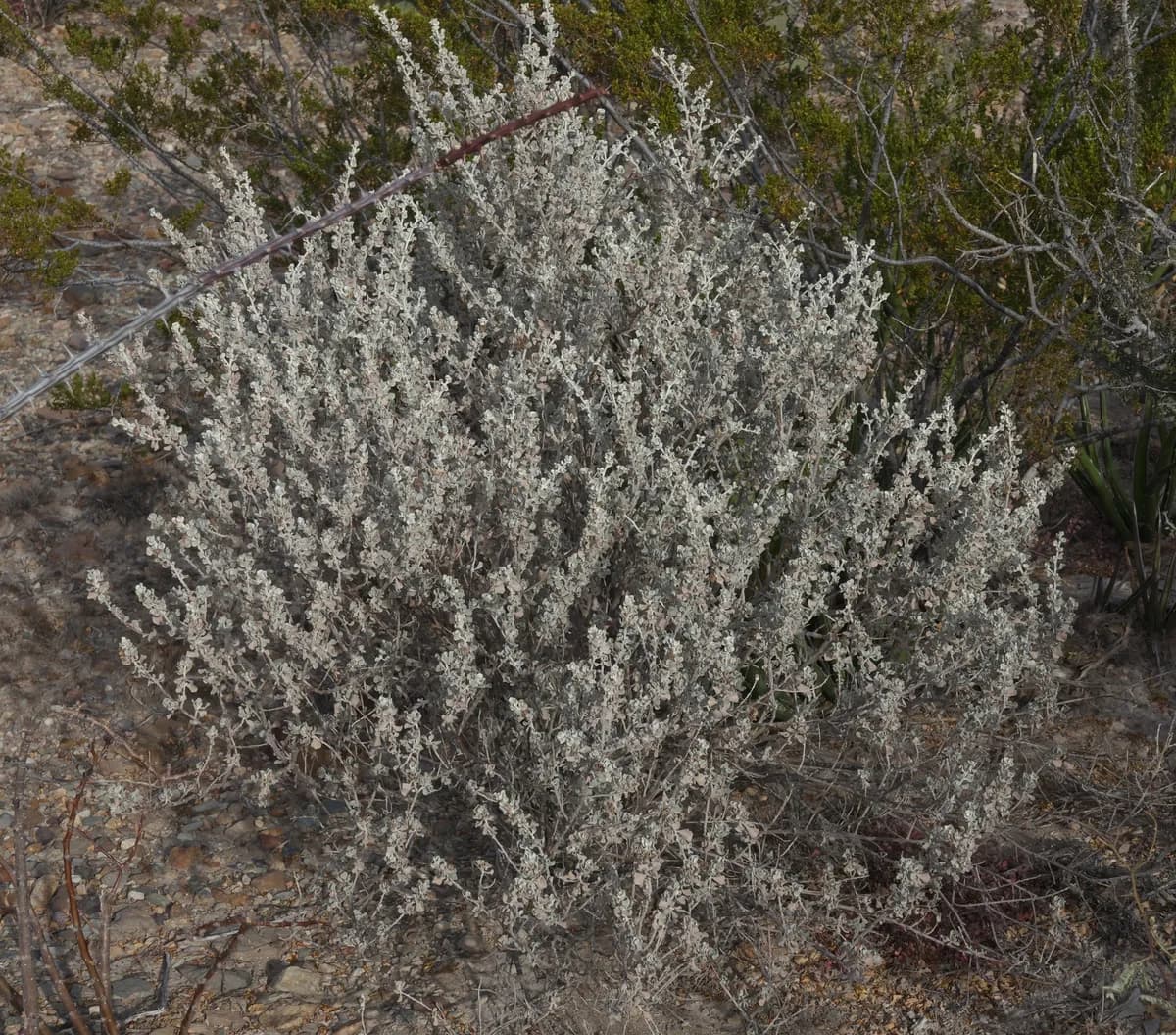
A dense, rounded evergreen shrub with small, felted silvery-white leaves that give it a soft, silver appearance year-round. Produces a flush of purple, trumpet-shaped flowers triggered by rainfall or humidity spikes during the warm season. Naturally compact form needs little pruning to hold its shape.
Growing Silver cloud Texas sage
Grow Silver cloud Texas sage in full sun and low water. Mature plants reach 24 to 36 inches tall and spread 24 to 36 inches wide. Expect low maintenance to keep it looking intentional in a front yard.
How to care for Silver cloud Texas sage, by region
How to care for Silver cloud Texas sage where it is actually grown: year-round basics plus what to do each season, region by region, with the sources for each.
Care guidance last updated: September 2026
Edwards Plateau (includes San Antonio, TX)
Year-round
Silvercloud Texas Sage is a compact, silver-leaved evergreen shrub built for heat and drought. It performs well in San Antonio's climate even though its wild native range sits farther west, in the Chihuahuan Desert of Trans-Pecos Texas.
- Give it full sun to light part shade and well-drained soil. Alkaline, rocky, or clay soils are fine and it does not need soil amendments at planting.
- Water only when the soil is dry a few inches down, then soak deeply. Standing water or a low spot with runoff risks root rot, which is the most common way this plant declines.
- Skip regular feeding. One light application of a slow-release fertilizer in spring is enough.
- Let it keep its natural rounded form. Shearing it into a hedge ball removes the arching shape and cuts down on flowering.
- It tolerates San Antonio's summer heat well past 100F and typical winter lows without protection; the species is documented as native to Texas by the Lady Bird Johnson Wildflower Center, though its natural populations are concentrated in far West Texas rather than the San Antonio area.
Its neat, silvery, naturally rounded form and compact mature size (about 4 to 5 feet) reads as tidy and intentional in a front bed without any shearing into geometric shapes, which fits an HOA-friendly foundation planting.
Fall
Fall, through San Antonio's average late-November first frost, is a second good window for light shaping and for planting, and it usually brings the fullest bloom of the year.
- Peak flowering for Silvercloud Texas Sage typically runs into September and October, giving a strong late-season show of purple blooms for pollinators.
- Continue watering only when the soil is dry. Cooler fall temperatures mean less frequent watering than summer.
- Fall, like spring, is a reasonable time to plant so roots can settle before winter, though avoid planting right up against the average November first frost date.
- Taper off any fertilizing well before frost season so the plant is not pushing tender new growth into cold weather.
Winter
Silvercloud Texas Sage is dormant and largely hands-off through San Antonio's mild winters, which rarely get cold enough to threaten an established plant.
- Stop supplemental watering in winter. Established plants get by on rainfall, and dormant-season water needs are minimal.
- The plant tolerates cold down to about 10F, well below San Antonio's typical winter lows; San Antonio sits mostly in USDA Plant Hardiness Zone 9a, with an average annual minimum of 20 to 25F.
- Do not prune in winter. Wait for after bloom or early spring so you are not cutting the plant back right before its main growth flush.
- If an unusual hard freeze is forecast, a light frost cloth over young or newly planted specimens is a reasonable precaution, though established plants typically handle San Antonio's normal winter lows without cover.
Spring
Spring is the main planting and pruning window in San Antonio, once the average mid-February last frost has passed and before Silvercloud pushes its new growth flush.
- Plant new Silvercloud sage after the average last frost (mid to late February in San Antonio) so roots have time to establish before summer heat arrives.
- Do the year's main shaping now, thinning and pruning lightly by hand rather than shearing, to keep the natural rounded form.
- Watering needs are still light in spring. Let the soil dry out between waterings and add water only during dry stretches.
- Hold off on fertilizer until new growth is clearly underway, and use a slow-release product sparingly if at all.
Summer
San Antonio summers push into the high 90s and low 100s, which is close to the heat this Chihuahuan Desert selection is built to handle, so summer care is mostly about not overwatering.
- Established plants need very little supplemental water in summer, even during San Antonio's hot, dry stretches. Overwatering is the more common problem than underwatering.
- Summer rain or a humid spell can trigger a flush of purple blooms that continues into fall, which is part of why this genus is sometimes called a barometer bush.
- Avoid a hard prune during peak summer heat since cutting into intense sun and heat stresses the plant. Save major shaping for after bloom or early spring.
- A light mulch layer helps hold soil moisture without keeping the root zone constantly wet, since consistently damp soil is what leads to root rot in summer heat.
Sources: Lady Bird Johnson Wildflower Center, Leucophyllum candidum plant profile, Texas SmartScape, Texas Sage 'Silver Cloud', Gardening Flow, Leucophyllum candidum care guide (community tip), USDA Plant Hardiness Zone Map (official), Almanac.com, Frost Dates for San Antonio, TX (community tip)
Western Gulf Coastal Plain (includes Houston, TX)
Year-round
Silver Cloud Texas sage is a genuine Texas native, but its home ground is the dry Trans-Pecos and Big Bend country of far west Texas, not the Houston area. Grown here it is a desert plant living well outside its natural range, so drainage and airflow matter more than they would for a true Gulf Coast native.
- This shrub's documented range is the Chihuahuan Desert side of Texas, including Brewster County, hundreds of miles from Houston's Gulf Coast plain.
- It wants full sun, low water, and sharp drainage, the opposite of Houston's humid air and heavy clay soils.
- Plant it in a raised bed or a mounded, amended bed rather than straight into native Houston clay.
- Space plants for airflow and skip overhead sprinklers so the leaves dry out between rains.
Its tidy silver-gray form and summer bloom read as an intentional, well-kept desert accent even in a humid-climate yard, as long as it looks healthy rather than stressed.
Fall
Fall is a good window to plant or transplant in the Houston area, before winter cold snaps and before next year's humid season builds.
- Cooler fall temperatures and typically lower humidity make this a good window to plant or move a Texas sage in the Houston area.
- Continue minimal watering, the plant is winding down for the year and does not want extra moisture.
- Check the base of the plant for standing water after fall rains and improve drainage if it collects there.
- Skip fall fertilizer, this shrub performs best on lean, low-nutrient soil year round.
A fall planting has time to settle in before Houston's next humid summer, which is when drainage problems tend to show up.
Winter
Winter in Houston brings occasional hard freezes, and this desert shrub tolerates cold better than it tolerates wet feet.
- This species is cold-hardy well below freezing in its native range, so a typical Houston winter cold snap is not the main risk.
- Wet, cold soil is more dangerous to the roots than the cold itself, keep the bed well-drained through winter rains.
- Hold off on winter pruning, wait until after the coldest weather passes to avoid pushing tender new growth ahead of a freeze.
- No winter fertilizer, the plant is dormant and lean soil is still what it wants.
A healthy, well-drained planting keeps its structure through winter rather than going patchy, which matters for curb appeal in the dormant months.
Spring
Spring is when to set a new plant and get the drainage right before Houston's wet season arrives.
- Plant in early spring after the last frost, into a raised or mounded bed with fast-draining soil, not flat ground in heavy clay.
- Water deeply but infrequently while roots establish, then taper off once new growth appears.
- Hold off on fertilizer, this plant is bred for lean desert soil and does not want rich feeding.
- Watch new growth for the silvery leaf color, dull or yellowing leaves in wet spring weather can be an early sign of soggy roots.
A newly planted, well-drained bed keeps the display looking deliberate rather than struggling, which matters most in the first season.
Summer
Summer is bloom season and also flash-rain and humidity season in Houston, so drainage and watching for root stress both matter.
- Expect flushes of purple-pink flowers after summer rain or watering, a Texas sage trait sometimes called the barometer bush habit.
- Water only during real dry spells, established plants in a well-drained bed rarely need supplemental water even in Houston's summer heat.
- After heavy summer downpours, check that the bed drains within a few hours rather than staying soggy.
- Prune lightly to open up the center of the shrub, better airflow through the canopy lowers the odds of fungal leaf and root problems in humid weather.
The summer bloom is the plant's best curb-appeal moment, and a well-drained bed keeps that display clean rather than patchy.
Sources: Lady Bird Johnson Wildflower Center: Leucophyllum candidum plant profile, SEINet Portal Network: Leucophyllum candidum specimen records (Brewster County, Trans-Pecos Texas), Lady Bird Johnson Wildflower Center: cotton root rot risk in Leucophyllum (Ask Mr. Smarty Plants), Texas A&M AgriLife Extension, Bexar County: 'Silverado' Texas Sage care notes
In an HOA neighborhood
Silver cloud Texas sage is an HOA-friendly choice. Maintenance level: low. Tidiness: 4 out of 5.
Works well in: front yard, foundation, street edge, mid zone.
Wildlife value
Rain-triggered flower flushes offer a burst of nectar for bees and hummingbirds during the warm season.
Common questions
- When does Silver cloud Texas sage bloom?
- It typically flowers from June through September, with flushes of purple blooms often appearing after periods of rain or high humidity.
- How much sun does Silver cloud Texas sage need?
- It performs best in full sun and can tolerate some light afternoon shade, but too much shade reduces flowering and makes the growth leggy.
- How often should Silver cloud Texas sage be watered?
- This shrub is drought tolerant and prefers low water once established, so it should be watered sparingly and allowed to dry out between waterings.
- What pollinators are attracted to Silver cloud Texas sage?
- Bees and hummingbirds regularly visit the tubular purple flowers for nectar during the summer bloom period.
- What kind of soil does Silver cloud Texas sage prefer?
- It grows best in well-drained, rocky or sandy soils and does poorly in heavy clay or areas with standing water.
- Is Silver cloud Texas sage HOA-friendly?
- Silver cloud Texas sage is generally an HOA-friendly choice in the right placement, with low maintenance.
These answers were drafted with an AI model from this plant's data. Verify care details with a local expert.
Native range data from vouchered herbarium specimen records and regional native plant society lists. Pollinator and host plant associations compiled from GBIF, iNaturalist, and published ecological literature.
If something looks wrong
Common plant problems, and what to check first
These come up on almost any plant. Each guide lists the likely causes in the order they are worth ruling out, with one thing to check before you act on any of them, and links to the source it came from.
- It is dying right after planting
- Leaves turning yellow
- Wilting even though I watered it
- Brown crispy leaf tips
- Bugs on the plant
Ready to grow Silver cloud Texas sage? Add it to your garden in Pollinator Patch to track it and get season-by-season care guidance.