Spotted Lily
Lilium columbianum
Last reviewed: September 2026
Lilium columbianum, the Columbia or spotted lily, blooms June through August with nodding orange petals speckled in maroon, thriving in part sun and moderate moisture across western mountain meadows and open woods.
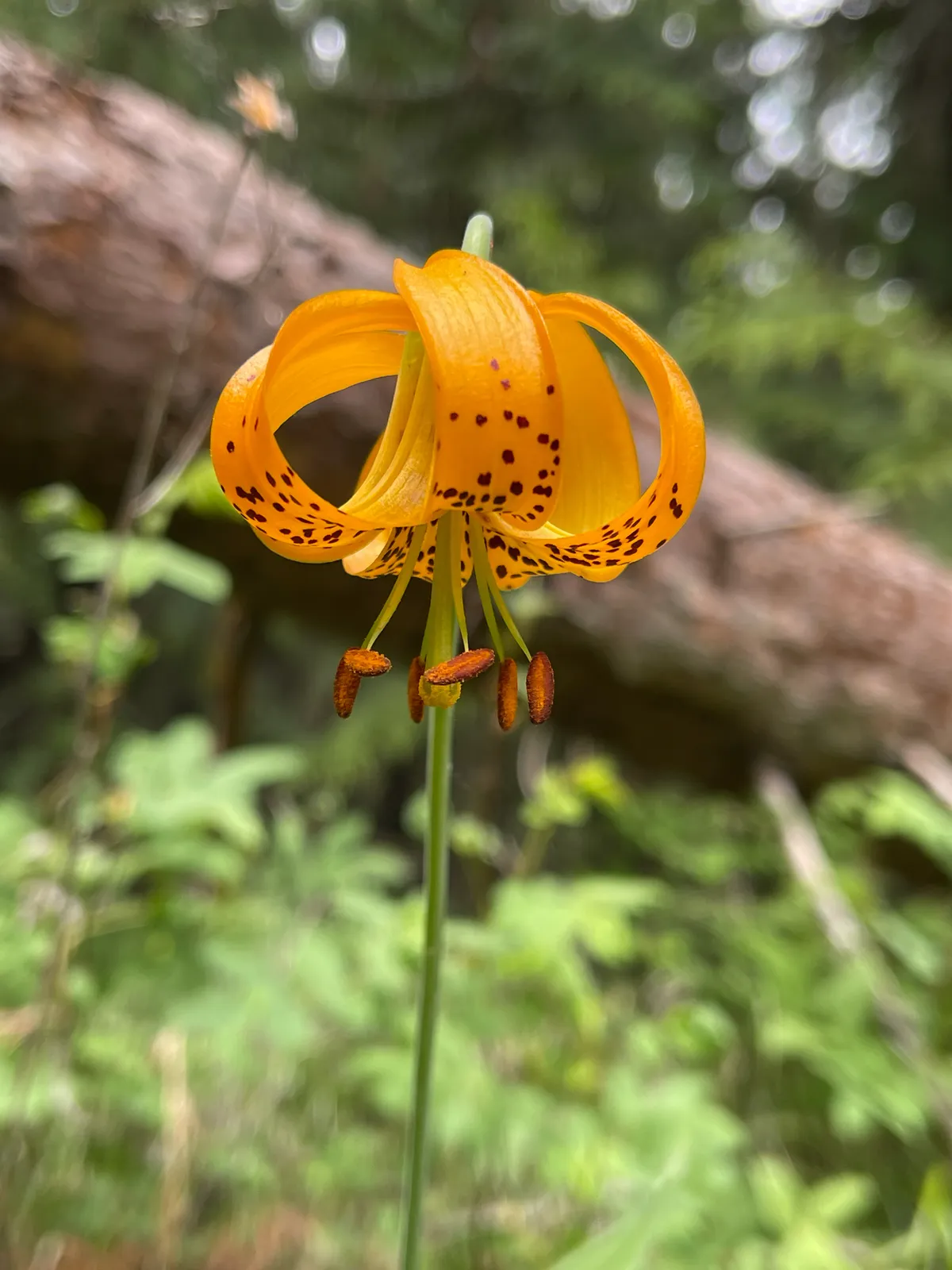
Spotted Lily (Lilium columbianum) is not on the ASPCA Animal Poison Control Center toxic plant list for dogs (aspca.org (opens in new tab), last reviewed 2026-05-21). If your pet shows symptoms after eating any plant, call the ASPCA at (888) 426-4435.
Light
part sun
Water
medium
Size
12"–48" H × 6"–12" W
Bloom
Jun, Jul, Aug
Native to
CA, ID, MT, OR and 1 more states
Pollinators
bees, butterflies, beetles
Before you buy
Your city may pay you to plant this
Cities and water utilities offer rebates for replacing lawn with native and water-wise plants. We track 459 programs across 44 states, each with a link to the provider and the date we last checked it.
Find rebates in your areaPicture natives in your own yard
Upload a photo of your yard and Patch Vision shows a rendering of it planted with natives for your region, like Spotted Lily.


Browse plants for this ecoregion
Spotted lily produces elegant orange flowers with dark spots on tall stems. The plant grows from bulbs and creates attractive vertical accents in partially shaded gardens. After blooming, the foliage dies back naturally in late summer.
Growing Spotted Lily
Grow Spotted Lily in part sun and medium water. Mature plants reach 12 to 48 inches tall and spread 6 to 12 inches wide. Expect low maintenance to keep it looking intentional in a front yard.
How to care for Spotted Lily, by region
How to care for Spotted Lily where it is actually grown: year-round basics plus what to do each season, region by region, with the sources for each.
Care guidance last updated: August 2026
Puget Lowland (includes Seattle, WA)
Year-round
This true lily is toxic to cats and can cause kidney failure, even from a small bite of leaf or pollen, or from drinking water that held cut flowers. It is native to the Puget Lowland around Seattle and does best in part sun to part shade.
- Every part of this true lily is toxic to cats. A cat that eats even a leaf or a few petals, licks pollen off its fur, or drinks water from a vase that held cut flowers can go into kidney failure. If a cat lives in the house, this is a plant to grow with real caution or skip.
- Dogs are not affected by lily toxicity from this plant, according to the ASPCA.
- It is a true native of the Puget Lowland region around Seattle and Puget Sound, naturally growing in prairies, forest edges, and meadows on both sides of the Cascades.
- Give it part sun to part shade, closer to a woodland edge than open full sun, with medium water in soil that stays evenly moist but drains well.
- Grows from a bulb into a single unbranched stem, about 12 to 48 inches tall, topped with nodding orange flowers spotted dark red or purple.
The tall, nodding blooms read as an intentional cottage garden accent rather than an overgrown patch, but it looks most tended planted toward the back or middle of a bed rather than right against the sidewalk.
Fall
Foliage dies back naturally after bloom as the bulb stores energy for next year.
- Let the stem and leaves yellow and die back on their own instead of cutting them early. That natural dieback is how the bulb recharges for next year's bloom.
- Once the top growth is fully brown, it can be cut back or left in place for winter garden texture.
- No extra watering is needed once the plant goes dormant. Fall rain around Puget Sound is normally enough.
Winter
The bulb stays dormant underground through winter and needs no active care.
- The bulb rests below ground through winter, living off stored energy rather than putting out new growth.
- Skip watering and feeding until spring growth starts. The main job is leaving the spot undisturbed.
- Mark the spot if the exact location is easy to forget, so the dormant bulb does not get dug up or planted over by mistake.
Spring
The bulb breaks dormancy in spring and sends up a single new shoot.
- Watch for one leafy stem pushing up through the soil as the bulb ends its winter dormancy.
- Keep the soil evenly moist as new growth resumes, especially if spring rain around Seattle runs lighter than usual.
- Avoid digging near the base. The bulb sits just below the surface and can be damaged easily.
Summer
This is bloom season, and it is also when the cat-toxicity risk is highest. Cut flowers in a vase, pollen on fur, or a curious nibble of a petal can cause kidney failure in cats.
- Flowers open anywhere from May into August depending on elevation, with Seattle-area gardens typically seeing bloom in June and July.
- This true lily is toxic to cats. If stems get cut for a vase, the water and any dropped pollen are just as dangerous as the plant itself, so keep cut flowers out of any home with a cat.
- Dogs are not affected the same way, per the ASPCA, but the flowers still are not something to let a dog chew on for fun.
- The nodding orange, dark-spotted flowers draw in swallowtail butterflies, giving the plant real pollinator value during peak bloom.
Sources: ASPCA Animal Poison Control Center, Washington Native Plant Society: Lilium columbianum, USDA Forest Service, Celebrating Wildflowers: Lilium columbianum, Calscape: Columbia Lily (Lilium columbianum)
Willamette Valley (includes Portland, OR)
Year-round
This is a true lily, and the ASPCA lists lilies as toxic to cats, where even a small amount, including pollen brushed onto fur or water from a vase, can cause kidney failure. If a cat lives with you, keep this plant out of reach and do not bring cut stems indoors. The ASPCA lists lilies as non-toxic to dogs. In the Portland area it wants part sun, roughly half a day of light, and ground that drains instead of holding a winter puddle. It grows wild in Oregon, so the climate already suits it, but it flowers June through August, which is exactly when the valley stops raining. The bulb sleeps underground the rest of the year and asks for very little.
- Keep cut stems and dropped pollen away from cats. The ASPCA lists lilies as toxic to cats.
- Give it part sun, about half a day of light, with shade during the hottest afternoons.
- Plant where water drains. Skip low spots that stay soggy from November through April.
- Water deeply every 7 to 10 days from late June into September while it is blooming.
- Leave the stem standing until it turns brown in fall so the bulb can refill itself.
Nodding orange flowers on one upright stem read as intentional rather than wild. Planting three to five bulbs together behind a low, clean edge keeps a front bed HOA-friendly.
Fall
Fall is the best planting window in the Willamette Valley because the rain that starts in late October settles new bulbs in for free. Aim for October into early November, ahead of the mid November first frost. Our silt and clay soil is the one catch, so drop each bulb onto a handful of coarse grit or sand and set it about 4 to 6 inches deep, which is roughly three times the height of the bulb. On plants already in the ground, wait until the stem is fully brown before you cut it, because a green stem is still feeding the bulb. When you do cut, bag and remove the stems rather than leaving them where a cat could chew them, since the ASPCA lists lilies as toxic to cats.
- Plant new bulbs in October or early November so the fall rain waters them in for you.
- Set each bulb 4 to 6 inches deep on a handful of coarse grit if your soil is heavy clay.
- Wait until the stem is fully brown, usually late October, before cutting it to the ground.
- Bag and remove the cut stems if a cat lives with you. The ASPCA lists lilies as toxic to cats.
- Stop watering once the steady rain returns, usually the first week of November.
Cutting the browned stem to the ground in late fall keeps the bed reading tidy through winter, which is the HOA-friendly move on a front-yard planting.
Winter
Winter is the season that kills this bulb around Portland, and it is not the cold that does it. Most of our roughly 40 inches of rain falls November through April, and heavy silt and clay soil can stay saturated for weeks, which rots a lily bulb sitting in it. The plant itself is fine with a zone 8b winter, so there is no need to dig it up or wrap anything. Your whole job is drainage. Check the bed after a big storm and keep any mulch thin and pulled back from the spot where the stem came out.
- Walk the bed after heavy rain. If water stands more than a few hours, move the bulb next fall.
- Keep mulch to about 1 inch and pull it back from where the stem was. Soggy mulch rots the bulb.
- Do not water at all from November through March.
- Push a small marker into the soil so you do not slice the bulb while digging in early spring.
- Leave the bulb in the ground. It handles a Portland winter without lifting or covering.
Spring
Around Portland the last frost lands near mid April, and this bulb pushes up before that as a single pointed spear, usually in March. The soil is still full of winter rain, so you do not need to water at all yet. The real spring problem here is slugs, which shred a soft new lily shoot in one wet night. Heavy silt and clay soil is also still cold and sticky, so stay off the bed until it stops clinging to your boots. If the plant reached three feet or more last year, set a slim stake early while you can still push it in without hitting the bulb.
- Watch for the first shoot from mid March. It comes up as one spear, not a clump.
- Put out iron phosphate slug bait or hand pick at night. Slugs are the top spring threat here.
- Do not water until May. The ground is still holding winter rain.
- Scratch a thin ring of compost into the soil around the shoot, not piled against it.
- Push a thin stake in now if the plant got tall last year, before roots fill the space.
Summer
This plant flowers June through August, which is the driest stretch of the Portland year, when July, August, and September often deliver under an inch of rain each. That timing matters more than anything else you do. Heavy valley clay bakes into a hard crust in that window, so a quick sprinkle runs off instead of soaking in and the flower buds shrivel early. Water slowly and deeply about every 7 to 10 days until the fall rain returns. While it is in bloom, remember the ASPCA lists lilies as toxic to cats, so do not cut stems for a vase if a cat lives with you.
- Water slowly and deeply every 7 to 10 days from late June through September.
- Do not bring cut flowers indoors if you have a cat. The ASPCA lists lilies as toxic to cats.
- Spread 2 inches of mulch over the root zone to stop the clay from cracking. Keep it off the stem.
- Snap off faded flowers, but leave the green stem and leaves standing.
- Knock aphids off the buds with a hose spray before they build up on the flowers.
Spent flowers dry into brown pods that look neglected from the sidewalk. Pinching them off once a week keeps a front bed looking cared for.
Sources: ASPCA, Lily (Lilium species) toxic and non-toxic plants, Lady Bird Johnson Wildflower Center, Lilium columbianum, USDA Forest Service, Plant of the Week: Columbian Lily, Benton Soil and Water Conservation District (Willamette Valley), Tiger Lily, Clackamas County Master Gardeners (OSU Extension), Summer Watering
In an HOA neighborhood
Spotted Lily is an HOA-friendly choice. Maintenance level: low. Tidiness: 3 out of 5.
Works well in: foundation, mid zone.
- Goes completely dormant after blooming
- May appear too wild for formal settings
Wildlife value
The bright orange flowers attract bees, butterflies, and beetles during summer bloom period. The nectar-rich blooms are particularly valuable for native pollinators.
Common questions
- When does the spotted lily bloom?
- Lilium columbianum typically flowers from June through August, producing nodding, orange, spotted blooms on tall stems.
- What growing conditions does Lilium columbianum need?
- It does best in part sun with medium moisture, often growing along woodland edges and in open meadows where soil stays evenly moist but not waterlogged.
- What pollinates the spotted lily?
- Bees, butterflies, and beetles visit the flowers of Lilium columbianum for nectar and pollen, making it a useful plant for supporting local pollinator activity.
- Is the spotted lily a good choice for a naturalistic garden?
- Yes, as a forb with a clumping bulb habit and summer color, it fits well in woodland gardens or meadow plantings with part sun and moderate watering.
- Is Spotted Lily toxic to dogs?
- Spotted Lily is not on the ASPCA Animal Poison Control Center toxic plant list for dogs (aspca.org).
- Is Spotted Lily toxic to cats?
- Yes. Spotted Lily is listed as toxic to cats by the ASPCA Animal Poison Control Center (aspca.org). If your cat has been exposed, call the ASPCA Animal Poison Control Center at (888) 426-4435.
- Is Spotted Lily HOA-friendly?
- Spotted Lily is generally an HOA-friendly choice in the right placement, with low maintenance.
These answers were drafted with an AI model from this plant's data. Verify care details with a local expert.
Native range data from vouchered herbarium specimen records and regional native plant society lists. Pollinator and host plant associations compiled from GBIF, iNaturalist, and published ecological literature.
If something looks wrong
Common plant problems, and what to check first
These come up on almost any plant. Each guide lists the likely causes in the order they are worth ruling out, with one thing to check before you act on any of them, and links to the source it came from.
- It is dying right after planting
- Leaves turning yellow
- Wilting even though I watered it
- Brown crispy leaf tips
- Bugs on the plant
Ready to grow Spotted Lily? Add it to your garden in Pollinator Patch to track it and get season-by-season care guidance.