Tennessee purple-coneflower
Echinacea tennesseensis
Last reviewed: September 2026
Tennessee purple-coneflower (Echinacea tennesseensis) is a perennial forb native to TN. It blooms in June, July, and August. The flowers draw bees and butterflies.
Toxicity unknown
Tennessee purple-coneflower (Echinacea tennesseensis) is not listed by the ASPCA Animal Poison Control Center (opens in new tab) or the other sources we check, so we have no verdict for it either way. Absence from those lists is not a clearance. If your pet shows symptoms after eating any plant, call the ASPCA at (888) 426-4435.
Light
full sun
Water
low
Size
18"–24" H × 12"–18" W
Bloom
Jun, Jul, Aug
Native to
TN
Pollinators
bees, butterflies
Before you buy
Your city may pay you to plant this
Cities and water utilities offer rebates for replacing lawn with native and water-wise plants. We track 458 programs across 44 states, each with a link to the provider and the date we last checked it.
Find rebates in your areaBrowse plants for this ecoregion
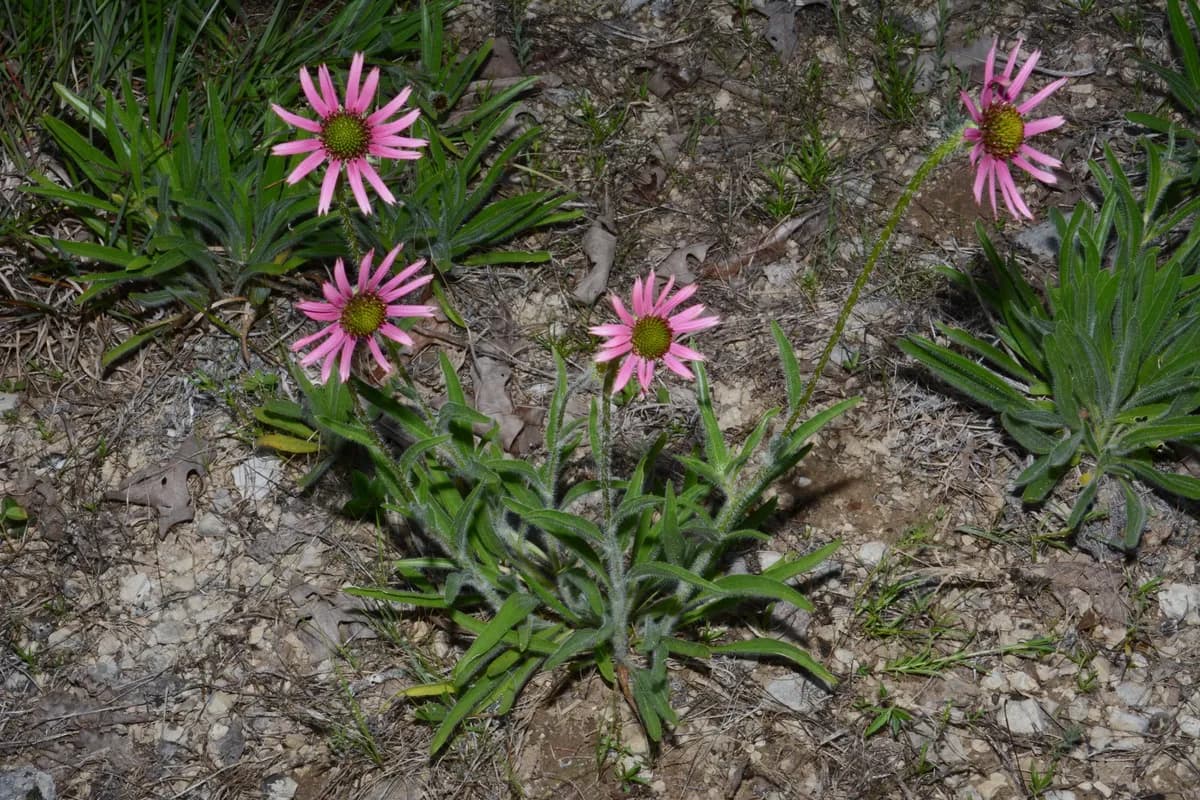
An upright perennial with narrow pink rayed flowers surrounding a prominent orange-brown central cone. Drought tolerant once established and blooms steadily through summer on rocky limestone glades and open ground.
Growing Tennessee purple-coneflower
Grow Tennessee purple-coneflower in full sun and low water. Mature plants reach 18 to 24 inches tall and spread 12 to 18 inches wide.
How to care for Tennessee purple-coneflower, by region
How to care for Tennessee purple-coneflower where it is actually grown: year-round basics plus what to do each season, region by region, with the sources for each.
Care guidance last updated: September 2026
Piedmont (includes Atlanta, GA)
Year-round
Tennessee coneflower is grown here as a garden perennial, not as a native plant. It comes from a small number of limestone cedar glades in Middle Tennessee, but it adapts well to Atlanta's zone 7b/8a climate with full sun and well drained soil.
- This species was once federally listed as endangered. It recovered enough in its native Tennessee cedar glades that the U.S. Fish and Wildlife Service delisted it in 2011.
- It is not native to Georgia. Its only wild populations are a small number of limestone cedar glades in Rutherford, Davidson, and Wilson counties in Middle Tennessee.
- Give it at least 6 hours of direct sun a day and soil that drains well, especially in Atlanta's clay.
- Water new plants regularly the first year. Established plants handle heat and short dry spells well.
- Space plants for good airflow to help prevent leaf spot and powdery mildew in humid summers.
A tidy clump of coneflowers in a front bed reads as an intentional garden planting rather than a wildflower patch.
Fall
Fall is a low stress time to plant or divide Tennessee coneflower, and it is also when to start leaving seed heads standing for winter birds.
- Divide crowded clumps in early fall while the soil is still warm.
- Cut back only the flower stalks you do not want to leave for birds.
- Stop fertilizing by late summer so new growth has time to harden off before frost.
- Clear away fallen leaves from nearby trees to reduce fungal disease pressure over winter.
Winter
Tennessee coneflower goes dormant in winter and needs little attention beyond leaving some structure standing for wildlife.
- Leave dried seed heads and stems standing through winter for birds and overwintering insects.
- Wait until late winter or early spring to cut the plant back hard.
- Mulch lightly around the crown after a hard freeze warning, then pull heavy mulch back once new growth starts.
- Avoid walking on the dormant crown in wet clay soil, which can compact it.
Standing dried stems can look unkempt to some neighbors. A neat edge or border around the bed helps it read as intentional rather than neglected.
Spring
Spring is the best window to plant new Tennessee coneflowers or divide established clumps, once the soil has warmed and the last frost has passed.
- Plant new starts after the average last frost date for the Atlanta area, usually early to mid April.
- Work compost into heavy clay soil before planting to improve drainage.
- Water new transplants two to three times a week until roots establish.
- Expect slower spring growth than common purple coneflower. This species is not as vigorous.
Summer
Summer brings the long bloom season for Tennessee coneflower, from June into August, and established plants handle Atlanta's heat and humidity well.
- Water deeply during extended dry spells, especially in the first year after planting.
- Skip overhead watering. Wetting the leaves in humid weather raises the risk of powdery mildew and leaf spot.
- Deadhead spent blooms if you want more flowers, or leave some seed heads for later in the season.
- Avoid heavy fertilizer. Rich soil makes the plant leggy and more likely to flop.
Sources: U.S. Fish & Wildlife Service: Removal of Echinacea tennesseensis From the Federal List of Endangered and Threatened Plants, USDA PLANTS Database: Echinacea tennesseensis profile (ECTE3), NC State Extension Gardener Plant Toolbox: Echinacea tennesseensis, Clemson HGIC: How to Grow Echinacea (Coneflower)
Wildlife value
Flowers draw bees and butterflies, and the dried seed heads feed goldfinches into winter if left standing.
Common questions
- How much sun does Tennessee purple-coneflower need?
- Tennessee purple-coneflower grows best in full sun conditions.
- When does Tennessee purple-coneflower bloom?
- Tennessee purple-coneflower blooms in June, July, and August.
- Where is Tennessee purple-coneflower native?
- Tennessee purple-coneflower (Echinacea tennesseensis) is native to TN, per the World Checklist of Vascular Plants (Kew).
- What pollinators does Tennessee purple-coneflower attract?
- Tennessee purple-coneflower draws bees and butterflies.
Native range data from the World Checklist of Vascular Plants (Kew). Pollinator and host plant associations compiled from GBIF, iNaturalist, and published ecological literature.
If something looks wrong
Common plant problems, and what to check first
These come up on almost any plant. Each guide lists the likely causes in the order they are worth ruling out, with one thing to check before you act on any of them, and links to the source it came from.
- It is dying right after planting
- Leaves turning yellow
- Wilting even though I watered it
- Brown crispy leaf tips
- Bugs on the plant
Ready to grow Tennessee purple-coneflower? Add it to your garden in Pollinator Patch to track it and get season-by-season care guidance.