Virginia Sweetspire
Itea virginica
Last reviewed: September 2026
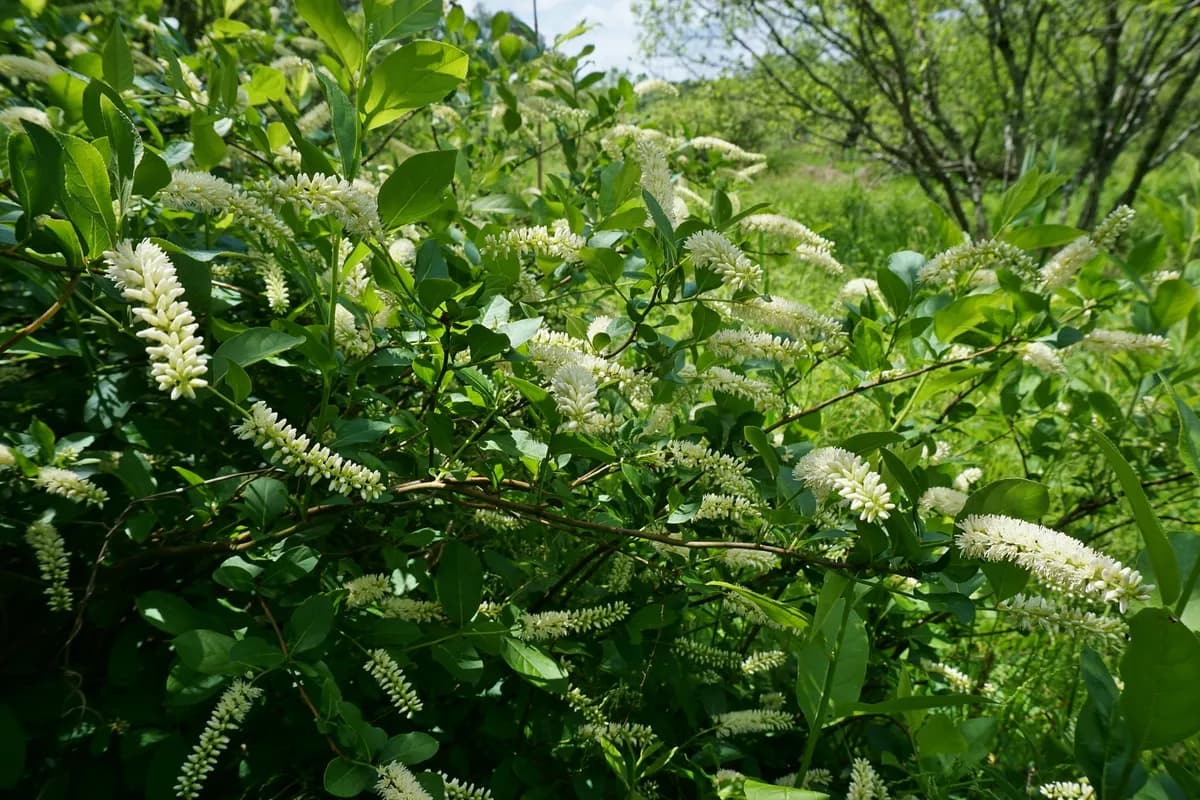
Virginia sweetspire is a wetland-tolerant shrub that blooms from March through May with fragrant white flower spikes. It thrives in moist, part-sun sites along streambanks and low woodland edges from the Gulf Coast to the mid-Atlantic.
Toxicity unknown
Virginia Sweetspire (Itea virginica) is not listed by the ASPCA Animal Poison Control Center (opens in new tab) or the other sources we check, so we have no verdict for it either way. Absence from those lists is not a clearance. If your pet shows symptoms after eating any plant, call the ASPCA at (888) 426-4435.
The USDA PLANTS Database (opens in new tab) does not flag Virginia Sweetspire as toxic to livestock.
Light
part sun
Water
high
Size
36"–96" H × 36"–36" W
Bloom
Mar, Apr, May
Native to
AL, AR, DE, FL and 17 more states
Pollinators
butterflies, bees, nectar insects
Before you buy
Your city may pay you to plant this
Cities and water utilities offer rebates for replacing lawn with native and water-wise plants. We track 452 programs across 44 states, each with a link to the provider and the date we last checked it.
Find rebates in your areaBrowse plants for this ecoregion
Virginia Sweetspire is a native Texas shrub that produces fragrant white flower spikes in spring. It offers attractive fall color and adapts well to moist conditions, making it useful for areas with poor drainage.
Growing Virginia Sweetspire
Grow Virginia Sweetspire in part sun and high water. Mature plants reach 36 to 96 inches tall and spread 36 to 36 inches wide. Expect low maintenance to keep it looking intentional in a front yard.
How to care for Virginia Sweetspire, by region
How to care for Virginia Sweetspire where it is actually grown: year-round basics plus what to do each season, region by region, with the sources for each.
Care guidance last updated: September 2026
Cross Timbers (includes Fort Worth, TX)
Year-round
Virginia sweetspire is a mounded, arching shrub that wants steady moisture and part to full sun, not a drought tolerant pick for a dry front bed.
- Plant it somewhere it gets water regularly, near a downspout, a low spot, or with supplemental irrigation, since this shrub does not tolerate long dry stretches
- Give it part sun to full sun; more sun brings better bloom and stronger red fall color, but afternoon shade helps in the hottest, most exposed spots
- Expect a mounded, arching shrub roughly 3 to 8 feet tall and wide at maturity
- It can spread slowly by suckering into a thicket over years, so give it room or plan to trim the spread if you want a tidy single clump
- It is native to the eastern and southeastern United States, from New Jersey to Florida and west to Missouri and East Texas, but our own plant data does not count it as a local native for the Cross Timbers or Blackland Prairie areas, so treat it as a garden shrub choice rather than a native-restoration pick here
Fall
Fall is when Virginia sweetspire earns its keep with red to purple foliage, and it is also a good time to plant new shrubs while the weather cools.
- Plant new shrubs in October or November so roots can establish in cooler weather before next summer's heat
- Expect green leaves to turn red to purple starting in October, often holding on the plant well into winter in mild years
- Water new fall plantings once or twice a week until the first freeze; established plants can taper off as fall rain returns
- Cut back only dead or damaged wood now, save any real shaping for right after next spring's bloom
- Reduce watering frequency as temperatures drop, but do not let the root zone go fully dry
The red to purple fall color reads as a deliberate ornamental accent rather than a plant in decline, so it is worth placing where it is visible from the street or sidewalk.
Winter
Winter is mostly a rest period since the shrub is dormant, though the last of the fall foliage often hangs on until a hard freeze knocks it off.
- Water only during extended dry spells, roughly once every 2 to 3 weeks if there is no rain; this shrub does not need regular winter watering
- Leave it unpruned through winter, wait until right after spring bloom to shape it
- Ahead of a hard freeze or an Arctic outbreak, a deep watering the day before can help roots handle the cold
- Check the base for suckers spreading outward; if you want to keep a tidy single clump rather than let it thicket, cut unwanted suckers to the ground now while the structure is easy to see
- Refresh mulch in late winter before spring growth starts, keeping it a few inches back from the stems
A bare, well-defined shrub outline in winter reads as tended rather than overgrown, so trimming stray suckers back to the clump's edge keeps the bed looking maintained.
Spring
Spring is bloom season, when the arching white flower spires open, and it is also the best time to plant this shrub in North Texas so roots settle in before summer heat.
- Plant in March or April while spring rain keeps soil moist; water 2 to 3 times a week if rain is light, until roots establish
- Expect drooping 3 to 4 inch white flower spires from March into May, opening from the base of the spike toward the tip
- Water deeply once or twice a week during any dry spring stretch; this shrub does not like to dry out
- In heavy black clay, plant it high on a slight mound or work in compost for drainage; in the sandier soils west of the metro it will need water more often since that soil drains faster
- Lay 2 to 3 inches of mulch over the root zone at planting to hold moisture, keeping it a few inches back from the stems
The mass of white bloom spires against arching branches reads as an intentional flowering border, especially kept inside a defined bed edge rather than left to spread loose.
Summer
Summer is the hardest stretch for this shrub since North Texas brings weeks of 100 degree afternoons with little rain, and steady watering is the main job.
- Water deeply 2 to 3 times a week through July and August if there is no rain, more often for a plant in its first summer
- Keep 2 to 3 inches of mulch over the root zone to slow moisture loss in the heat
- Give it afternoon shade where possible; plants in full, hot afternoon sun can show leaf scorch on the worst days
- Do not let it go more than a few days without water; wilting or drooping leaves mean it needs watering now, not next week
- Hold off on any pruning until after bloom or into dormancy, do not cut it back in summer heat
Scorched or drooping leaves in a front bed read as a neglected plant to neighbors, so keeping the watering schedule steady through the hot stretch keeps it looking tended.
Sources: Itea virginica, Lady Bird Johnson Wildflower Center
Mississippi Valley Loess Plains (includes Memphis, TN)
Year-round
Virginia sweetspire is a low fuss native shrub for the Memphis area, with arching sprays of white flowers in spring and vivid fall color. It grows naturally in wet woods and along streambanks statewide in Tennessee, including West Tennessee, so it fits right into a Memphis yard.
- Give it full sun to light shade, more sun generally means better flowering and fall color
- It handles Memphis clay and occasional soggy spots better than most shrubs, moist soil is actually what it prefers
- Water regularly the first year or two while roots establish, mature plants tolerate both wet and dry stretches
- No major pest or disease problems to watch for
- Not on the ASPCA toxic plant list for dogs or cats
Fall
Fall is when sweetspire earns its keep in Memphis yards, with leaves turning red to burgundy and often hanging on well past when other shrubs go bare, ahead of the mid November first frost.
- Enjoy the fall color, it can hold on the branches into early winter here
- Hold off on pruning, next spring's flower buds are already set on this year's growth
- Rake or leave fallen leaves as light mulch, either is fine for the plant
- Cut back on watering as fall rain becomes more reliable and temperatures drop
Winter
Winters in Memphis are mild most years, zone 8a, and sweetspire often keeps some reddish leaves through the cold months, needing little care besides cleanup after a rough freeze.
- Leave the shrub alone through most of winter, this zone does not call for wrapping or covering it
- Only cut out dead, broken, or storm damaged wood now, save real shaping for right after spring bloom
- A hard freeze snap can brown some leaves early, that is a cosmetic issue and not usually a sign the plant is in trouble
- Hold off on fertilizer until spring growth begins
Leaves that hold reddish color into winter read as intentional seasonal interest, worth mentioning if a neighbor or HOA committee asks why the shrub still has foliage.
Spring
Spring in Memphis brings sweetspire's big show, with fragrant white flower spikes opening around late April as the weather warms past the mid March last frost.
- Skip pruning now, this is bloom season and cutting stems back removes the flowers
- Expect peak bloom from late April into May in the Memphis area
- Water if a dry spring stretch hits while the shrub is flowering and leafing out
- Once the blooms fade, that is the signal to move into any pruning for the year
Summer
Memphis summers get hot and humid, but sweetspire handles it well once established, the main jobs are keeping it watered during dry spells and doing any shaping now that bloom is over.
- This is the window for shaping or rejuvenation pruning, right after flowering and before next year's buds set later in summer
- Water during dry stretches, Memphis summer humidity does not always mean enough rain reaches the roots
- Mulch to keep roots cool and cut down on watering needs
- Trim root suckers back to the bed line if the patch is spreading wider than planned
Trimming suckers back to a clean edge keeps the bed looking like a deliberate planting instead of a spreading patch.
Sources: Lady Bird Johnson Wildflower Center, Itea virginica native distribution, University of Tennessee Extension, Tennessee Smart Yards, Itea virginica (statewide native), ASPCA Toxic and Non-Toxic Plant List, Dogs, ASPCA Toxic and Non-Toxic Plant List, Cats, North Carolina Extension Gardener Plant Toolbox, Itea virginica, University of Tennessee Gardens, Virginia sweetspire
Ouachita Mountains (includes Hot Springs, AR)
Year-round
Virginia sweetspire is an easygoing arching shrub with fragrant white flower spikes in spring and fiery fall color. It is native to Arkansas overall, but the documented wild populations sit in the eastern part of the state along Crowley's Ridge, not the Ouachita foothills around Hot Springs, so here it is best treated as a well suited garden shrub rather than a confirmed local native.
- Give it morning sun with afternoon shade, or full sun if you can keep the soil from drying out completely
- Plant in soil that holds some moisture, it tolerates both occasionally wet spots and average garden soil once established
- Water regularly through the first year or two, after that it handles Hot Springs summers well as long as it is not in fast draining sand
- No major pests or diseases to watch for, and deer mostly leave it alone
- Not on the ASPCA toxic plant list for dogs or cats, so it is a reasonable pick in a yard with pets
Fall
Fall is sweetspire's second act in Hot Springs, with leaves turning shades of red and burgundy that often hang on the branches for weeks as the first frost approaches in early November.
- Enjoy the color, red to burgundy fall foliage that often lingers on the branches for weeks here
- Hold off on pruning now, next spring's flower buds are already set on this year's growth
- Rake fallen leaves for a tidy bed, or leave a light layer as mulch, either is fine for the plant
- Cut back on watering as temperatures drop and rain becomes more reliable
Winter
Winters in Hot Springs are mild enough, zone 8a, that sweetspire often holds onto some of its reddish leaves into the cold months, and the plant needs little care besides cleanup.
- Leave the shrub alone through most of winter, this zone does not call for wrapping or covering it
- Only remove dead, broken, or storm damaged branches now, save real shaping for right after spring bloom
- Some reddish leaves may hang on through a mild winter here, that is normal and not a sign of stress
- Hold off on fertilizer until spring growth starts
Leaves that hold reddish color into winter read as deliberate seasonal interest rather than a shrub that failed to drop its leaves, worth knowing if a neighbor or HOA committee asks.
Spring
Spring is when sweetspire puts on its main show in Hot Springs, with arching white flower spikes opening as the last frost risk fades in late March.
- Do not prune now, this is bloom time and cutting stems back removes the flowers you are waiting on
- Expect the fragrant white flower racemes to open in the second half of April into May in this area
- Water during a dry stretch if one hits while the shrub is flowering and leafing out
- Once flowering finishes, that is the cue to move into any shaping for the year
Summer
Summer heat and humidity in Hot Springs are no problem for sweetspire once it is established, and this is the right window to do any shaping now that flowering is over.
- This is the window for shaping or rejuvenation pruning, right after flowering finishes and before next year's flower buds set later in summer
- Water during dry spells, especially in the first couple of summers after planting
- Mulch around the base to keep roots cool and cut down on how often you need to water
- Trim stray root suckers back to the bed line if the patch is spreading wider than you want
Trimming suckers back to a clean edge now keeps the bed reading as an intentional planting instead of a patch spreading into the lawn.
Sources: Lady Bird Johnson Wildflower Center, Itea virginica native distribution, University of Arkansas Extension, Sweetspire plant profile (native range in eastern Arkansas), ASPCA Toxic and Non-Toxic Plant List, Dogs, ASPCA Toxic and Non-Toxic Plant List, Cats, North Carolina Extension Gardener Plant Toolbox, Itea virginica
Texas Blackland Prairies (includes Dallas, TX)
Year-round
Virginia sweetspire is a mounded, arching shrub that wants steady moisture and part to full sun, not a drought tolerant pick for a dry front bed.
- Plant it somewhere it gets water regularly, near a downspout, a low spot, or with supplemental irrigation, since this shrub does not tolerate long dry stretches
- Give it part sun to full sun; more sun brings better bloom and stronger red fall color, but afternoon shade helps in the hottest, most exposed spots
- Expect a mounded, arching shrub roughly 3 to 8 feet tall and wide at maturity
- It can spread slowly by suckering into a thicket over years, so give it room or plan to trim the spread if you want a tidy single clump
- It is native to the eastern and southeastern United States, from New Jersey to Florida and west to Missouri and East Texas, but our own plant data does not count it as a local native for the Cross Timbers or Blackland Prairie areas, so treat it as a garden shrub choice rather than a native-restoration pick here
Fall
Fall is when Virginia sweetspire earns its keep with red to purple foliage, and it is also a good time to plant new shrubs while the weather cools.
- Plant new shrubs in October or November so roots can establish in cooler weather before next summer's heat
- Expect green leaves to turn red to purple starting in October, often holding on the plant well into winter in mild years
- Water new fall plantings once or twice a week until the first freeze; established plants can taper off as fall rain returns
- Cut back only dead or damaged wood now, save any real shaping for right after next spring's bloom
- Reduce watering frequency as temperatures drop, but do not let the root zone go fully dry
The red to purple fall color reads as a deliberate ornamental accent rather than a plant in decline, so it is worth placing where it is visible from the street or sidewalk.
Winter
Winter is mostly a rest period since the shrub is dormant, though the last of the fall foliage often hangs on until a hard freeze knocks it off.
- Water only during extended dry spells, roughly once every 2 to 3 weeks if there is no rain; this shrub does not need regular winter watering
- Leave it unpruned through winter, wait until right after spring bloom to shape it
- Ahead of a hard freeze or an Arctic outbreak, a deep watering the day before can help roots handle the cold
- Check the base for suckers spreading outward; if you want to keep a tidy single clump rather than let it thicket, cut unwanted suckers to the ground now while the structure is easy to see
- Refresh mulch in late winter before spring growth starts, keeping it a few inches back from the stems
A bare, well-defined shrub outline in winter reads as tended rather than overgrown, so trimming stray suckers back to the clump's edge keeps the bed looking maintained.
Spring
Spring is bloom season, when the arching white flower spires open, and it is also the best time to plant this shrub in North Texas so roots settle in before summer heat.
- Plant in March or April while spring rain keeps soil moist; water 2 to 3 times a week if rain is light, until roots establish
- Expect drooping 3 to 4 inch white flower spires from March into May, opening from the base of the spike toward the tip
- Water deeply once or twice a week during any dry spring stretch; this shrub does not like to dry out
- In heavy black clay, plant it high on a slight mound or work in compost for drainage; in the sandier soils west of the metro it will need water more often since that soil drains faster
- Lay 2 to 3 inches of mulch over the root zone at planting to hold moisture, keeping it a few inches back from the stems
The mass of white bloom spires against arching branches reads as an intentional flowering border, especially kept inside a defined bed edge rather than left to spread loose.
Summer
Summer is the hardest stretch for this shrub since North Texas brings weeks of 100 degree afternoons with little rain, and steady watering is the main job.
- Water deeply 2 to 3 times a week through July and August if there is no rain, more often for a plant in its first summer
- Keep 2 to 3 inches of mulch over the root zone to slow moisture loss in the heat
- Give it afternoon shade where possible; plants in full, hot afternoon sun can show leaf scorch on the worst days
- Do not let it go more than a few days without water; wilting or drooping leaves mean it needs watering now, not next week
- Hold off on any pruning until after bloom or into dormancy, do not cut it back in summer heat
Scorched or drooping leaves in a front bed read as a neglected plant to neighbors, so keeping the watering schedule steady through the hot stretch keeps it looking tended.
Sources: Itea virginica, Lady Bird Johnson Wildflower Center
Want these tasks as reminders timed to your yard? Pollinator Patch turns this guidance into a season-by-season care plan for the plants you actually grow.
In an HOA neighborhood
Virginia Sweetspire takes more care to keep looking intentional in a front yard. Maintenance level: low. Consider it for backyard or mid-zone beds rather than the street edge.
Works well in: backyard only.
- Height exceeds typical HOA-friendly range
Wildlife value
The fragrant spring blooms attract butterflies, bees, and other nectar-feeding insects. Birds may also use the dense branching structure for nesting and shelter.
Common questions
- When does Virginia sweetspire bloom?
- Virginia sweetspire typically flowers from March into May, producing arching spikes of small white blossoms.
- What kind of light does Virginia sweetspire need?
- It grows well in part sun and adapts to conditions ranging from full sun to fairly deep shade, though flowering and fall color are strongest with more light.
- How much water does Virginia sweetspire need?
- This shrub prefers consistently moist to wet soil and is often found along streambanks, in low woods, and in boggy ground. It tolerates occasional flooding better than dry sites.
- Do pollinators visit Virginia sweetspire flowers?
- Yes, the spring flower spikes attract bees, butterflies, and other nectar-seeking insects.
- Does Virginia sweetspire lose its leaves in winter?
- It is deciduous, though in milder climates the foliage often turns red to burgundy in fall before dropping.
- Is Virginia Sweetspire toxic to livestock?
- The USDA PLANTS Database does not flag Virginia Sweetspire as toxic to livestock.
- Is Virginia Sweetspire HOA-friendly?
- Virginia Sweetspire takes more care to look intentional in a front yard. Consider it for backyard or mid-zone beds rather than the street edge.
These answers were drafted with an AI model from this plant's data. Verify care details with a local expert.
Native range data from vouchered herbarium specimen records and regional native plant society lists. Pollinator and host plant associations compiled from GBIF, iNaturalist, and published ecological literature.
If something looks wrong
Common plant problems, and what to check first
These come up on almost any plant. Each guide lists the likely causes in the order they are worth ruling out, with one thing to check before you act on any of them, and links to the source it came from.
- It is dying right after planting
- Leaves turning yellow
- Wilting even though I watered it
- Brown crispy leaf tips
- Bugs on the plant
Ready to grow Virginia Sweetspire? Add it to your garden in Pollinator Patch to track it and get season-by-season care guidance.
Planning a bed around it? Start a free plan with this plant
Not sure where to start? Take the 2-minute yard quiz