Virgin's-bower
Clematis virginiana
Last reviewed: September 2026
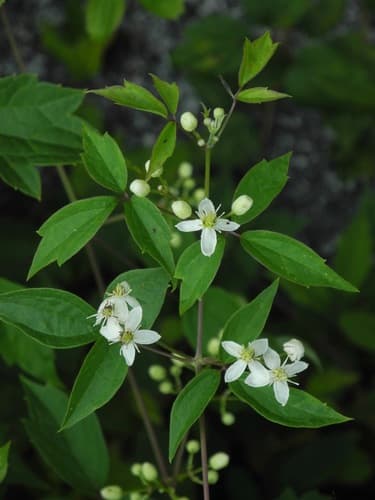
Clematis virginiana is a vigorous deciduous vine that covers fences, shrubs, and thickets with clusters of small white flowers from July through September.
Virgin's-bower is toxic to dogs and cats.
Listed as toxic by the ASPCA Animal Poison Control Center (opens in new tab) (last reviewed 2026-05-21). If your pet has been exposed, call the ASPCA Animal Poison Control Center at (888) 426-4435 and your veterinarian's emergency line.
Pollinator Patch flags toxic plants so you can choose a pet-safe native alternative for your yard.
Native swaps for a yard with pets
Virgin's-bower is listed as toxic to dogs by the ASPCA Animal Poison Control Center. These natives fill a similar role in a planting and are not on the ASPCA toxic plant list for dogs or cats. Each plant's page carries its dated record.
The USDA PLANTS Database (opens in new tab) does not flag Virgin's-bower as toxic to livestock.
Light
part sun
Water
medium
Size
120"–300" H × 36"–120" W
Bloom
Jul, Aug, Sep
Native to
AL, AR, CT, DE and 33 more states
Pollinators
bees, beetles
Before you buy
Your city may pay you to plant this
Cities and water utilities offer rebates for replacing lawn with native and water-wise plants. We track 459 programs across 44 states, each with a link to the provider and the date we last checked it.
Find rebates in your areaPicture natives in your own yard
Upload a photo of your yard and Patch Vision shows a rendering of it planted with natives for your region, like Virgin's-bower.


Browse plants for this ecoregion
Virgin's-bower is a vigorous native vine that produces masses of small white flowers in late summer followed by feathery seed heads. This deciduous climber can quickly cover fences, trellises, or arbors with its attractive foliage and fragrant blooms.
Growing Virgin's-bower
Grow Virgin's-bower in part sun and medium water. Mature plants reach 120 to 300 inches tall and spread 36 to 120 inches wide. Expect high maintenance to keep it looking intentional in a front yard.
How to care for Virgin's-bower, by region
How to care for Virgin's-bower where it is actually grown: year-round basics plus what to do each season, region by region, with the sources for each.
Care guidance last updated: August 2026
Cross Timbers (includes Fort Worth, TX)
Year-round
Virgin's-bower is a fast deciduous vine that climbs by wrapping its leaf stalks around whatever it touches, not by sticky pads or tendrils. It grows wild along forest edges, in thickets, and on river and lake shores across eastern North America, which is a very different setting from a Dallas or Fort Worth front yard. Our own records do not place this species in the Cross Timbers or Blackland Prairie ecoregions around DFW, so treat the plant you just bought as one sitting at the dry western edge of its comfort zone. It can add 20 feet of growth in a single year, so decide on a support and commit to a yearly hard cutback before you put it in the ground. Every part of it is poisonous if chewed and the sap can irritate skin, so gloves are part of owning it.
- It climbs by twisting its leaf stalks around a support, so it needs something narrow to grab like wire, twine, or lattice, and it will not cling to a flat brick wall (North Carolina Extension Gardener Plant Toolbox).
- Its wild home is forest edges, thickets, river and lake shores, and wetland margins, which tells you it wants steady moisture far more than it wants a hot open fence line (Native Plant Trust Go Botany).
- Fast-growing stems can put on 20 feet in one year and it can be an aggressive self seeder, so this is a lot of plant for a small front bed (Lady Bird Johnson Wildflower Center).
- All parts are poisonous if eaten, causing mouth pain and ulcers, and the sap causes skin redness and a burning feeling for some people, so wear gloves any time you cut it (Lady Bird Johnson Wildflower Center).
- The ASPCA lists Clematis as toxic to dogs, cats, and horses because of an irritant called protoanemonin, with drooling, vomiting, and diarrhea as the signs, so bag your clippings instead of leaving a pile a dog can chew (ASPCA Animal Poison Control).
- Plants are usually either male or female, and only female plants make the feathery seed heads this vine is famous for, so yours may flower beautifully and never produce a single plume (Lady Bird Johnson Wildflower Center).
This is the least tidy plant in our catalog by a wide margin, and left alone it will swamp a fence, a mailbox post, or a neighboring shrub in one season. On an HOA-conscious street, give it a defined structure like an arbor or a single trellis panel and cut it back hard every year so the shape reads as deliberate.
Fall
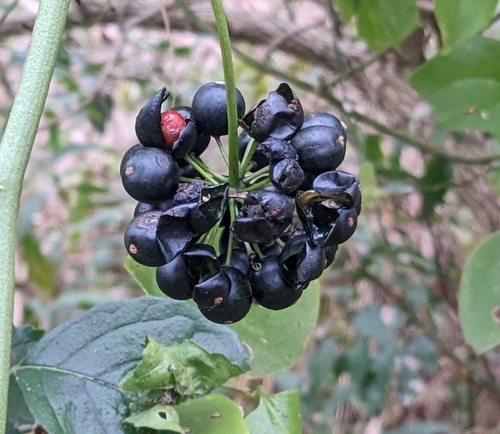
Fall is the payoff season and also the decision season. If your plant is female, the spent flowers turn into silvery feathery plumes through October, which is where the old name Old Man's Beard comes from. If your plant is male you get flowers and no plumes at all, and that is normal biology, not a defect in your plant. Fall is also when the seed ripens and blows, and this vine self-seeds aggressively, so you have to choose between keeping the plumes and preventing volunteers all over the bed. Cooler wetter weather also gives it a second growth push, so this is the month to check what it has quietly climbed into.
- Plants are usually either male or female, with the pollen flowers and the seed flowers on separate plants, so only a female makes plumes and a nursery pot is almost never labeled by sex (Lady Bird Johnson Wildflower Center).
- To keep the plumes, leave them standing. To avoid seedlings everywhere, shear the spent flowers off in October before the plumes ripen and blow, because this vine can be an aggressive self seeder (Lady Bird Johnson Wildflower Center).
- Fall opens the correct pruning window, which runs from late fall through early spring for this Type 3 clematis, so a hard cutback any time inside that window is on schedule (North Carolina Extension Gardener Plant Toolbox).
- Pull volunteer seedlings while they are small and check their leaflets as you go, because a smooth-edged seedling with 5 or 7 leaflets is the invasive nonnative sweet autumn clematis rather than your plant (Missouri Department of Conservation).
- Walk the fence line and unwind any stems that have wrapped into a neighboring shrub, a gate, or a downspout, since this vine climbs by twisting its leaf stalks around whatever it reaches (North Carolina Extension Gardener Plant Toolbox).
Seed plumes read as silver and intentional on an arbor and read as a mess draped over chain link. If the vine faces the street, either give it a real structure or shear the flowers in October and skip the plumes entirely.
Winter
This vine is fully deciduous, so it goes to bare stems every DFW winter and that is normal, not a warning sign. Cold is the one thing you genuinely do not have to manage here, because its range runs north into Nova Scotia and Manitoba, far colder than anything Dallas or Fort Worth produces, including the February 2021 freeze. Winter is when you do the single job this plant actually demands, which is the hard cutback. Do it and you get a controlled vine that flowers heavily at eye level. Skip it and within two years you have a mat of dead thatch at the bottom and all the new growth 15 feet up out of reach.
- Cut it back hard any time from late fall through early spring, down toward 8 to 12 inches where healthy buds remain, because it flowers on new wood and falls in pruning Type 3 (North Carolina Extension Gardener Plant Toolbox).
- Stop worrying about hard freezes here, since this species ranges from Nova Scotia and Manitoba south to Georgia, Louisiana, and Oklahoma, which makes a DFW winter mild by its standards (Lady Bird Johnson Wildflower Center).
- Wear gloves and long sleeves for the winter cutback and bag the trimmings rather than leaving a pile in the yard, because the ASPCA lists Clematis as toxic to dogs, cats, and horses from an irritant called protoanemonin (ASPCA Animal Poison Control).
- Inspect and repair the trellis or arbor while the vine is bare, because 20 feet of new growth in one season puts real weight and wind load on the structure (Lady Bird Johnson Wildflower Center).
- If you left the plumes up for winter interest, the February cutback also clears whatever seed has not blown yet, which matters because this vine can be an aggressive self seeder (Lady Bird Johnson Wildflower Center).
A freshly hard-cut vine looks like a dead plant to anyone walking past for about six weeks in late winter. If the support sits right at the curb on an HOA-conscious street, pick a structure that looks finished on its own so the bare weeks read as pruning rather than neglect.
Spring
Spring sets the whole year for this vine. It flowers on new wood, which means the stems that push out this spring are the ones that bloom in July, so cutting it to the ground in late winter costs you nothing and is actually the correct move. In DFW that cutback wants to happen in February or the first days of March, before buds swell. Spring is also the wetter half of our year, which makes it the right window to plant and get roots down before the first run of 100 degree afternoons. It is also the one time of year the new leaves make it easy to confirm you bought the native vine and not its look-alike.
- Cut the whole vine back hard in late winter or very early spring, down to roughly 8 to 12 inches where healthy buds remain, because this is a Type 3 clematis that flowers on new growth (North Carolina Extension Gardener Plant Toolbox).
- Wear gloves for that cutback, because all parts of the plant are poisonous and the sap can leave skin red and burning (Lady Bird Johnson Wildflower Center).
- When the new leaves open, look at the leaflet edges: the native Virgin's-bower has toothed and often shallowly lobed leaflets, usually 3 to a leaf, while the Asian look-alike sweet autumn clematis has smooth-edged leaflets, usually 5 or 7, and is an invasive nonnative (Missouri Department of Conservation).
- Site it for morning sun and afternoon shade rather than an all-day west-facing fence, because this vine handles anything from full sun to deep shade, which is unusual for a clematis, and shade is what carries it through a Texas summer (North Carolina Extension Gardener Plant Toolbox).
- Put the support up before growth starts, since it climbs by wrapping leaf stalks and a 20 foot season is normal for it (Lady Bird Johnson Wildflower Center).
- Mulch 2 to 3 inches over the root zone at planting, whether your yard is Cross Timbers sand or Blackland clay, because this plant wants rich soil that stays moist and both of those bake dry at the surface (North Carolina Extension Gardener Plant Toolbox).
Summer
Summer is when a DFW planting of this vine either holds or quietly fails. Its natural home is moist woodland edges and stream banks, so a July of 100 degree afternoons against a dry west-facing fence is close to the opposite of what it is built for. The realistic failure mode here is not death by cold, it is leaves scorching and dropping from the bottom of the vine upward in late July, leaving a thin plant that never delivers its August flowers. The two things that fix it are afternoon shade and deep water at the roots, and neither one is optional in this metro. Get it through, and you get white flower clusters from July into September, right when most yards have given up.
- Water deeply at the base once or twice a week during 100 degree stretches instead of a light daily sprinkle, because this vine grows wild along river and lake shores and in wetland margins and expects soil that does not fully dry out (Native Plant Trust Go Botany).
- If it is scorching, fix the light before you fix anything else: it tolerates full sun through deep shade, which is unusual for a clematis, so moving it into afternoon shade costs you very few flowers (North Carolina Extension Gardener Plant Toolbox).
- Keep 3 inches of mulch out past the base all summer, in sand or in black clay, because the roots want rich moist soil even when the top of the vine is in sun (Lady Bird Johnson Wildflower Center).
- Expect white flower clusters from July through September, and expect bees, moths, and hummingbirds working them, which is the whole reason to grow this one here (North Carolina Extension Gardener Plant Toolbox).
- Do not do more than a light tidy of stray stems now, because the flowers you are waiting on are forming on this year's growth and a summer cutback removes the bloom (North Carolina Extension Gardener Plant Toolbox).
- If it drops most of its leaves in a bad August, do not dig it up, since this vine regrows from the base and the correct response is a hard cutback in the coming winter plus a shadier spot (Lady Bird Johnson Wildflower Center).
A heat-stressed vine with bare lower stems and a leafy tuft on top is the version of this plant that draws comments. Screening the base with a low shrub or a short section of solid trellis keeps it looking intentional through the worst of August.
Sources: Lady Bird Johnson Wildflower Center: Clematis virginiana (Devil's darning needles), ASPCA Animal Poison Control: Clematis, Native Plant Trust Go Botany: Clematis virginiana, Virginia virgin's-bower, Lady Bird Johnson Wildflower Center NPIN: Questions about Clematis virginiana in Austin, TX, NC State Extension Gardener Plant Toolbox: Clematis virginiana, Missouri Department of Conservation Field Guide: Sweet Autumn Virgin's Bower (Autumn Clematis)
Texas Blackland Prairies (includes Dallas, TX)
Year-round
Virgin's-bower is a fast deciduous vine that climbs by wrapping its leaf stalks around whatever it touches, not by sticky pads or tendrils. It grows wild along forest edges, in thickets, and on river and lake shores across eastern North America, which is a very different setting from a Dallas or Fort Worth front yard. Our own records do not place this species in the Cross Timbers or Blackland Prairie ecoregions around DFW, so treat the plant you just bought as one sitting at the dry western edge of its comfort zone. It can add 20 feet of growth in a single year, so decide on a support and commit to a yearly hard cutback before you put it in the ground. Every part of it is poisonous if chewed and the sap can irritate skin, so gloves are part of owning it.
- It climbs by twisting its leaf stalks around a support, so it needs something narrow to grab like wire, twine, or lattice, and it will not cling to a flat brick wall (North Carolina Extension Gardener Plant Toolbox).
- Its wild home is forest edges, thickets, river and lake shores, and wetland margins, which tells you it wants steady moisture far more than it wants a hot open fence line (Native Plant Trust Go Botany).
- Fast-growing stems can put on 20 feet in one year and it can be an aggressive self seeder, so this is a lot of plant for a small front bed (Lady Bird Johnson Wildflower Center).
- All parts are poisonous if eaten, causing mouth pain and ulcers, and the sap causes skin redness and a burning feeling for some people, so wear gloves any time you cut it (Lady Bird Johnson Wildflower Center).
- The ASPCA lists Clematis as toxic to dogs, cats, and horses because of an irritant called protoanemonin, with drooling, vomiting, and diarrhea as the signs, so bag your clippings instead of leaving a pile a dog can chew (ASPCA Animal Poison Control).
- Plants are usually either male or female, and only female plants make the feathery seed heads this vine is famous for, so yours may flower beautifully and never produce a single plume (Lady Bird Johnson Wildflower Center).
This is the least tidy plant in our catalog by a wide margin, and left alone it will swamp a fence, a mailbox post, or a neighboring shrub in one season. On an HOA-conscious street, give it a defined structure like an arbor or a single trellis panel and cut it back hard every year so the shape reads as deliberate.
Fall
Fall is the payoff season and also the decision season. If your plant is female, the spent flowers turn into silvery feathery plumes through October, which is where the old name Old Man's Beard comes from. If your plant is male you get flowers and no plumes at all, and that is normal biology, not a defect in your plant. Fall is also when the seed ripens and blows, and this vine self-seeds aggressively, so you have to choose between keeping the plumes and preventing volunteers all over the bed. Cooler wetter weather also gives it a second growth push, so this is the month to check what it has quietly climbed into.
- Plants are usually either male or female, with the pollen flowers and the seed flowers on separate plants, so only a female makes plumes and a nursery pot is almost never labeled by sex (Lady Bird Johnson Wildflower Center).
- To keep the plumes, leave them standing. To avoid seedlings everywhere, shear the spent flowers off in October before the plumes ripen and blow, because this vine can be an aggressive self seeder (Lady Bird Johnson Wildflower Center).
- Fall opens the correct pruning window, which runs from late fall through early spring for this Type 3 clematis, so a hard cutback any time inside that window is on schedule (North Carolina Extension Gardener Plant Toolbox).
- Pull volunteer seedlings while they are small and check their leaflets as you go, because a smooth-edged seedling with 5 or 7 leaflets is the invasive nonnative sweet autumn clematis rather than your plant (Missouri Department of Conservation).
- Walk the fence line and unwind any stems that have wrapped into a neighboring shrub, a gate, or a downspout, since this vine climbs by twisting its leaf stalks around whatever it reaches (North Carolina Extension Gardener Plant Toolbox).
Seed plumes read as silver and intentional on an arbor and read as a mess draped over chain link. If the vine faces the street, either give it a real structure or shear the flowers in October and skip the plumes entirely.
Winter
This vine is fully deciduous, so it goes to bare stems every DFW winter and that is normal, not a warning sign. Cold is the one thing you genuinely do not have to manage here, because its range runs north into Nova Scotia and Manitoba, far colder than anything Dallas or Fort Worth produces, including the February 2021 freeze. Winter is when you do the single job this plant actually demands, which is the hard cutback. Do it and you get a controlled vine that flowers heavily at eye level. Skip it and within two years you have a mat of dead thatch at the bottom and all the new growth 15 feet up out of reach.
- Cut it back hard any time from late fall through early spring, down toward 8 to 12 inches where healthy buds remain, because it flowers on new wood and falls in pruning Type 3 (North Carolina Extension Gardener Plant Toolbox).
- Stop worrying about hard freezes here, since this species ranges from Nova Scotia and Manitoba south to Georgia, Louisiana, and Oklahoma, which makes a DFW winter mild by its standards (Lady Bird Johnson Wildflower Center).
- Wear gloves and long sleeves for the winter cutback and bag the trimmings rather than leaving a pile in the yard, because the ASPCA lists Clematis as toxic to dogs, cats, and horses from an irritant called protoanemonin (ASPCA Animal Poison Control).
- Inspect and repair the trellis or arbor while the vine is bare, because 20 feet of new growth in one season puts real weight and wind load on the structure (Lady Bird Johnson Wildflower Center).
- If you left the plumes up for winter interest, the February cutback also clears whatever seed has not blown yet, which matters because this vine can be an aggressive self seeder (Lady Bird Johnson Wildflower Center).
A freshly hard-cut vine looks like a dead plant to anyone walking past for about six weeks in late winter. If the support sits right at the curb on an HOA-conscious street, pick a structure that looks finished on its own so the bare weeks read as pruning rather than neglect.
Spring
Spring sets the whole year for this vine. It flowers on new wood, which means the stems that push out this spring are the ones that bloom in July, so cutting it to the ground in late winter costs you nothing and is actually the correct move. In DFW that cutback wants to happen in February or the first days of March, before buds swell. Spring is also the wetter half of our year, which makes it the right window to plant and get roots down before the first run of 100 degree afternoons. It is also the one time of year the new leaves make it easy to confirm you bought the native vine and not its look-alike.
- Cut the whole vine back hard in late winter or very early spring, down to roughly 8 to 12 inches where healthy buds remain, because this is a Type 3 clematis that flowers on new growth (North Carolina Extension Gardener Plant Toolbox).
- Wear gloves for that cutback, because all parts of the plant are poisonous and the sap can leave skin red and burning (Lady Bird Johnson Wildflower Center).
- When the new leaves open, look at the leaflet edges: the native Virgin's-bower has toothed and often shallowly lobed leaflets, usually 3 to a leaf, while the Asian look-alike sweet autumn clematis has smooth-edged leaflets, usually 5 or 7, and is an invasive nonnative (Missouri Department of Conservation).
- Site it for morning sun and afternoon shade rather than an all-day west-facing fence, because this vine handles anything from full sun to deep shade, which is unusual for a clematis, and shade is what carries it through a Texas summer (North Carolina Extension Gardener Plant Toolbox).
- Put the support up before growth starts, since it climbs by wrapping leaf stalks and a 20 foot season is normal for it (Lady Bird Johnson Wildflower Center).
- Mulch 2 to 3 inches over the root zone at planting, whether your yard is Cross Timbers sand or Blackland clay, because this plant wants rich soil that stays moist and both of those bake dry at the surface (North Carolina Extension Gardener Plant Toolbox).
Summer
Summer is when a DFW planting of this vine either holds or quietly fails. Its natural home is moist woodland edges and stream banks, so a July of 100 degree afternoons against a dry west-facing fence is close to the opposite of what it is built for. The realistic failure mode here is not death by cold, it is leaves scorching and dropping from the bottom of the vine upward in late July, leaving a thin plant that never delivers its August flowers. The two things that fix it are afternoon shade and deep water at the roots, and neither one is optional in this metro. Get it through, and you get white flower clusters from July into September, right when most yards have given up.
- Water deeply at the base once or twice a week during 100 degree stretches instead of a light daily sprinkle, because this vine grows wild along river and lake shores and in wetland margins and expects soil that does not fully dry out (Native Plant Trust Go Botany).
- If it is scorching, fix the light before you fix anything else: it tolerates full sun through deep shade, which is unusual for a clematis, so moving it into afternoon shade costs you very few flowers (North Carolina Extension Gardener Plant Toolbox).
- Keep 3 inches of mulch out past the base all summer, in sand or in black clay, because the roots want rich moist soil even when the top of the vine is in sun (Lady Bird Johnson Wildflower Center).
- Expect white flower clusters from July through September, and expect bees, moths, and hummingbirds working them, which is the whole reason to grow this one here (North Carolina Extension Gardener Plant Toolbox).
- Do not do more than a light tidy of stray stems now, because the flowers you are waiting on are forming on this year's growth and a summer cutback removes the bloom (North Carolina Extension Gardener Plant Toolbox).
- If it drops most of its leaves in a bad August, do not dig it up, since this vine regrows from the base and the correct response is a hard cutback in the coming winter plus a shadier spot (Lady Bird Johnson Wildflower Center).
A heat-stressed vine with bare lower stems and a leafy tuft on top is the version of this plant that draws comments. Screening the base with a low shrub or a short section of solid trellis keeps it looking intentional through the worst of August.
Sources: Lady Bird Johnson Wildflower Center: Clematis virginiana (Devil's darning needles), ASPCA Animal Poison Control: Clematis, Native Plant Trust Go Botany: Clematis virginiana, Virginia virgin's-bower, Lady Bird Johnson Wildflower Center NPIN: Questions about Clematis virginiana in Austin, TX, NC State Extension Gardener Plant Toolbox: Clematis virginiana, Missouri Department of Conservation Field Guide: Sweet Autumn Virgin's Bower (Autumn Clematis)
In an HOA neighborhood
Virgin's-bower takes more care to keep looking intentional in a front yard. Maintenance level: high. Consider it for backyard or mid-zone beds rather than the street edge.
Works well in: backyard only.
- Extremely vigorous growth can appear uncontrolled
- May be perceived as wild or weedy by neighbors
- Requires frequent pruning to maintain neat appearance
Wildlife value
The abundant summer flowers attract bees and beetles for nectar and pollen. Birds use the fluffy seed heads as nesting material in fall.
Common questions
- When does Clematis virginiana bloom?
- Virgin's-bower flowers from July through September, with the small white blooms often peaking in late summer.
- What insects visit the flowers of virgin's-bower?
- Bees and beetles are the main visitors, drawn to the abundant pollen produced by the fluffy white flower clusters.
- How much sunlight does this vine need?
- It does best with part sun, though it can handle anywhere from fuller sun to part shade, particularly along woodland edges and thicket margins.
- Does Clematis virginiana keep its leaves year round?
- No, it is deciduous and drops its leaves in fall after its late-summer bloom period ends.
- How much water does virgin's-bower need to thrive?
- It grows well in medium moisture but also tolerates consistently wet soil, which is why it is often found scrambling along streambanks and damp thickets.
- Is Virgin's-bower toxic to dogs?
- Yes. Virgin's-bower is listed as toxic to dogs by the ASPCA Animal Poison Control Center (aspca.org). If your pet has been exposed, call the ASPCA Animal Poison Control Center at (888) 426-4435.
- Is Virgin's-bower toxic to cats?
- Yes. Virgin's-bower is listed as toxic to cats by the ASPCA Animal Poison Control Center (aspca.org). If your cat has been exposed, call the ASPCA Animal Poison Control Center at (888) 426-4435.
- Is Virgin's-bower toxic to livestock?
- The USDA PLANTS Database does not flag Virgin's-bower as toxic to livestock.
- Is Virgin's-bower HOA-friendly?
- Virgin's-bower takes more care to look intentional in a front yard. Consider it for backyard or mid-zone beds rather than the street edge.
These answers were drafted with an AI model from this plant's data. Verify care details with a local expert.
Native range data from vouchered herbarium specimen records and regional native plant society lists. Pollinator and host plant associations compiled from GBIF, iNaturalist, and published ecological literature.
If something looks wrong
Common plant problems, and what to check first
These come up on almost any plant. Each guide lists the likely causes in the order they are worth ruling out, with one thing to check before you act on any of them, and links to the source it came from.
- It is dying right after planting
- Leaves turning yellow
- Wilting even though I watered it
- Brown crispy leaf tips
- Bugs on the plant
Pollinator Patch flags toxic plants like Virgin's-bower and shows pet-safe natives for your ecoregion instead.