Woodland Buttercup (En)
Ranunculus uncinatus
Last reviewed: June 2026
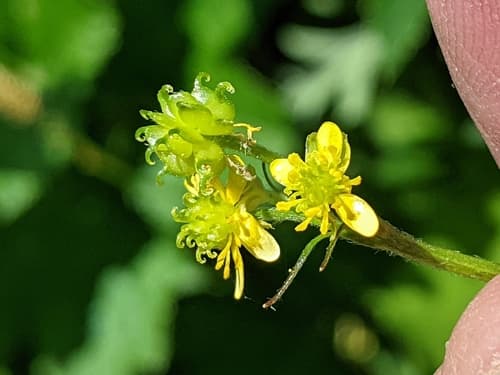
Woodland Buttercup (En) is toxic to dogs and cats.
Listed as toxic by the ASPCA Animal Poison Control Center (last reviewed 2026-05-21). If your pet has been exposed, call the ASPCA Animal Poison Control Center at (888) 426-4435and your veterinarian's emergency line.
Pollinator Patch flags toxic plants so you can choose a pet-safe native alternative for your yard.
Light
part sun
Water
medium
Size
4"–16" H × 4"–12" W
Bloom
May, Jun, Jul
Native to
AZ, CA, CO, ID and 6 more states
Pollinators
bees, beetles
Browse plants for this ecoregion
Ranunculus uncinatus is a small woodland buttercup native to shaded areas. This compact perennial produces small yellow flowers from May through July and stays under 16 inches tall. It thrives in partially shaded spots with consistent moisture.
In an HOA neighborhood
Woodland Buttercup (En) takes more care to keep looking intentional in a front yard. Maintenance level: low. Consider it for backyard or mid-zone beds rather than the street edge.
Works well in: backyard only.
- Very informal wildflower appearance
- May be perceived as weedy by neighbors
- Small scattered growth pattern lacks structure
Wildlife value
This native buttercup attracts bees and beetles during its spring and early summer bloom period. The flowers provide nectar for pollinators when many other native plants are not yet flowering.
Native range data from the USDA PLANTS Database and regional native plant society lists. Pollinator and host plant associations compiled from GBIF, iNaturalist, and published ecological literature.
Pollinator Patch flags toxic plants like Woodland Buttercup (En) and shows pet-safe natives for your ecoregion instead.